

We Are the Music: 2-Part Choral Octavo
Music by Carl Strommen
Item: 00-PO-0003890
$2.25
Minimum order quantity: 20 copies
Pickup currently not available
Description
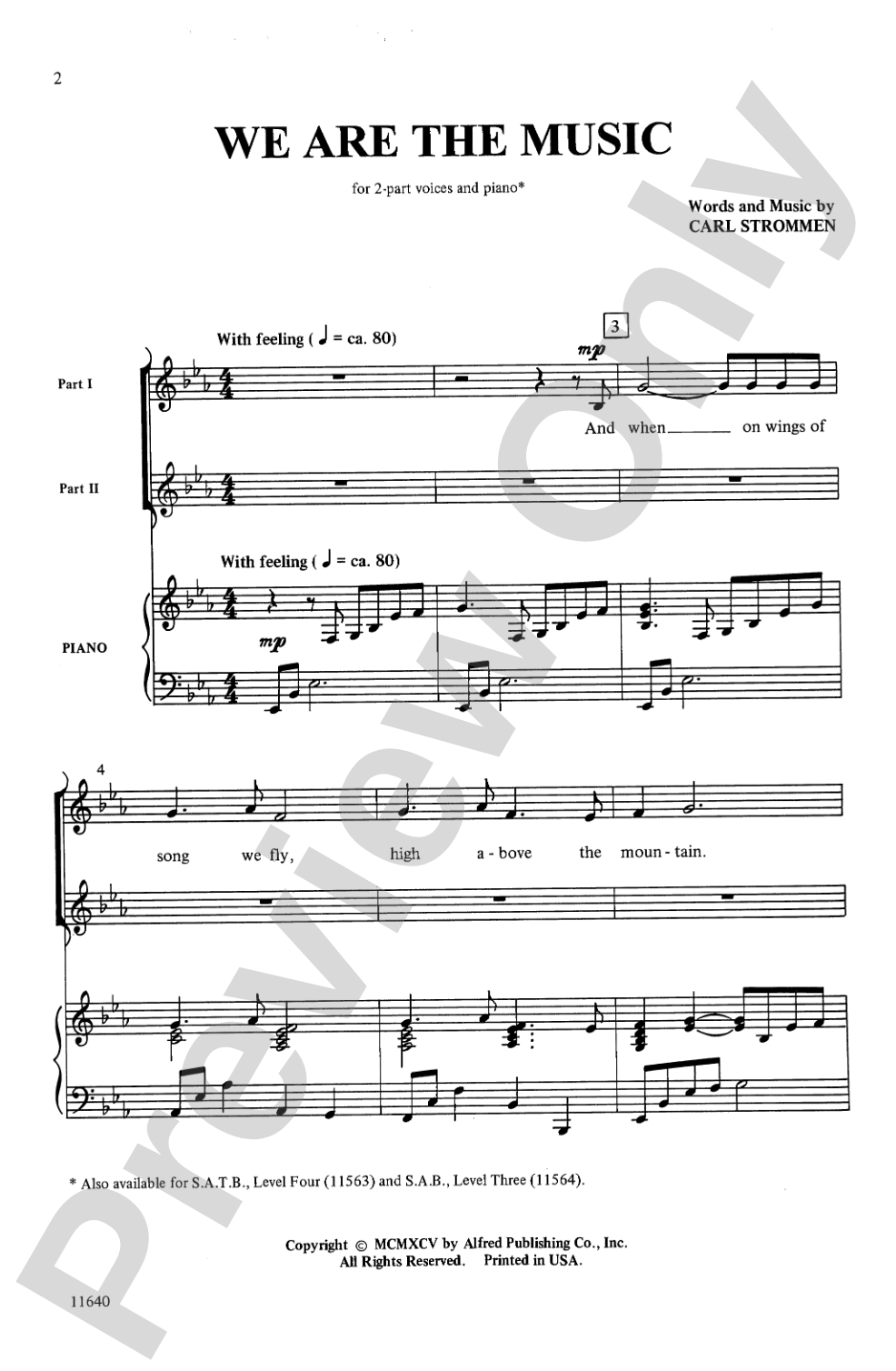
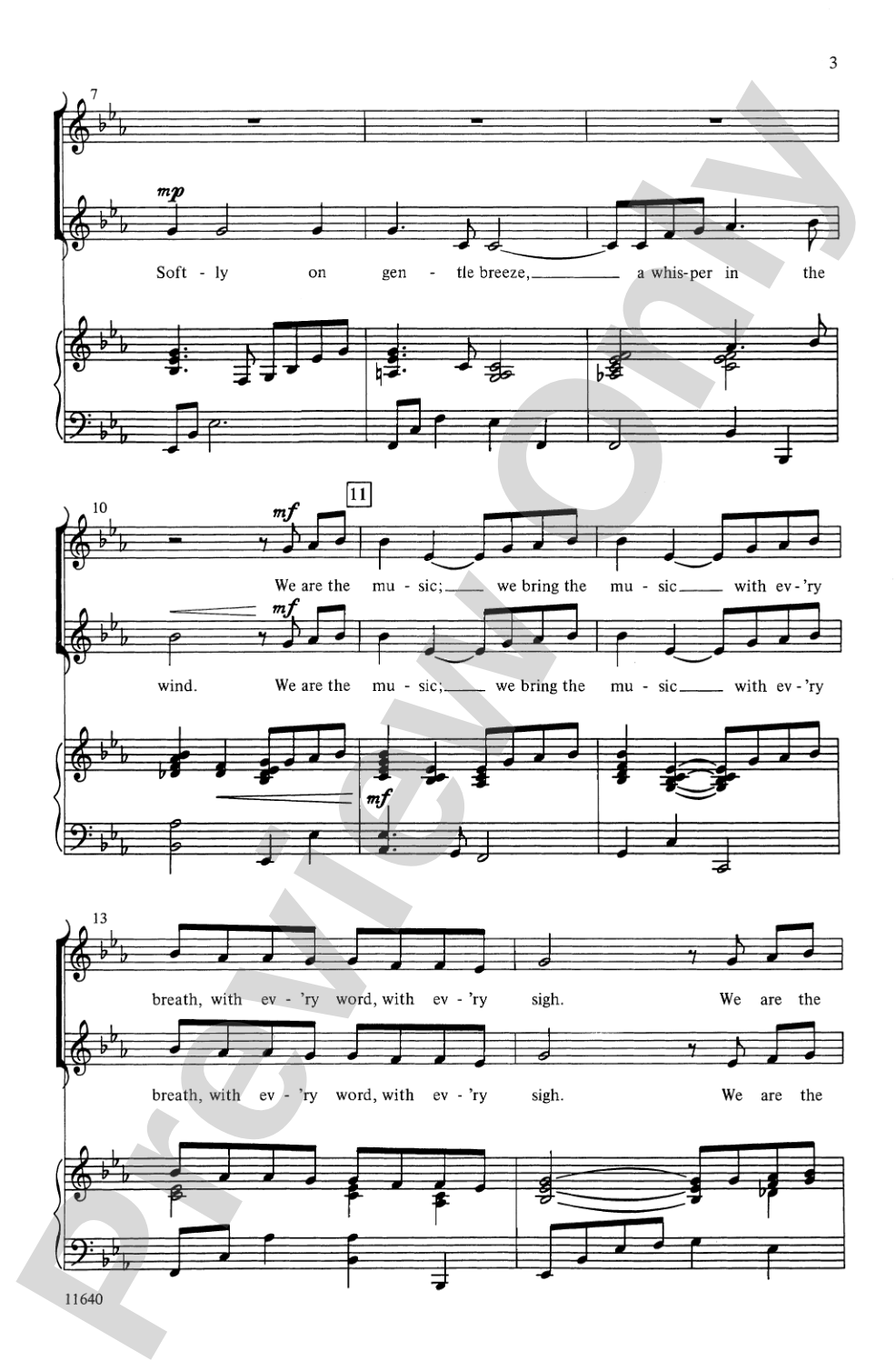
A meaningful "music" song by Carl Strommen with logical harmonies and simple vocal lines. The text describes the power of music in our lives...how music can "explain a sunrise, describe a star." Use it as your concert "theme" or during Music In Our Schools month. Basic, practical literature for school choirs.


We Are the Music: 2-Part Choral Octavo isn't in MakeMusic Cloud just yet...but it could be. Let us know you'd like to see it, and you'll help shape what comes next. In the meantime, start a free trial and dive into thousands of interactive titles your students can play along with today.
Request This Title
Tell us you want it.
Start Your Free Trial
Explore everything that's ready to play right now.
Sample Audio
No sample audio found.
Sample Video
No sample videos found.
Additional Details
Series:
Alfred Archive Edition: Alfred Choral Designs
Publisher:
Alfred Music
Page Count:
8
SKU:
00-PO-0003890
More about this title
About the Composer: Carl Strommen

Carl Strommen has established himself as one of the most widely performed composer/arrangers across band, orchestra, jazz band, and choral genres. His music appears regularly in concert halls, on television, and in film productions, and he remains in constant demand as both a clinician and commissioned composer. The ASCAP Standard Writers Award has recognized his prolific output annually.
A graduate of the City College of New York, Strommen has maintained his connection to music education as an adjunct professor of orchestration and composition at C.W. Post Campus of Long Island University in Brookville, New York. He divides his time between Long Island and Colorado, where he spends extended time with family in Denver and Boulder.
Why we love this
Strommen's text choices here are poetic without being overwrought, and the musical setting matches that restraint perfectly. The straightforward harmonic language and accessible vocal writing make this genuinely singable for young choirs while the programmatic purpose (concert theme or Music In Our Schools Month anchor) gives directors a natural place to feature it without needing elaborate context.
What to expect
Uplifting and affirming without saccharine quality. The vocal lines sit comfortably in a range accessible to developing singers, and the harmonic movement unfolds logically, creating a sense of inevitability rather than complexity. There's room for genuine expression here, even within the straightforward musical language.
Who it's for
Middle school and early high school choirs seeking repertoire that speaks directly to the joy and purpose of singing together. Directors programming Music In Our Schools Month or building a concert around a thematic concept will find this piece both musically and textually aligned with that goal.
How to get the most out of it
- Explore the movement and staging suggestions included in the score. These aren't window dressing; they give singers a physical anchor for the text and keep young performers engaged during performance.
- Shape each phrase with the imagery in mind. Words like 'sunrise' and 'star' invite rubato and dynamic nuance that will elevate the simplicity of the vocal lines.
- Balance the two parts carefully so neither dominates. The 'logical harmonies' work best when both lines can be heard equally, creating transparency rather than a melody-plus-accompaniment effect.
How to use it
Position this as your concert's philosophical statement. It works equally well as a standalone opener to frame the evening's theme or as an intermission piece that reminds the audience why you're all gathered. The eight-page format and modest rehearsal demands make it a realistic addition even to a full concert schedule.
Skills your students will build
- Singing secure two-part harmony with independent voice lines
- Interpreting text through musical phrasing and dynamic shape
- Coordinating movement with vocal performance
- Understanding harmonic progression through practical application rather than theory
- Building confidence in ensemble contexts through accessible, rewarding material