

We Are the Light: 3-Part Mixed Choral Octavo
Words and music by Andy Beck
Item: 00-PO-0007858

$2.70
Minimum order quantity: 10 copies
Please note: Under U.S. copyright law, you must purchase the exact number of copies needed for your ensemble. Printing, duplicating or sharing additional copies is strictly prohibited.
Pickup currently not available
Description
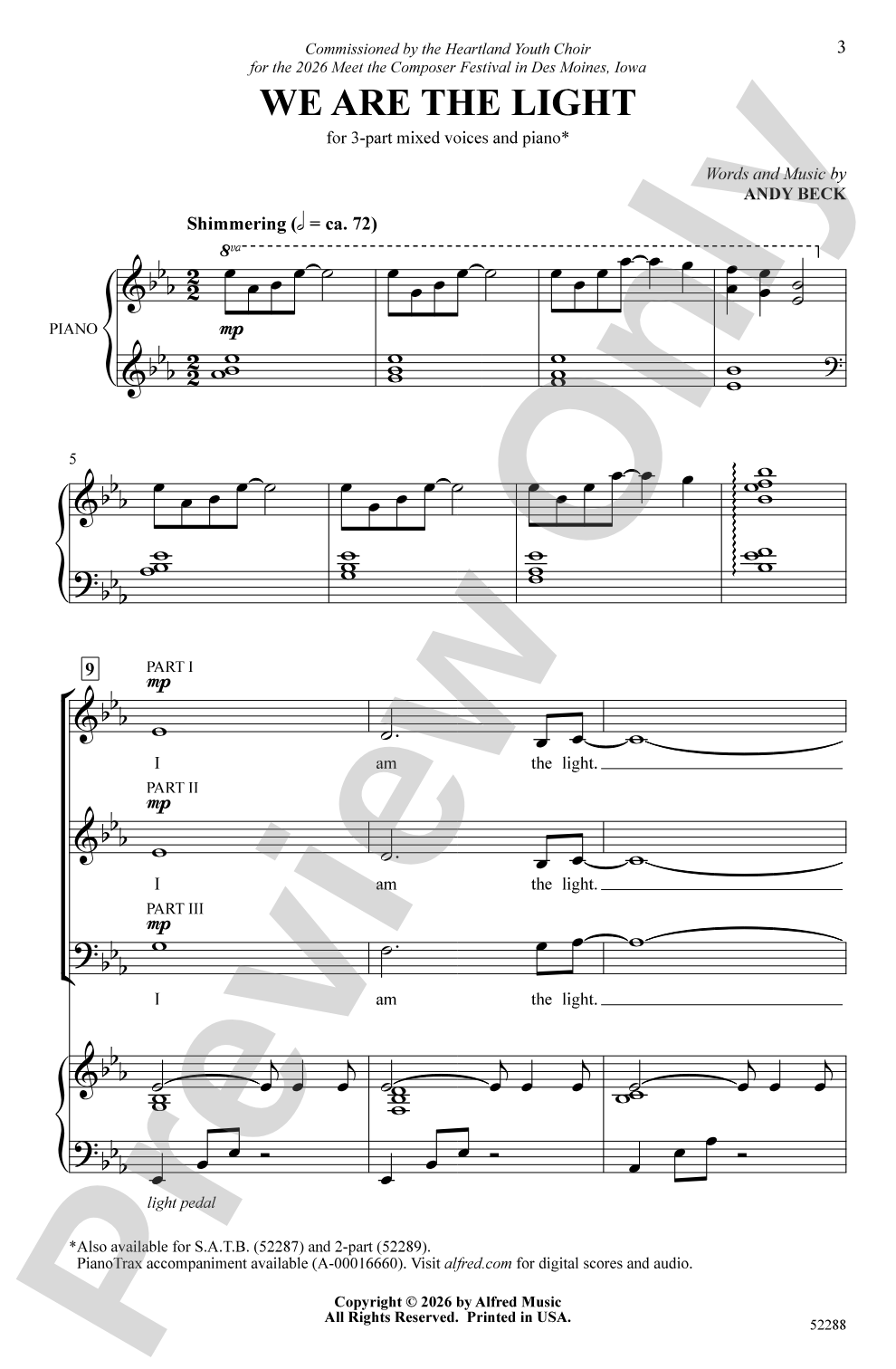
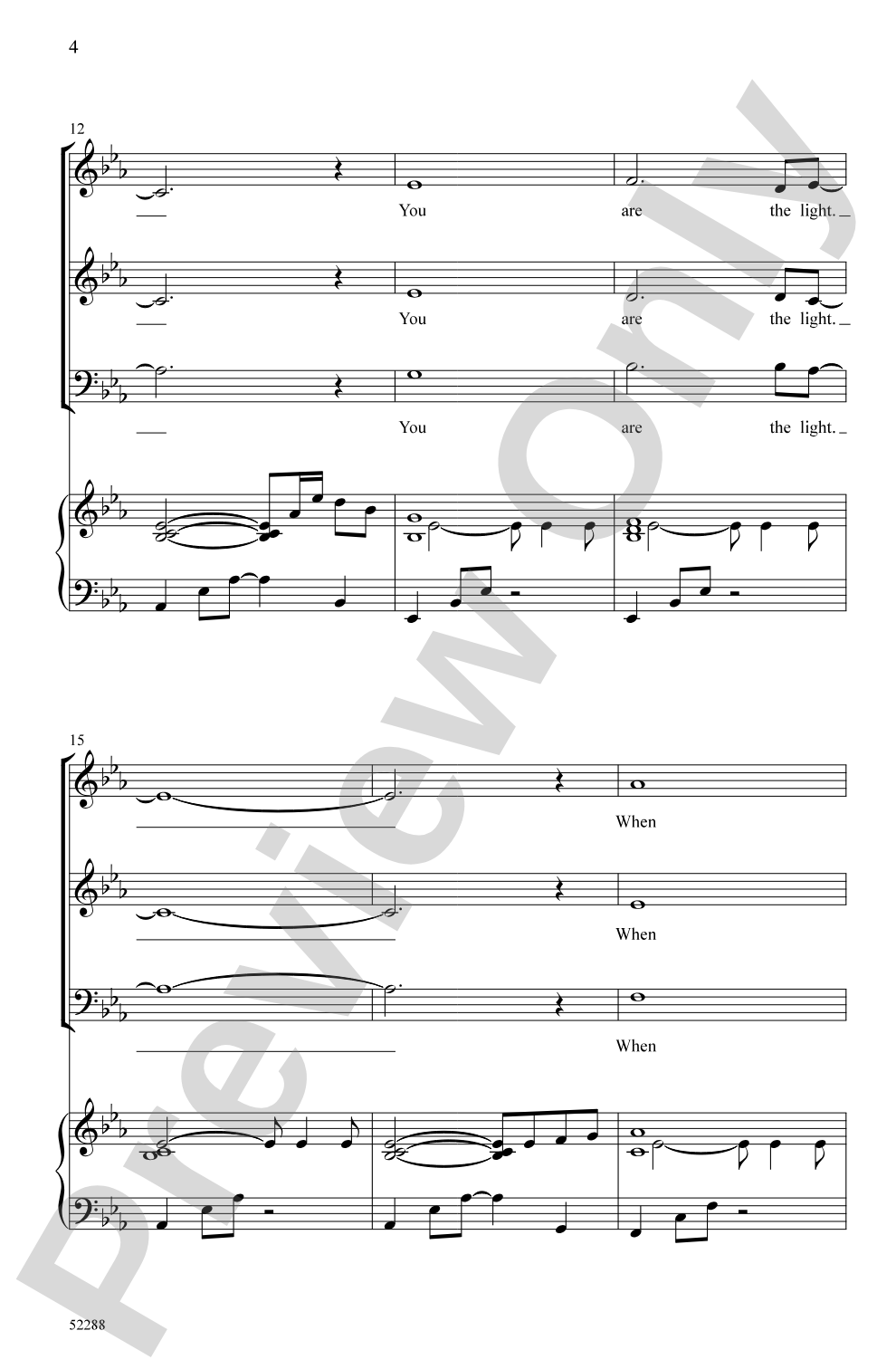
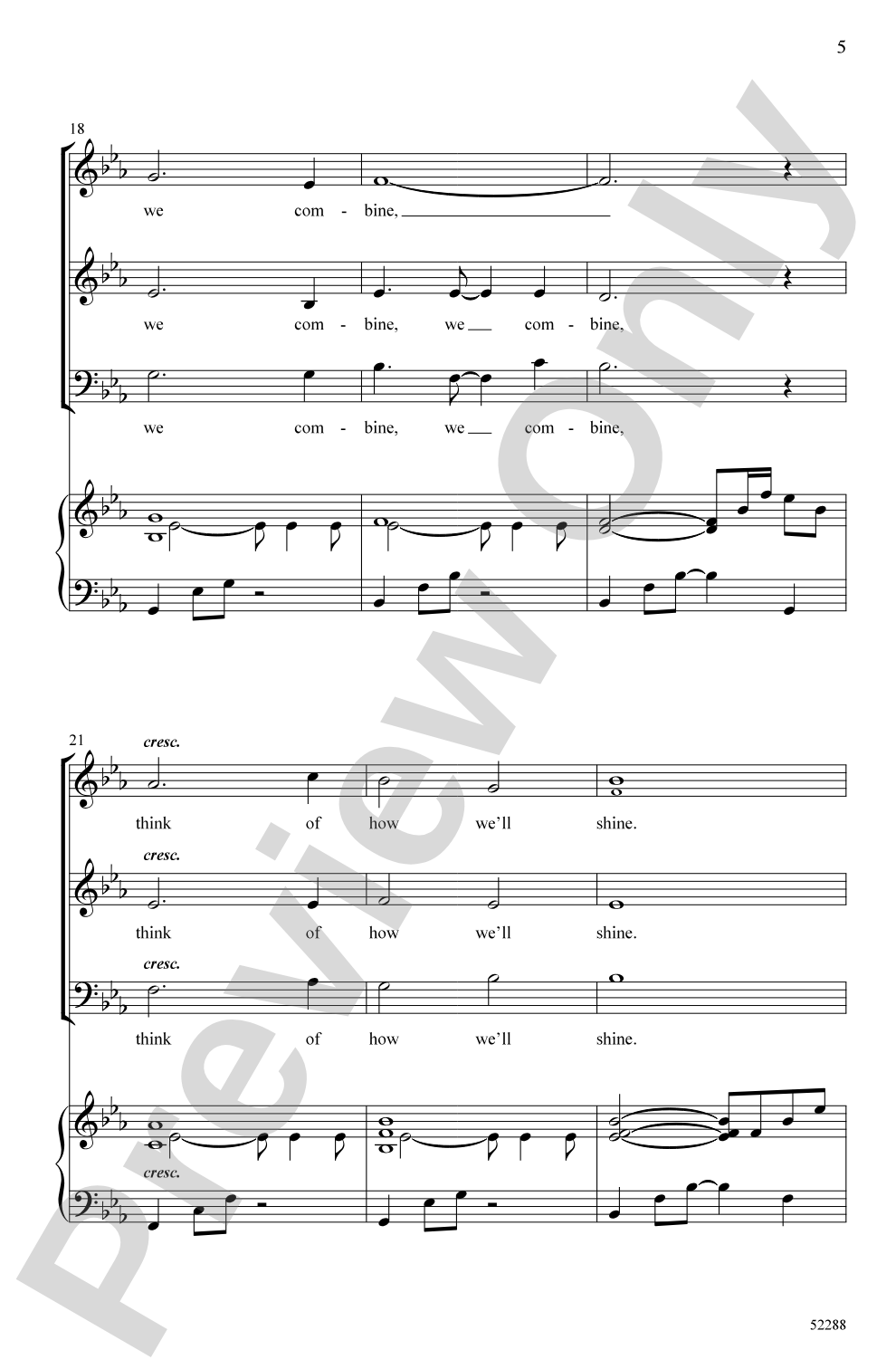
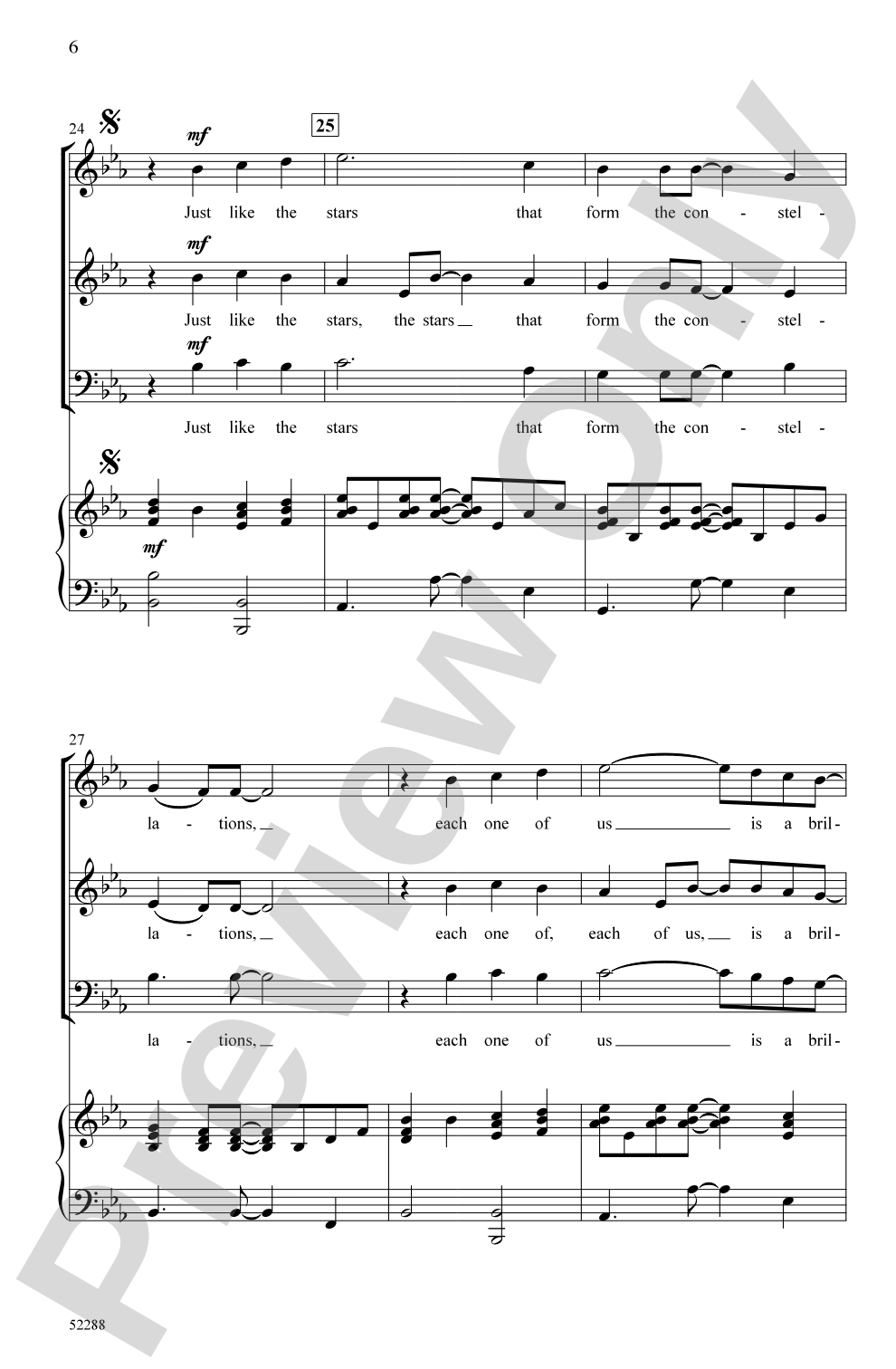
"In the dark of night, we are the light"---an inspiring concert theme for any time of year. Rich long-tone sonorities lay the foundation for what becomes a brilliantly textured second verse when the altos add their unique perspective. Encourage a warm forte and true legato on the fully harmonized, lightly syncopated chorus. A soaring descant achieves new heights on the final refrain. Just before the closing cadence, a single voice makes the metaphoric message shine. Notice a hint of gospel at the uplifting call-and-response bridge, which declares "light" to be "hope . . . love . . . peace . . . grace . . . truth . . . and joy."


Don't just read it, hear it, play along with it, and watch your students grow with it. In MakeMusic Cloud, We Are the Light: 3-Part Mixed Choral Octavo comes alive with professional accompaniment, adjustable tempo, and built-in practice tools that turn solo practice into real progress.
Open in the Player
Jump straight in and assign it today.
Start Your Free Trial
Open this title and explore the full library in minutes.
Sample Audio
1
Audio File
--:--
0:00
0:00
Sample Video
Additional Details
Series:
Alfred Choral Designs
Publisher:
Alfred Music
Page Count:
20
SKU:
00-PO-0007858
More about this title
About the Composer: Andy Beck

Andy Beck leads Alfred Music's choral publications division and has become one of today's most performed choral composers, with more than 450 works for singers of all ages in active performance repertoire worldwide. His influence extends across multiple pedagogical domains through resources like Sing at First Sight and Vocalize! 45 Vocal Warm-Ups That Teach Technique, cementing his reputation as both a composer and music education innovator.
Beyond the page, Beck maintains an active presence as guest conductor, clinician, and adjudicator throughout the United States and internationally, with recent commissions and conducting engagements from honor choirs and all-state groups. A trained tenor with degrees from Ithaca College and Northwest Missouri State University, he continues to perform with the North Carolina Master Chorale Chamber Choir while sustaining his long-standing partnership with Alfred Music as a studio vocalist since 1992.
Why we love this
Beck writes from a director's understanding of what choirs actually need to sing well together. The textural layers here feel natural rather than forced, the descant earns its moment without straining voices, and the gospel-inflected bridge gives singers permission to find warmth and character in the text. Programming this gives your choir a genuinely uplifting experience while developing real musicianship around legato, part independence, and dynamic control.
What to expect
The piece opens with quiet certainty, then gradually reveals layers of meaning as voices join in. There's a genuine moment of vulnerability when a single voice delivers the metaphor, followed by the infectious energy of the call-and-response bridge where hope and joy feel contagious rather than preachy. The descant finale leaves listeners with something to hold onto.
Who it's for
Any developing choir with secure singers in three parts and enough vocal maturity to sustain long tones with warmth. The piece works equally well for middle or high school choirs, community ensembles, and festival or graduation programs where emotional authenticity matters as much as technical polish.
How to get the most out of it
- Build the long tones in the opening section with complete breath support; resist any tendency to thin the sound as voices sustain. This foundation determines how the piece breathes.
- Let the altos own their entrance in the second verse. Their "unique perspective" is textural contrast, not accompaniment. Balance them generously so listeners hear the harmonic shift.
- The syncopated chorus needs clarity without rushing. Lock the rhythm with your beat, then encourage singers to float the legato line above the pulse rather than clinging to it.
- Shape the descant by thinking of it as a call rather than a solo. It should soar, but it rises from the harmonic foundation beneath it, not away from it.
How to use it
This works beautifully as a graduation finale, but it's equally at home as an opener for any concert focused on hope, community, or resilience. Consider pairing it with contrasting material earlier in the program so the warmth and inspiration land with full impact. The recorded accompaniment option makes it accessible for smaller ensembles or as a festival selection.
Skills your students will build
- Sustaining warm, connected long tones across phrase lengths
- Balancing independent parts while maintaining harmonic blend
- Reading and performing syncopated rhythms in a legato context
- Navigating texture shifts (gospel call-and-response idiom)
- Creating contrast between ensemble and solo voice without losing cohesion
- Controlling dynamic shape in a descant line over underlying harmony