
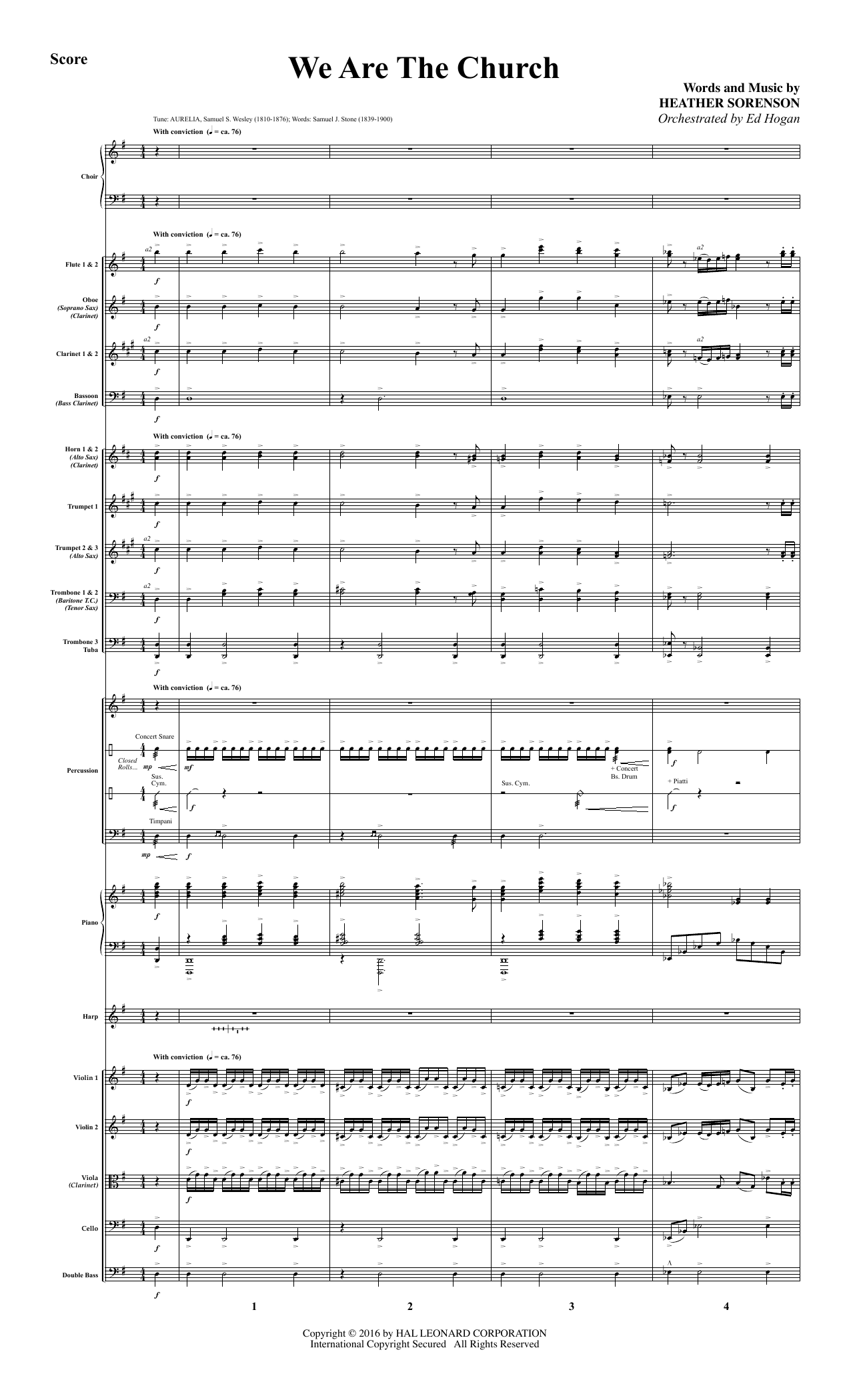

We Are the Church: Choral Instrumental Pak
By Heather Sorenson
Item: 35-PK00344366
$75.00
Pickup currently not available
Buy Extra Parts (Digital PDF Download)
Parts Added to Cart!
Description
Uses: Church Heritage, Commitment, Reformation
Scripture: Psalm 18:2-3; Revelation 19:7-9
This is an epic anthem whose content challenges the church to find her unity and calling. The chorus brings the theme into focus, "We are the Church, we are the Bride, we are the lost who've been fully justified." There is a strong crescendo of purpose as this piece develops, and the final chorus sings like a sacred concerto with piano and choir proclaiming confidence in Christ. Some vocal divisi allows larger groups to fully engage, while the thoughtful part-writing and ranges encourage smaller ensembles.


We Are the Church: Choral Instrumental Pak isn't in MakeMusic Cloud just yet...but it could be. Let us know you'd like to see it, and you'll help shape what comes next. In the meantime, start a free trial and dive into thousands of interactive titles your students can play along with today.
Request This Title
Tell us you want it.
Start Your Free Trial
Explore everything that's ready to play right now.
Sample Audio
No sample audio found.
Sample Video
No sample videos found.
Additional Details
Publisher:
Hal Leonard
SKU:
35-PK00344366
More about this title
About the Composer: Heather Sorenson
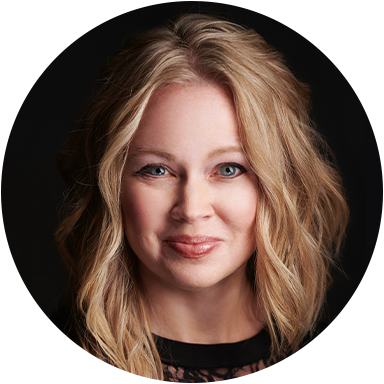
Heather Sorenson has built a reputation as a composer and arranger working across multiple musical worlds. Based in Dallas, she commands both traditional and contemporary idioms of sacred music, often fusing them into a signature sound that feels neither pastiche nor compromise. Her works appear regularly in churches, universities, and concert halls worldwide, and she has received commissions from institutions including Texas A&M University and Carnegie Hall, where her oratorio EXODUS premiered.
Beyond composing, Sorenson has shaped musicians at every level. She spent four years teaching elementary music at Grace Academy of Dallas, served as adjunct faculty at Baylor University, and continues to lead master classes and workshops at conferences and universities across the country. Her dual commitment to writing and mentorship, combined with her active schedule as a guest conductor and clinician, keeps her deeply connected to the needs of working musicians and developing choirs.
Why we love this
Sorenson crafts the text as a declaration of identity, letting the chorus anchor the theological content while the surrounding verses and instrumental sections build theological weight without becoming preachy. The part-writing is genuinely flexible: directors of ten-voice choirs and directors of forty will both find the divisi allows full participation, and the ranges sit naturally across mixed ensembles. That final chorus as a sacred concerto transforms what could have been a straightforward anthem into something architecturally satisfying and genuinely moving.
What to expect
The piece builds with purposeful momentum, moving from reflection toward affirmation. When the final chorus emerges as a concerto with piano, the energy crystallizes into something both celebratory and spiritually confident, leaving singers and listeners with a sense of unified proclamation.
Who it's for
This work suits ensembles ranging from modest mixed choirs to larger groups seeking flexible part-writing that doesn't sacrifice musical or theological substance. It is equally at home in a traditional worship setting and in a concert or festival context where sacred music carries genuine artistic weight.
How to get the most out of it
- Balance the piano part as a full musical partner during the final chorus, not as accompaniment. The concerto texture only lands if the two forces are in genuine dialogue.
- Attend to dynamic control through the crescendo passages. The momentum builds through accumulation of voices and thickened texture, so resist the temptation to push volume prematurely; let the musical architecture do the work.
- Shape the chorus melody with the confidence the text demands. This is a moment of proclamation, not introspection, so commit fully to the vocal line's forward motion.
- Consider how the divisi sections create textural variety. Rather than treating all divided passages alike, listen for where Sorenson uses divisi to add color versus where it opens accessibility. Those distinctions matter.
How to use it
This serves well as a centerpiece for a worship service focused on church identity or calling, or as the anchor of a sacred concert program where it can command attention without being overshadowed by lighter fare. The length and structure also make it an excellent choice for festival or competition programming where choirs benefit from working with substantial, architecturally interesting literature.
Skills your students will build
- Reading and executing divisi within mixed voicing
- Sustaining line through longer phrase structures without losing support
- Balancing vocal tone and weight against piano as an equal musical force
- Navigating dynamic development across sections with textural rather than volume-based intensity
- Text painting and theological expression through musical gesture