We Are God's People Sheet Music Preview

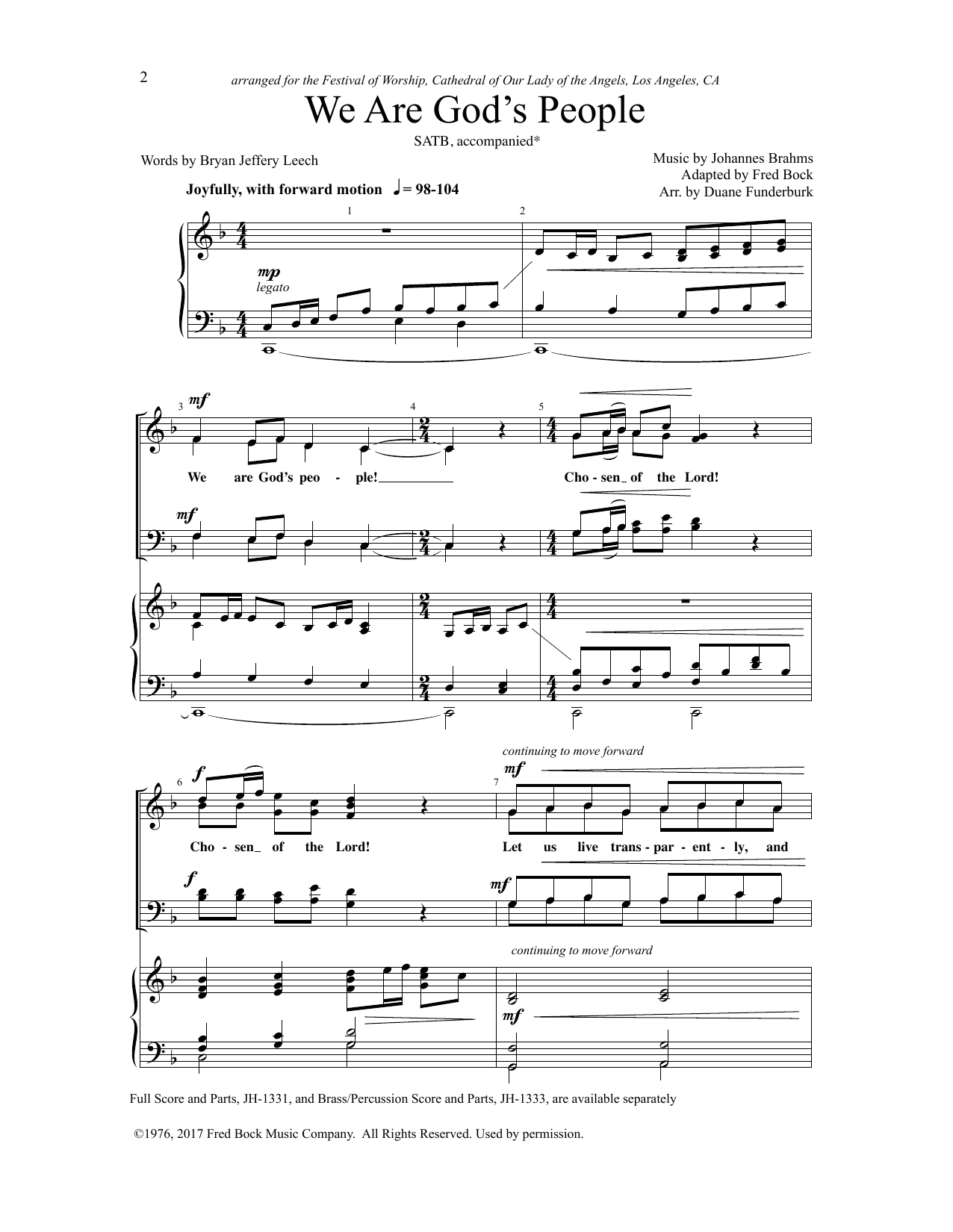
We Are God's People: SATB Choral Octavo

As performed by Johannes Brahms / As performed by Fred Bock / As performed by Duane Funderburk / Arranged by Bryan Jeffery Leech

Item: 35-DS00403657

Digital Download
$2.99
Description

We Are God's People: SATB Choral Octavo isn't in MakeMusic Cloud just yet...but it could be. Let us know you'd like to see it, and you'll help shape what comes next. In the meantime, start a free trial and dive into thousands of interactive titles your students can play along with today.

Sample Audio
No sample audio found.
Sample Video
Additional Details
Publisher: Hal Leonard
Page Count: 11
SKU: 35-DS00403657

More about this title

About the Artist: Johannes Brahms

Johannes Brahms (1833-1897) stands as one of the most significant composers of the Romantic era, equally celebrated for his symphonies, concertos, and intimate chamber works. His compositional approach combined rigorous German counterpoint with lyrical melody, establishing him as a bridge between the Classical tradition and modern musical thought. For choral directors, Brahms remains essential repertoire, both for his original sacred works and for arrangements like this one that demonstrate his gift for elevating hymn texts with sophisticated harmonic language.

Why we love this

This arrangement takes a text with deep congregational resonance and treats it with genuine musical substance. The SATB setting honors Brahms' harmonic sensibility while remaining accessible for volunteer and school choirs, making it a rare piece that feels neither oversimplified nor unnecessarily complex.

What to expect

The music carries conviction and quiet dignity. There's warmth in the harmonic language without sentimentality, and a sense of shared purpose that invites singers and listeners into genuine affirmation rather than empty gesture.

Who it's for

This octavo works well for SATB choirs seeking substantial yet singable repertoire that bridges sacred and secular contexts. It suits community choirs, church ensembles, and school choirs strong enough to handle four-part voice independence without excessive doubling.

How to get the most out of it

  • Balance the inner voices carefully through the harmonic progressions; Brahms-influenced writing often asks alto and tenor lines to carry surprising melodic weight that can disappear if only sopranos and basses anchor the sound.
  • Attend to text declamation across all four parts to maintain clarity and ensure the message lands even when voices move independently.
  • Shape phrases according to the poetic arc rather than musical bar lines; letting the text breathe will reveal the arrangement's emotional architecture.

How to use it

Consider this for concert closings where you want an uplifting finish that feels earned rather than imposed, or for community and interfaith events where the text's inclusive message needs musical backing that sounds thoughtful and grounded. It also works beautifully on programs pairing contemporary arrangements with classical-rooted compositional approaches.

Skills your students will build

  • Part independence and voice leading awareness in four-part writing
  • Harmonic listening in a Romantic-influenced context
  • Text-music relationships across multiple vocal lines

You May Also Like