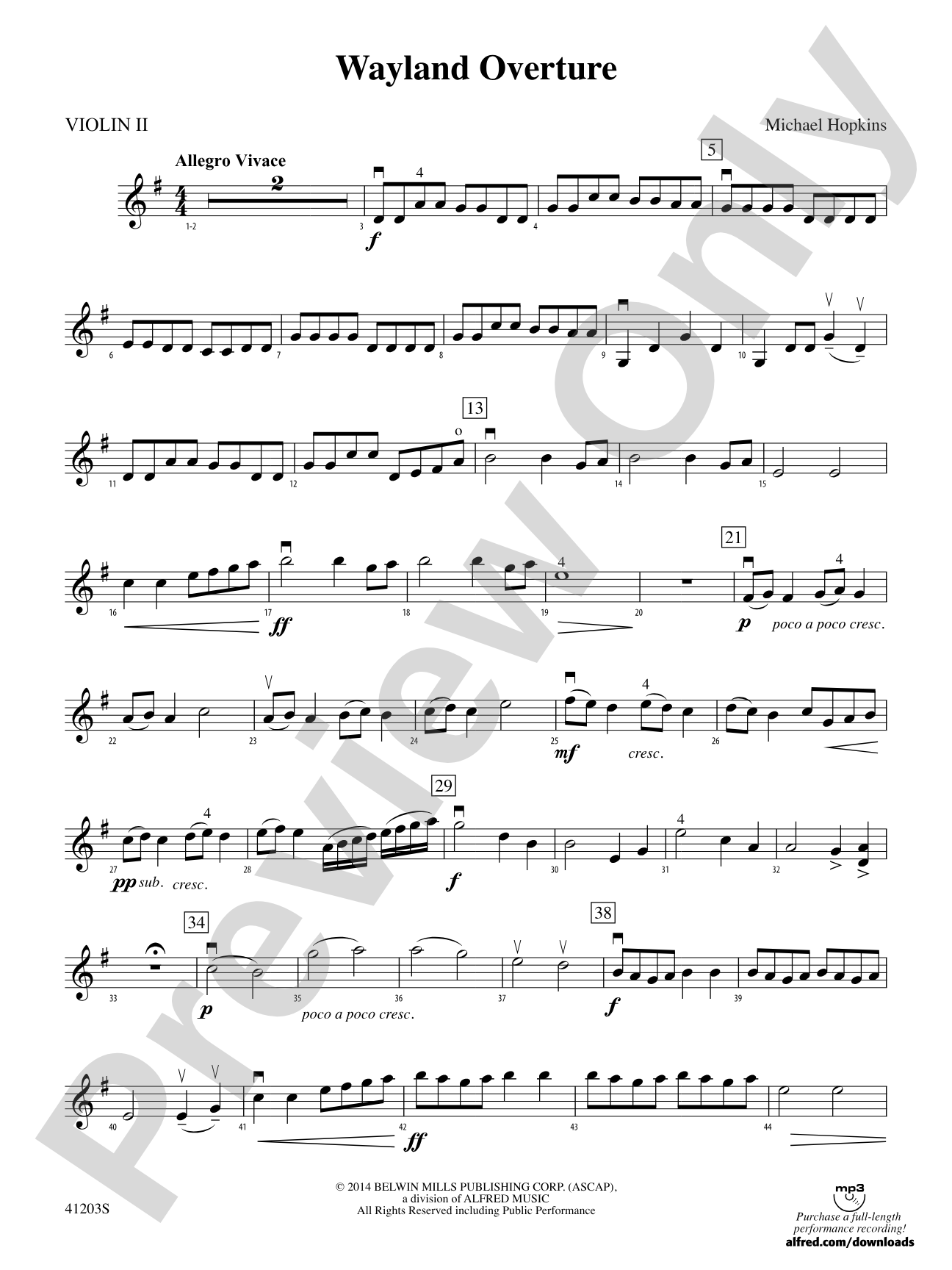
Wayland Overture: 2nd Violin Sheet Music Preview

Wayland Overture: 2nd Violin

By Michael Hopkins

Grade: 3

Item: 00-PC-0016330_VN2

Digital Download
$5.99
Description
This fast and energetic overture features driving propulsive rhythms and a syncopated melody. Fun and challenging parts for all sections in the orchestra makes this piece a great concert opener. (3:00) This title is available in MakeMusic Cloud.

Don't just read it, hear it, play along with it, and watch your students grow with it. In MakeMusic Cloud, Wayland Overture: 2nd Violin comes alive with professional accompaniment, adjustable tempo, and built-in practice tools that turn solo practice into real progress.

Sample Audio
0:00
0:00
Sample Video
Additional Details
Series: Belwin Intermediate String Orchestra
Publisher: Alfred Music
Page Count: 144
SKU: 00-PC-0016330_VN2

More about this title

About the Composer: Michael Hopkins

Michael Hopkins

Michael Hopkins has shaped string education through decades of conducting, teaching, and publishing. He currently leads the music education program at the University of Michigan, where he instructs courses in string techniques, orchestra methods, and music psychology. Before establishing his academic presence in Ann Arbor, he conducted the University of Vermont Symphony Orchestra and directed orchestras across Colorado, Michigan, and Vermont. He founded the Burlington Chamber Orchestra and has served as a guest conductor at more than 100 festivals and clinics nationwide.

Hopkins brings deep pedagogical expertise to his compositions and arrangements, which number over 70 published works for orchestra. His scholarship appears regularly in peer-reviewed journals including the Journal of Research in Music Education, the International Journal of Music Education, American String Teacher, and Music Educators Journal. He authored The Art of String Teaching (GIA Publications), a comprehensive resource for orchestra directors, college instructors, and private teachers. His work consistently reflects a commitment to crafting music that challenges students while remaining musically rewarding.

Why we love this

Hopkins writes overtures that actually work as openers—this one hits hard immediately with its syncopated melody and forward momentum, setting the right energy for a concert without requiring a long warm-up period. The orchestration gives every section meaningful material, which means rehearsal time yields results quickly for conductors working with developing players. It's the kind of opener that energizes an ensemble and audience alike.

What to expect

Wayland charges forward with purpose. Syncopated melodies dance over driving rhythmic foundations, creating forward momentum that sustains for three minutes without losing energy. The piece feels contemporary and alive, yet rooted in traditional overture form.

Who it's for

String orchestras at the intermediate level (Grade 3) ready to program something energetic and rewarding. Directors seeking a substantial opener with real musical content and engaging parts across all sections will find this piece ideal for mixed-ability orchestras.

How to get the most out of it

  • Establish the syncopated melody clearly in the first violins; this rhythmic profile drives the entire piece, so lock it in early and maintain crisp articulation throughout.
  • Balance the propulsive rhythmic energy in lower strings and violas with the lyric content in the upper voices; the piece thrives when both elements breathe together rather than compete.
  • Bring out the driving rhythms in the accompaniment figures; these are not filler but create the momentum that makes this overture effective as a concert opener.

How to use it

Program this as your concert opener to establish excitement and command attention from the first moment. Its three-minute length is perfect for setting tone without consuming significant program time, leaving room for longer works later in the concert.

Skills your students will build

  • Playing syncopated rhythmic figures with rhythmic precision and articulation
  • Balancing energetic accompaniment patterns with lyrical melodic material
  • Sustaining forward momentum and tension across a multi-section work
  • Executing fast articulations and dynamic shifts at tempo

You May Also Like