Wayfarin' Stranger: 1st Violin Sheet Music Preview

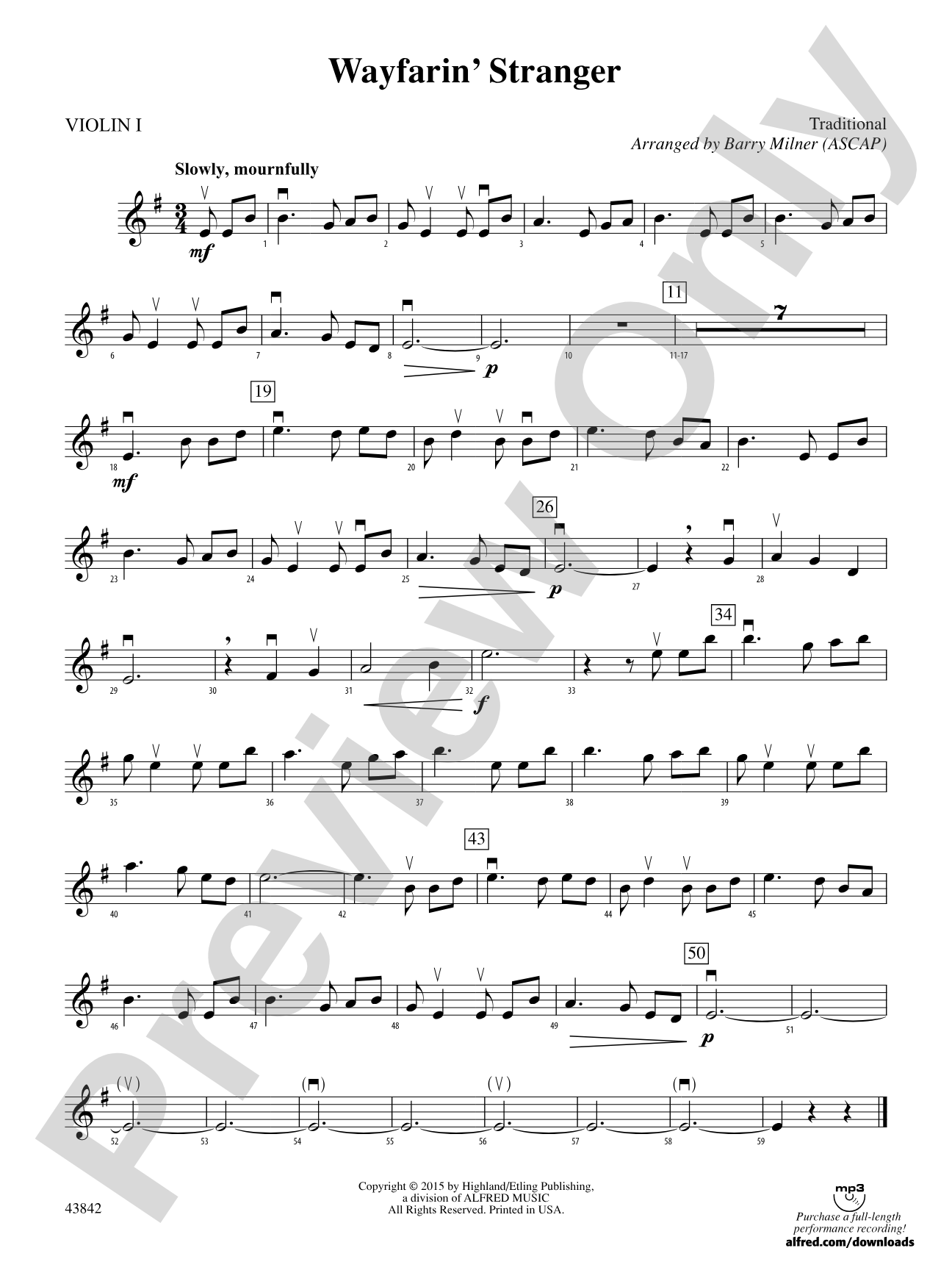
Wayfarin' Stranger: 1st Violin

Traditional / arr. Barry Milner

Grade: 2.5

Item: 00-PC-0016938_VN1

Digital Download
$5.99
Description
A beloved Appalachian folk song and spiritual that is perfect for historical study! This arrangement generally stays in 1st position and employs mainly standard rhythms with a great introduction to eighth-quarter-eighth rhythm. (2:30)

Don't just read it, hear it, play along with it, and watch your students grow with it. In MakeMusic Cloud, Wayfarin' Stranger: 1st Violin comes alive with professional accompaniment, adjustable tempo, and built-in practice tools that turn solo practice into real progress.

Sample Audio
0:00
0:00
Sample Video
Additional Details
Series: Highland/Etling String Orchestra
Publisher: Alfred Music
Page Count: 62
SKU: 00-PC-0016938_VN1

More about this title

About the Arranger: Barry Milner

Barry Milner

Barry Milner is a composer and arranger whose educational works appear regularly on state solo and ensemble festival lists. His compositions for concert band and orchestra have been published by Alfred Publishing, and his arrangements and original pieces have earned recognition in The Instrumentalist, School Band and Orchestra Magazine, and on the JWPepper editors' list.

Based in Arkansas, Milner teaches while maintaining an active freelance composing and arranging practice that extends to film scoring. His creative work draws inspiration from travel to national parks and a deep engagement with both traditional and contemporary musical forms. More information about his compositions and arrangements is available at www.barrymilner.com.

Why we love this

Milner's arrangement respects the spiritual weight of this folk song while keeping the technical demands grounded in early string orchestra repertoire. The introduction to the eighth-quarter-eighth rhythm pattern feels organic rather than imposed, making this a natural choice for directors building rhythmic vocabulary without overcomplicating an ensemble's first year.

What to expect

A quiet journey inward. The arrangement honors the hymn-like stillness of this Appalachian spiritual while inviting young string players to discover how simplicity and restraint can hold deep emotional resonance. There's a clarity here, an unadorned beauty that lets the melody speak.

Who it's for

This arrangement suits Grade 2.5 string orchestras ready to explore sacred music alongside folk traditions. It works equally well for ensembles seeking accessible material for festival competition or for directors looking to deepen students' understanding of American spiritual heritage through instrumental performance.

How to get the most out of it

  • Shape the introduction deliberately to establish the song's meditative character before the melody enters; this framing helps students understand the context of a spiritual rather than treating it as background music.
  • Keep first-position intonation tight by rehearsing in unison sections separately before layering parts; Appalachian spirituals require a lean, open sound that exposes tuning issues.
  • Balance the rhythmic motto (eighth-quarter-eighth) so it serves as gentle accompaniment rather than pulling attention away from the vocal quality of the melody line.
  • Allow the 2:30 duration to breathe naturally; resist the urge to push tempo, which will undermine the spiritual's reflective quality.

How to use it

Pair this with other spirituals or folk songs to build a concert segment exploring American roots music, or program it alone as a moment of reflection between more energetic works. It's equally valuable in a classroom setting focused on music history, where students can perform while studying the cultural significance of Appalachian sacred song.

Skills your students will build

  • Reading eighth-quarter-eighth rhythm patterns in string context
  • First-position technique and intonation in unison and divided passages
  • Expressive playing with restrained dynamics
  • Understanding of spiritual and folk music traditions through performance

You May Also Like