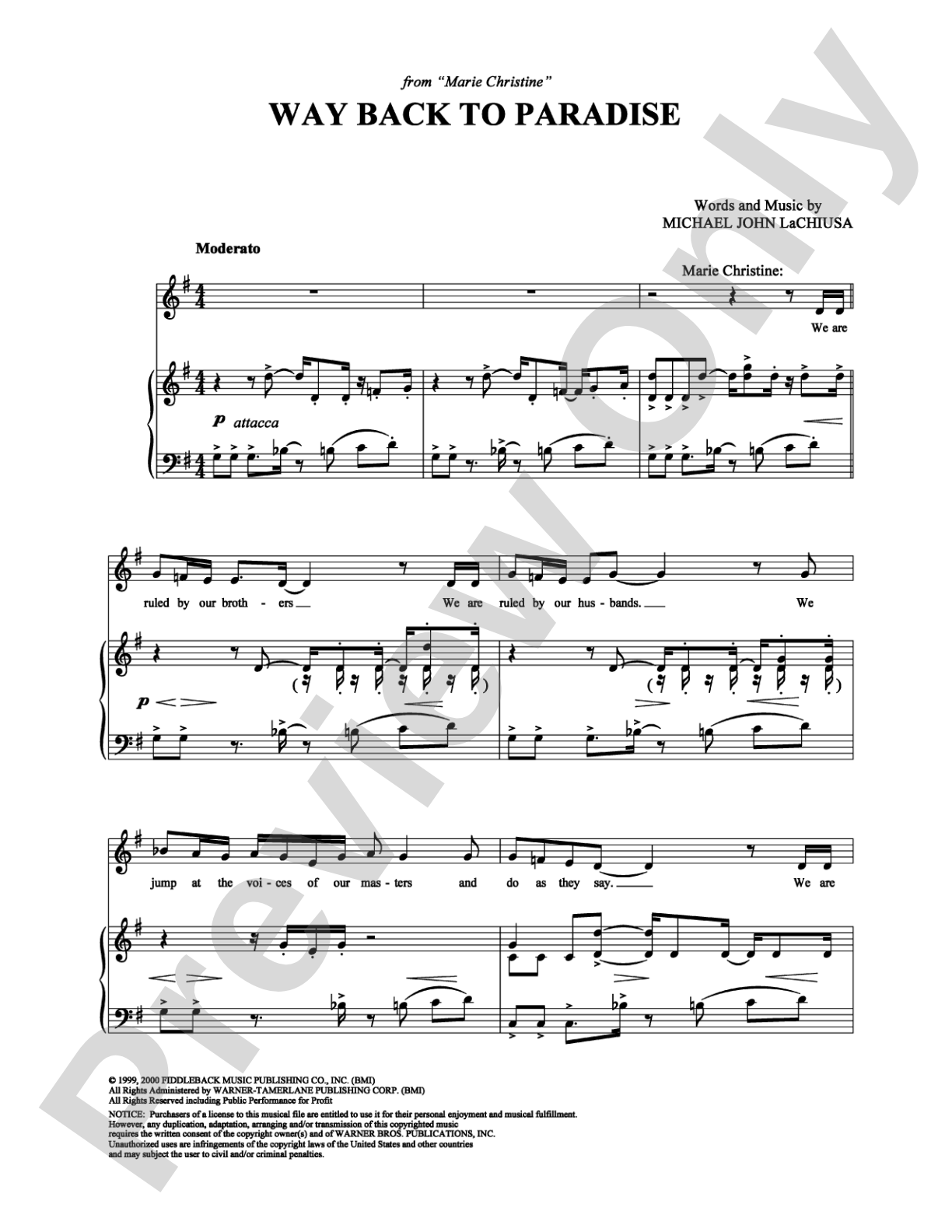
Way Back To Paradise: Piano/Vocal/Chords Digital Sheet Music

Way Back To Paradise: Piano/Vocal/Chords Digital Sheet Music

Michael John LaChiusa

Item: 00-PS-0001465

Digital Download
$3.99
Description

Way Back To Paradise: Piano/Vocal/Chords Digital Sheet Music isn't in MakeMusic Cloud just yet...but it could be. Let us know you'd like to see it, and you'll help shape what comes next. In the meantime, start a free trial and dive into thousands of interactive titles your students can play along with today.

Sample Audio
No sample audio found.
Sample Video
Additional Details
SKU: 00-PS-0001465

More about this title

Why we love this

The piano/vocal/chords format gives you flexibility to feature this piece in multiple settings, whether as a piano-accompanied vocal solo, a singer-songwriter arrangement for a recital, or a teaching tool for understanding voice-leading over chord changes. The included chord symbols make it accessible for pianists who read both notation and figured harmony, a practical skill in contemporary music settings.

What to expect

A song rooted in emotional reflection and forward motion, suggesting both nostalgia and yearning toward something better. The piano writing creates space for the voice to express narrative and feeling while maintaining harmonic sophistication throughout.

Who it's for

Vocalists preparing recital material, singer-songwriters developing arrangement skills, and pianists learning to accompany contemporary vocal repertoire. This format also works well for music students exploring the relationship between melody, harmony, and chord function in performance contexts.

How to get the most out of it

  • Balance the vocal line so it sits naturally above the piano part without oversinging. Let the accompaniment provide harmonic color without competing for attention.
  • Use the chord symbols as a guide to shape phrase dynamics. Anticipate harmonic movement and voice the accompaniment accordingly.
  • Communicate the emotional arc between vocalist and pianist. Mark intentional tempo rubato or breath points together during rehearsal so both parts feel coordinated.

How to use it

Feature this in a recital program alongside other contemporary vocal literature, or use it as a showcase piece for an accompanist and vocalist who want to demonstrate ensemble collaboration. It works equally well in a singer-songwriter concert setting or as teaching repertoire for advanced vocal students exploring interpretation with a live accompanist.

Skills your students will build

  • Reading and interpreting chord symbols in performance context
  • Balancing vocal melody against harmonic accompaniment
  • Coordinating tempo and phrasing between vocalist and pianist
  • Understanding voice leading and harmonic progression through playing and singing

You May Also Like