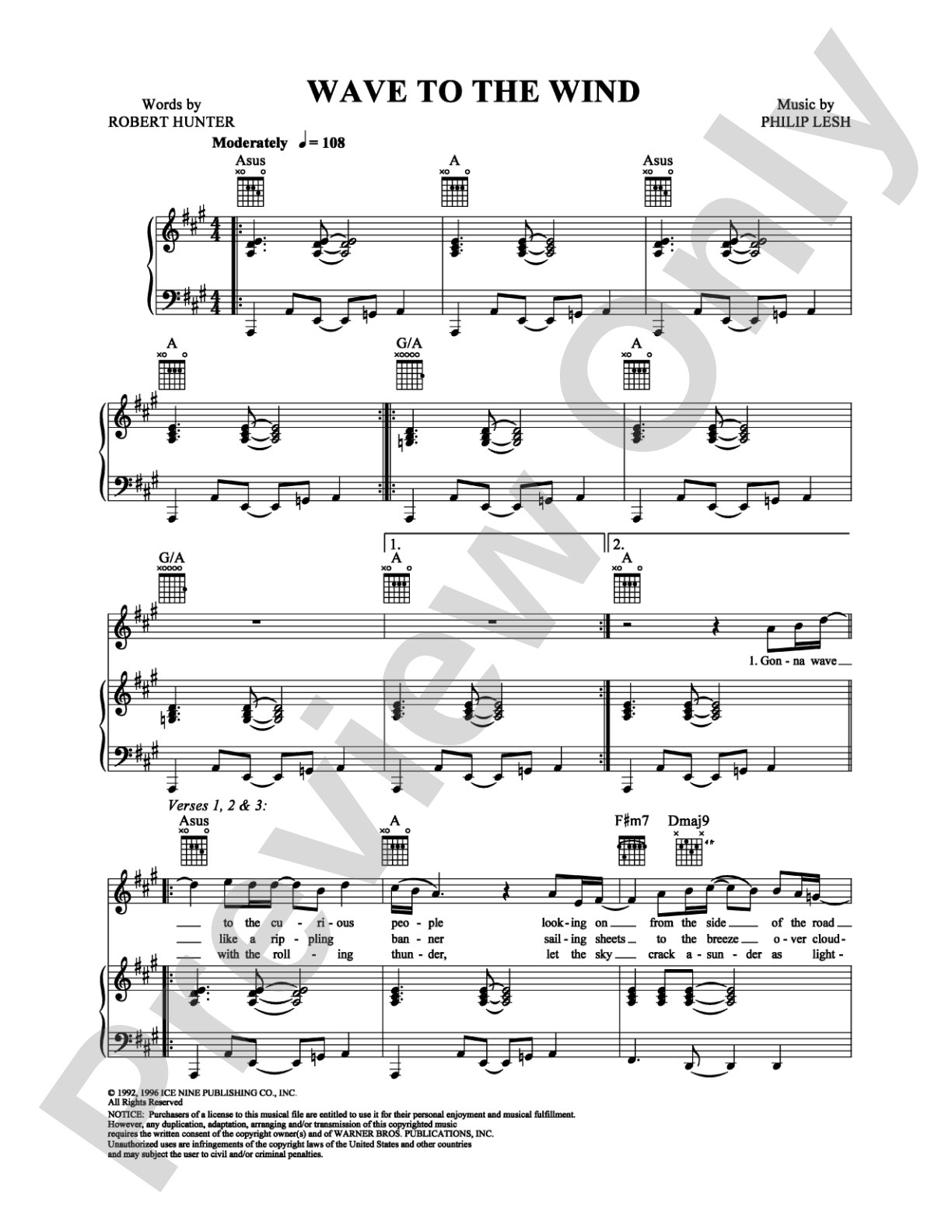
Wave to the Wind: Piano/Vocal/Chords Digital Sheet Music

Wave to the Wind: Piano/Vocal/Chords Digital Sheet Music

Grateful Dead, Phil Lesh

Item: 00-PS-0001218

Digital Download
$2.95
Description

Wave to the Wind: Piano/Vocal/Chords Digital Sheet Music isn't in MakeMusic Cloud just yet...but it could be. Let us know you'd like to see it, and you'll help shape what comes next. In the meantime, start a free trial and dive into thousands of interactive titles your students can play along with today.

Sample Audio
No sample audio found.
Sample Video
Additional Details
SKU: 00-PS-0001218

More about this title

About the Artist: Grateful Dead

The Grateful Dead emerged from the San Francisco Bay Area in the mid-1960s as architects of psychedelic rock and improvisational ensemble playing. Led by vocalist and guitarist Jerry Garcia, the band became known for extended instrumental explorations, sophisticated harmonic arrangements, and a devoted following built on live performance. Their influence on American popular music spans rock, folk, country, and jazz idioms, making their catalog essential listening for musicians seeking to understand how rock music can embrace both structure and spontaneity.

The band's songwriting, collaborative and constantly evolving, created a body of work that rewards close study. Teachers and students find in Grateful Dead repertoire an accessible entry point into modal harmony, jazz-influenced chord substitutions, and the challenge of maintaining musical coherence across variations and extended sections. The music demands both technical precision and interpretive freedom.

Why we love this

This is a song that students actually want to learn. The piano/vocal/chords format gives singers and pianists a direct path into music that feels contemporary and relevant, while the harmonic language introduces jazz and folk influences that deepen musical literacy. The Grateful Dead's appeal spans generations, making this an excellent bridge between popular music and serious musicianship.

What to expect

The song carries a reflective, open-air quality. There's a sense of movement and gentle urgency, supported by harmonic language that feels both warm and slightly mysterious. The piano part balances rhythmic grounding with harmonic color, creating space for the voice to breathe and explore the melody's emotional contours.

Who it's for

This resource works well for intermediate to advanced pianists and singers working on repertoire that blends pop-rock sensibility with harmonic sophistication. It's ideal for vocalists building a contemporary repertoire that goes beyond standard musical theater or classical art songs, and for pianists seeking material that develops harmonic awareness and accompaniment skills.

How to get the most out of it

  • Study the original recording to internalize the phrasing and groove; the piano voicings and vocal inflections are integral to how the song communicates.
  • Pay attention to chord substitutions and voice leading in the piano part. Grateful Dead arrangements often use extensions and alterations that require careful hand coordination and listening.
  • Treat the melody as a conversation with the harmony rather than a fixed line; the vocal part has natural space for interpretation and subtle rhythmic freedom.
  • If performing with a full band, lock the rhythm section with intention. The groove supports but never constrains the vocal interpretation.

How to use it

This works beautifully in a contemporary music concert or a program exploring rock and popular music with depth. Pair it with other singer-songwriter repertoire or use it as a solo recital piece for a vocalist developing interpretive maturity. It also functions well as a studio or classroom piece where students can explore how accompaniment and arrangement serve the narrative of a song.

Skills your students will build

  • Reading piano/vocal/chord charts and translating chord symbols into voice leading
  • Balancing rhythmic precision with interpretive flexibility in a pop-rock idiom
  • Recognizing and performing jazz-influenced harmonic movement (extensions, substitutions, modal interchange)
  • Coordinating vocal phrasing with piano accompaniment across sections of varying texture
  • Understanding how groove and harmonic rhythm interact in contemporary song forms

You May Also Like