
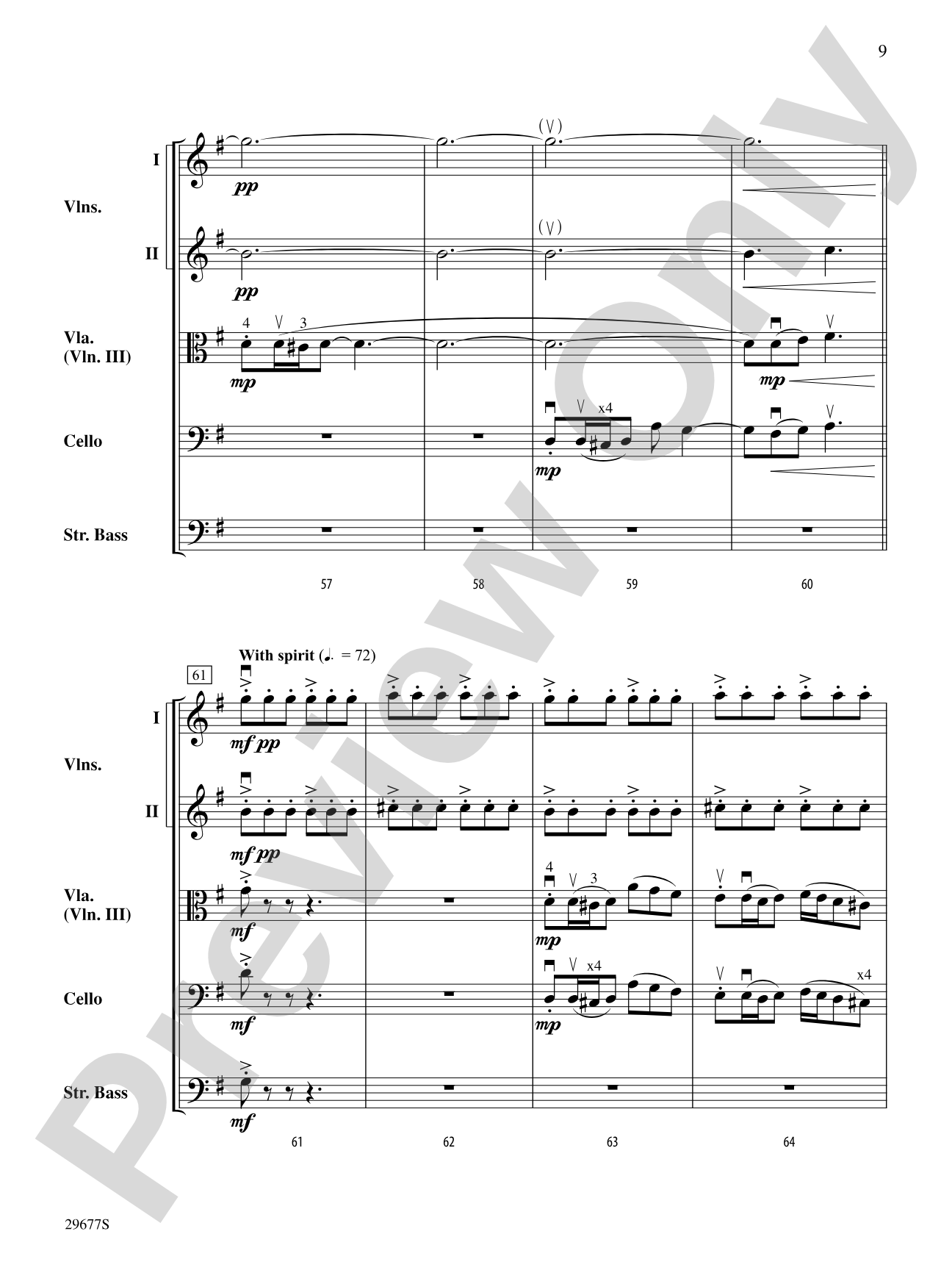
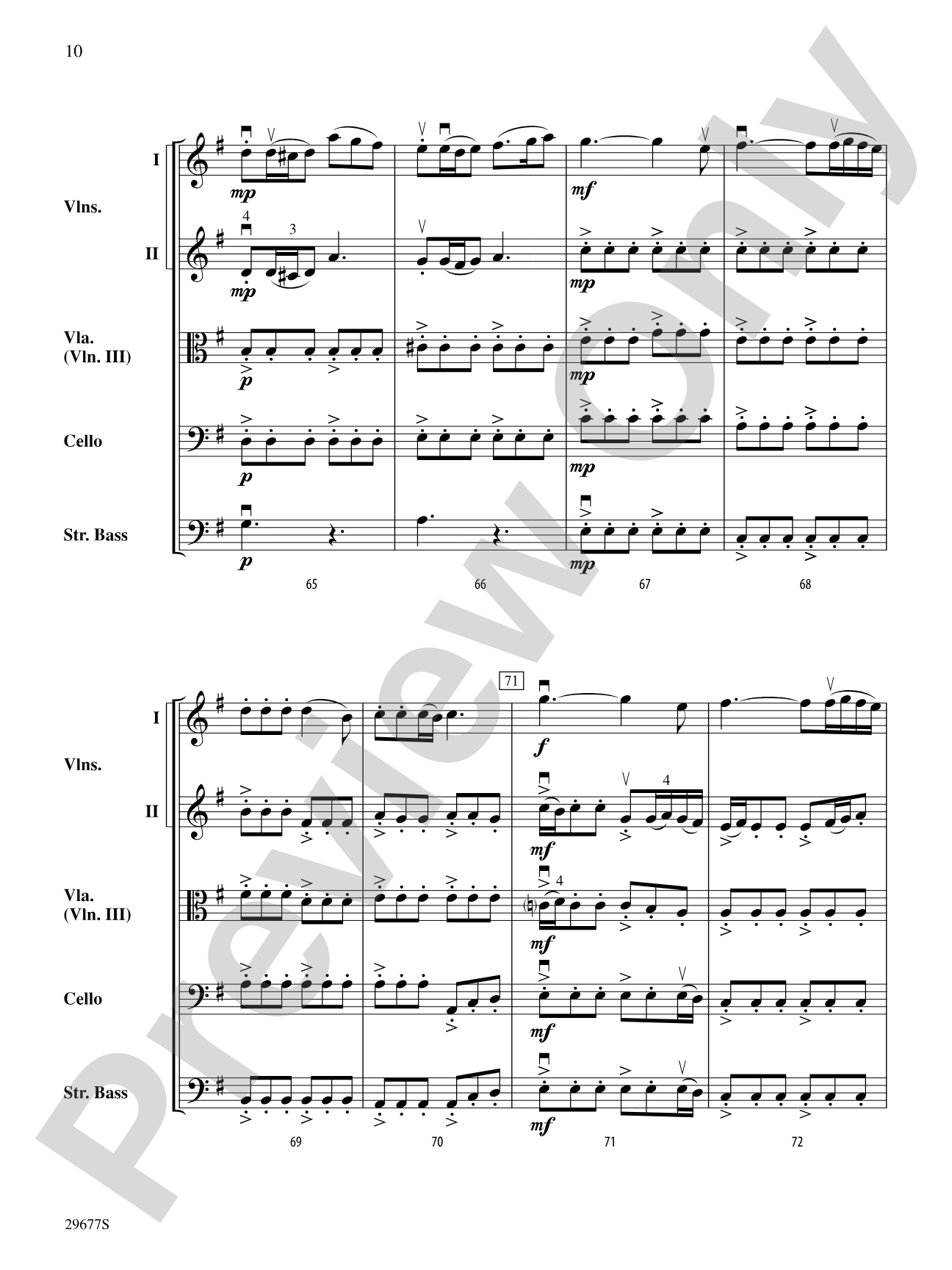
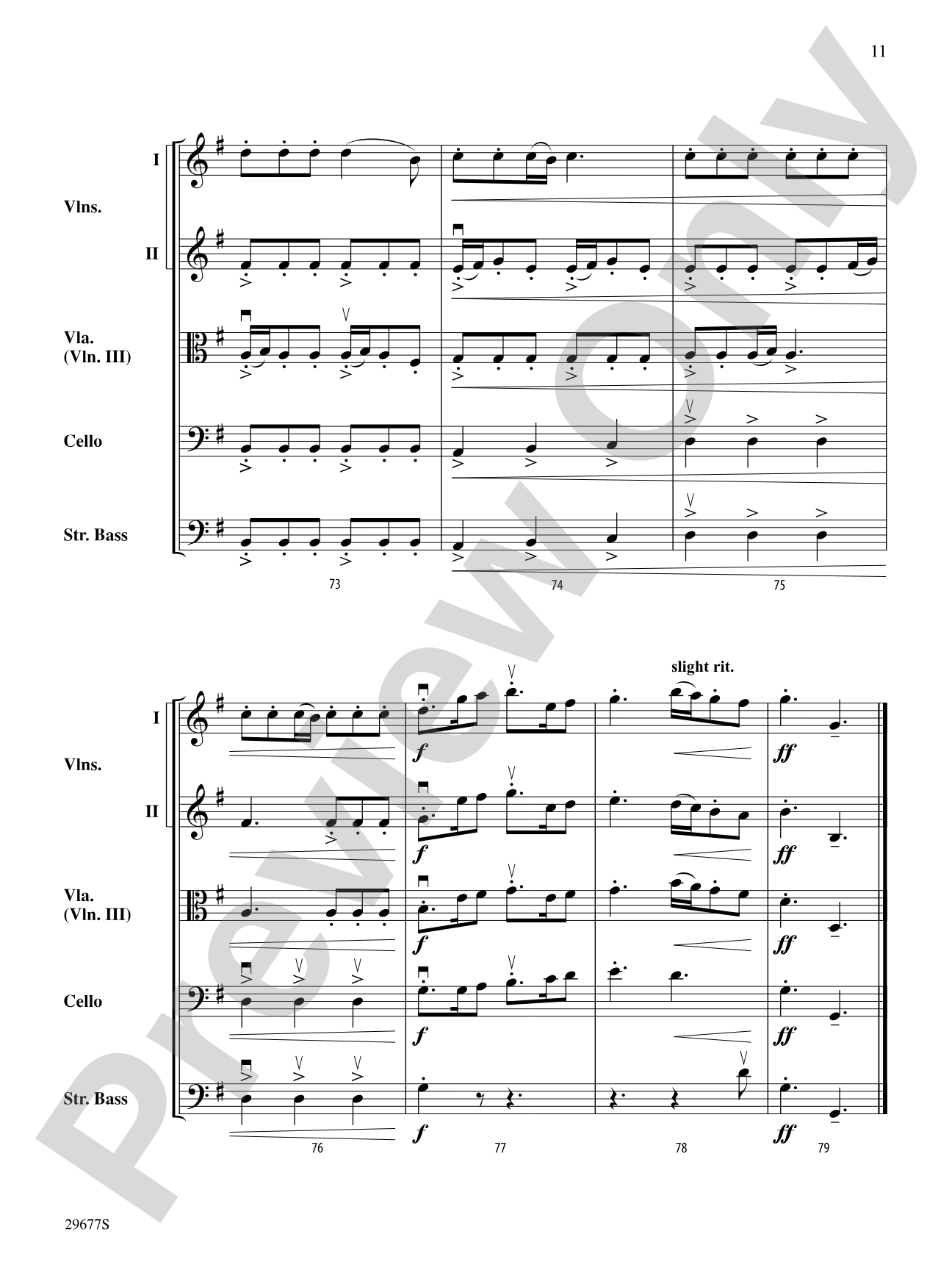


Wave Rider: String Orchestra Conductor Score & Parts
By Derek Richard
Grade: 3
Item: 00-PK-0001557

$45.00
Pickup currently not available
Buy Extra Parts (Digital PDF Download)
| Product | Price | Quantity |
|---|---|---|
| Wave Rider: Score | $7.00 | |
| Wave Rider: 1st Violin | $5.99 | |
| Wave Rider: 2nd Violin | $5.99 | |
| Wave Rider: 3rd Violin (Viola [TC]) | $5.99 | |
| Wave Rider: Viola | $5.99 | |
| Wave Rider: Cello | $5.99 | |
| Wave Rider: String Bass | $5.99 |
Parts Added to Cart!
Description
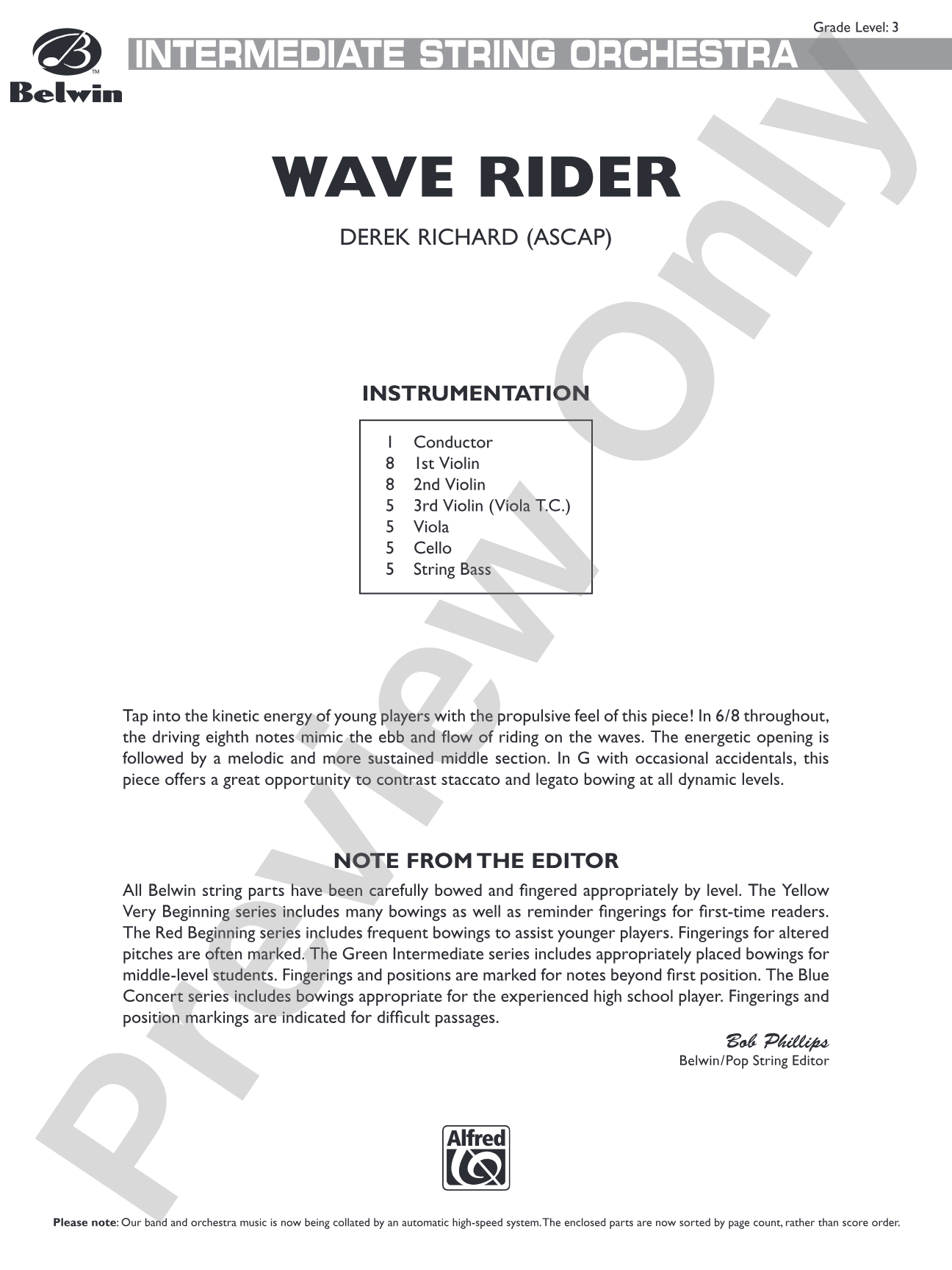
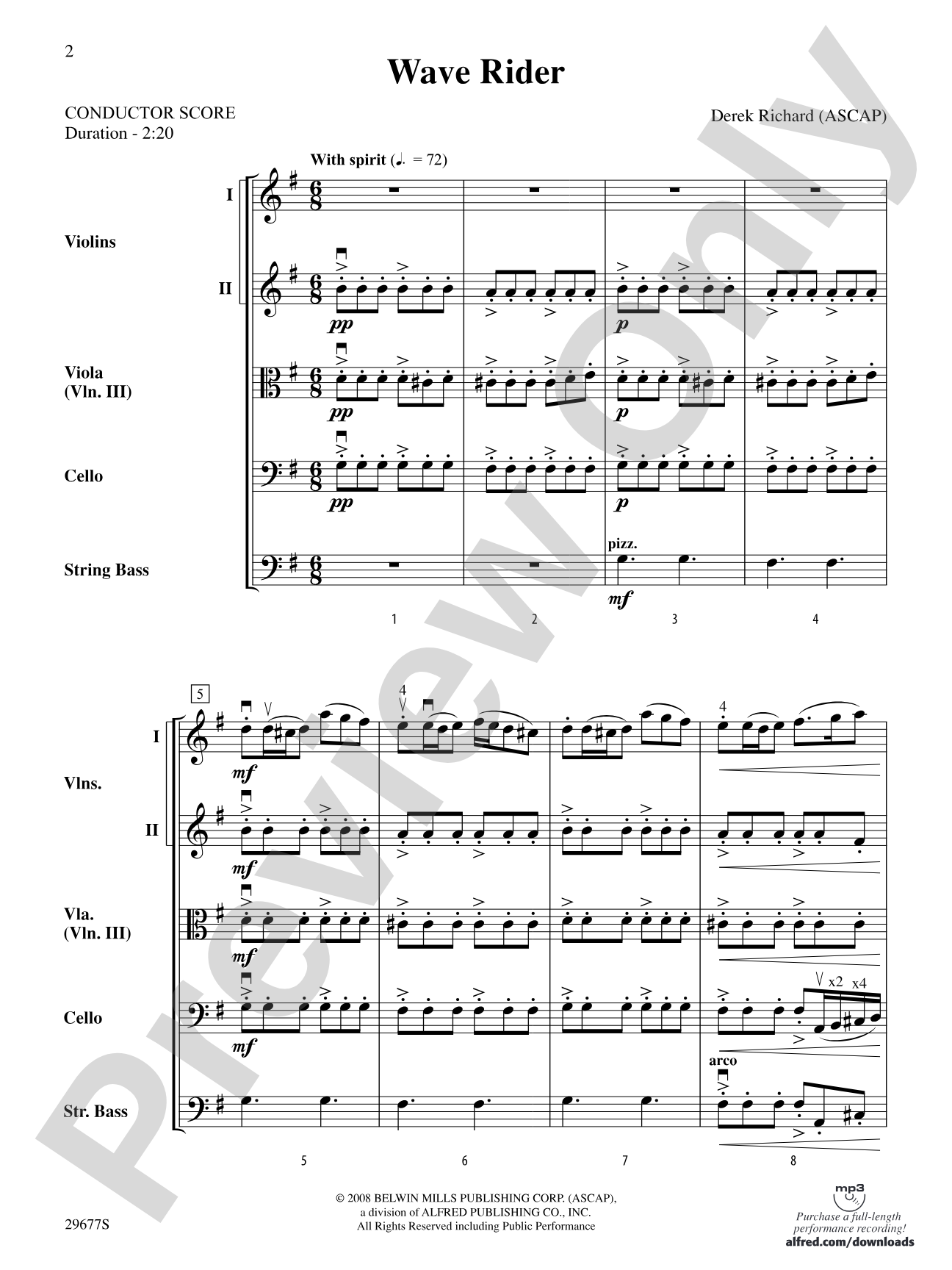
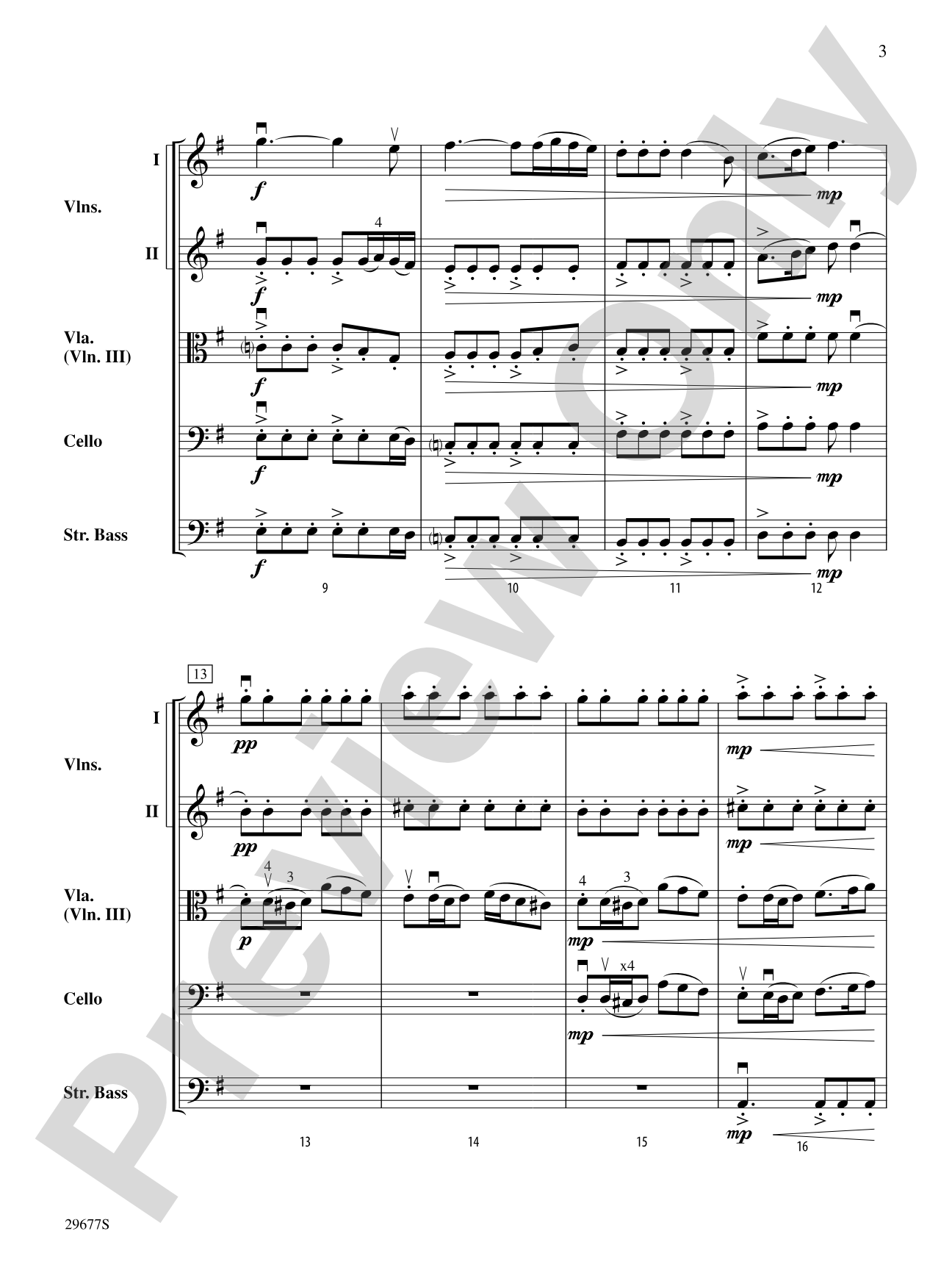
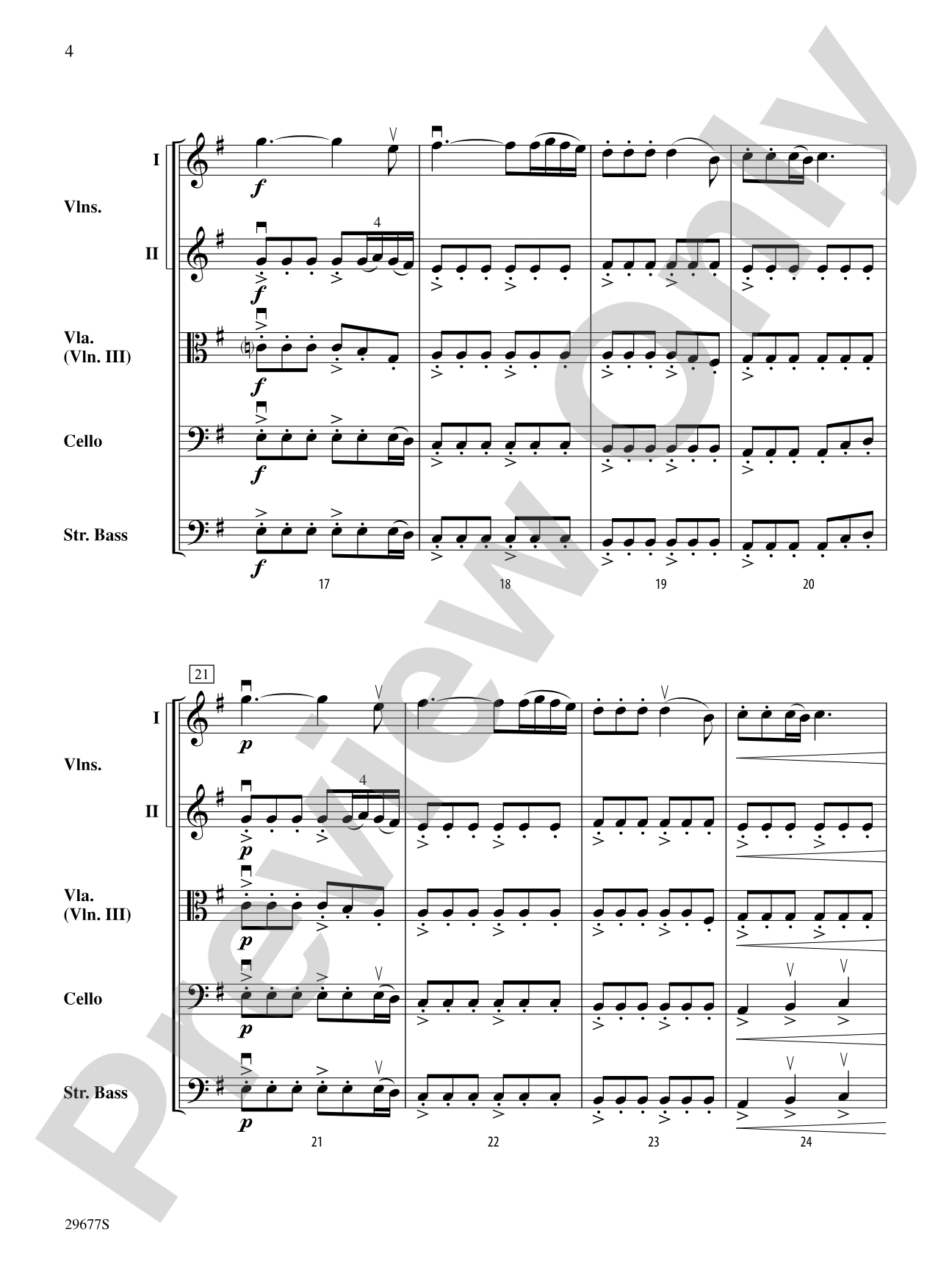
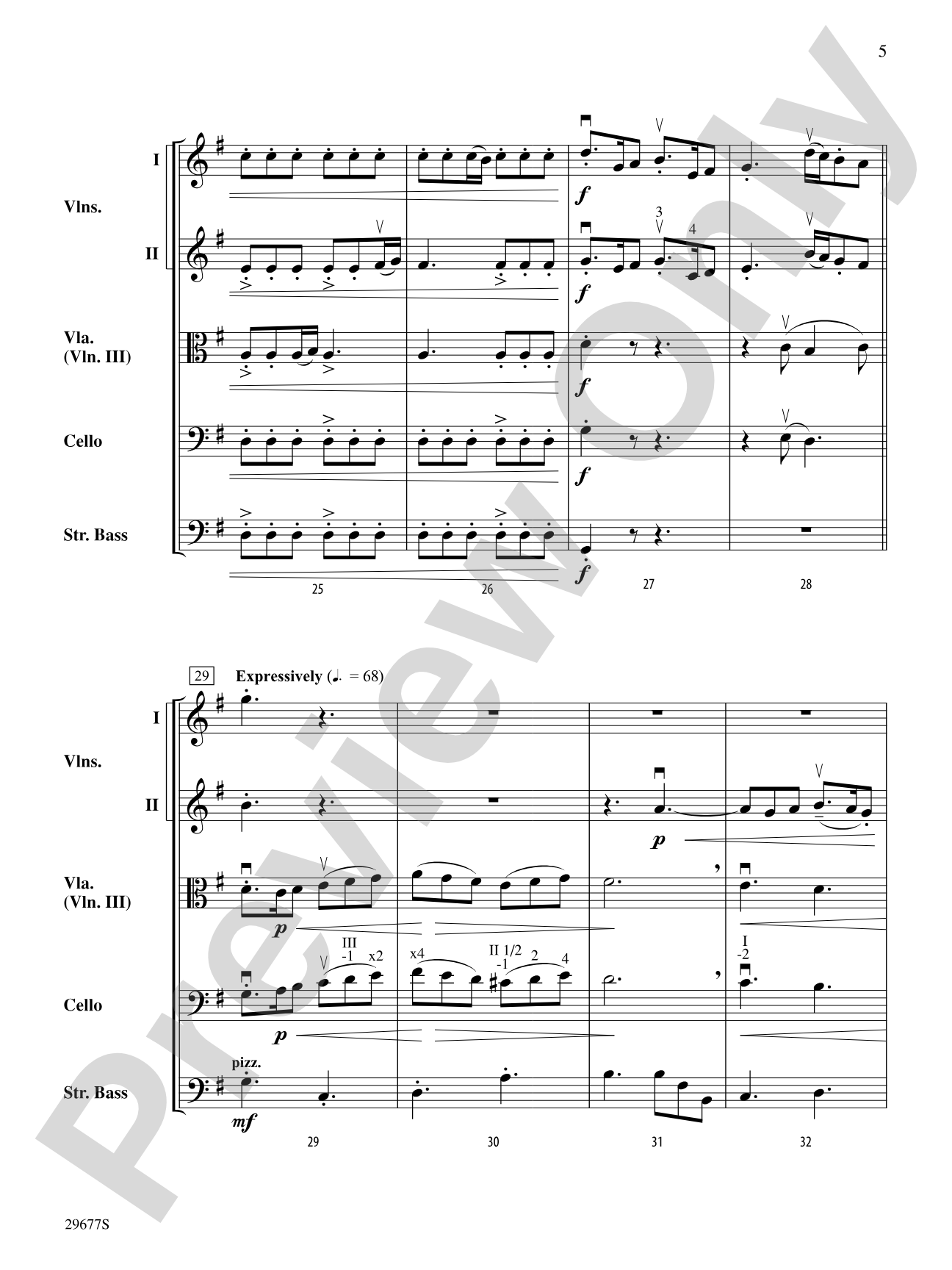
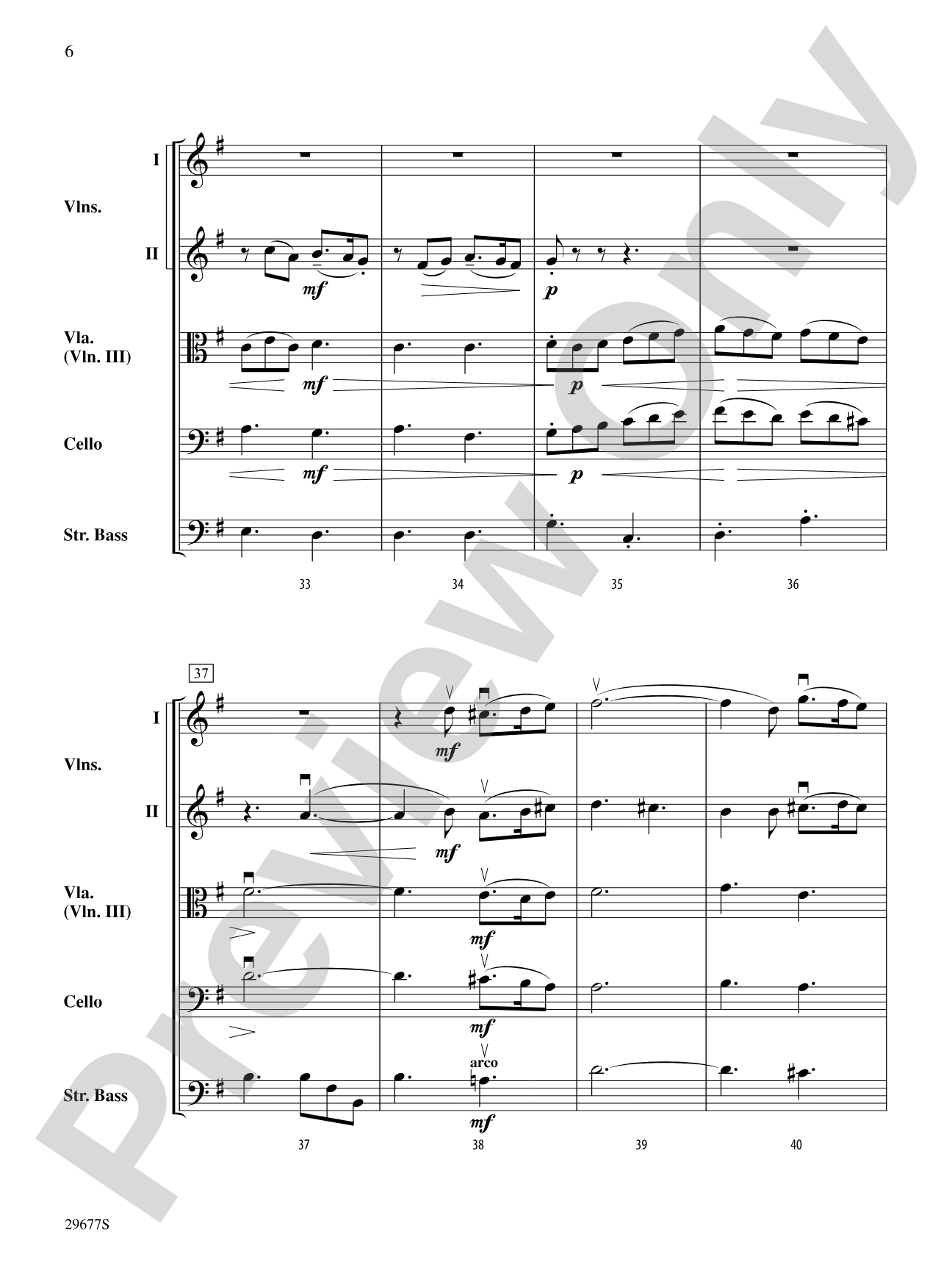
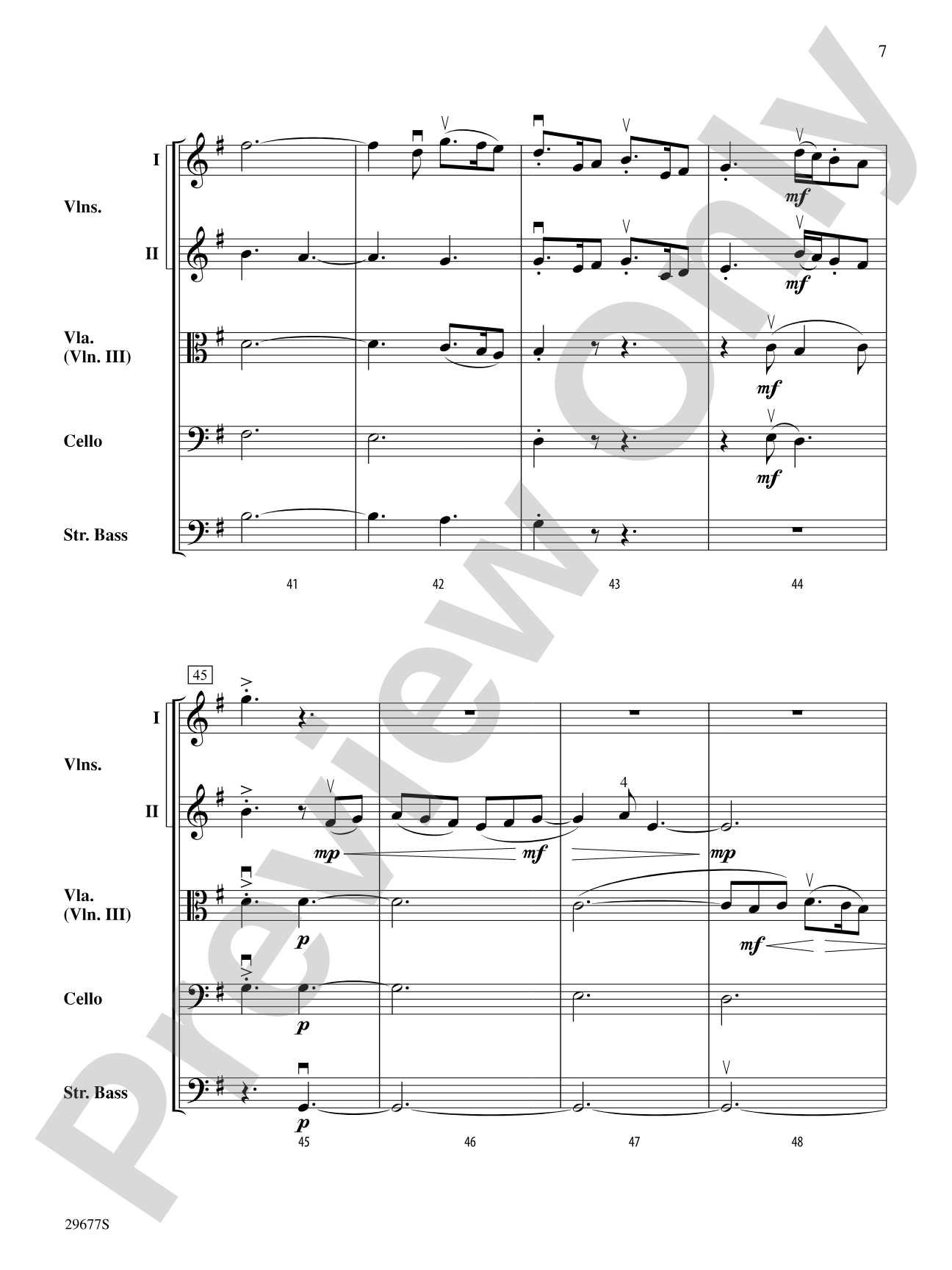
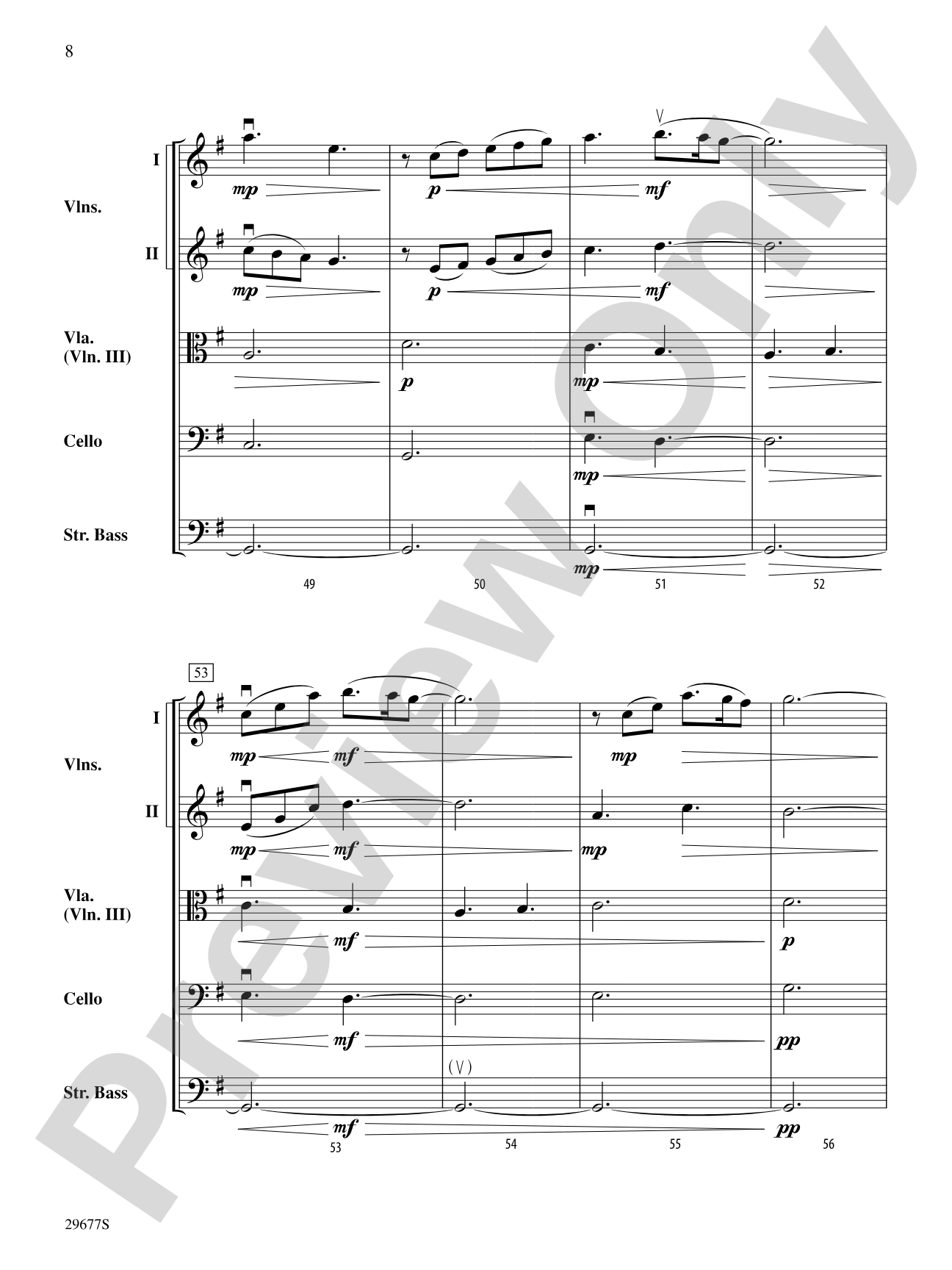
Tap into the kinetic energy of young players with the propulsive feel of this piece! In 6/8 throughout, the driving eighth notes mimic the ebb and flow of riding on the waves. The energetic opening is followed by a melodic and more sustained middle section. In G with occasional accidentals, this piece offers a great opportunity to contrast staccato and legato bowing at all dynamic levels.


Don't just read it, hear it, play along with it, and watch your students grow with it. In MakeMusic Cloud, Wave Rider: String Orchestra Conductor Score & Parts comes alive with professional accompaniment, adjustable tempo, and built-in practice tools that turn solo practice into real progress.
Open in the Player
Jump straight in and assign it today.
Start Your Free Trial
Open this title and explore the full library in minutes.
Sample Audio
1
Audio File
--:--
0:00
0:00
Sample Video
No sample videos found.
Additional Details
Series:
Belwin Intermediate String Orchestra
Publisher:
Alfred Music
Page Count:
144
SKU:
00-PK-0001557
More about this title
Why we love this
Wave Rider captures that sweet spot where young orchestras sound genuinely exciting without drowning in complexity. The 6/8 meter feels natural to players at this level, and the contrast between the propulsive opening and the sustained middle section gives you real programming flexibility—it works as a concert opener or a contest piece that showcases both technical precision and musicality.
What to expect
Wave Rider channels pure kinetic momentum. The relentless eighth-note motion in 6/8 mimics the physical sensation of propulsion and movement, while the melodic middle section offers respite and a chance to sing. You hear the ebb and flow Richard wrote into the piece.
Who it's for
String orchestras at Grade 3 level who are ready to tackle metric independence and dynamic control across a longer form. This works for groups building toward contest or concert performance with players who have solid fundamentals but aren't yet advanced enough for complex harmonies or extended techniques.
How to get the most out of it
- Establish the pulse of the eighth notes in 6/8 early in rehearsal. The kinetic energy depends on players feeling the subdivision clearly, not rushing the opening section.
- Shape the transition from the staccato opening to the legato middle section with deliberate dynamic support. Don't let the tempo drag when you shift bowing styles.
- Tune the occasional accidentals carefully. They stand out against the G major center, so minor intonation lapses become audible.
- Balance the narrative arc by letting the opening breathe with its driving rhythm before settling into the sustained section. Conductors often compress this contrast; resist that instinct.
How to use it
Open a concert with this to set an energetic tone, or program it mid-set as a palate cleanser between slower works. Its combination of technical drive and structural clarity makes it a strong festival choice that doesn't require weeks of rehearsal polish to sound professional.
Skills your students will build
- Reading and conducting in compound meter (6/8)
- Coordinating staccato and legato bowing at contrasting dynamic levels
- Sustaining rhythmic drive through repetitive eighth-note patterns
- Tuning accidentals in a diatonic context
- Shaping melodic phrasing in the sustained middle section while maintaining rhythmic precision