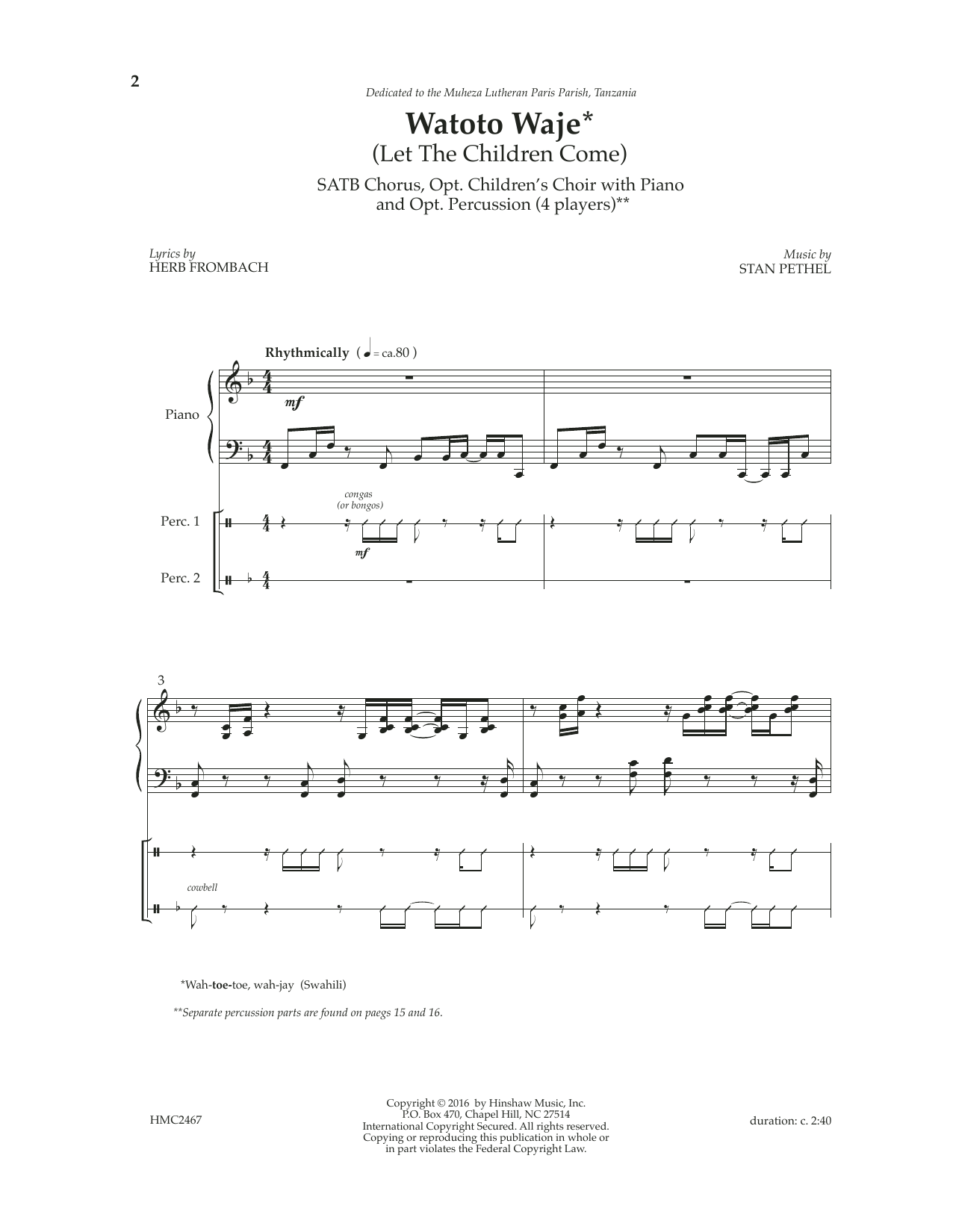
Watoto Waje (Let The Children Come) Sheet Music Preview

Watoto Waje (Let The Children Come): SATB Choral Octavo

By Stan Pethel / By Herb Frombach

Item: 35-DS00447017

Digital Download
$2.99
Description

Watoto Waje (Let The Children Come): SATB Choral Octavo isn't in MakeMusic Cloud just yet...but it could be. Let us know you'd like to see it, and you'll help shape what comes next. In the meantime, start a free trial and dive into thousands of interactive titles your students can play along with today.

Sample Audio
No sample audio found.
Sample Video
Additional Details
Publisher: Hal Leonard
Page Count: 15
SKU: 35-DS00447017

More about this title

About the Composer: Stan Pethel

Stan Pethel has built a substantial catalog of choral and instrumental music that balances accessibility with musical substance. His arrangements and compositions appear regularly in school and church music programs, where directors appreciate his gift for crafting pieces that engage singers while remaining teachable within typical rehearsal constraints.

Why we love this

Pethel captures the spiritual and communal essence of African music without resorting to shallow exoticism. The piece carries genuine warmth and rhythmic vitality that energizes singers, while the SATB writing remains clean enough that you can actually teach it in a reasonable number of rehearsals.

What to expect

Joyful and grounded, with a rhythmic buoyancy that invites movement and connection. The text's meaning (welcoming children) radiates warmth, while the music itself pulses with life and forward energy that feels genuinely celebratory rather than performed.

Who it's for

Intermediate to advanced high school choirs and collegiate ensembles seeking programming that honors African musical traditions. Church choirs and festival-level community groups will also find this rewarding for audiences and singers alike.

How to get the most out of it

  • Establish the groove early by having the rhythm section (or percussion accompaniment if available) lock the foundational pulse before full ensemble entry. This grounds the piece's rhythmic character from the start.
  • Lean into the text's rhythmic energy rather than forcing perfect vertical alignment in faster passages. African musical traditions prioritize forward momentum and textural layering over metronomic precision.
  • Balance the soprano and alto lines carefully during full sections; these voices often carry the primary melodic interest and should cut through without the tenors and basses receding into vagueness.
  • Consider how dynamics shape the arc across all 15 pages. Building from a more intimate opening through fuller sections and back down creates narrative shape rather than treating the piece as uniformly energetic.

How to use it

This works beautifully in spring or festival concerts where you want to close a first half or open a second half with something that lifts the room. Pair it with other world music selections to create a thoughtfully curated global program, or use it as a standalone piece to introduce singers to African musical language and collaborative joy.

Skills your students will build

  • Reading and performing rhythmic syncopation in ensemble texture
  • Sustaining independent vocal lines while blending into SATB harmony
  • Interpreting text with cultural awareness and authentic expression
  • Building rhythmic precision within a piece that prioritizes groove and feel
  • Understanding African musical idioms and their role in contemporary choral writing

You May Also Like