Waterloo (arr. Dirk Kokx) Sheet Music Preview

Waterloo (arr. Dirk Kokx): SAB Choral Octavo

As performed by ABBA / Arranged by Dirk Kokx

Item: 35-DS00488378

Digital Download
$2.99
Description

Waterloo (arr. Dirk Kokx): SAB Choral Octavo isn't in MakeMusic Cloud just yet...but it could be. Let us know you'd like to see it, and you'll help shape what comes next. In the meantime, start a free trial and dive into thousands of interactive titles your students can play along with today.

Sample Audio
No sample audio found.
Sample Video
Additional Details
Publisher: Hal Leonard
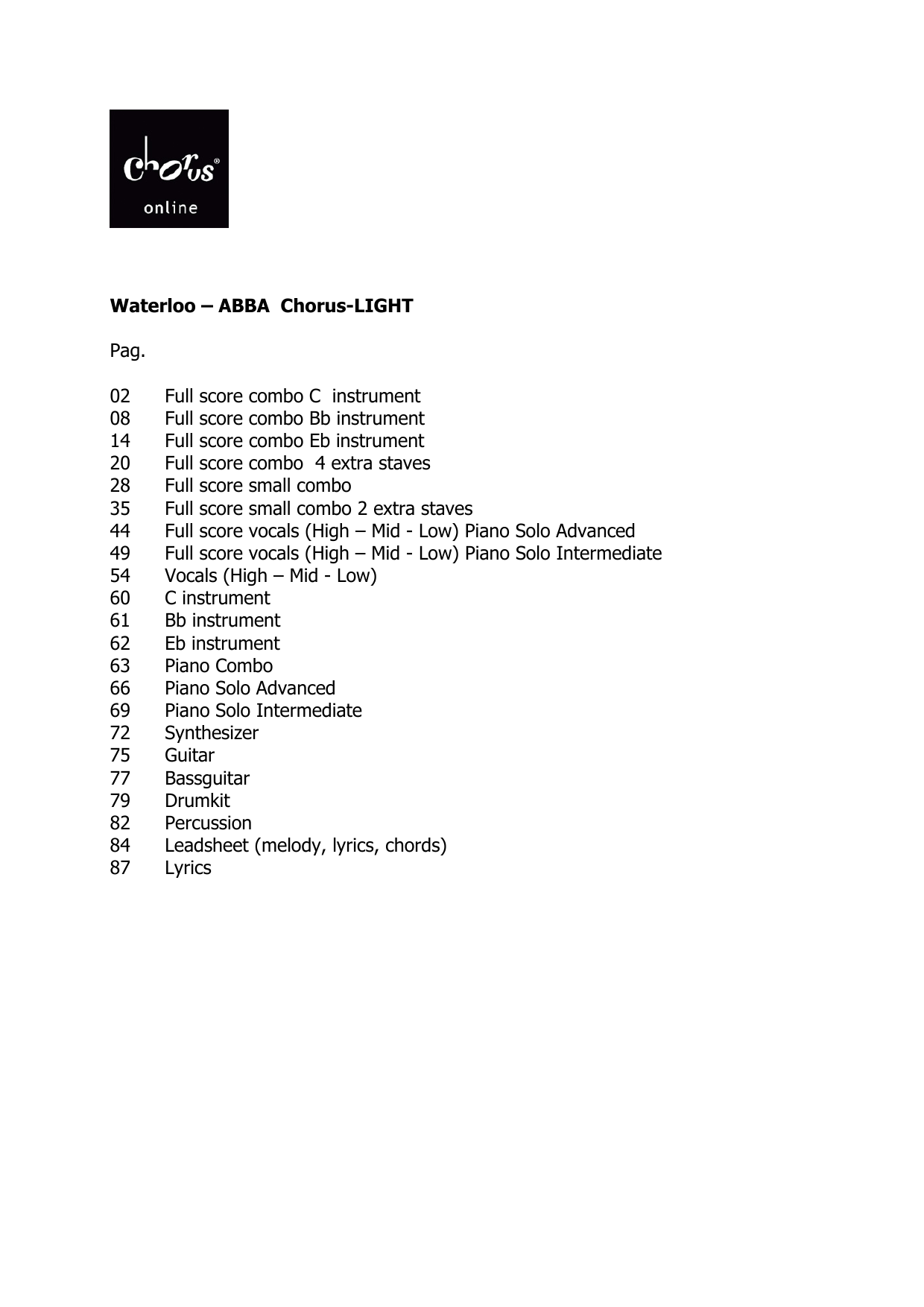
Page Count: 87
SKU: 35-DS00488378

More about this title

About the Artist: ABBA

ABBA emerged from Sweden in the 1970s to become one of the most commercially successful pop groups in history. Their songs are built on irresistible hooks, sophisticated harmonies, and production that defined the disco era while maintaining surprising melodic depth. For educators, ABBA's catalog represents accessible entry points into pop arranging; the vocal writing is singable yet musically engaging, and their songs translate remarkably well to choral settings.

Beyond chart success, ABBA's music has proven durable in educational contexts because it balances accessibility with craft. Arrangers like Dirk Kokx have recognized that ABBA's harmonic language and melodic architecture reward choral interpretation, making their work valuable both as repertoire that connects with students and as models for how to arrange popular music thoughtfully.

Why we love this

Waterloo is an absolute crowd pleaser with built-in energy and narrative drive that keeps student singers engaged throughout rehearsals and performances. Kokx's arrangement respects the original's infectious melody while opening up the harmony in ways that showcase three-part voicing without sacrificing the disco groove that makes the song instantly recognizable. Your students will be excited to learn it, audiences will erupt when they hear the opening, and you'll have a performance moment that validates why you included popular music in your season.

What to expect

Pure propulsive joy with a theatrical swagger. The disco framework creates an almost irresistible forward momentum, while the harmonic language sits comfortably in the voice and invites students to inhabit the emotional drama of the lyric. There's permission here to be bold and fun without sacrificing musicality.

Who it's for

Any director seeking contemporary repertoire that excites both singers and audiences. This arrangement works equally well for concert choirs wanting to program a modern classic and for pop or show choirs building a mixed set. The SAB voicing makes it accessible to developing ensembles while remaining musically satisfying.

How to get the most out of it

  • Treat the disco pulse as non-negotiable. Anchor the rhythm section (or recorded accompaniment if needed) on the offbeat; this groove defines the song's character and distinguishes it from a generic pop arrangement.
  • Shape the melody with confidence in the upper voices. Waterloo thrives on soaring, declarative singing rather than introspection; encourage your sopranos and altos to lean into the theatrical delivery without oversinging.
  • Balance the lower voices carefully during harmony sections. SAB writing can obscure the bass line if the altos dominate; adjust blend in rehearsal so the chordal foundation remains clear beneath the melody.
  • Create clear narrative arc from verse to chorus. The arrangement likely builds intensity toward the famous refrain; rehearse transitions between sections so the energy feels purposeful rather than repetitive.

How to use it

Consider opening a pop or variety concert with this; the immediate recognition and energy will set the tone for the evening. It also pairs naturally with other 1970s pop repertoire if you're building a retrospective, or stands alone as a high-impact program closer for a standard concert when you want to end on something anthemic. The arrangement's 87 pages suggests it may include instrumental parts or a full score, making it flexible for ensembles with accompaniment resources.

Skills your students will build

  • Maintaining steady disco pulse and syncopated rhythms across phrase lines
  • Singing tertiary melody and countermelody in SAB texture without losing the primary tune
  • Balancing pop vocal style (crisp articulation, rhythmic precision) with choral blend
  • Responding to dynamic and intensity cues in a groove-based arrangement

You May Also Like