Water's Edge: Bells Sheet Music Preview

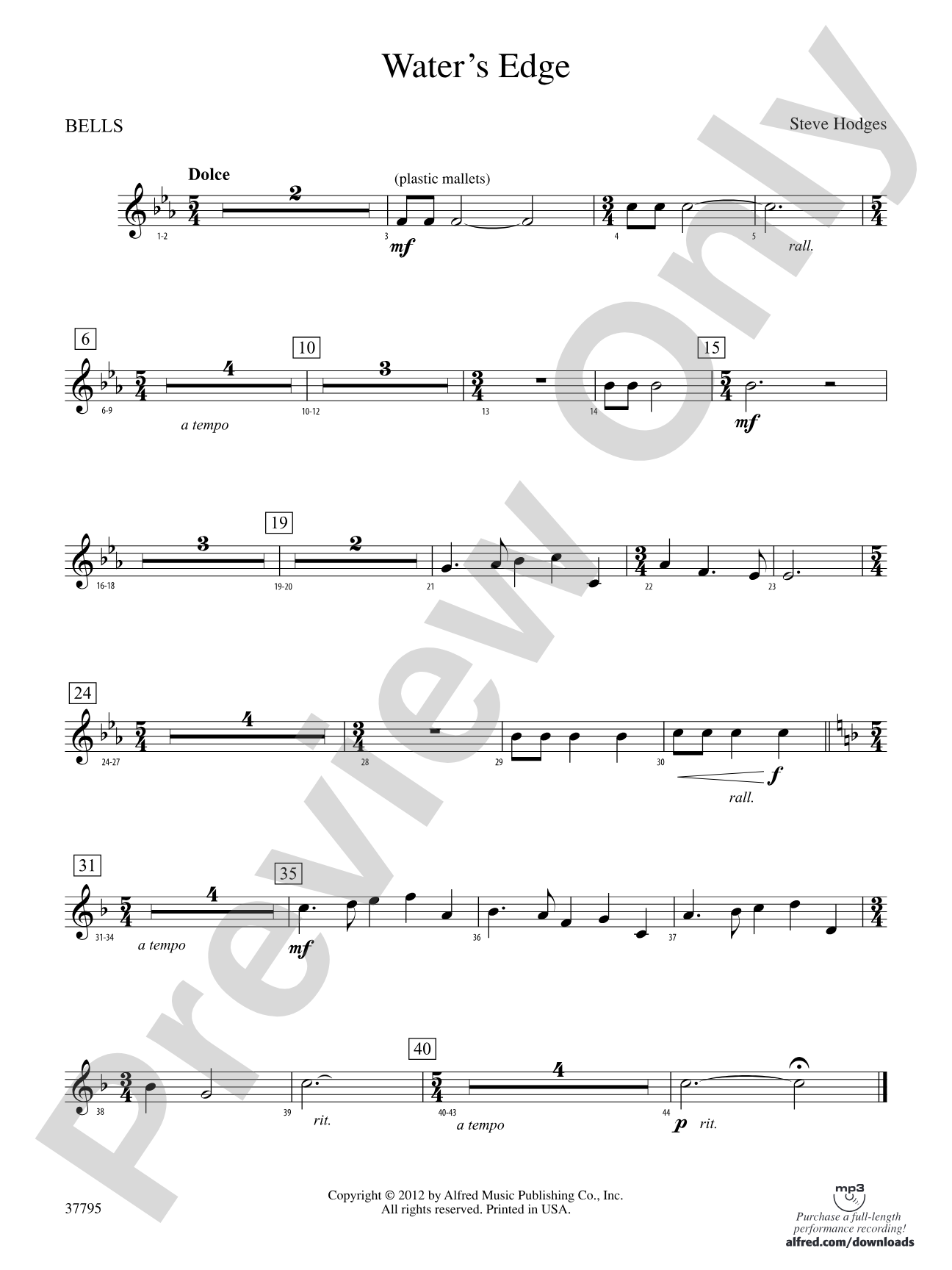
Water's Edge: Bells

By Steve Hodges

Grade: 2 (Medium Easy)

Item: 00-PC-0015326_B

Digital Download
$3.00
Description
The gentle ebb and flow of a brook or stream is depicted in this expressive composition. Lyrical melodies, smooth transitions, and shifting meters present a wonderful teaching tool for the young band. Try this great change of pace for a concert or festival. (2:30)

Don't just read it, hear it, play along with it, and watch your students grow with it. In MakeMusic Cloud, Water's Edge: Bells comes alive with professional accompaniment, adjustable tempo, and built-in practice tools that turn solo practice into real progress.

Sample Audio
0:00
0:00
Sample Video
Additional Details
Series: Challenger Band Series
Publisher: Alfred Music
Page Count: 120
SKU: 00-PC-0015326_B

More about this title

About the Composer: Steve Hodges

Steve Hodges

Steve Hodges holds degrees from Western Oregon University (B.S.) and Central Washington University (M.A. in Music Education). After four decades directing bands, choirs, and ensembles across public schools, he transitioned to composing full time, producing over 120 concert band works published by Alfred Music alongside choral arrangements with Staff Music and Shawnee Press.

Hodges' compositions have reached international audiences, performed at state conventions and festivals worldwide and commissioned by honor bands in Virginia, Iowa, Winnipeg, British Columbia, Oregon, Washington, and North Carolina. His music has also been featured on TBS and ESPN programming. An ASCAP member with multiple standard awards, Hodges currently lives in The Dalles, Oregon, where he remains active in community music and delights in hearing his grandchildren perform his pieces in their school bands.

Why we love this

Hodges captures something genuinely musical here: shifting meters feel organic rather than imposed, serving the water imagery without sacrificing flow or coherence. For a Grade 2 band, this is sophisticated repertoire that challenges young musicians to think beyond steady quarter notes while remaining well within their technical reach. It's the kind of piece that reminds students why they're learning to read music in the first place.

What to expect

Water's Edge mirrors the contemplative, ever-shifting quality of a moving stream. Smooth melodic lines ebb and flow through changing meters, creating a sense of gentle motion rather than urgency. The piece feels unhurried and painterly, inviting listeners into a moment of quiet observation.

Who it's for

Grade 2 concert bands seeking expressive literature that develops musical maturity without overwhelming younger musicians. This works equally well for ensembles building confidence in new skills and more experienced young bands that are ready to explore lyrical writing and metric variety.

How to get the most out of it

  • Let the meter changes breathe rather than counting through them mechanically. Each shift should feel like a natural response to the harmonic or melodic shape, not a rhythmic accident.
  • Balance the lyrical lines across sections. Younger players often drive dynamics on their own parts; work for blend so the brook flows continuously rather than in isolated streams.
  • Shape transitions carefully during rehearsal. Mark measure numbers where the meter changes occur and isolate those moments in sectionals so no one is caught off guard.

How to use it

Program this as a refreshing contrast to march-like concert openers or technical showcase pieces. Its moderate length (2:30) makes it an ideal second or third selection in a festival set, and it pairs well with either more energetic works or other character pieces that benefit from a breath of genuine musical expression.

Skills your students will build

  • Reading and performing meter changes (including mixed meters in single pieces)
  • Shaping lyrical phrases with appropriate dynamics and phrasing control
  • Sustaining ensemble blend and intonation in slower, expressive passages
  • Responding to conducted transitions and tempo relationships across metric shifts

You May Also Like