
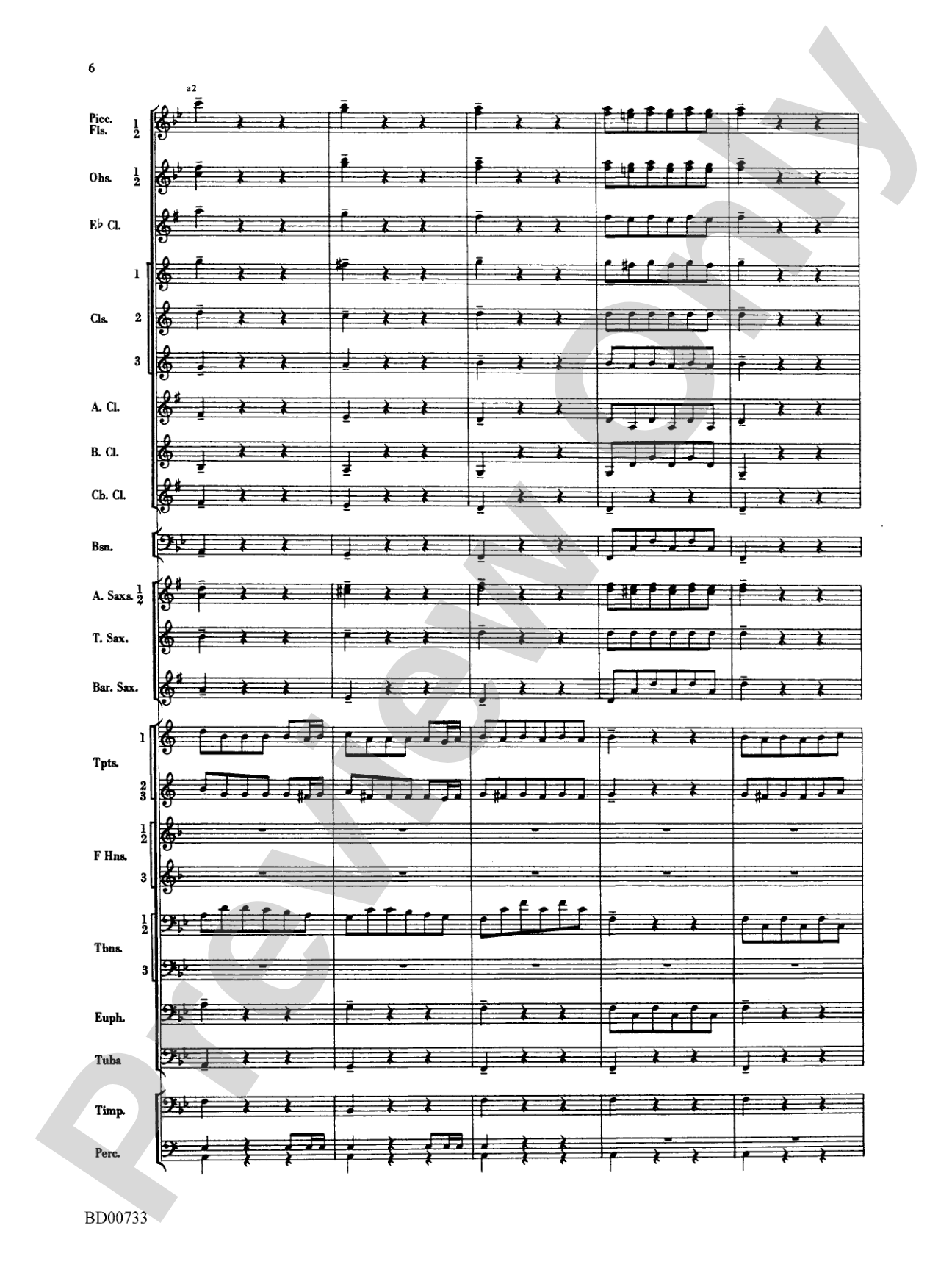
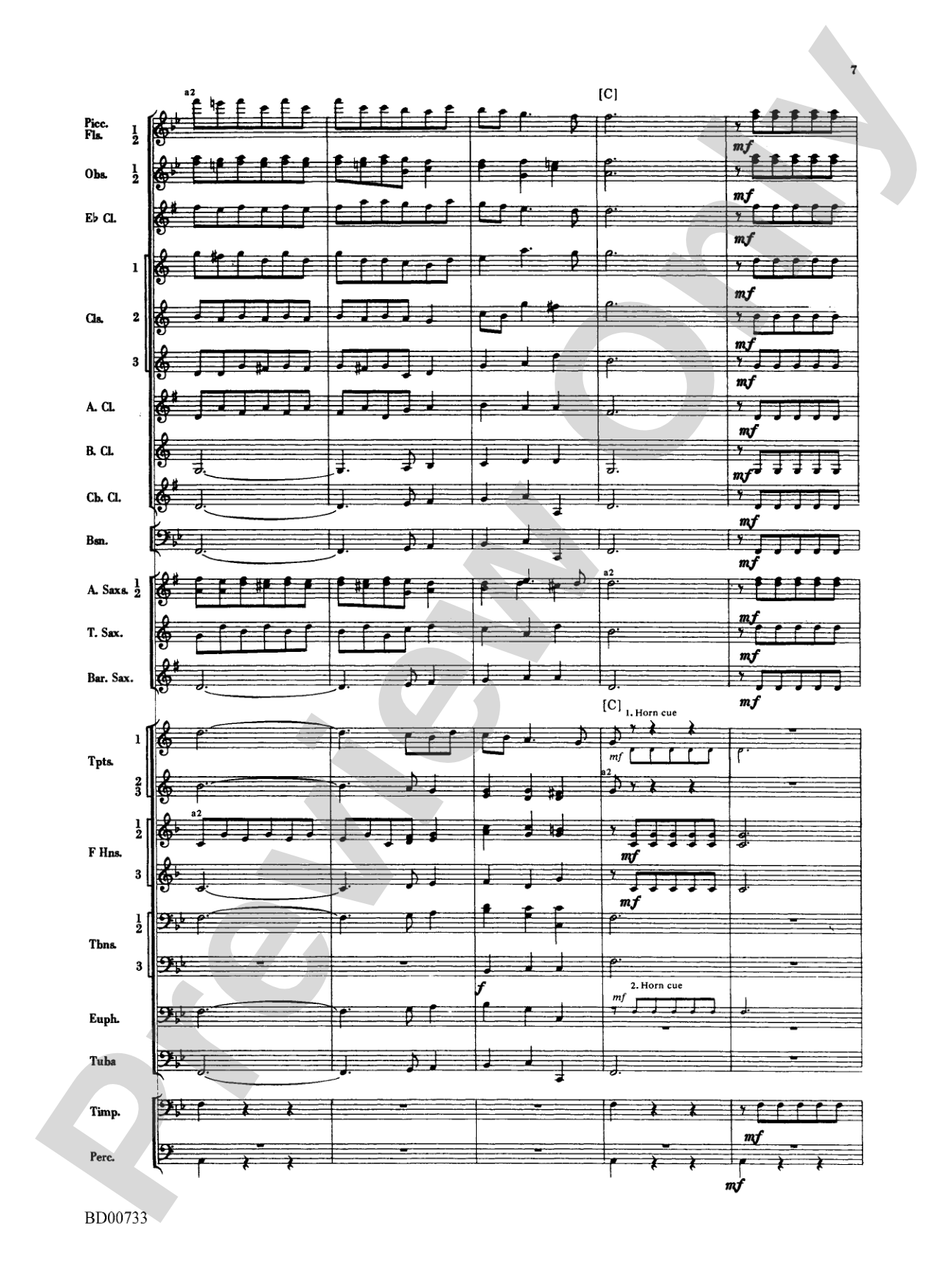
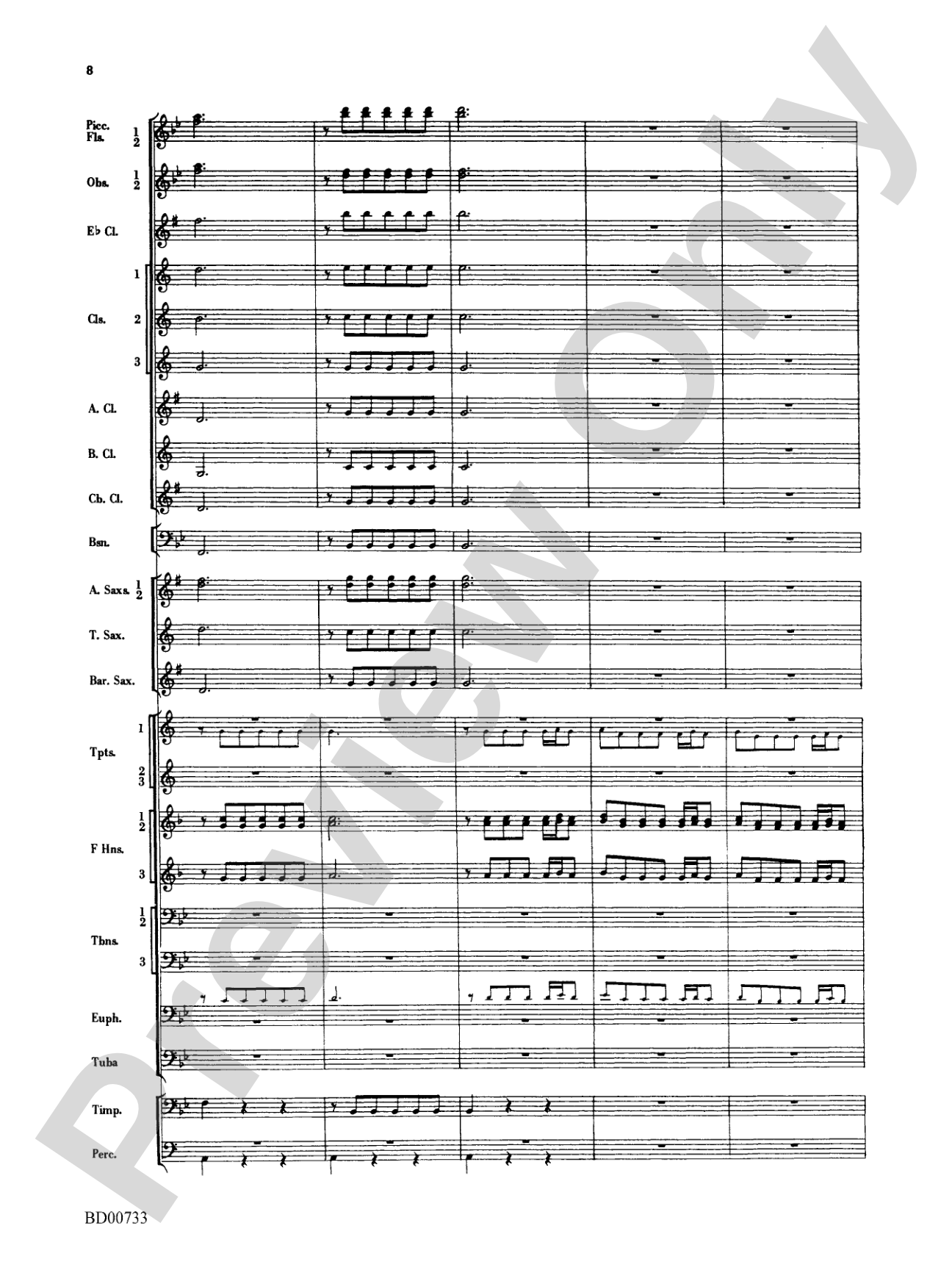
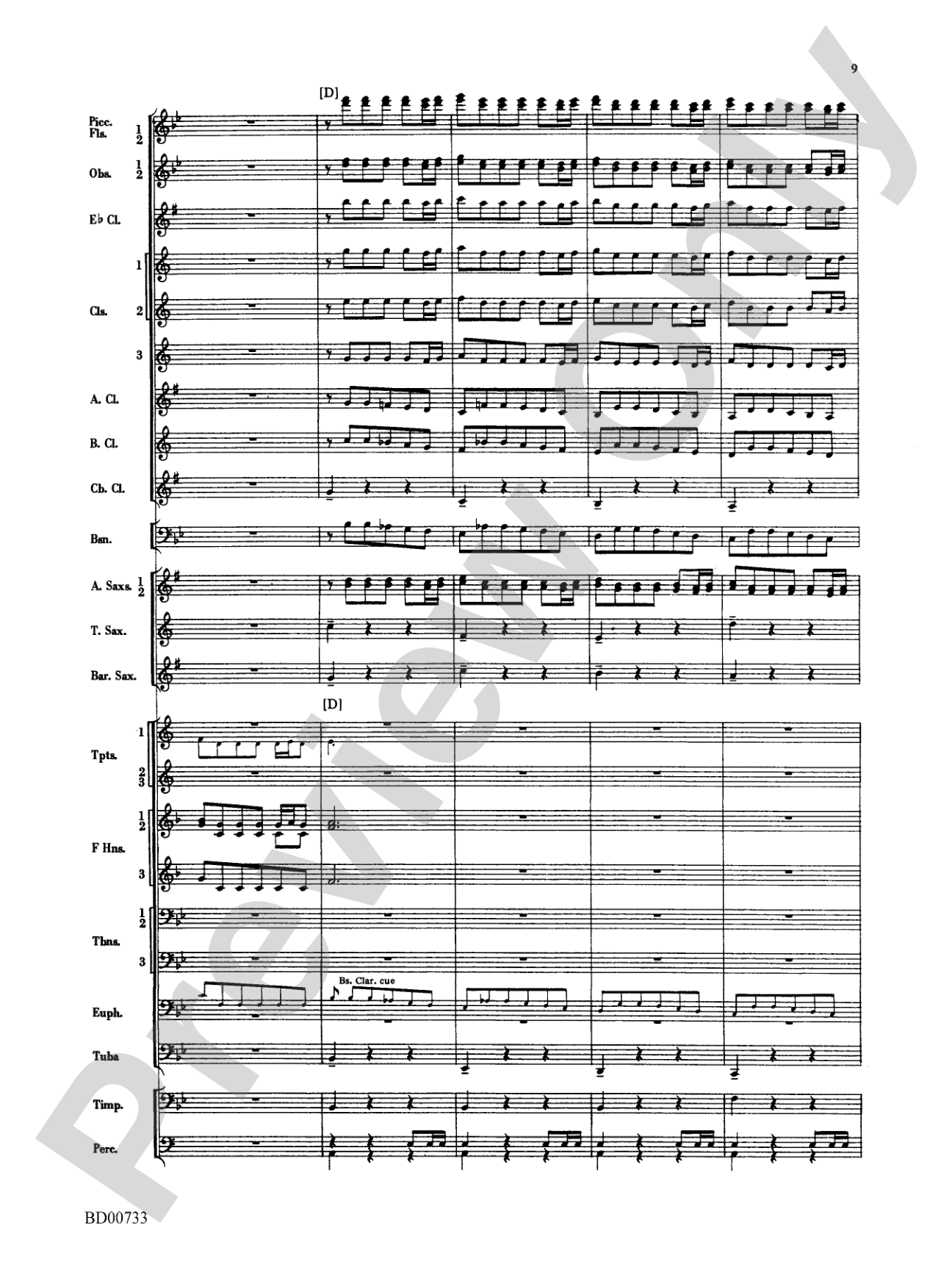
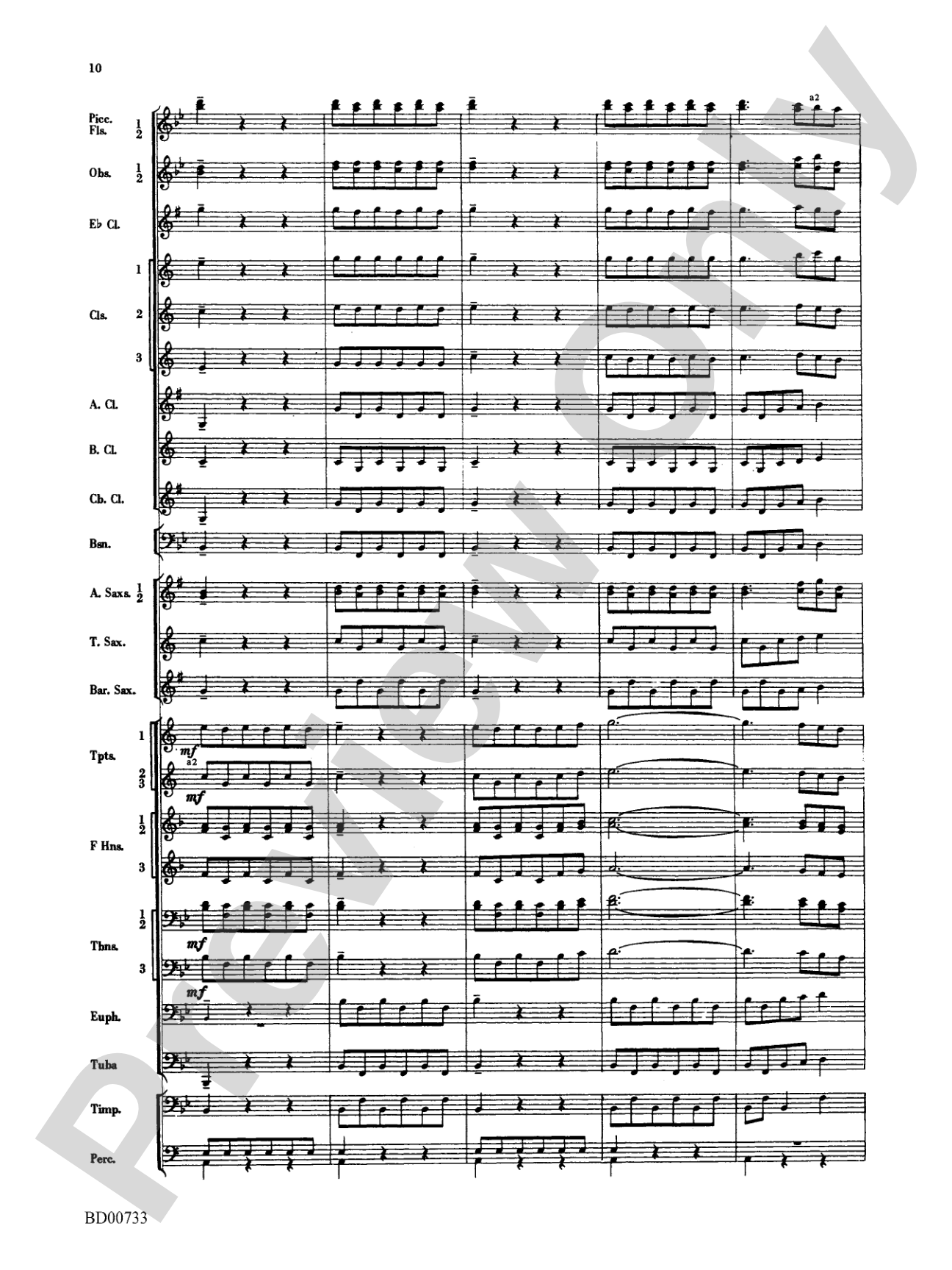
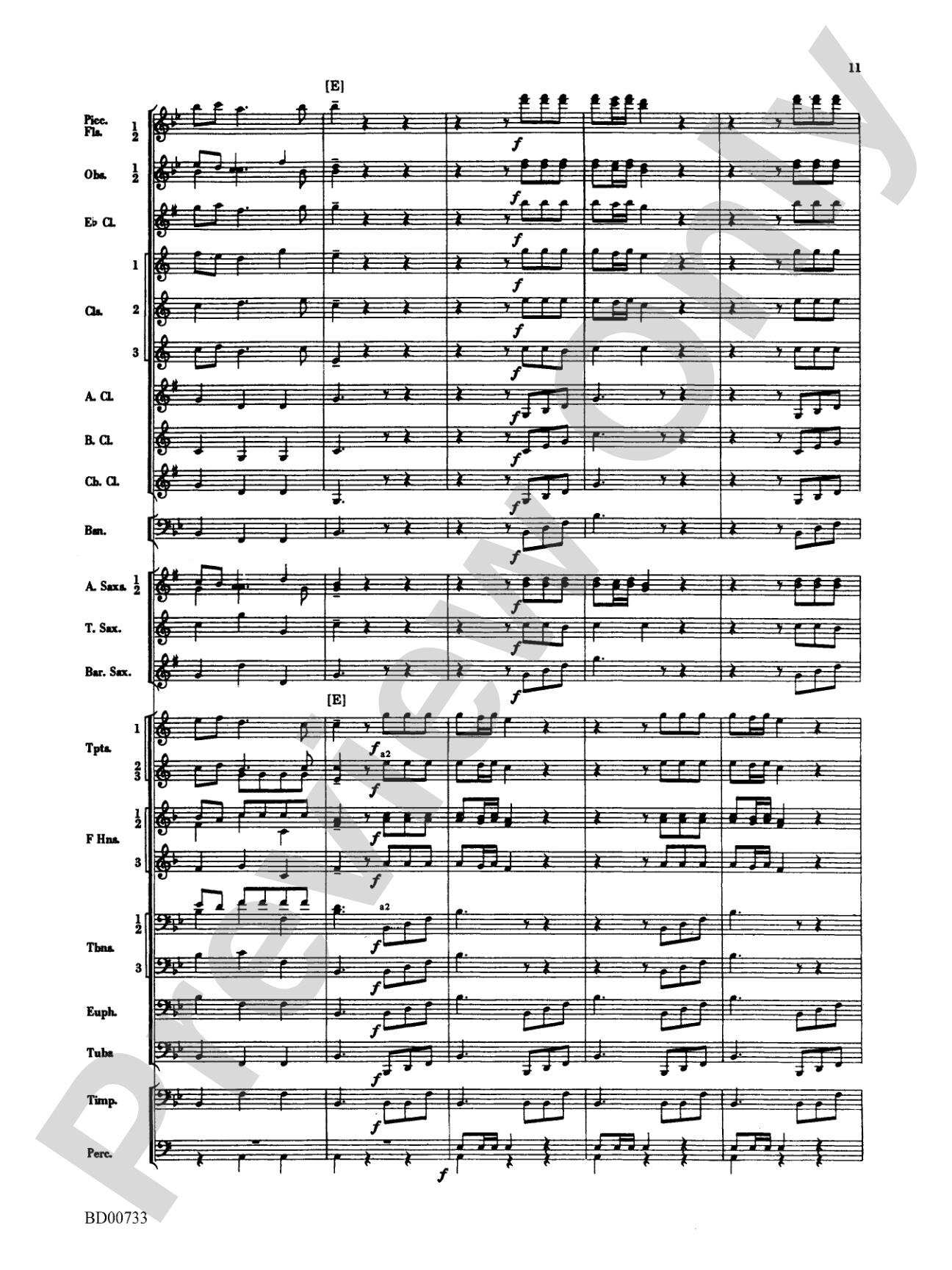
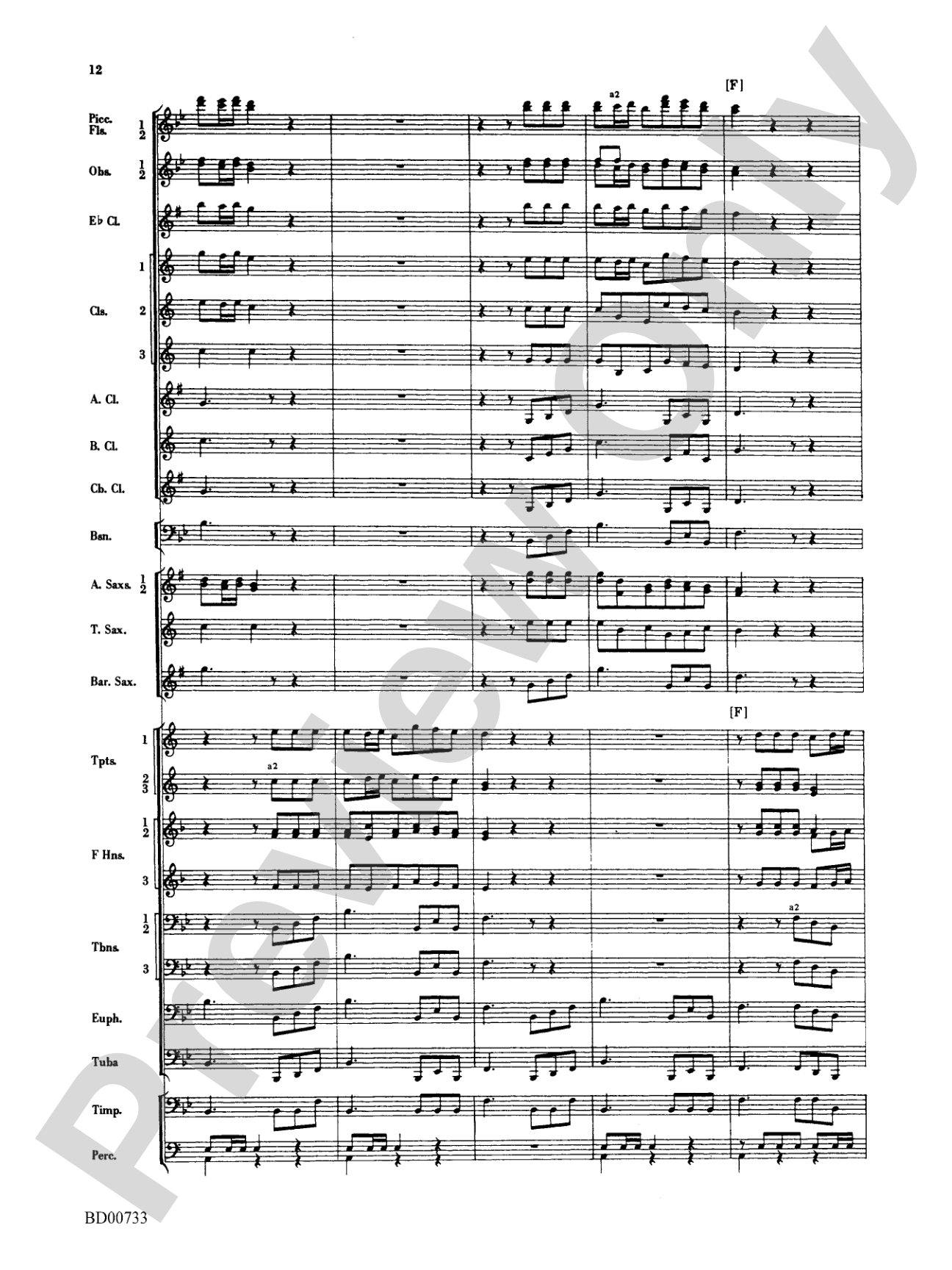
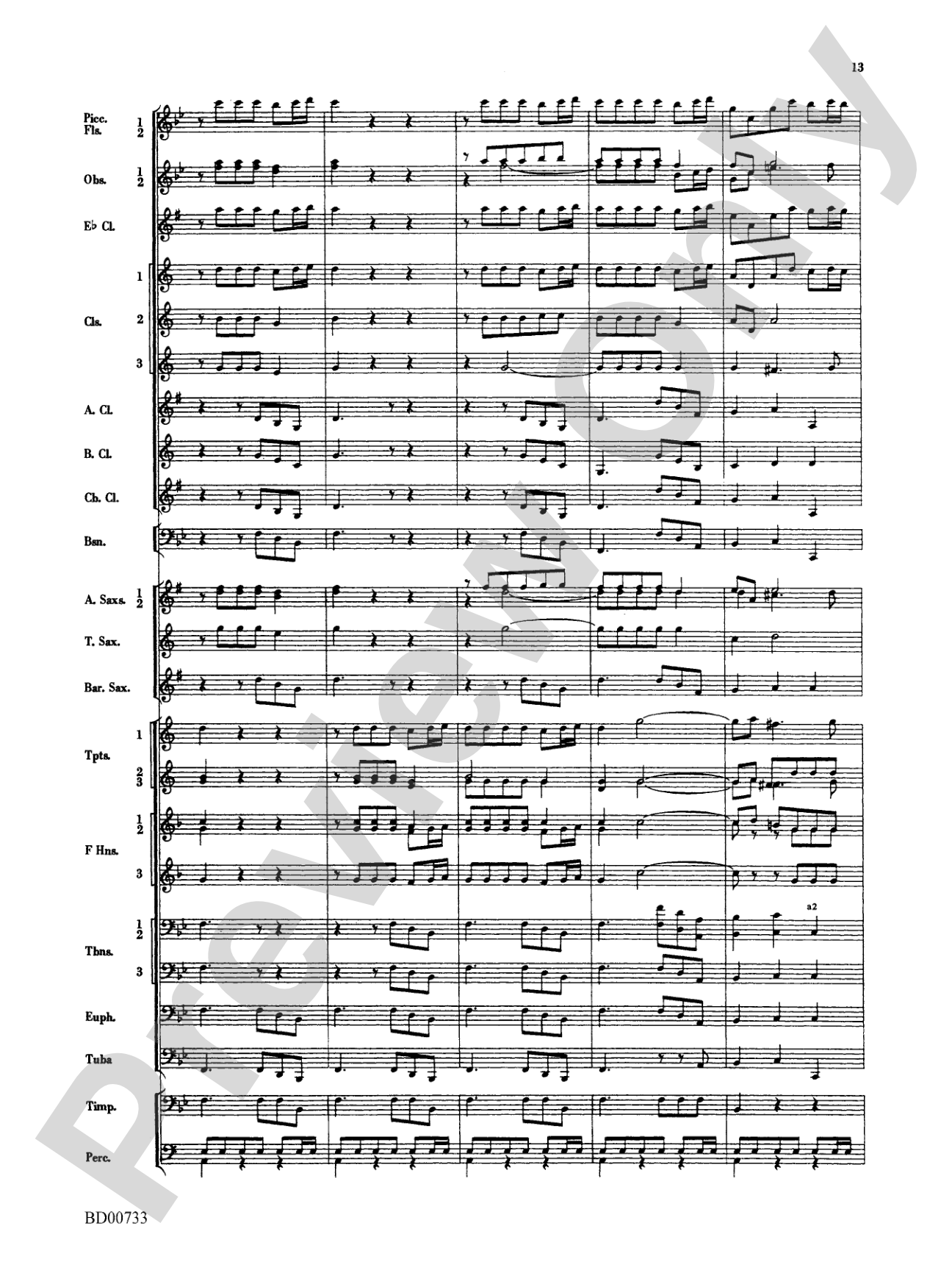
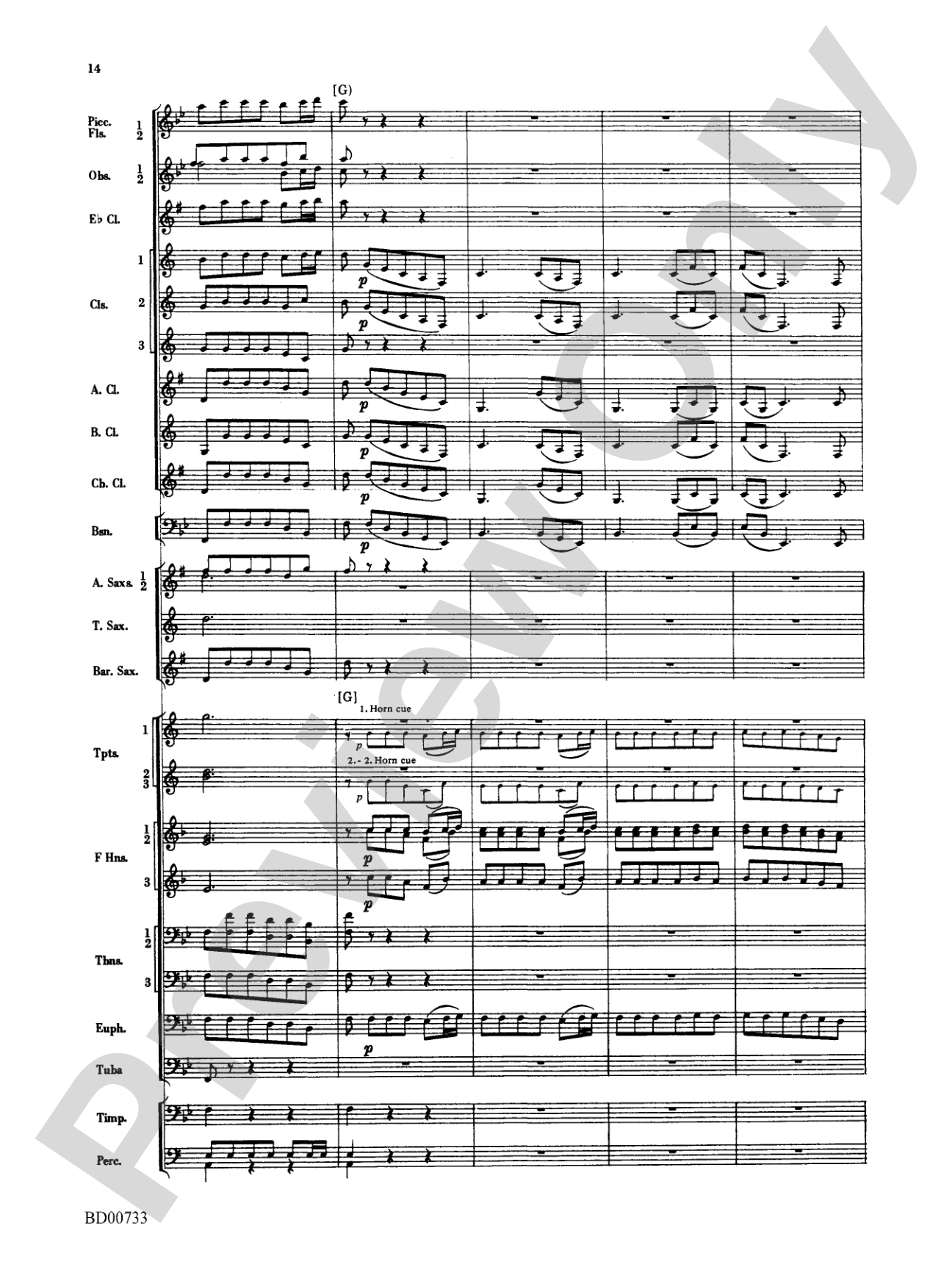
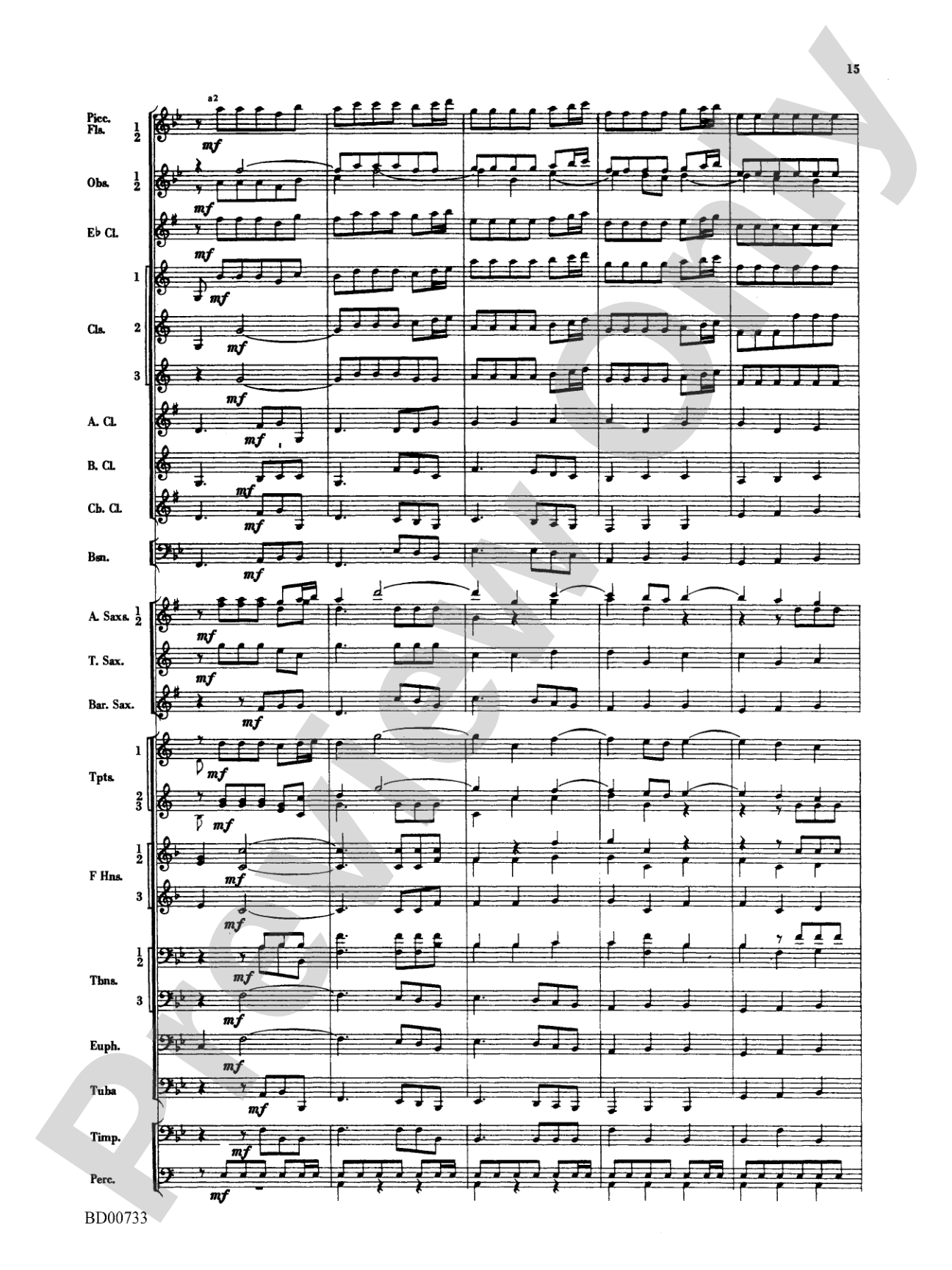
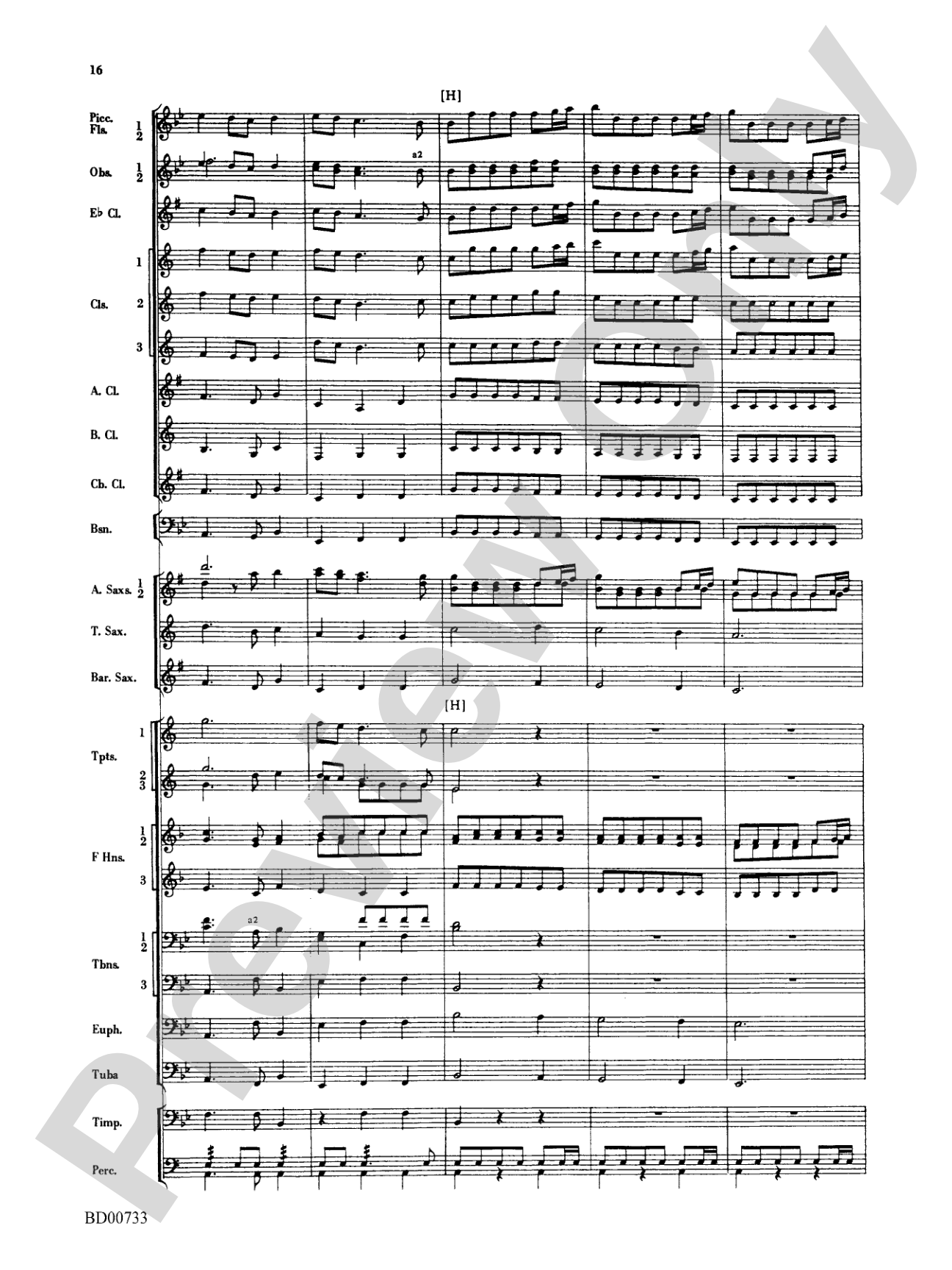
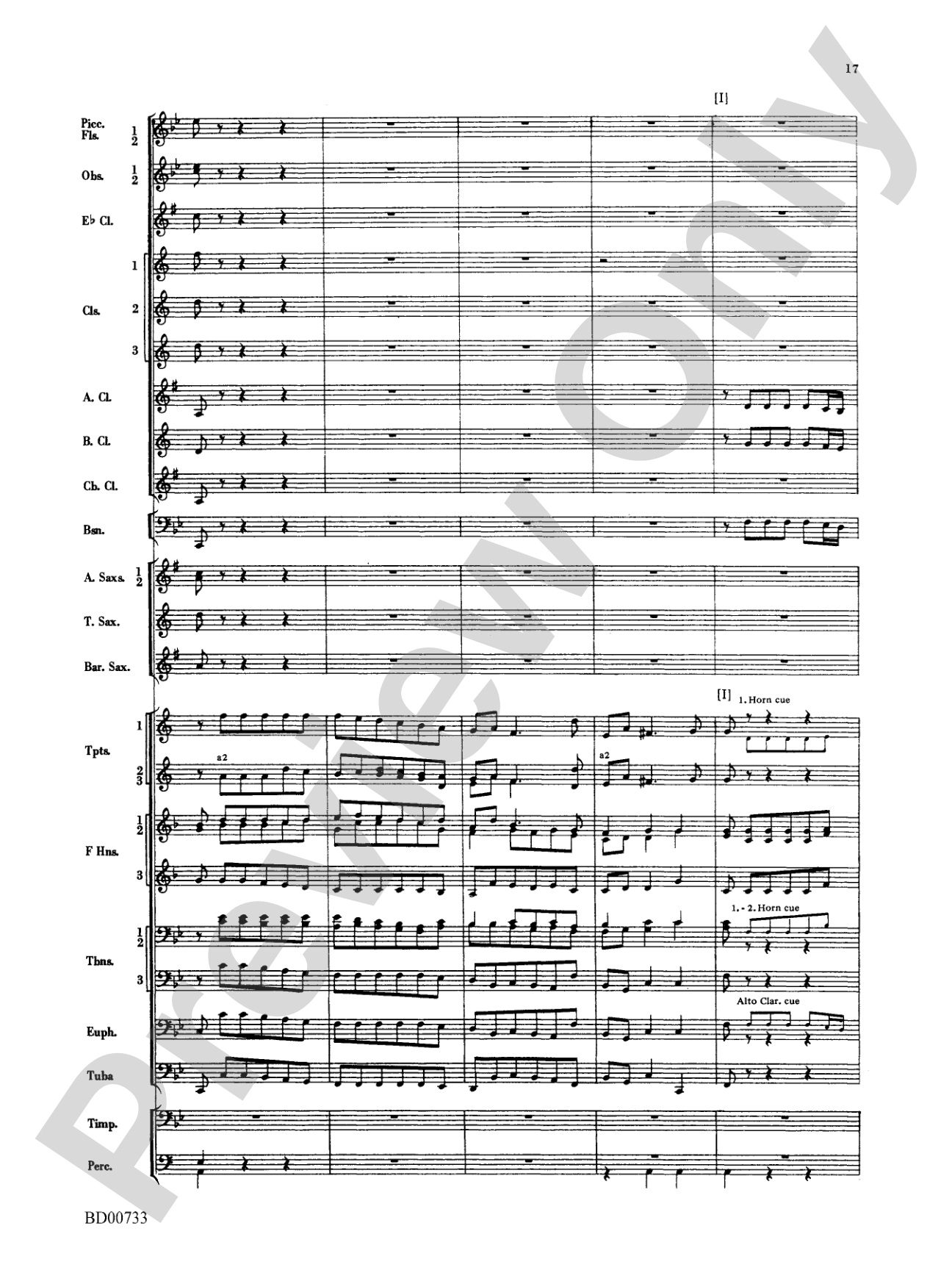
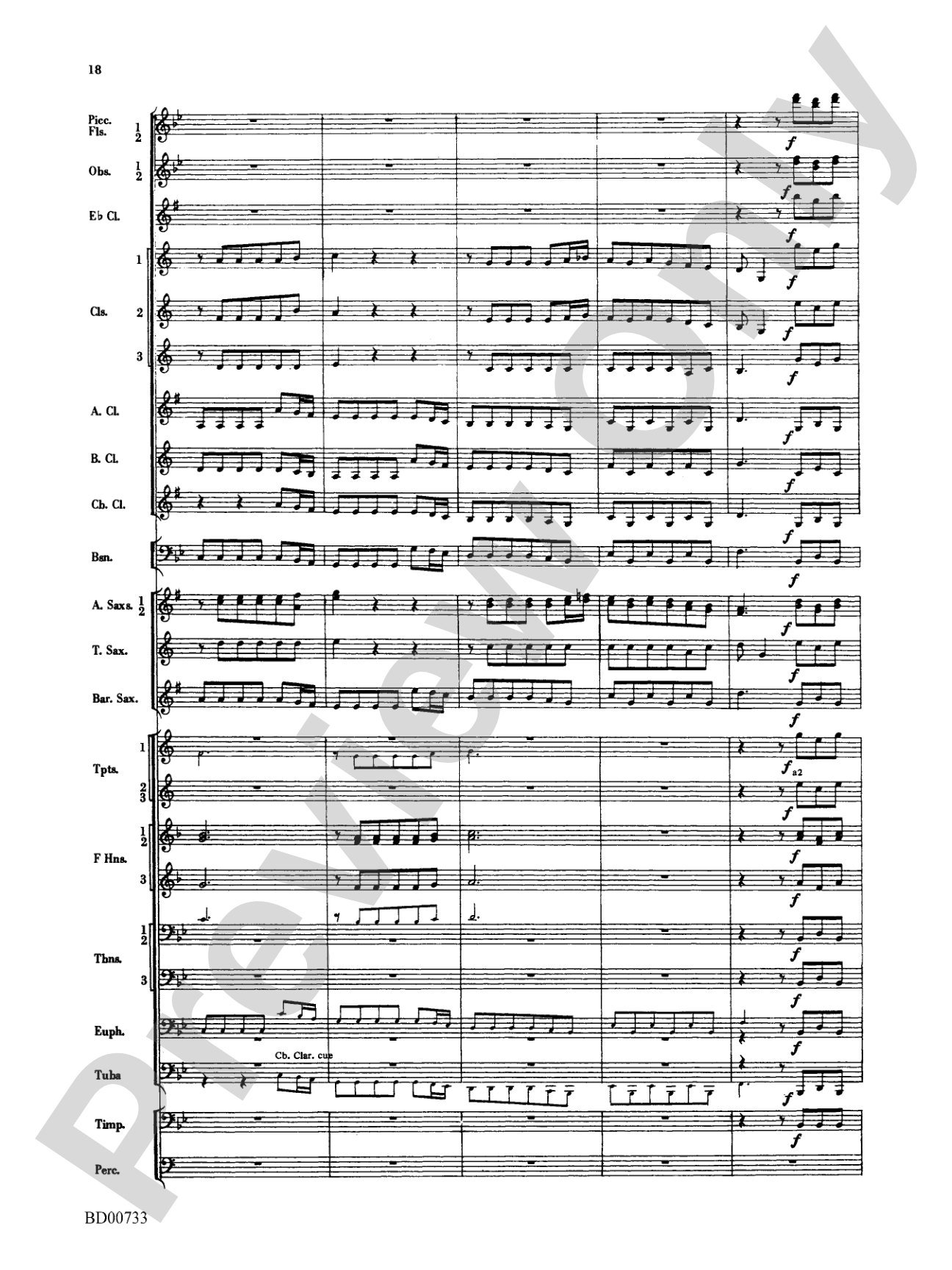
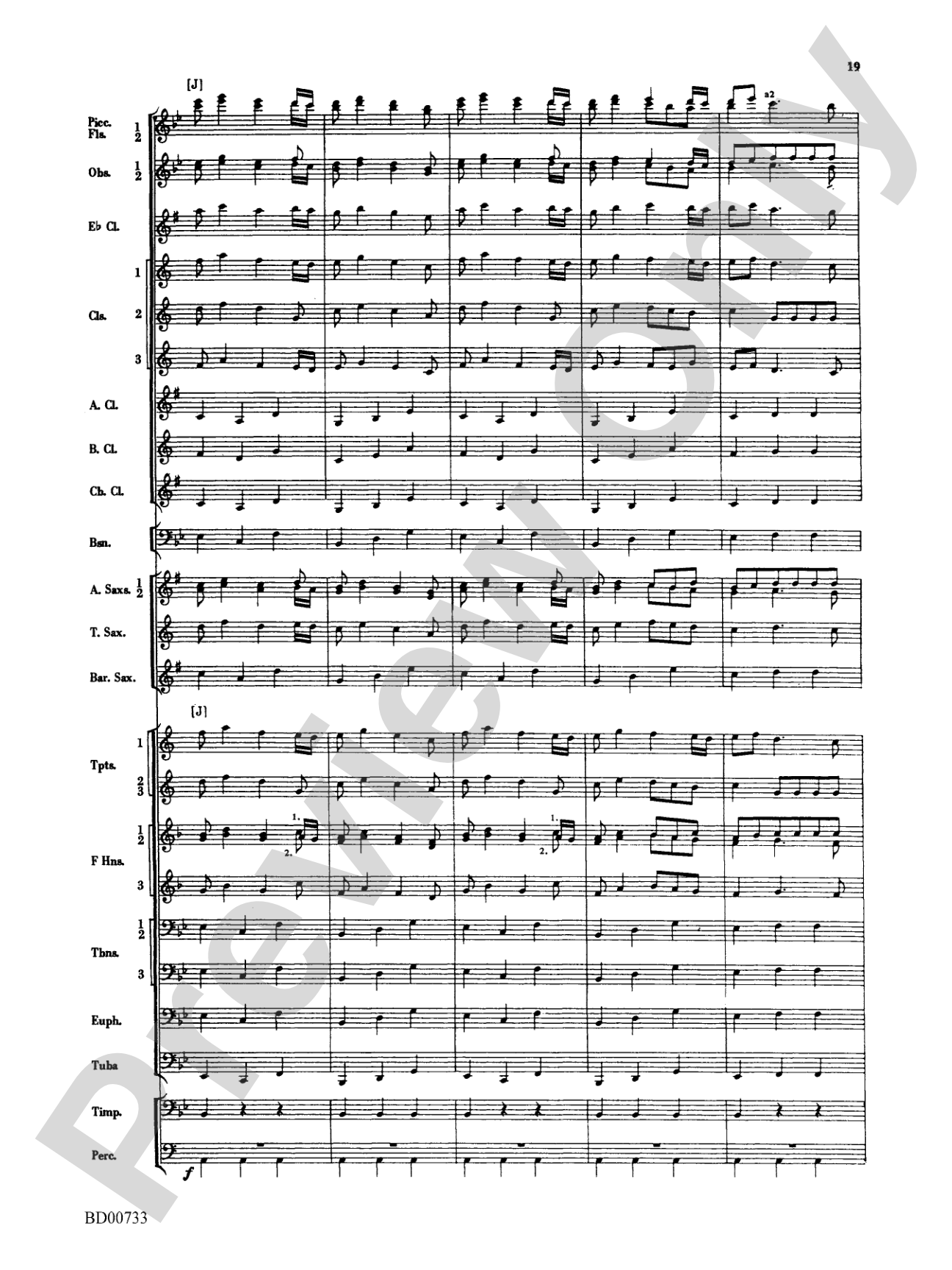
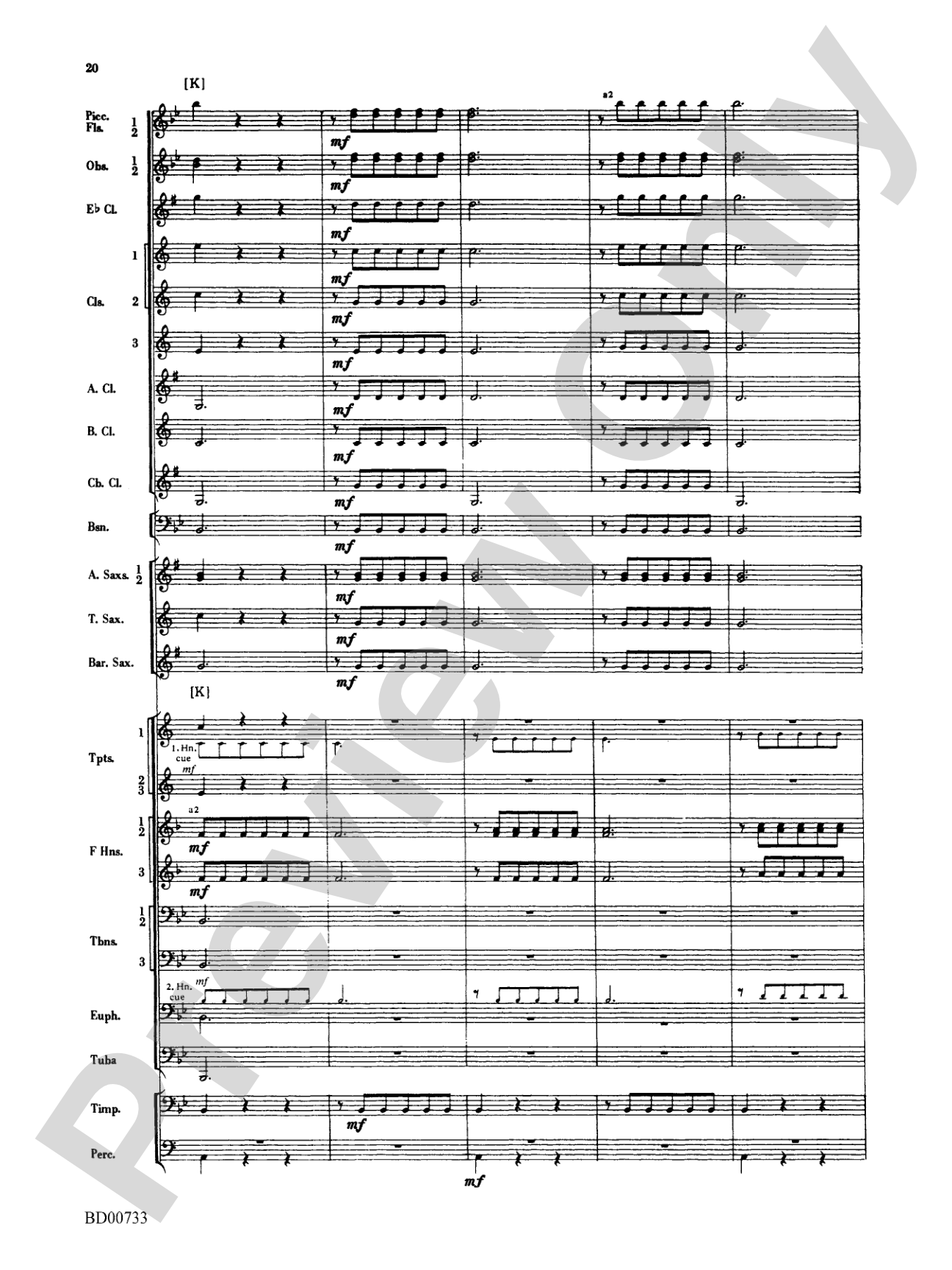
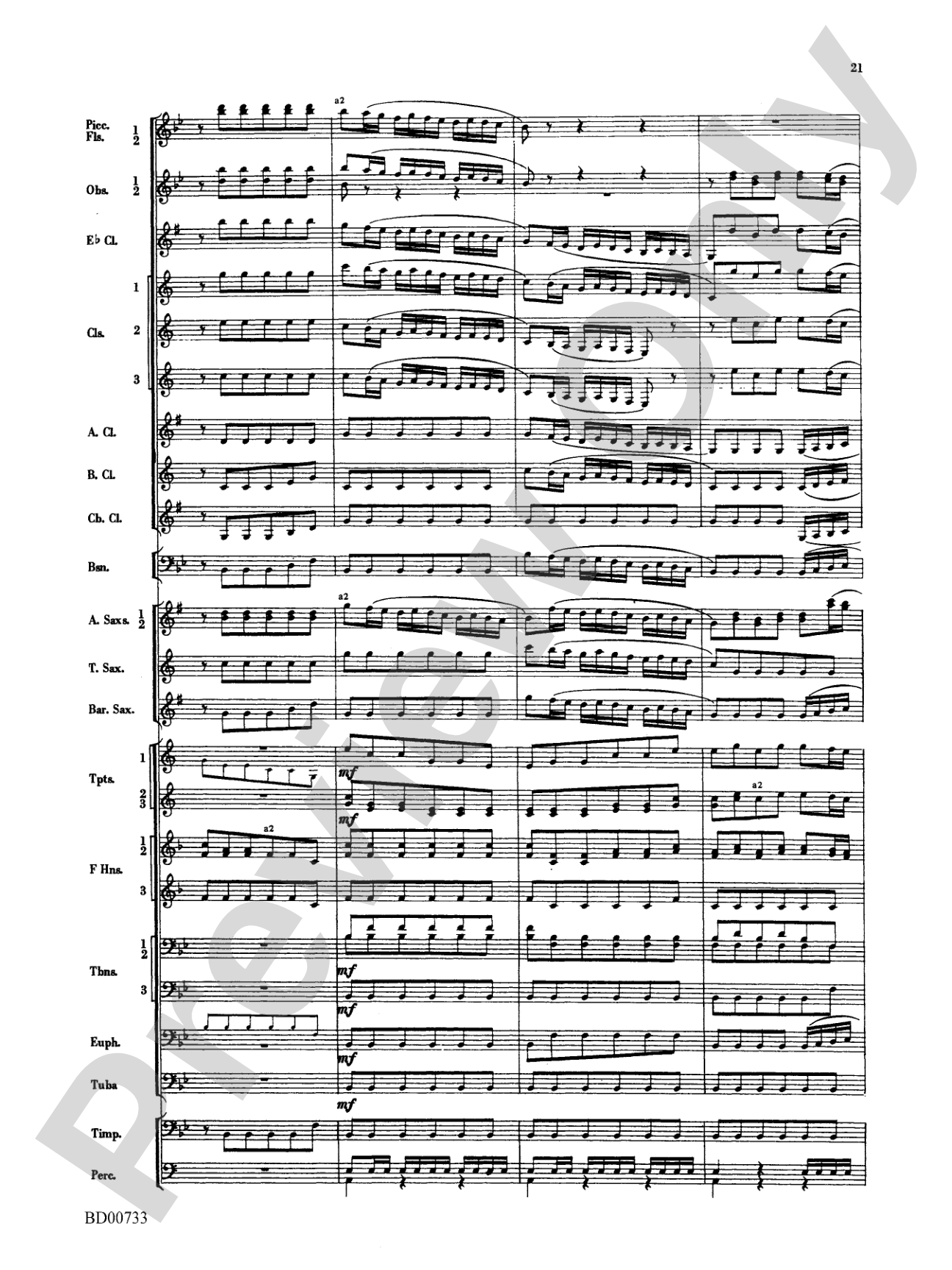
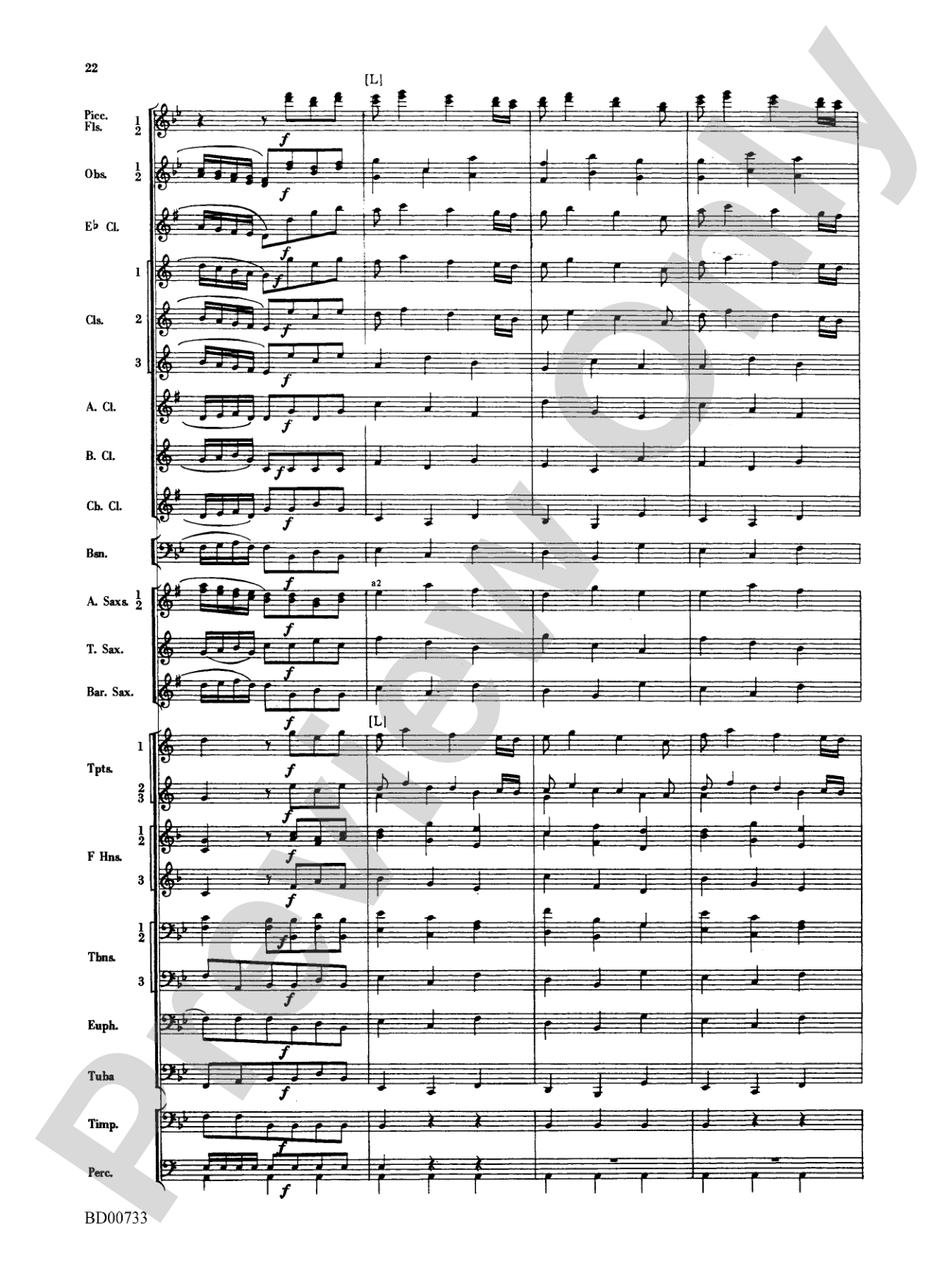
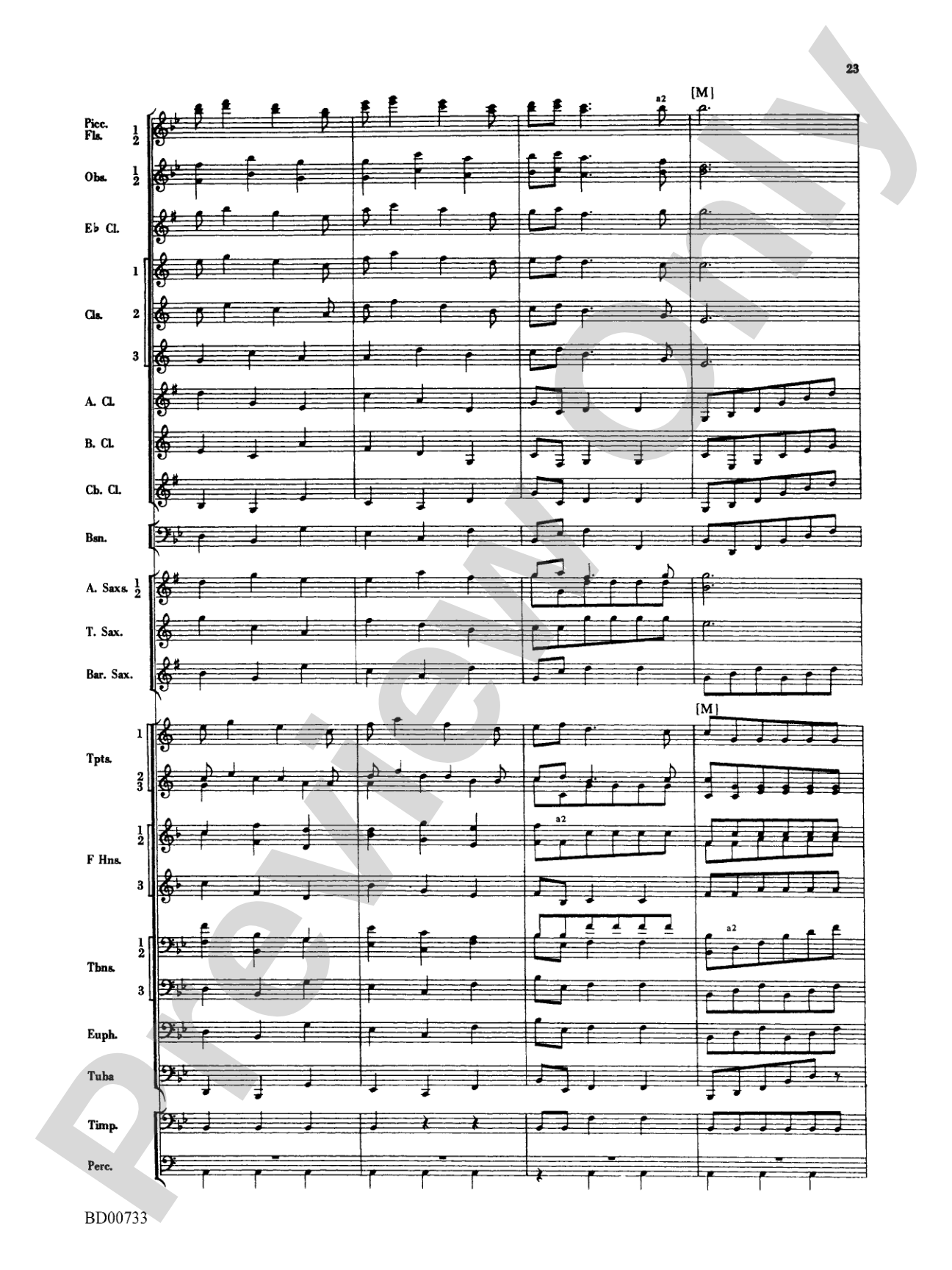
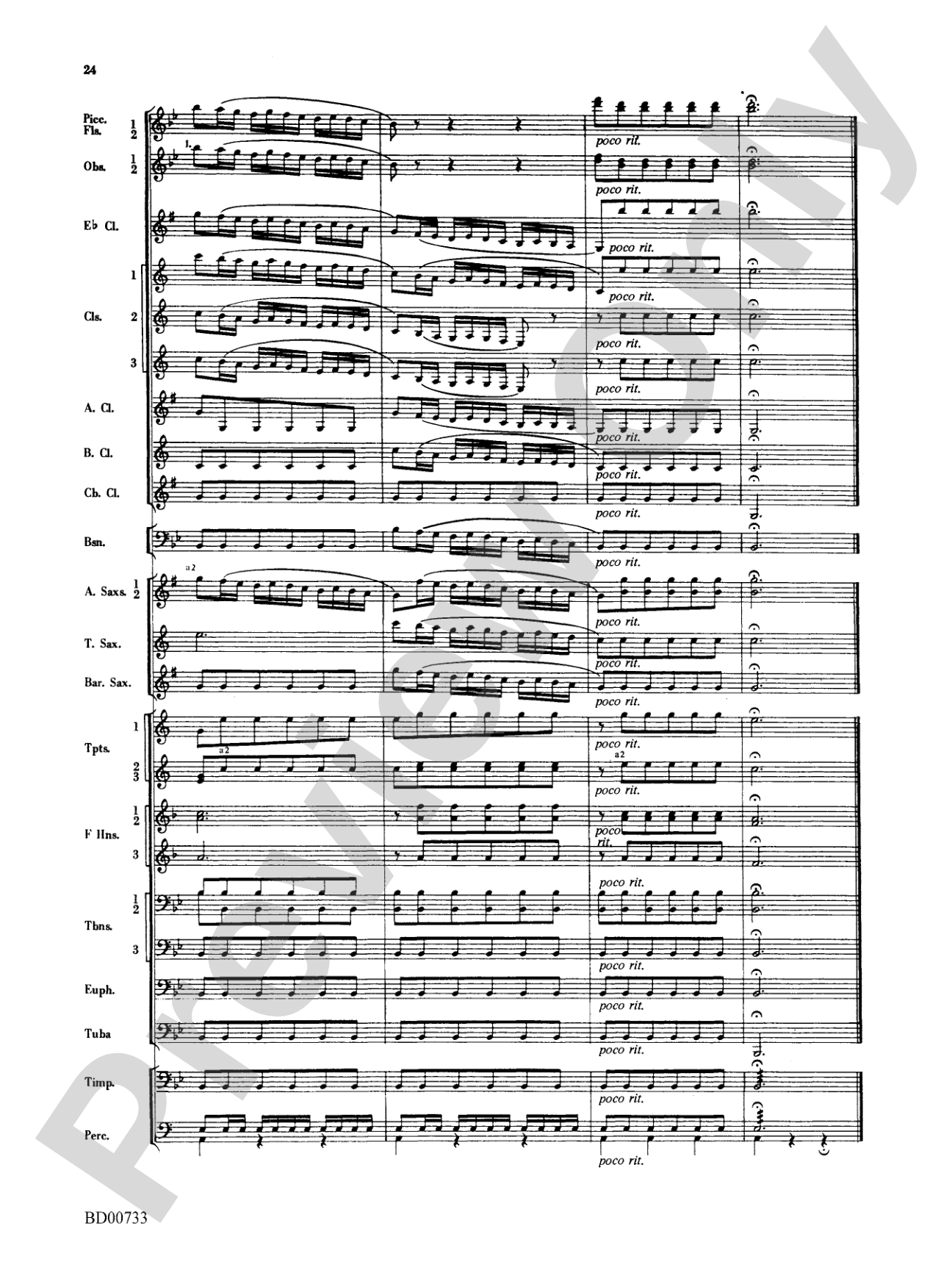
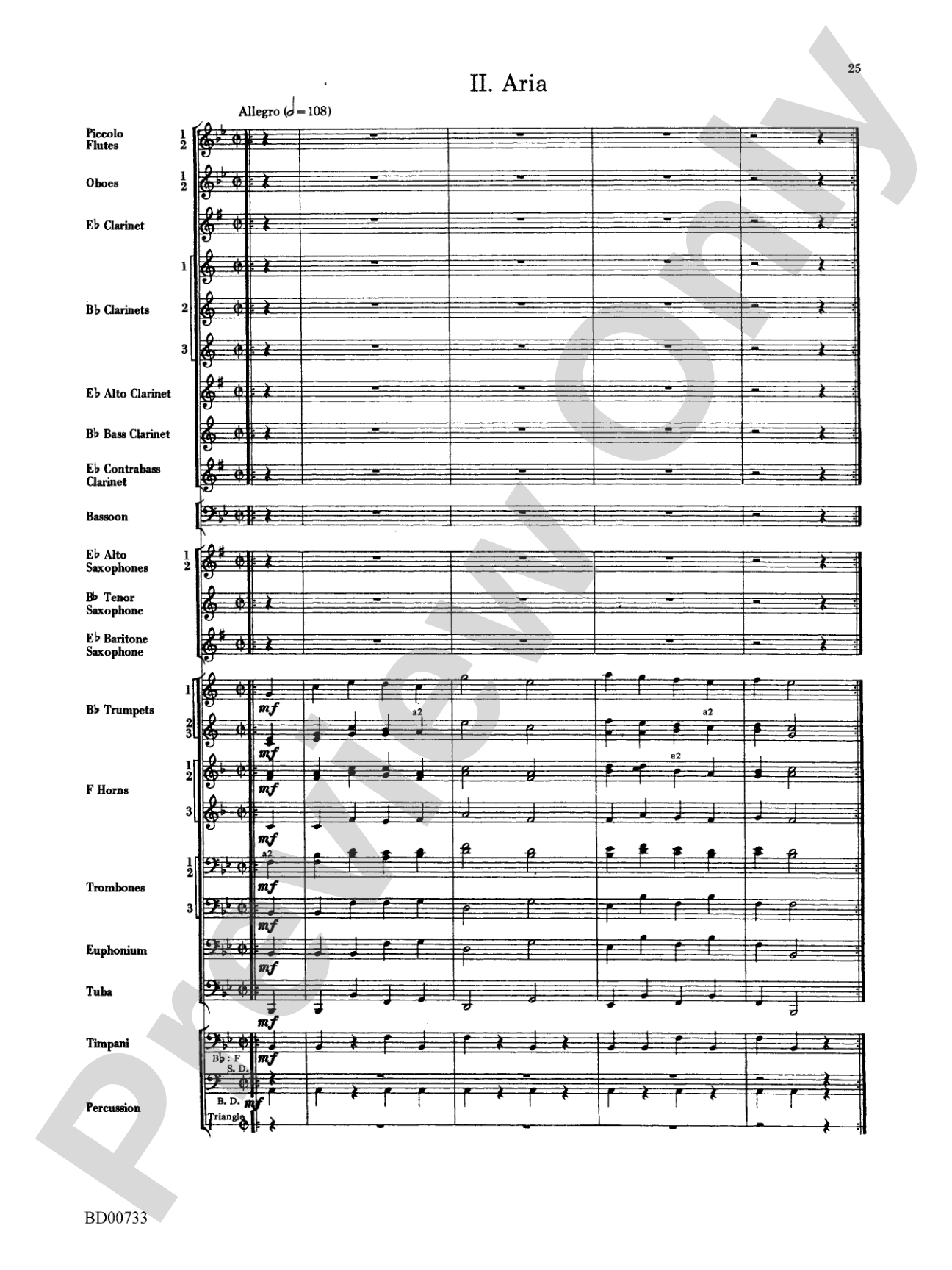
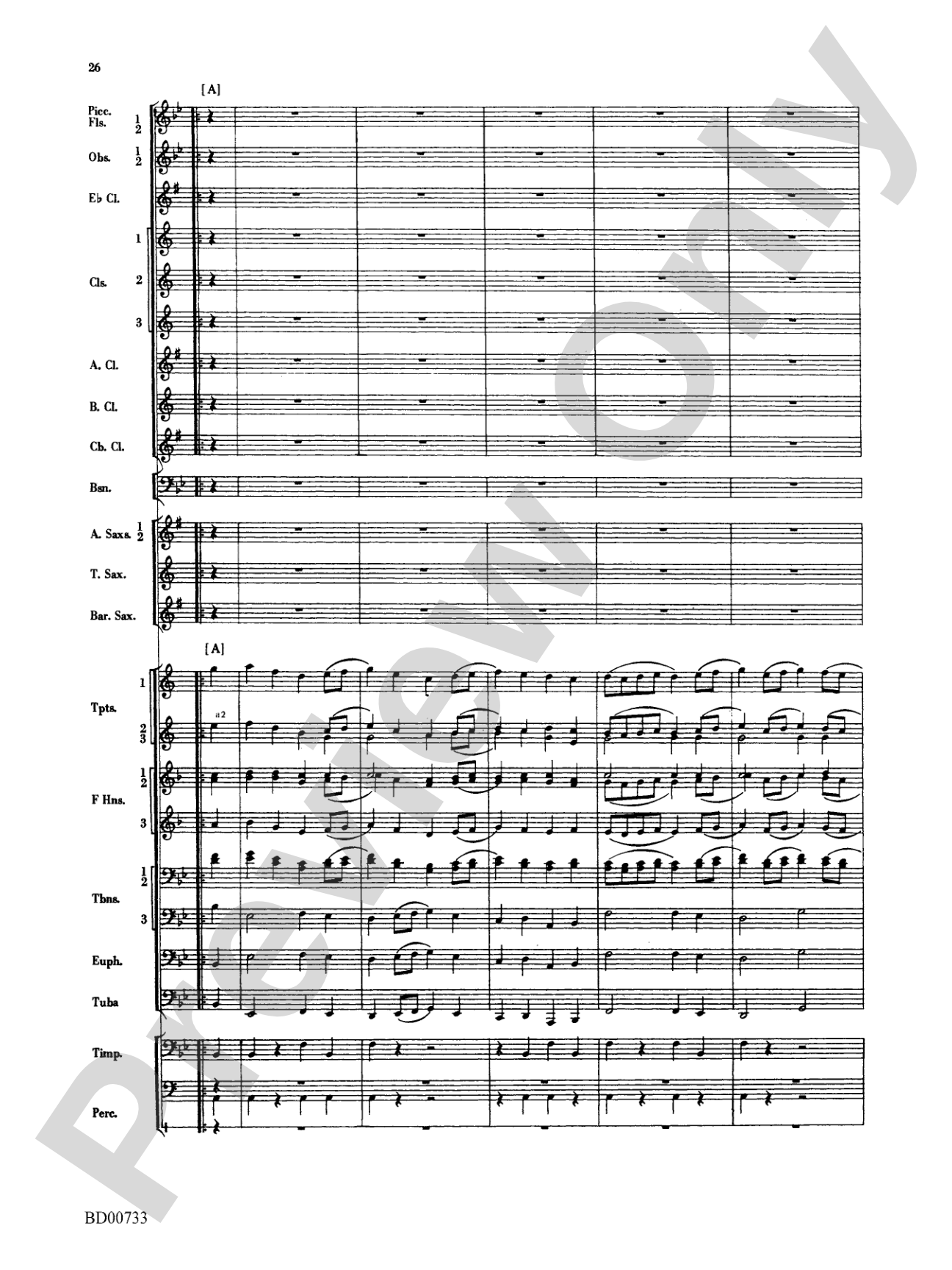
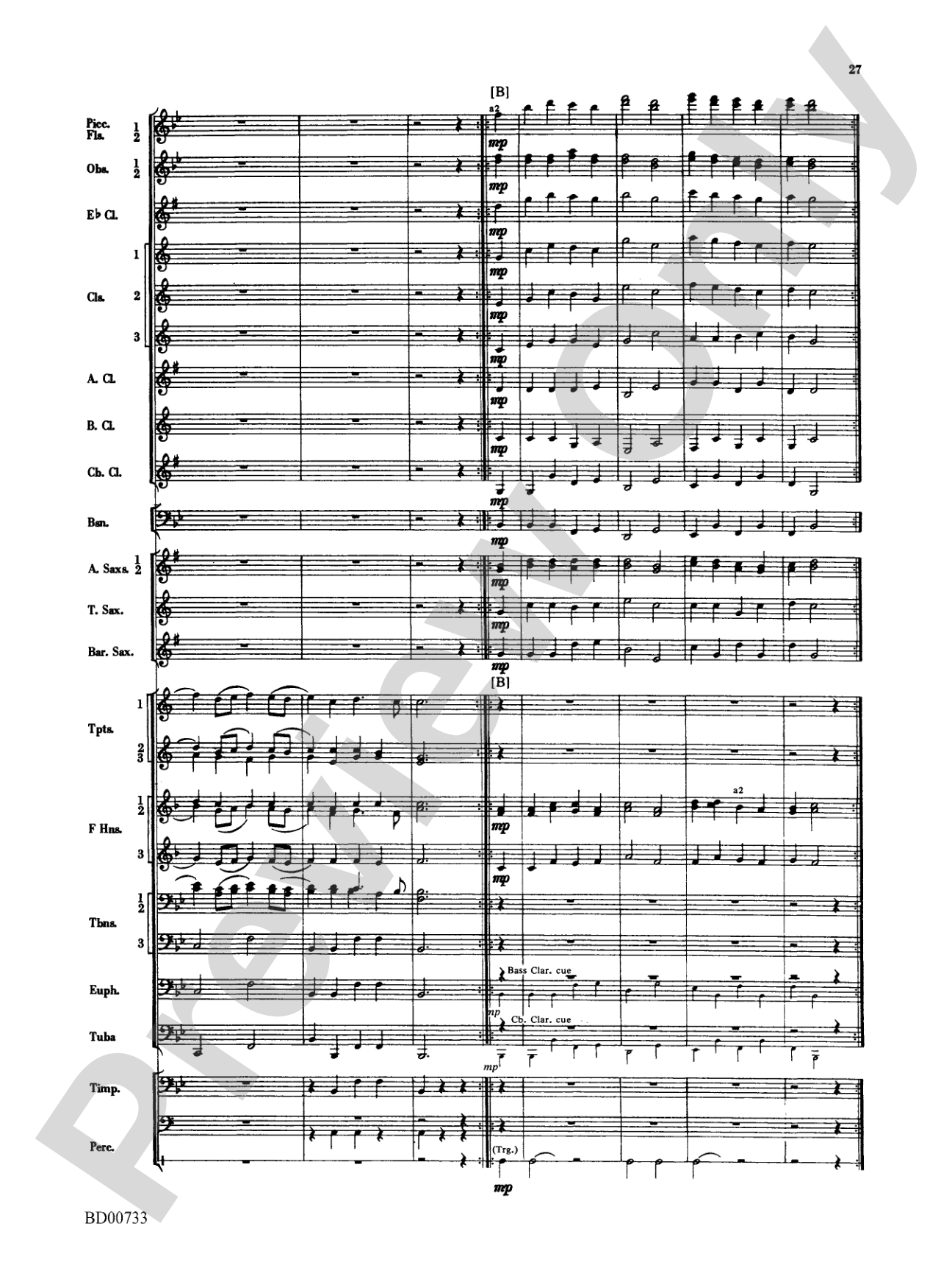
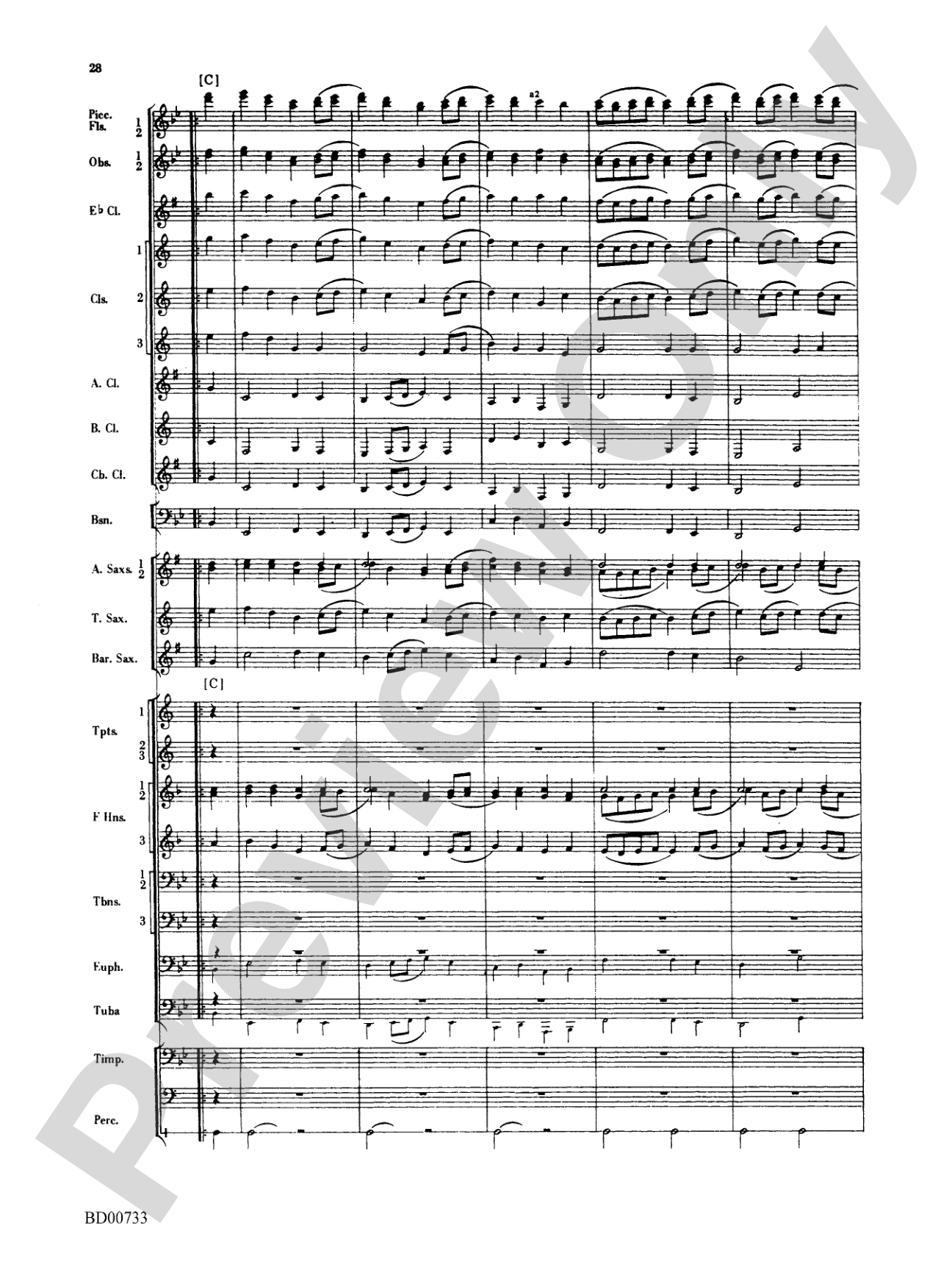
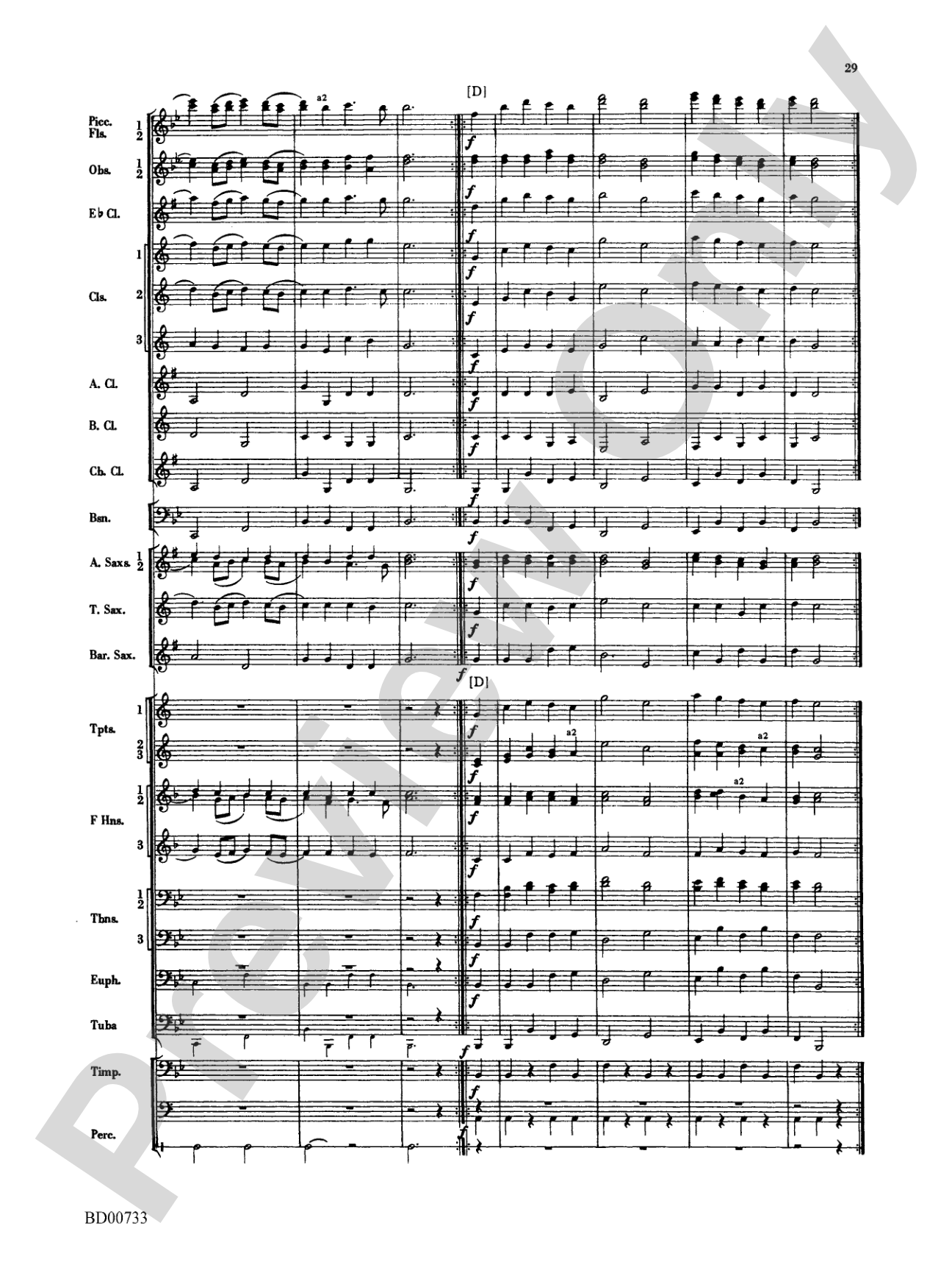
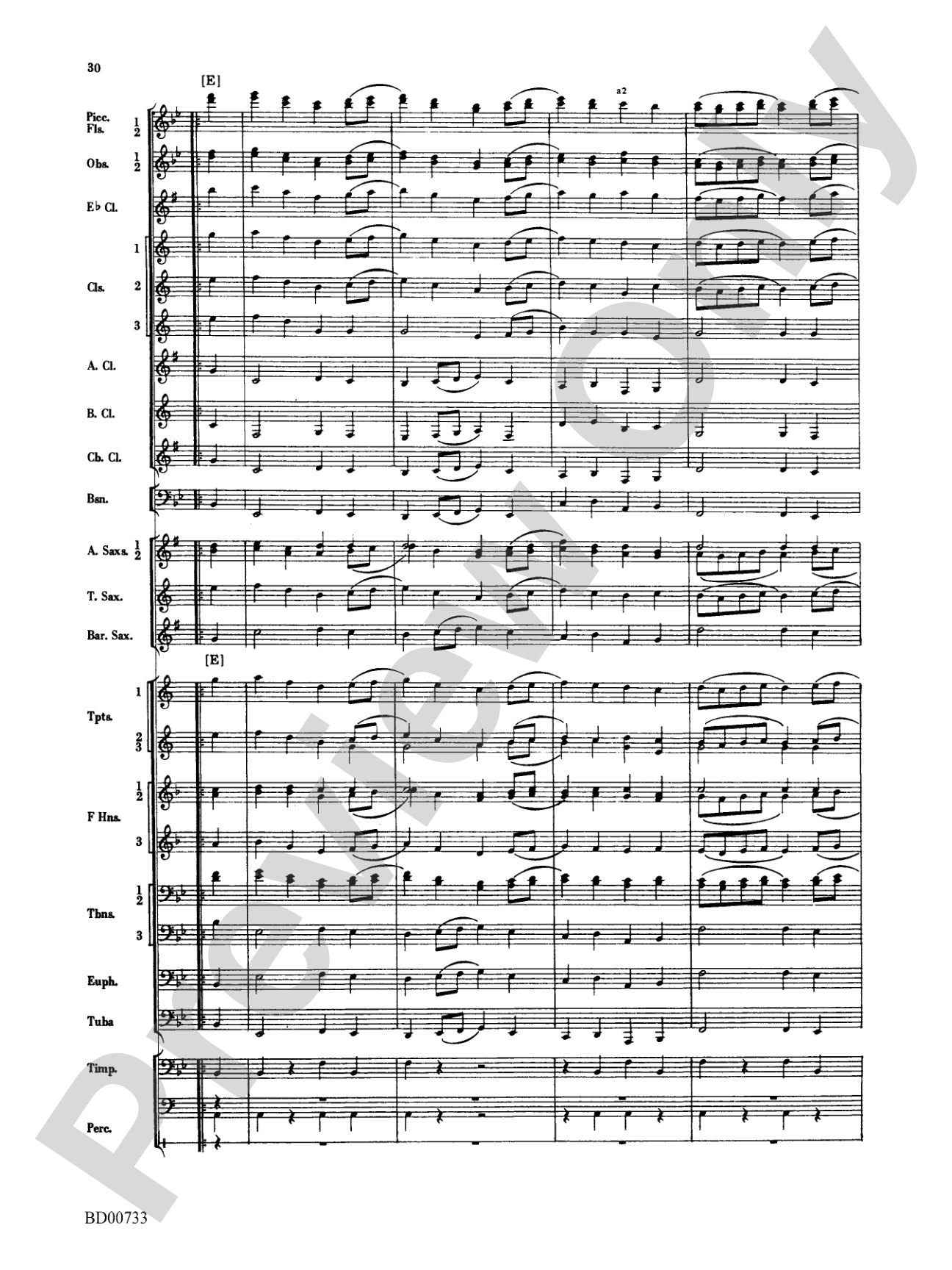
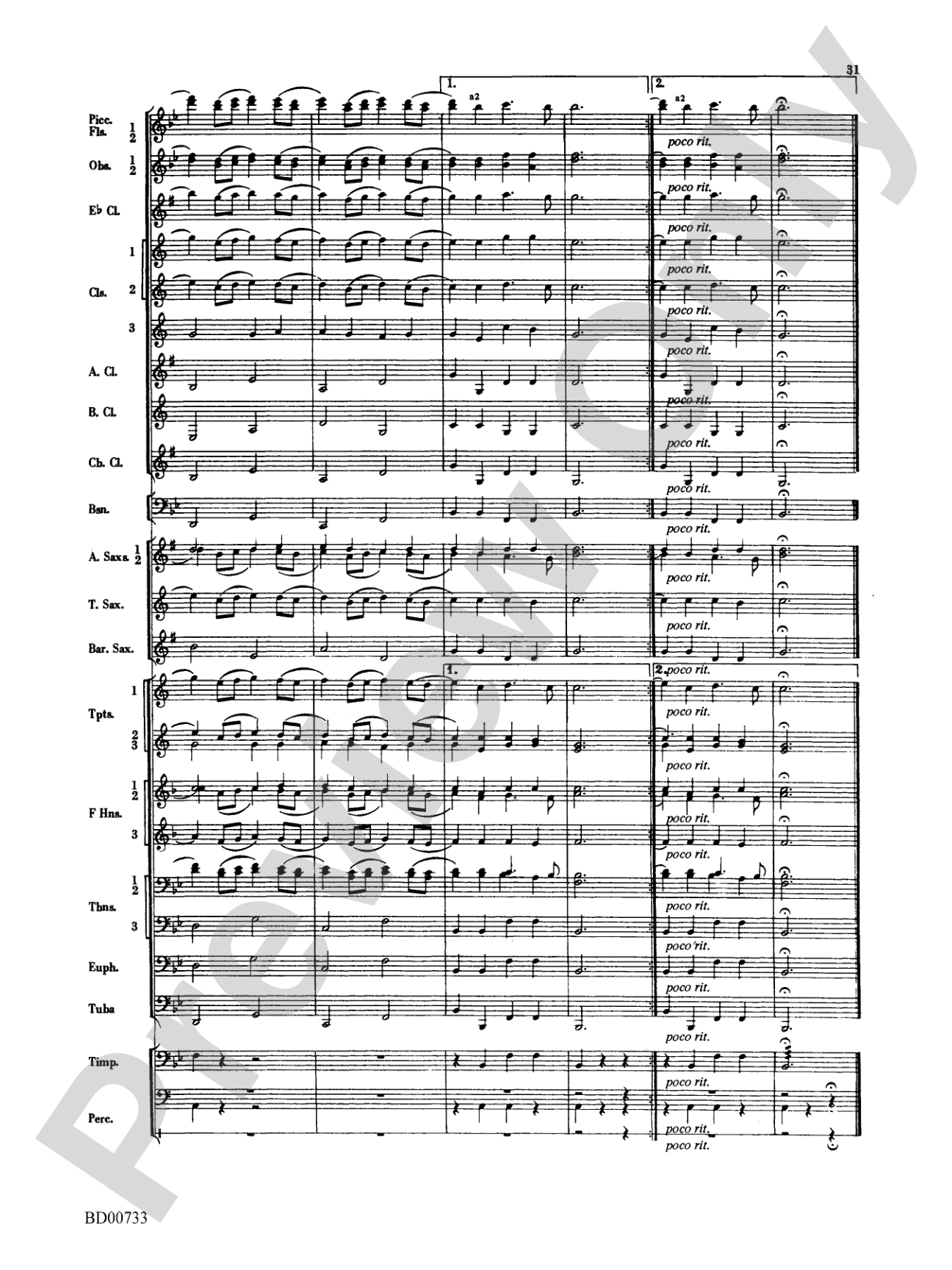
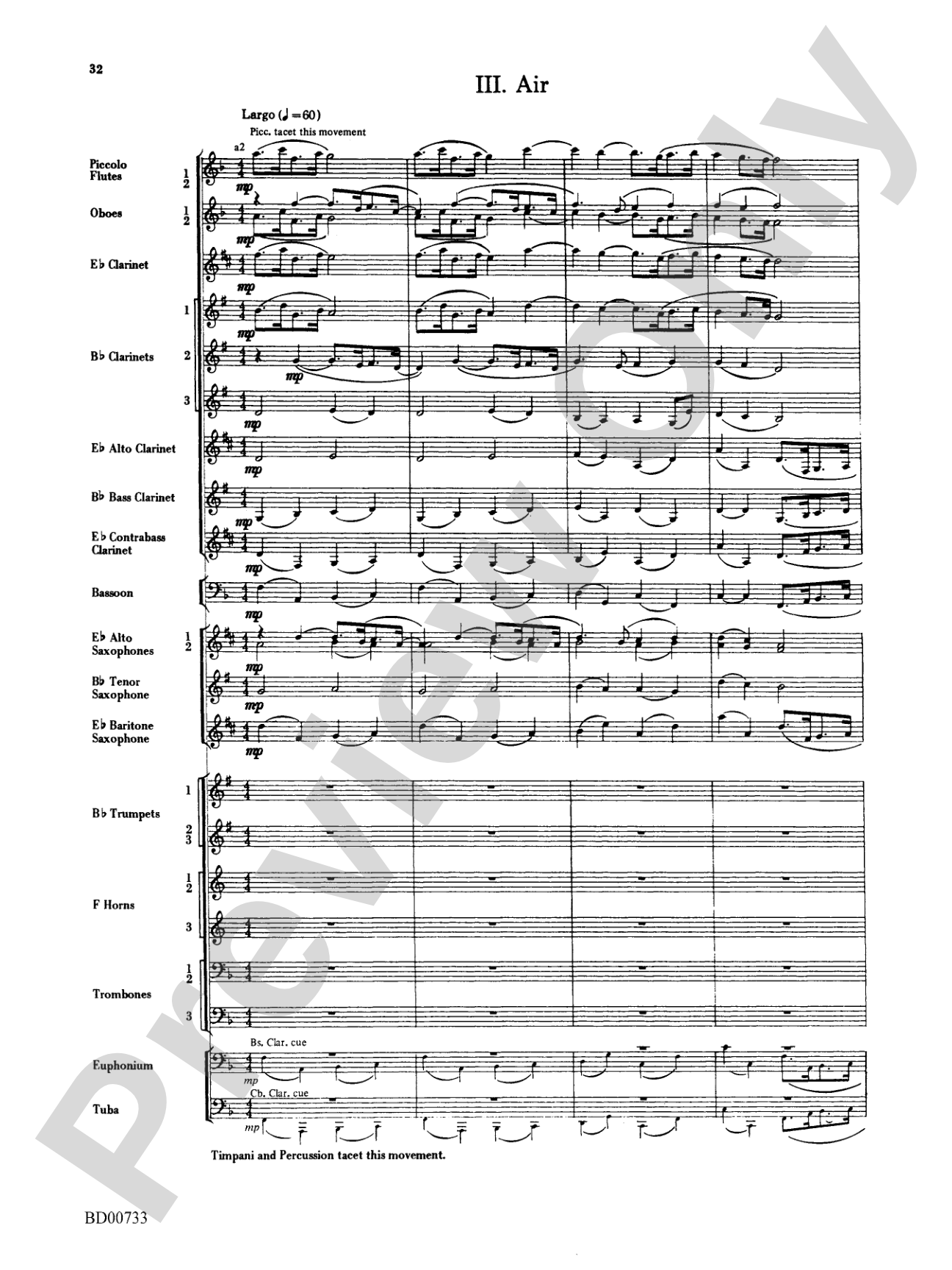
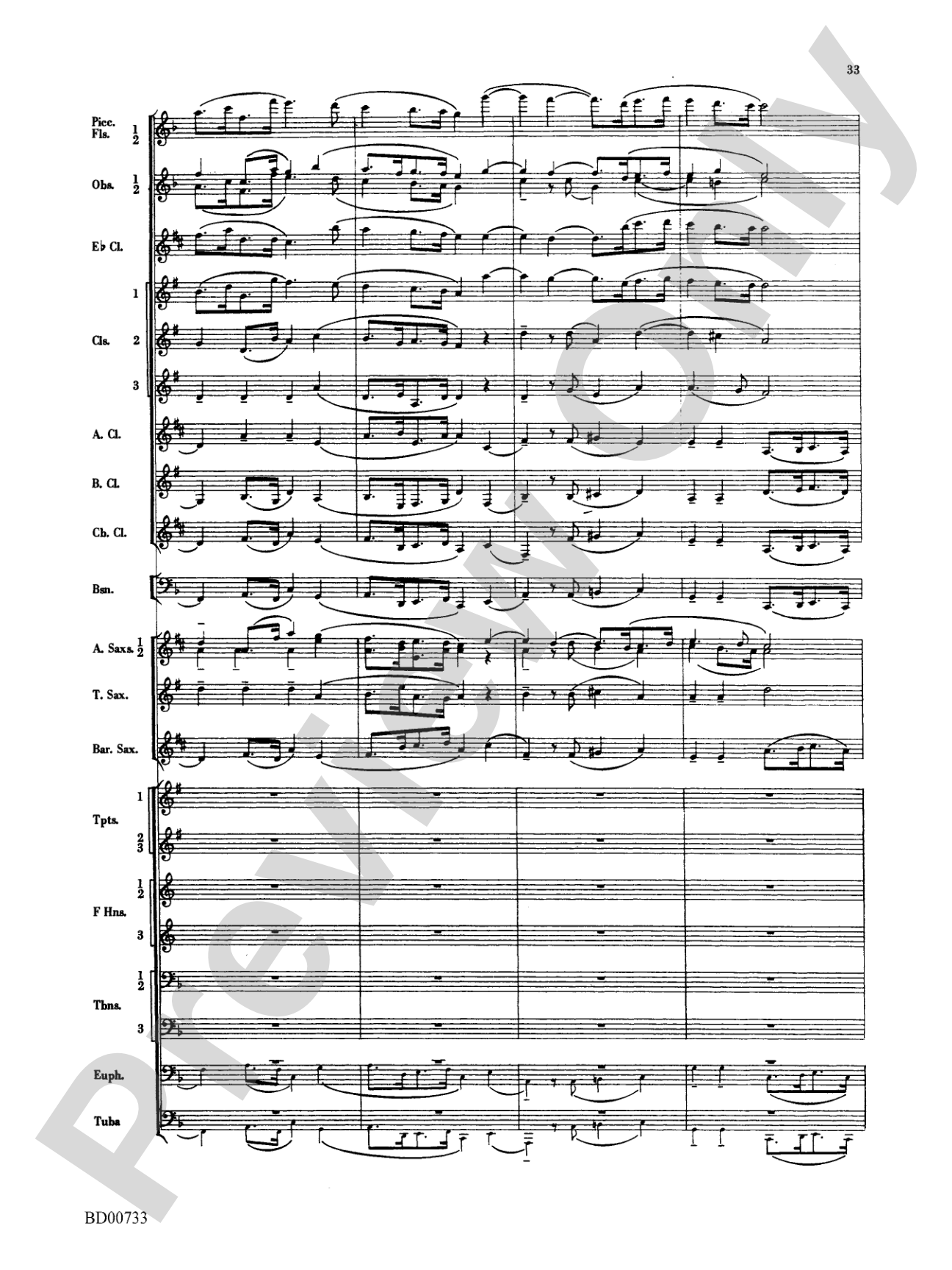
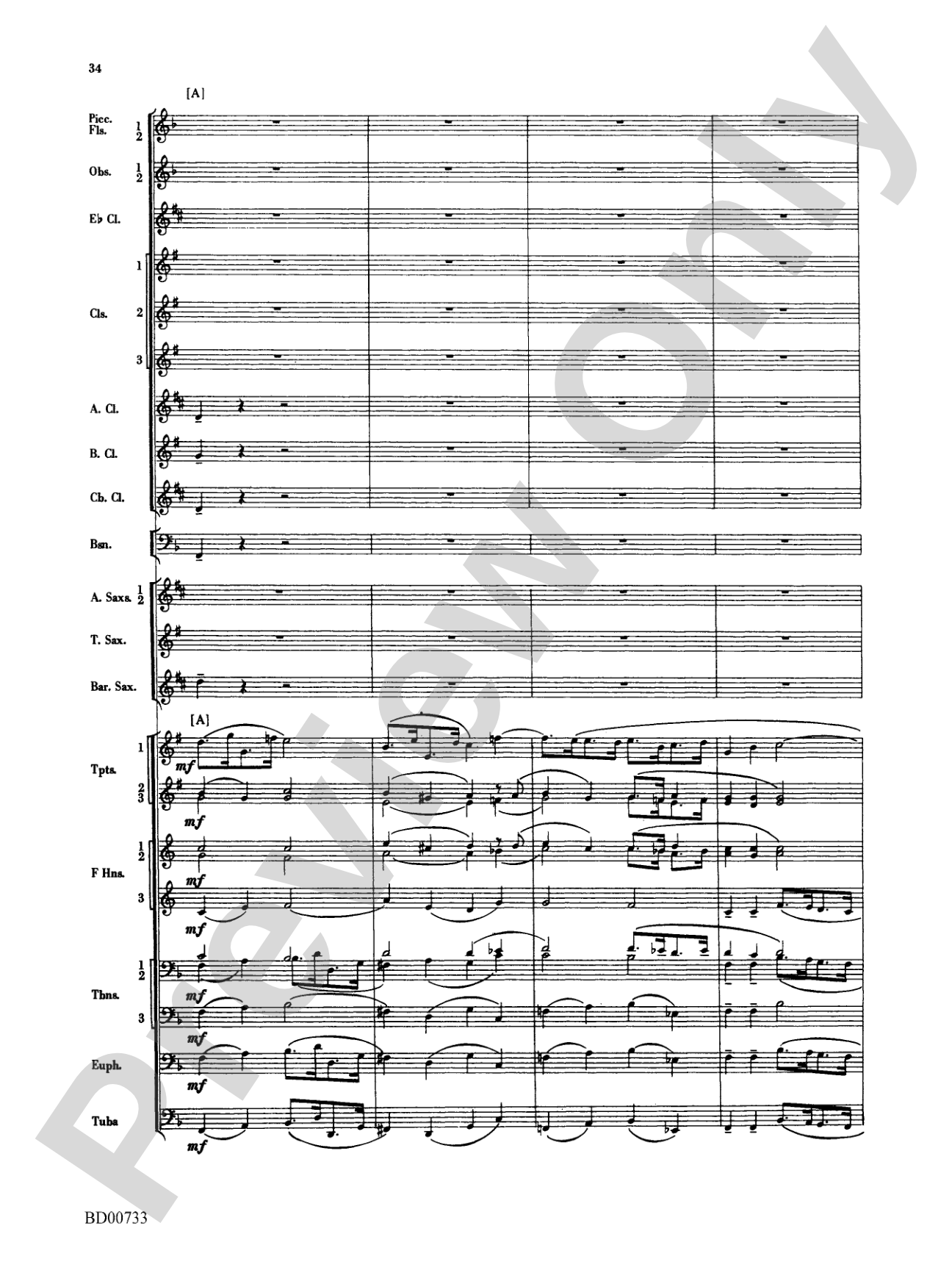
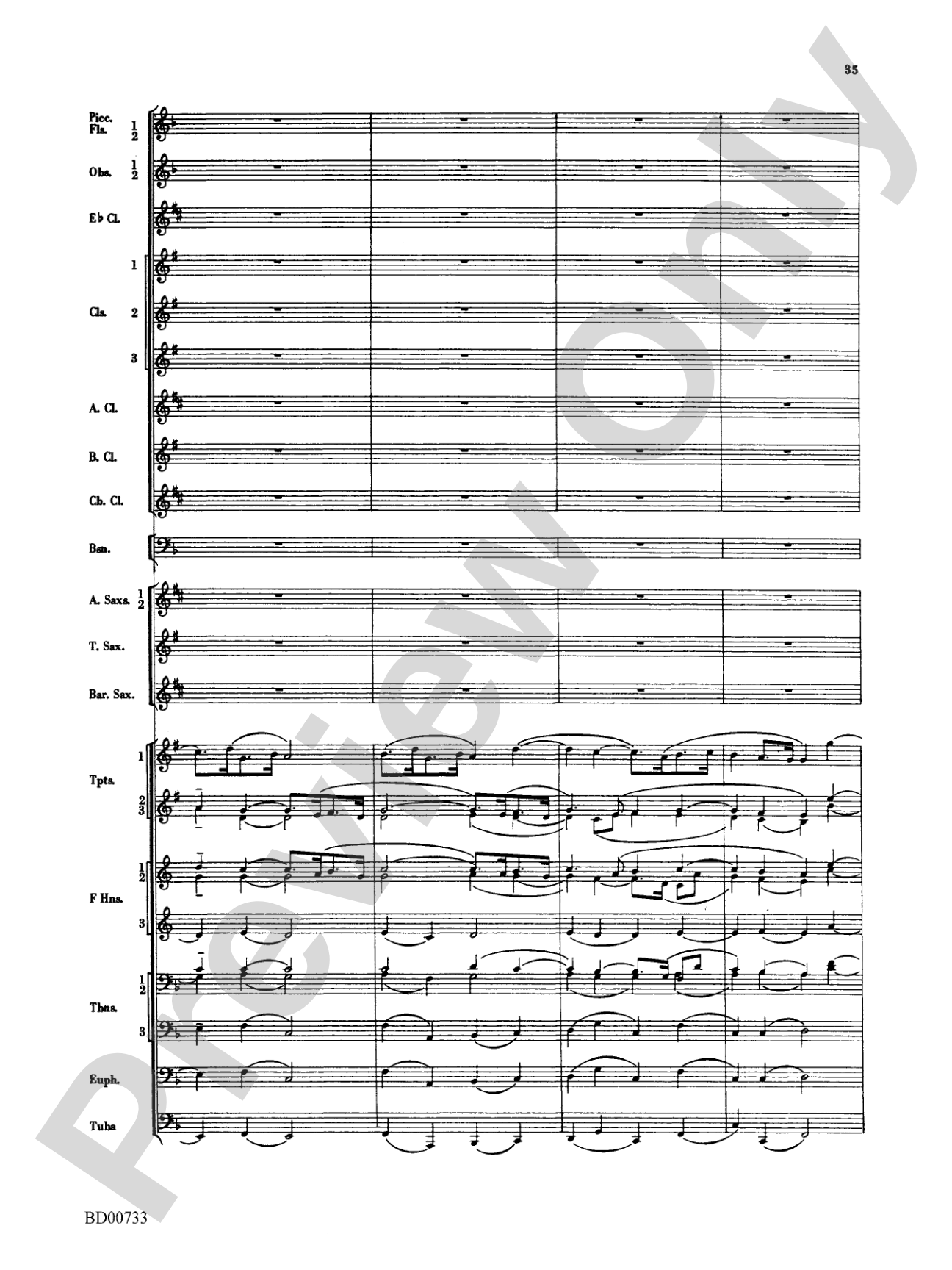
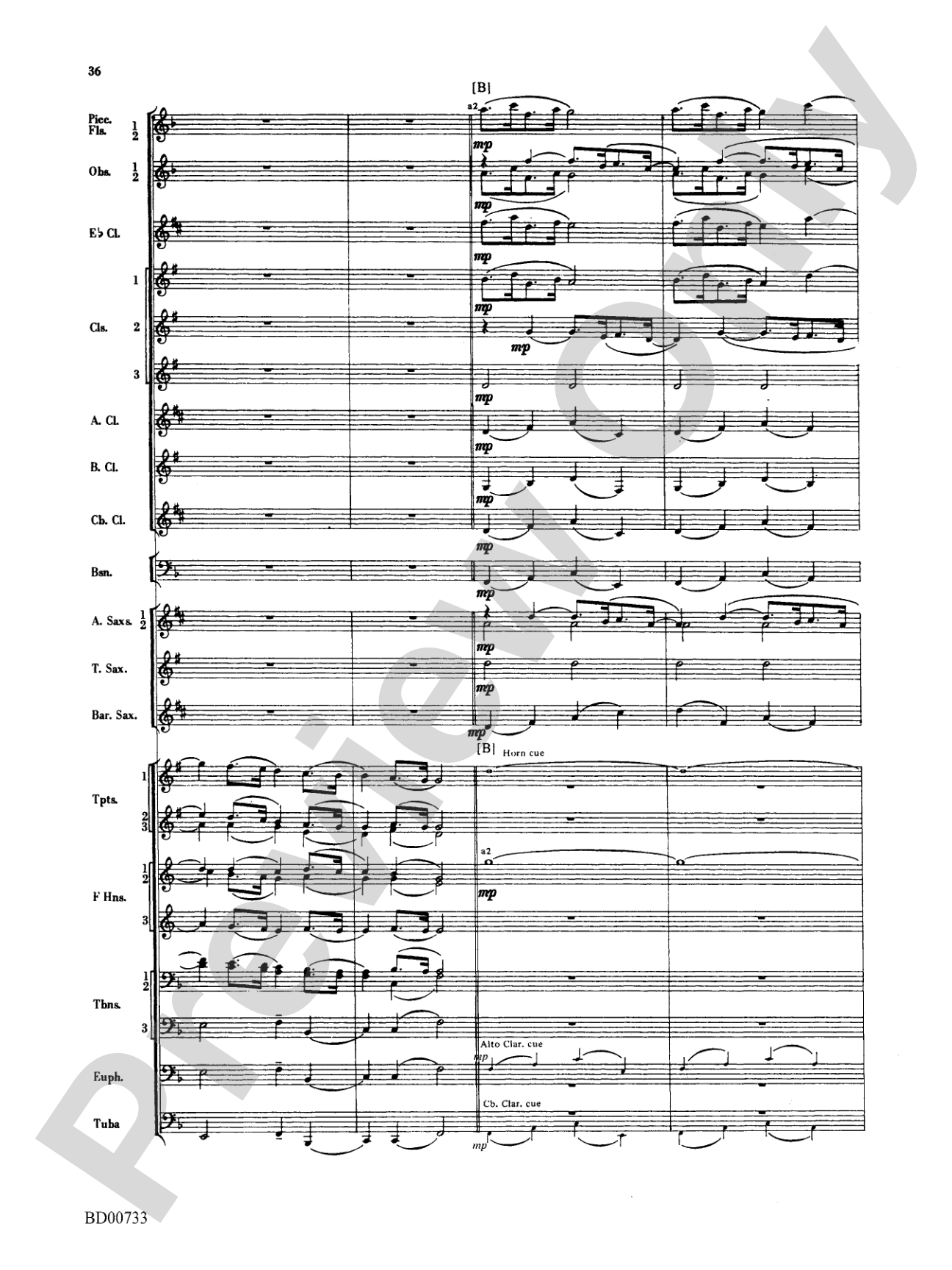
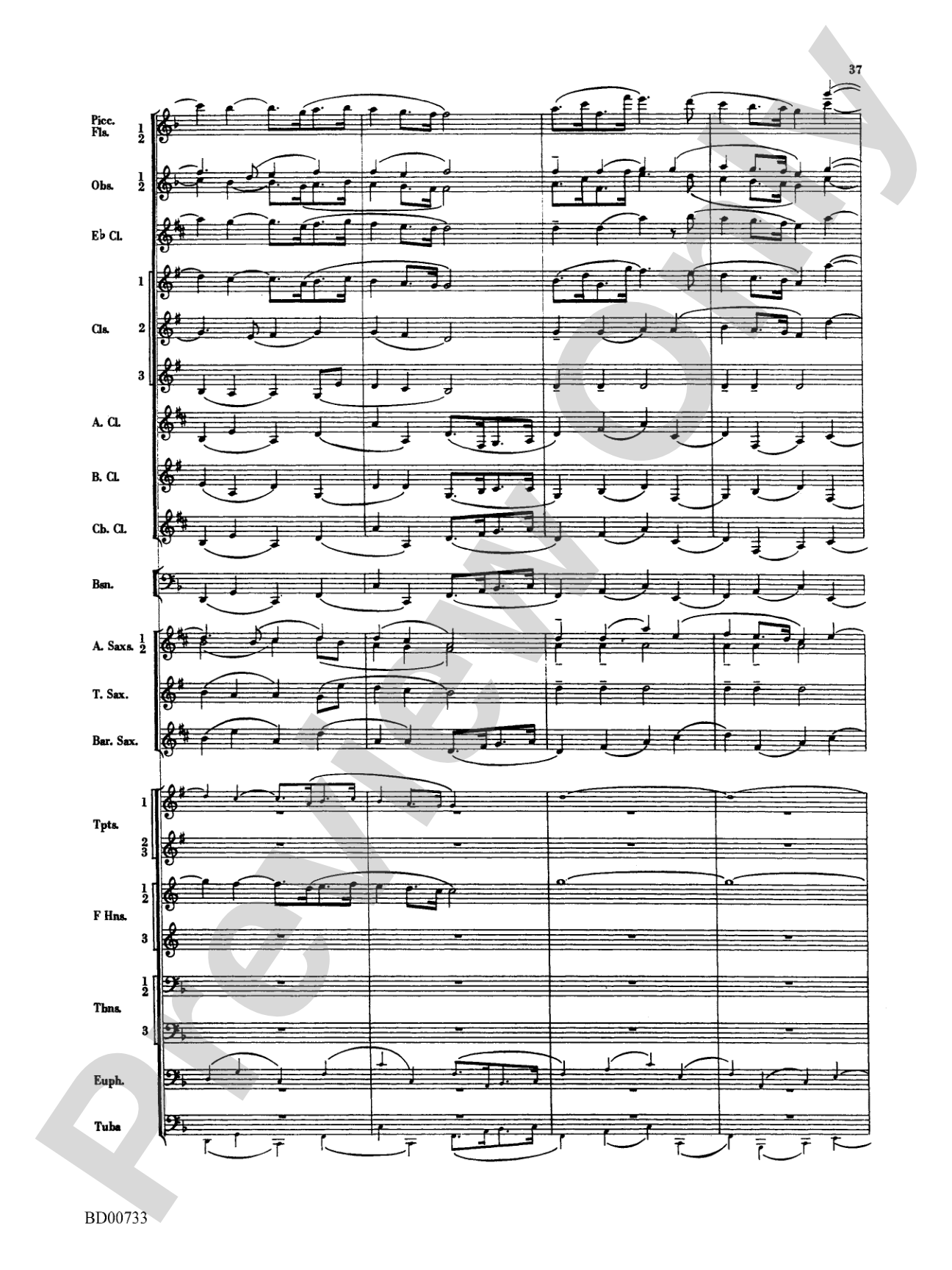
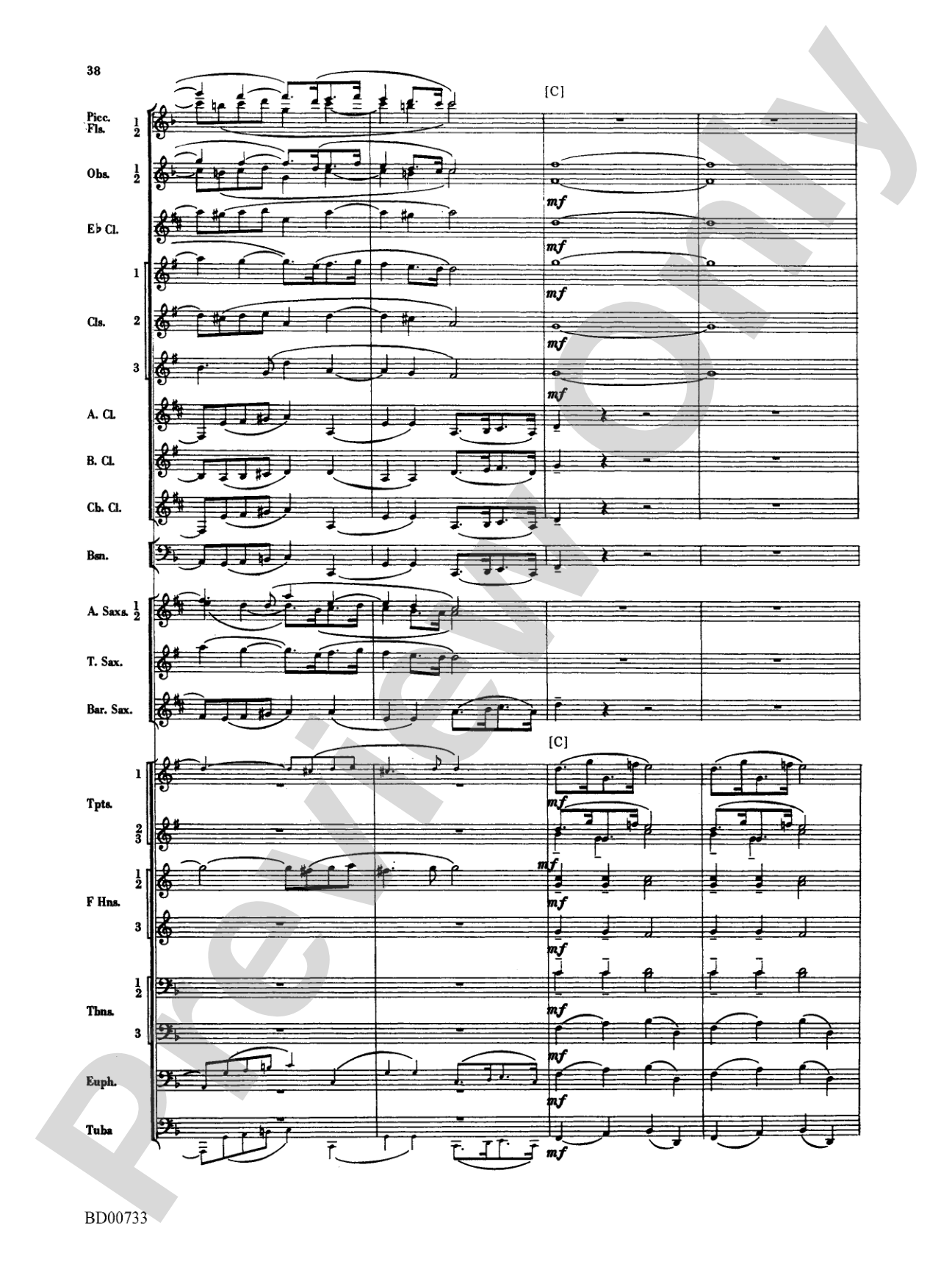
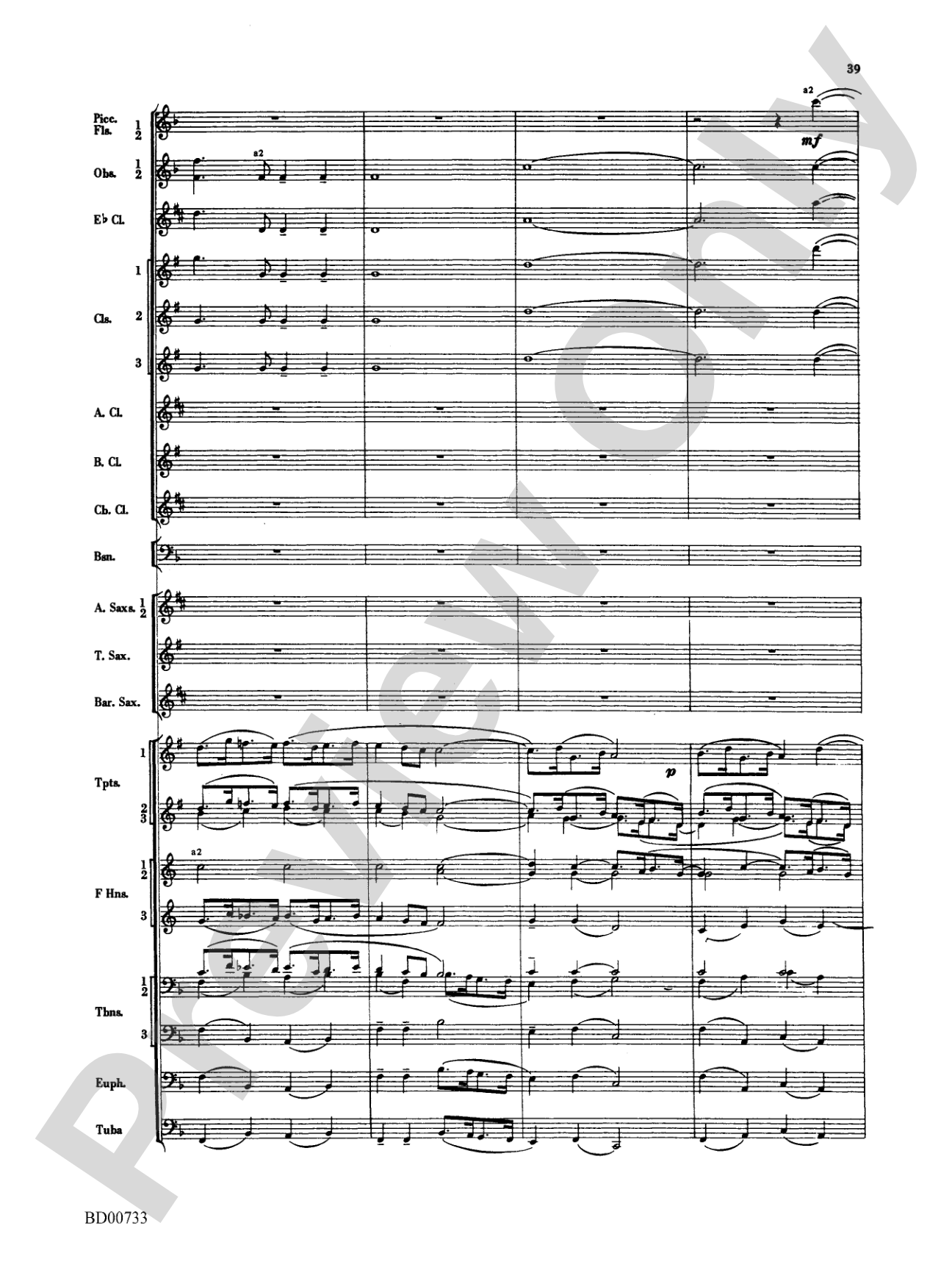
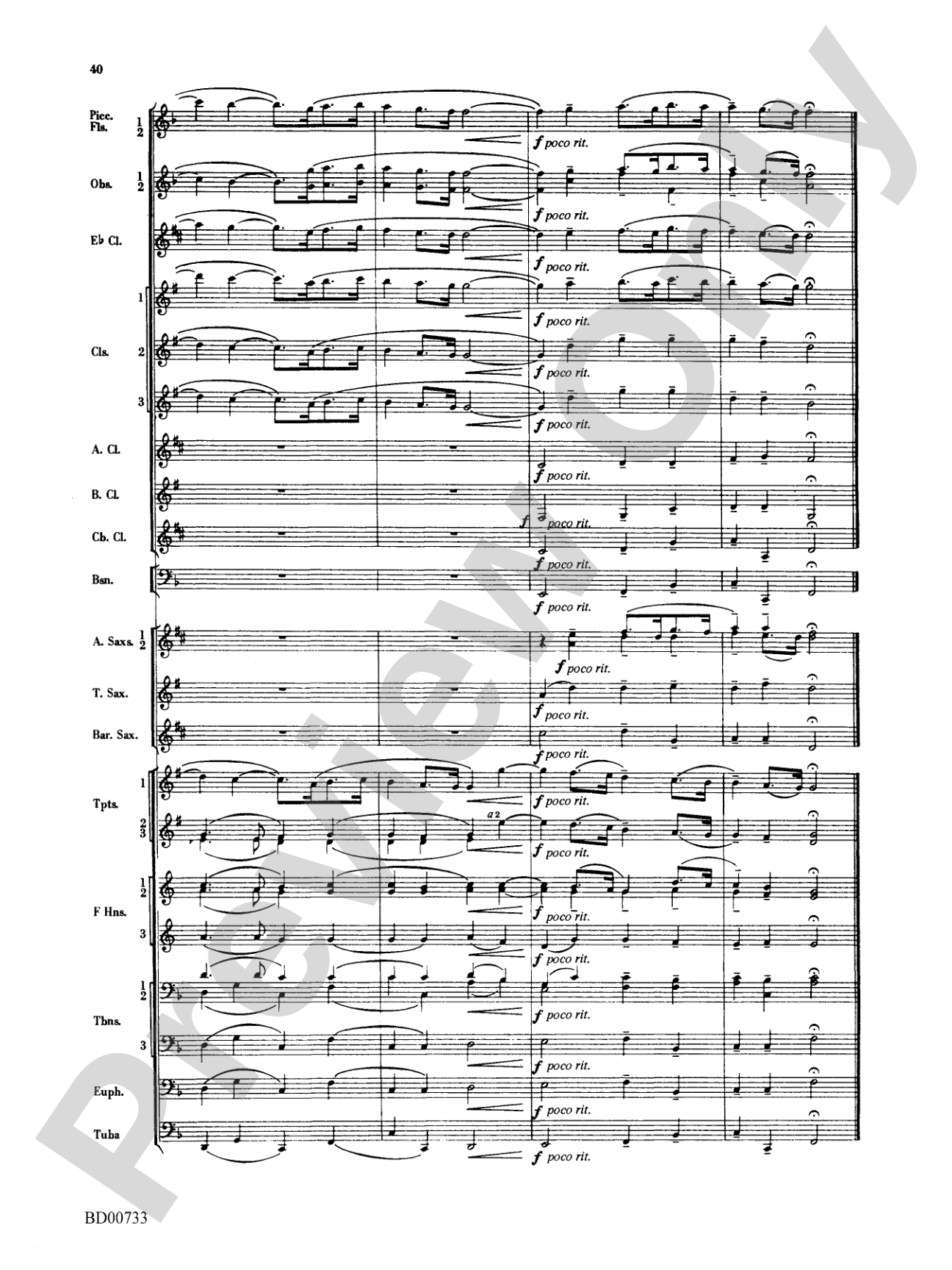
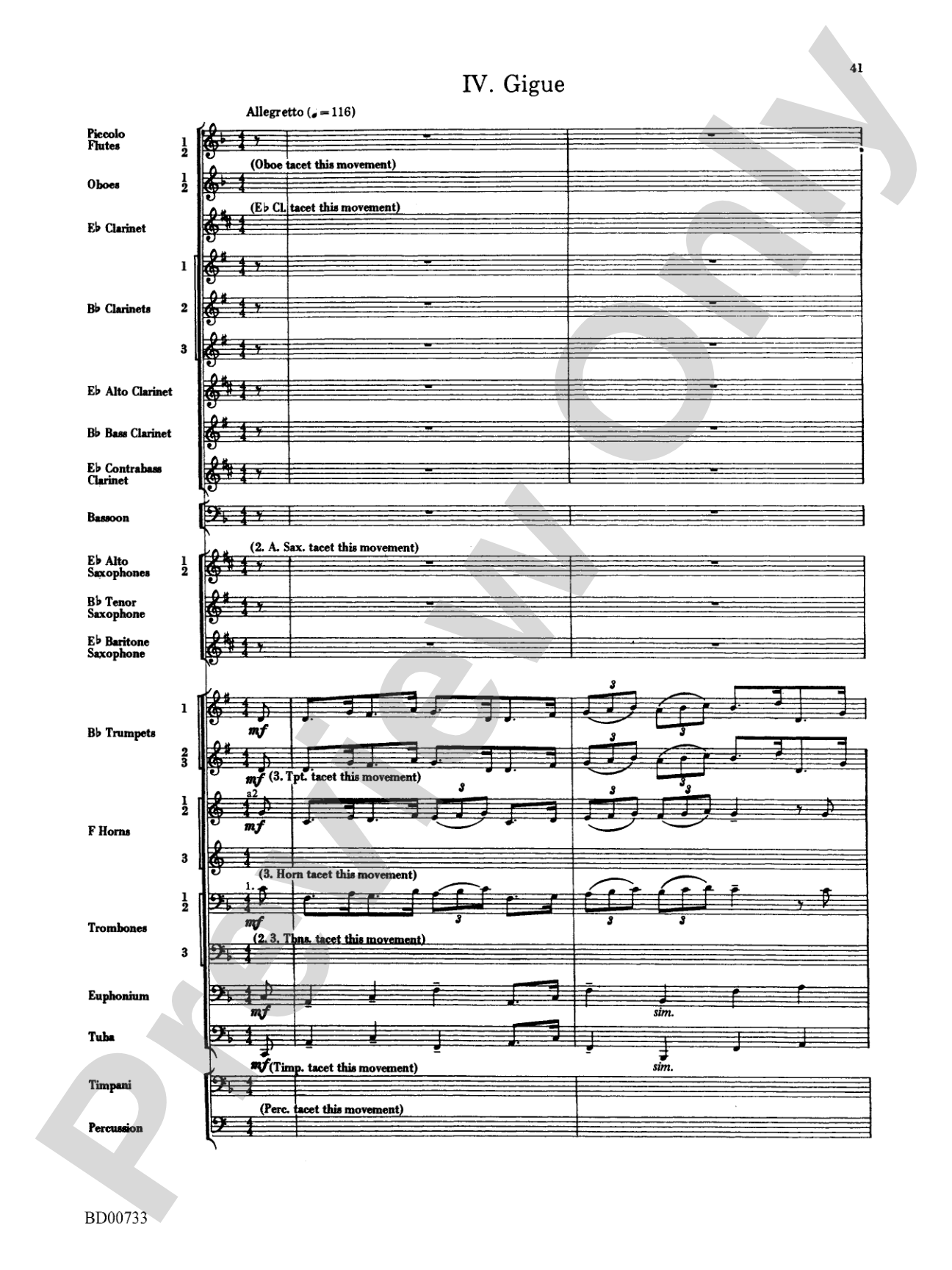
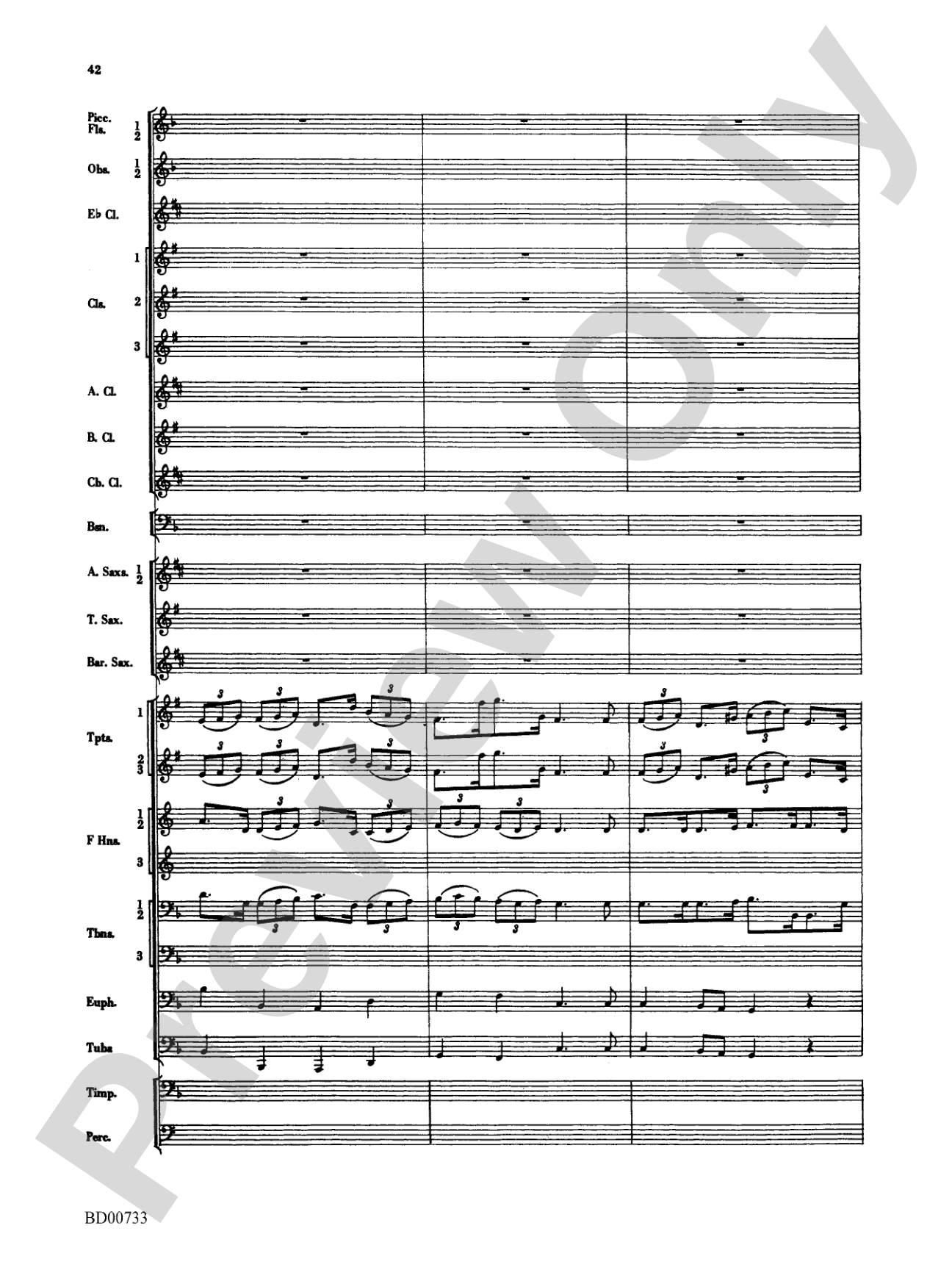
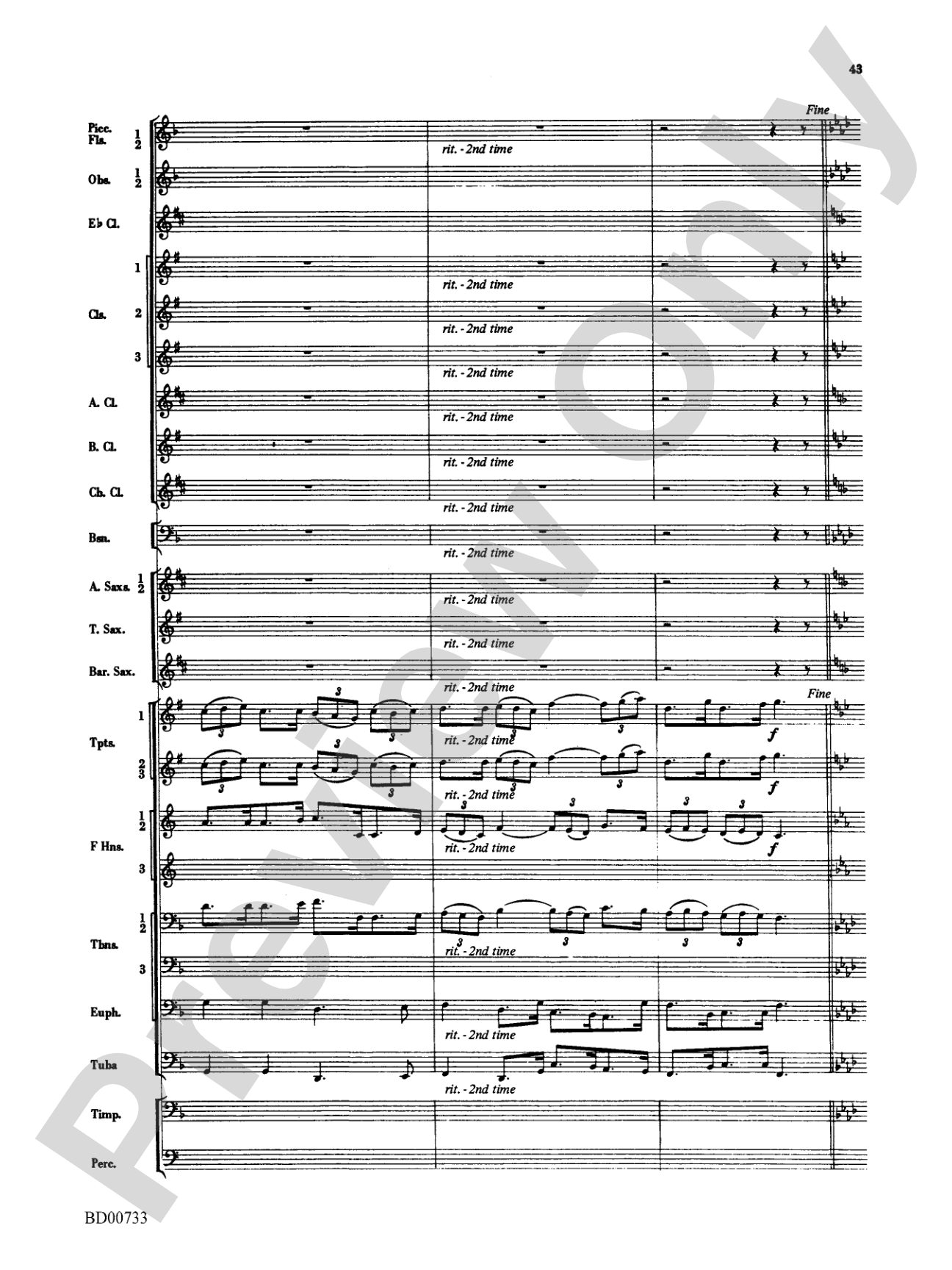
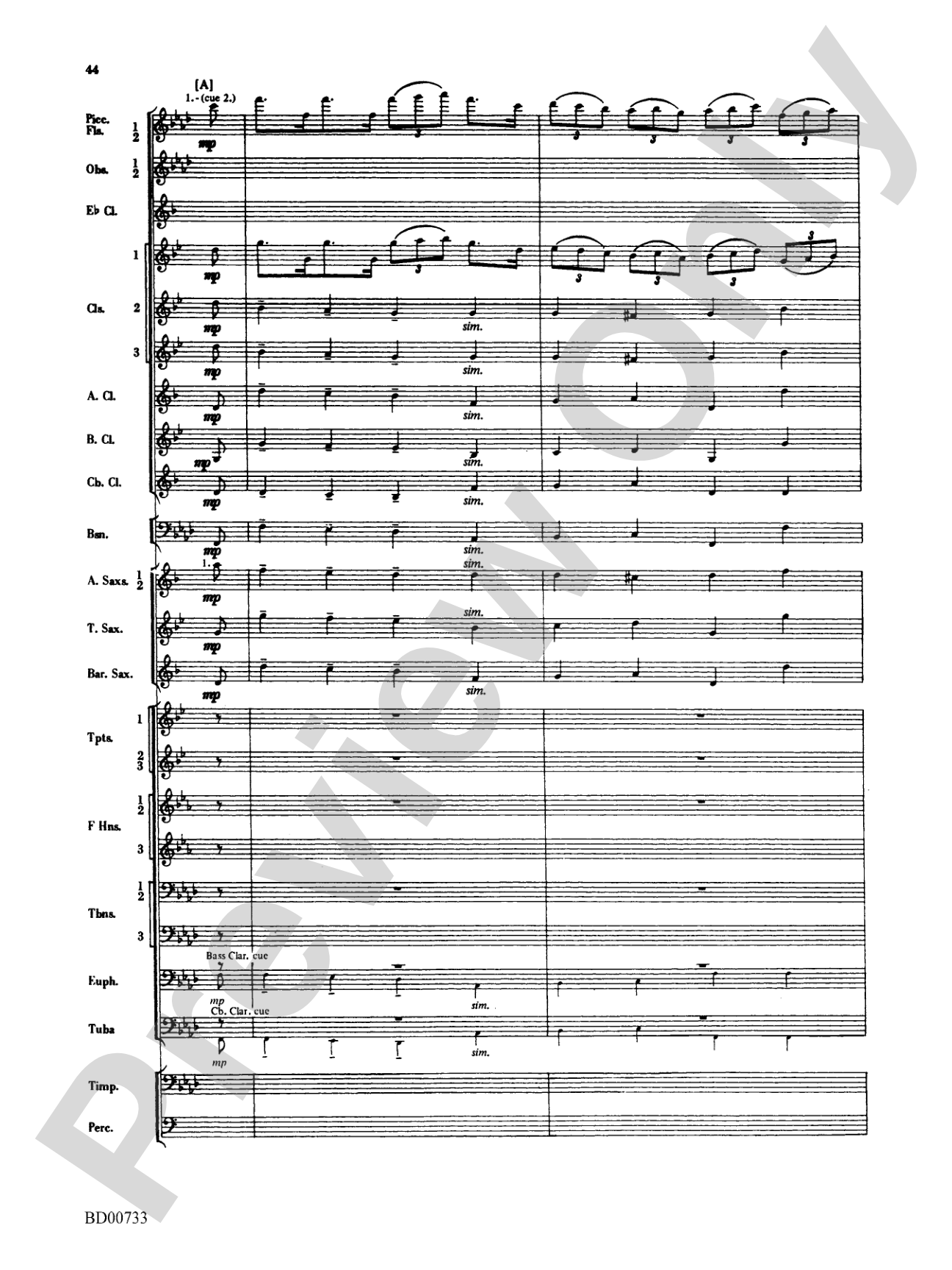
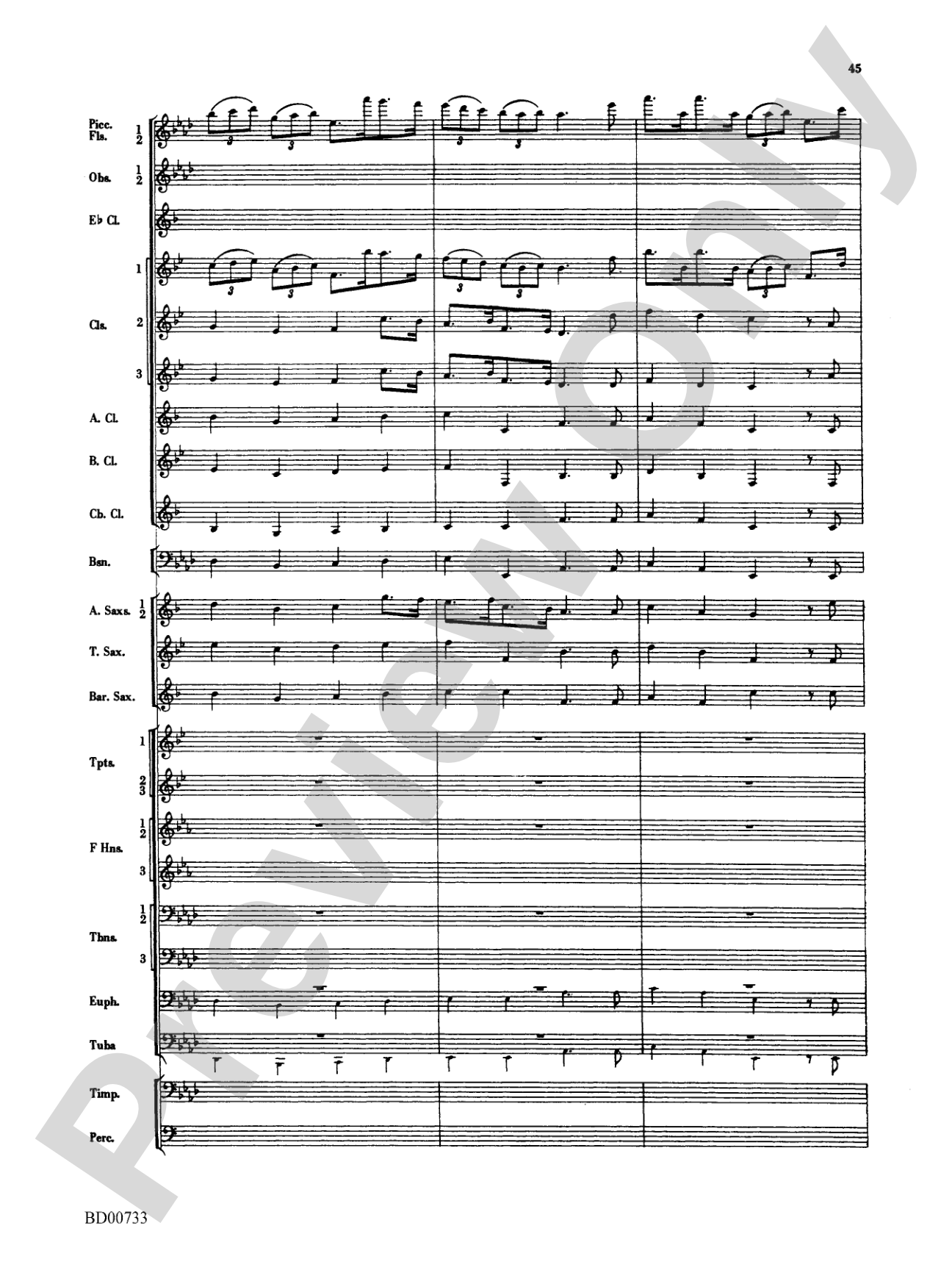
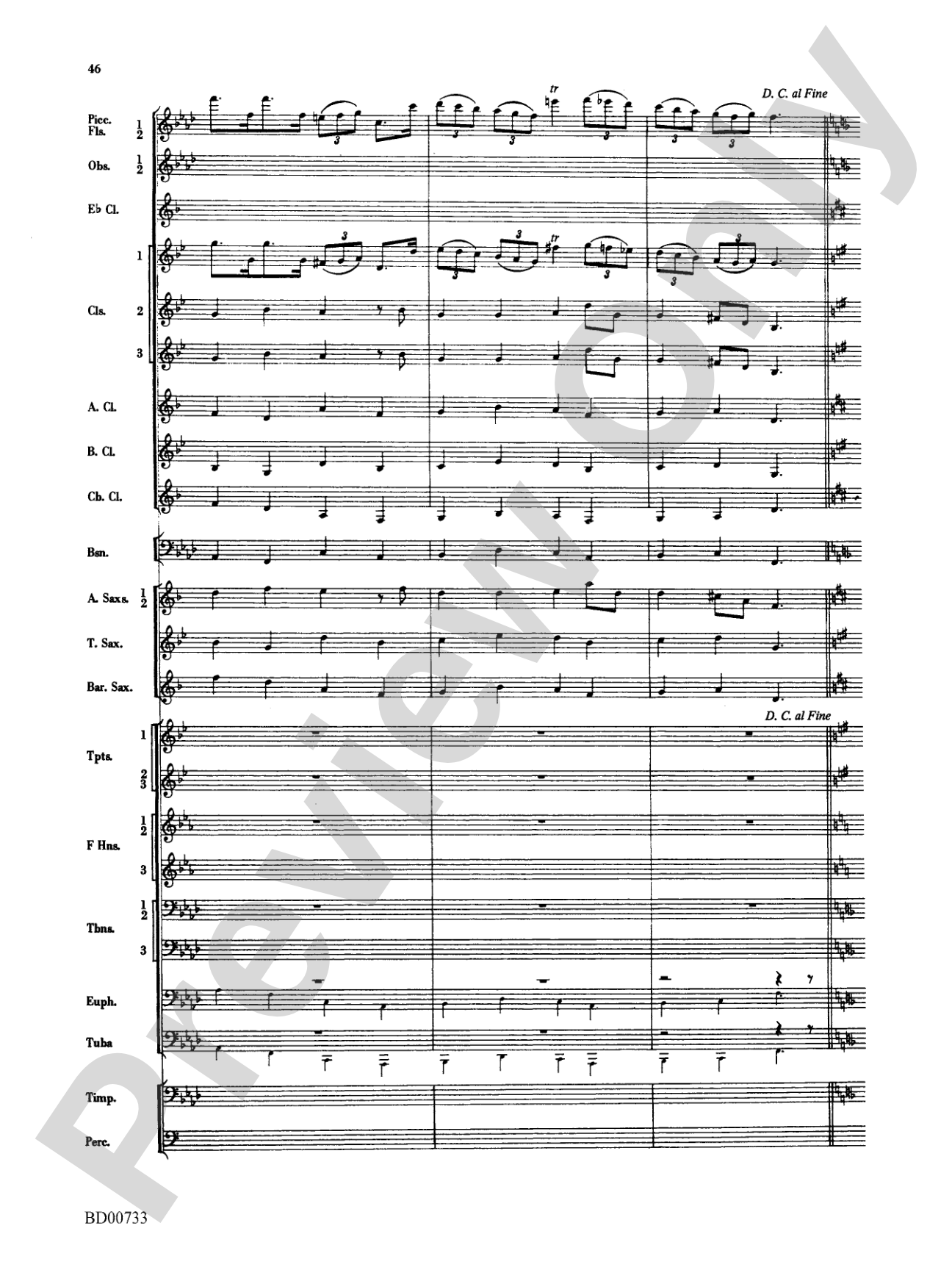
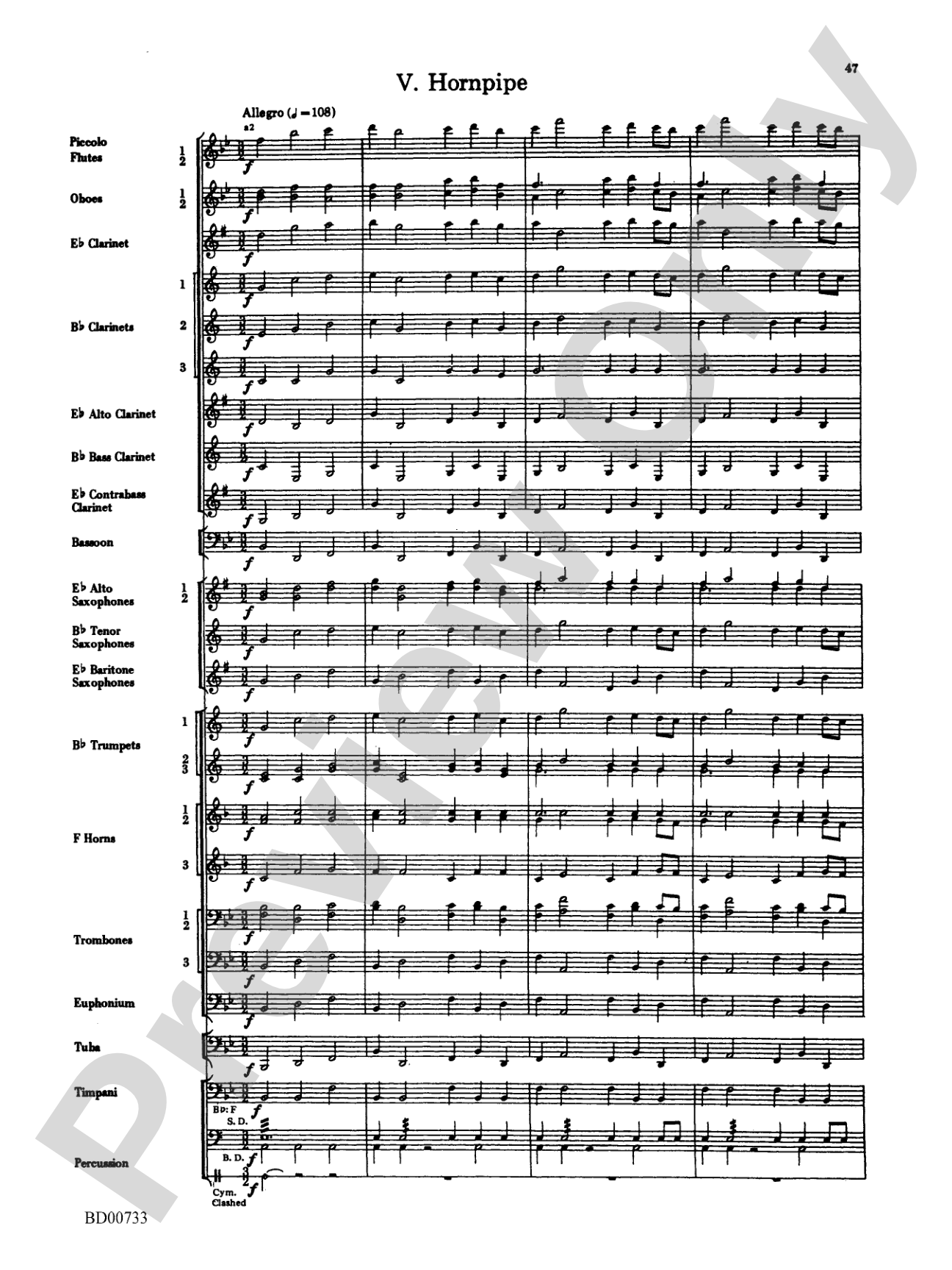
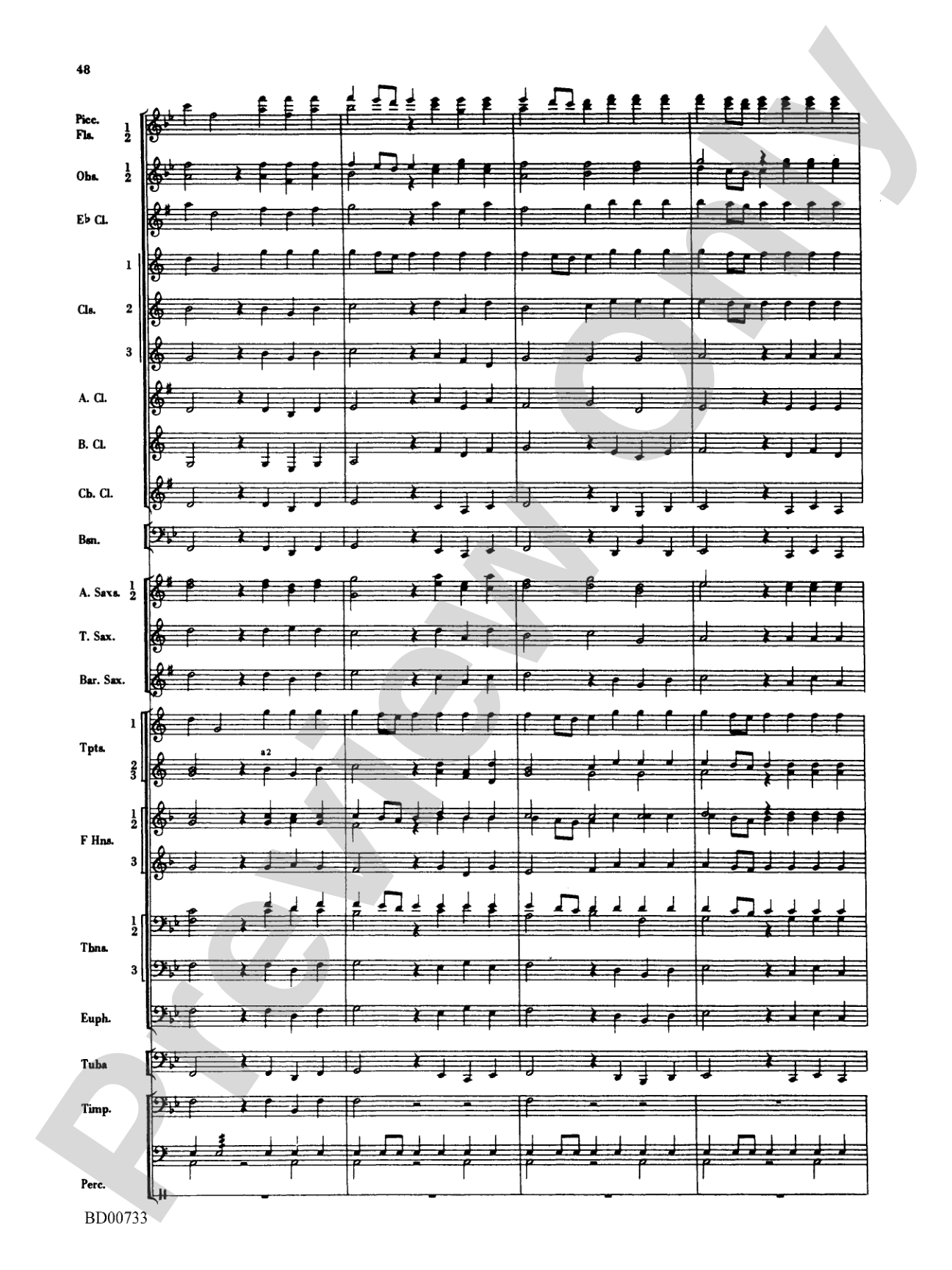
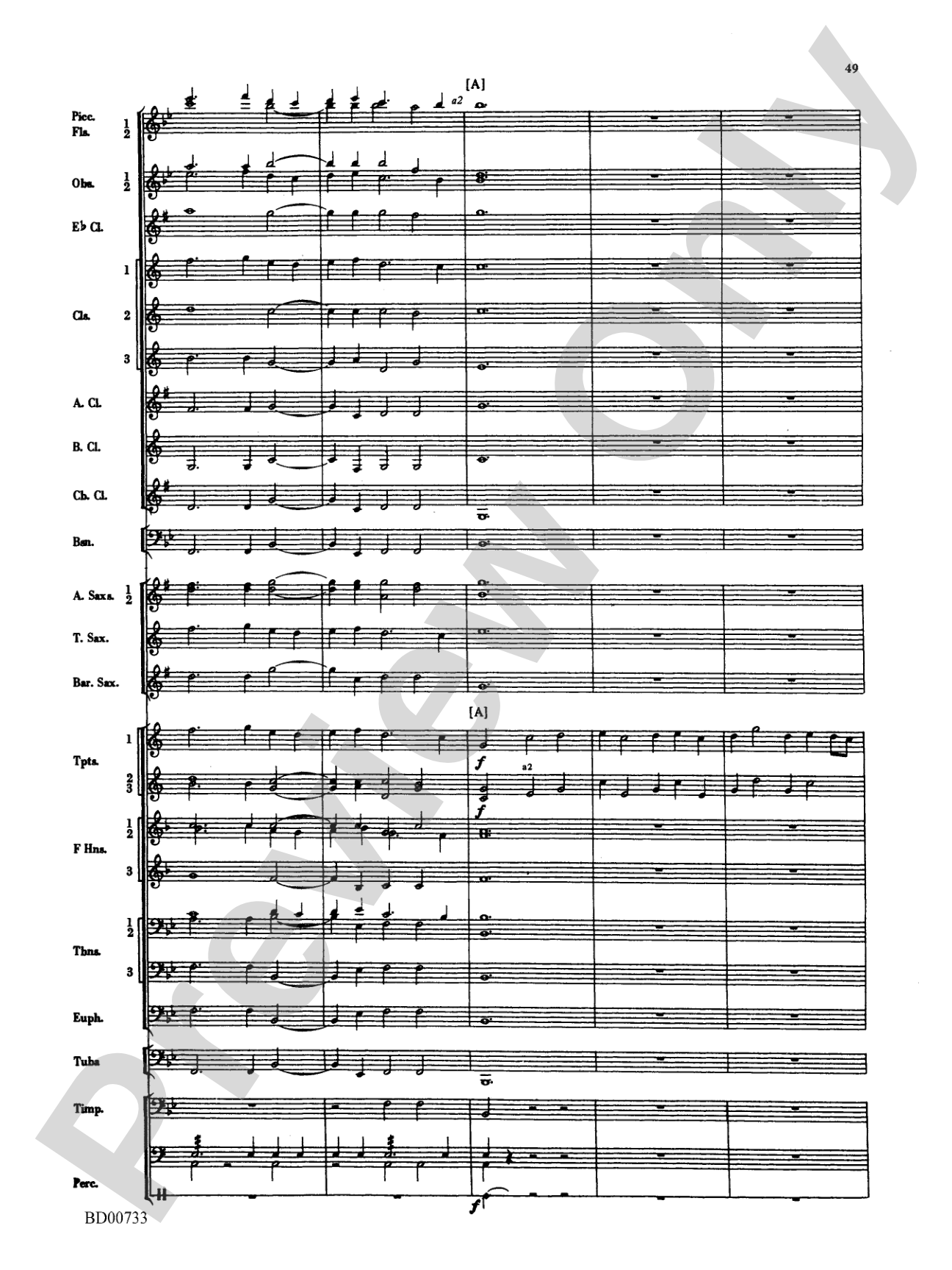
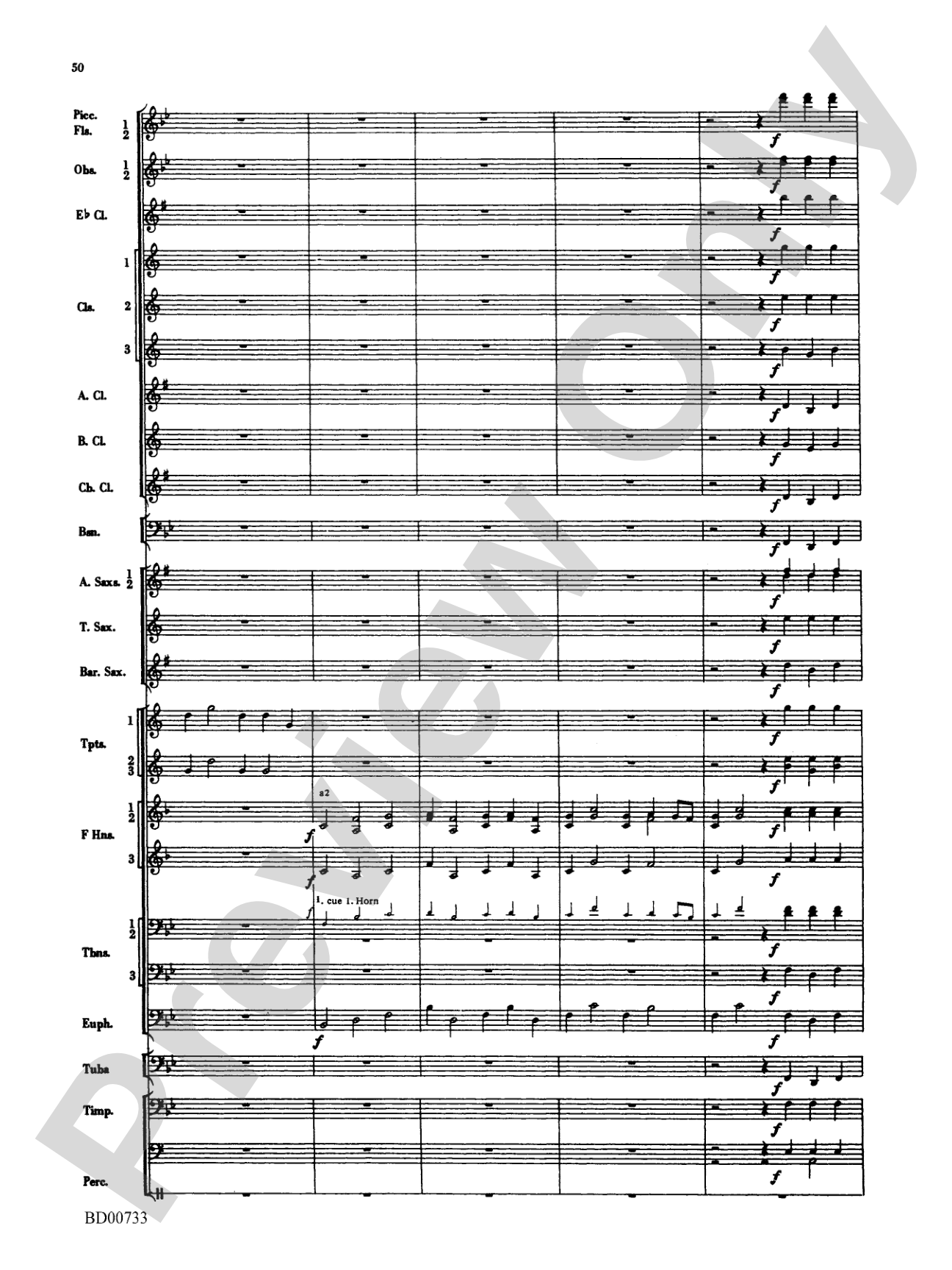
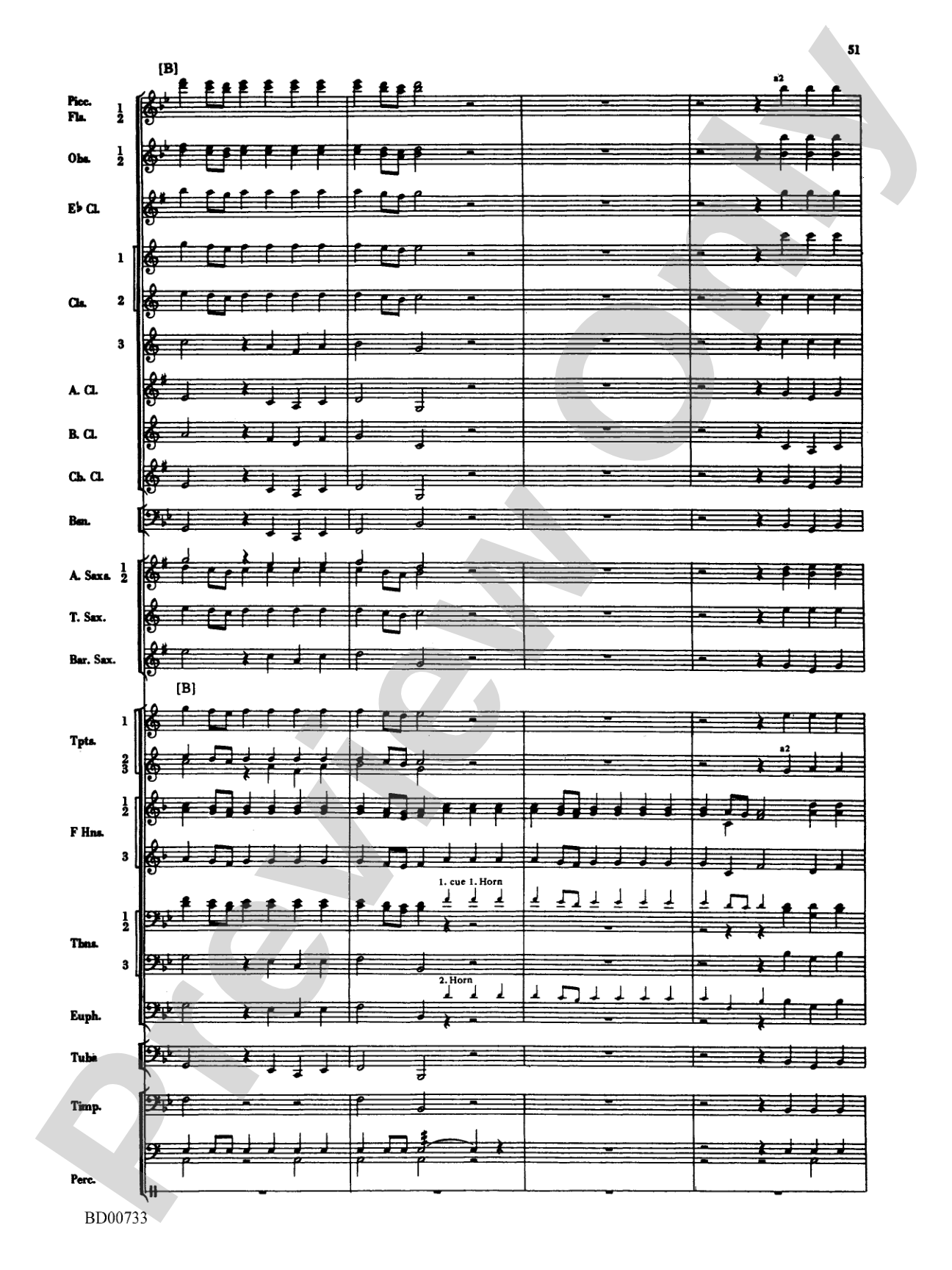

Water Music Suite: Score
By George Frideric Handel / arr. Frank Erickson
Grade: 4 (Medium)
Item: 00-PR-0003895
$15.00
Pickup currently not available
Description
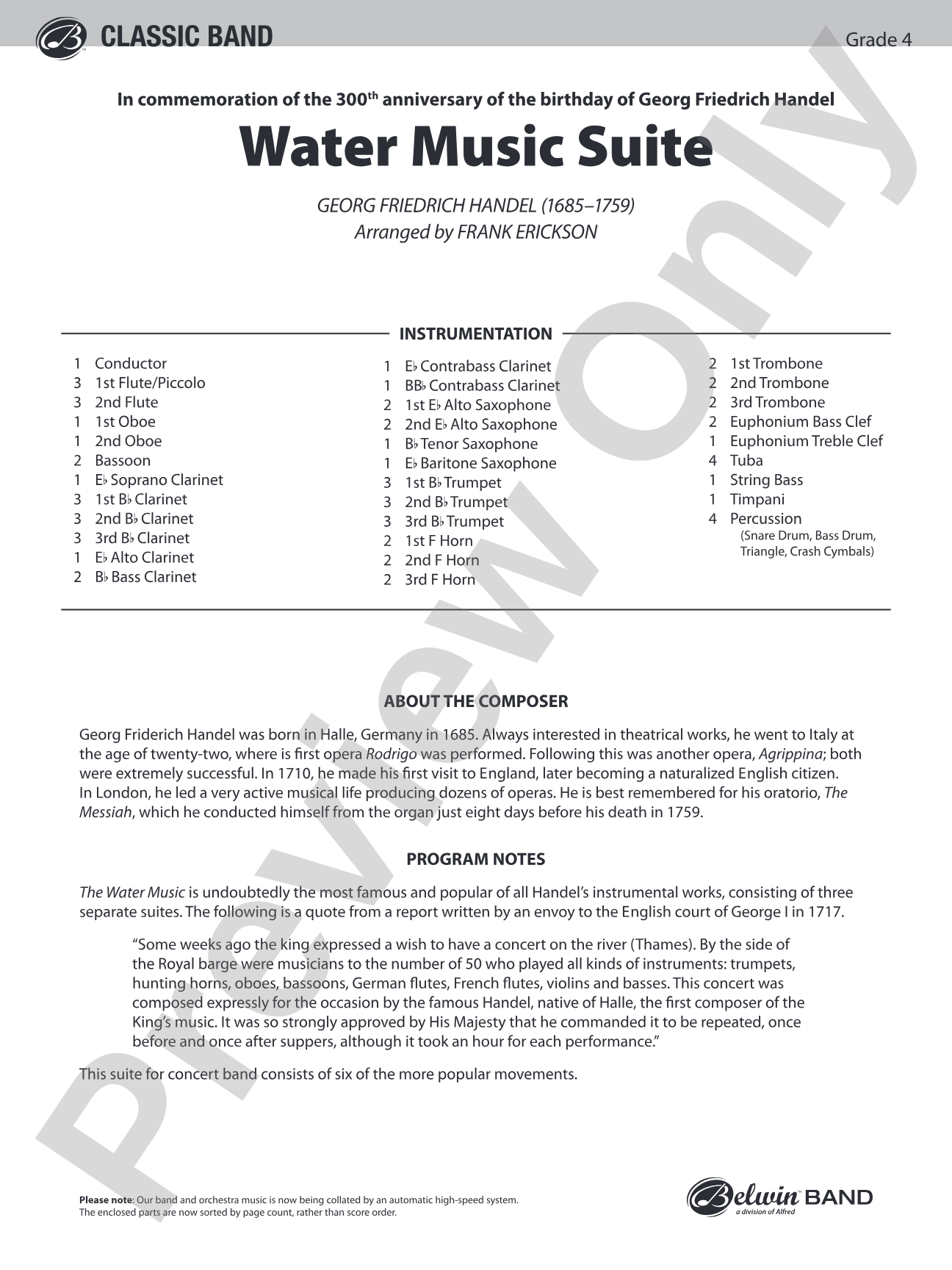
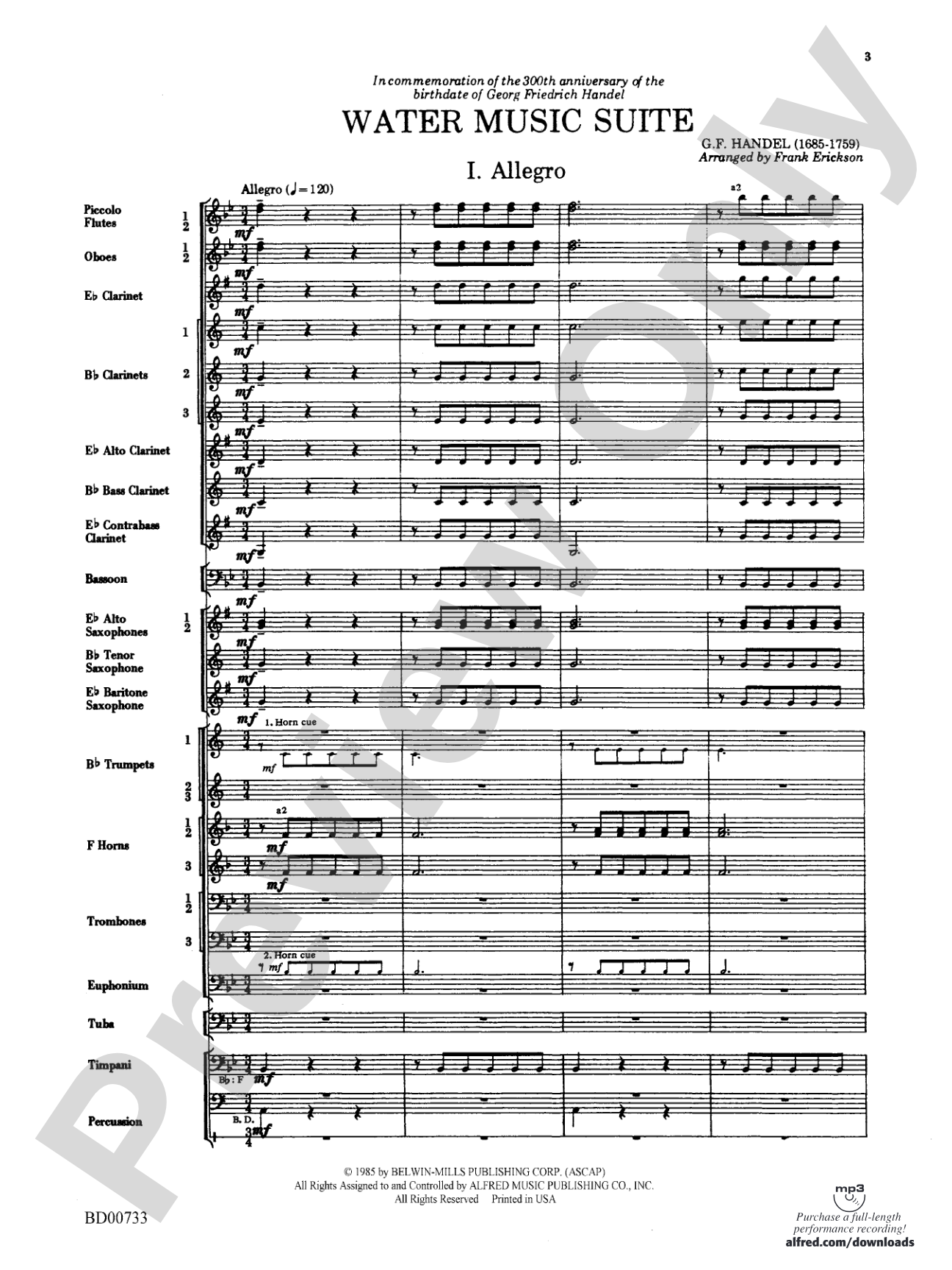
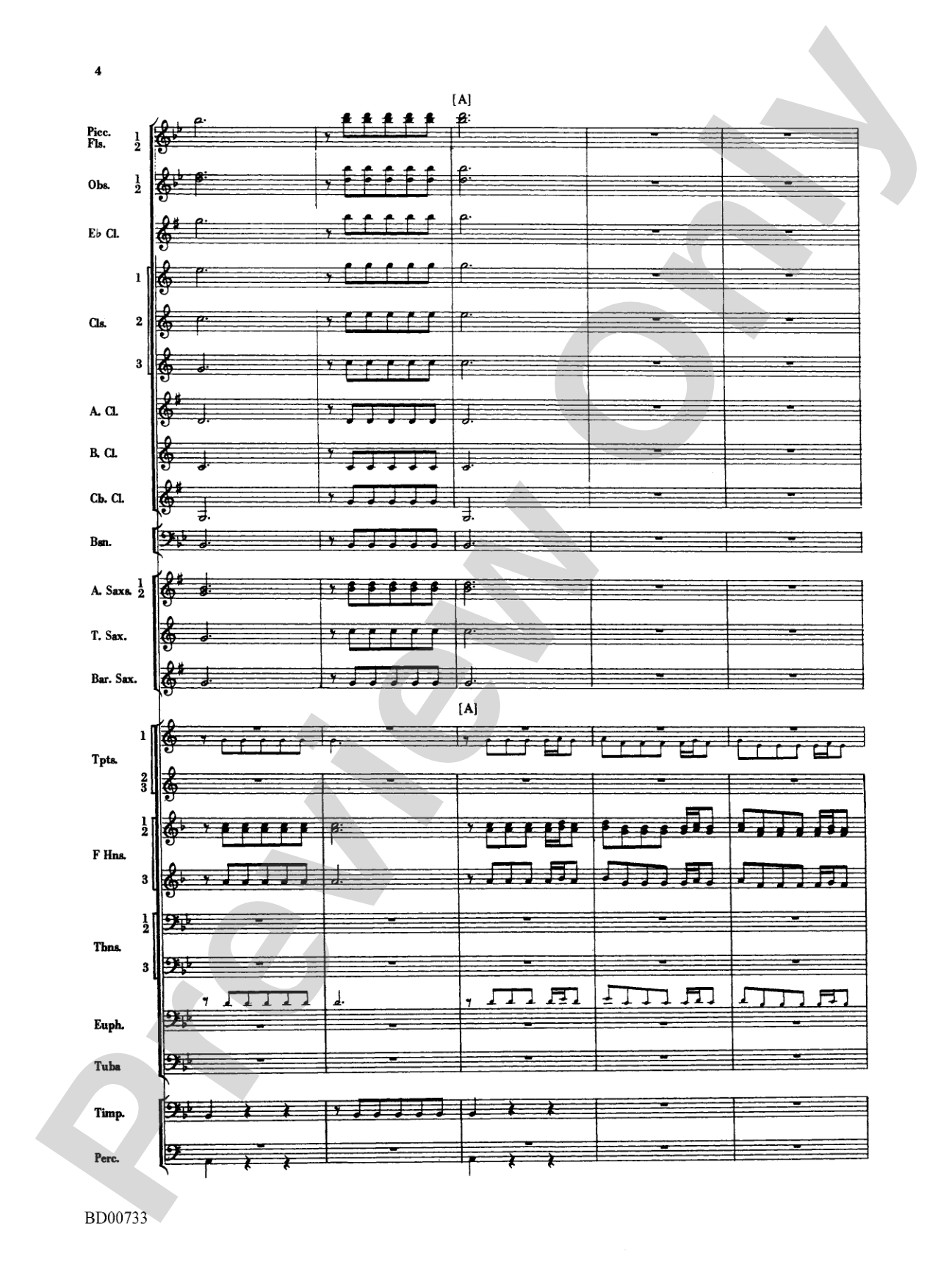
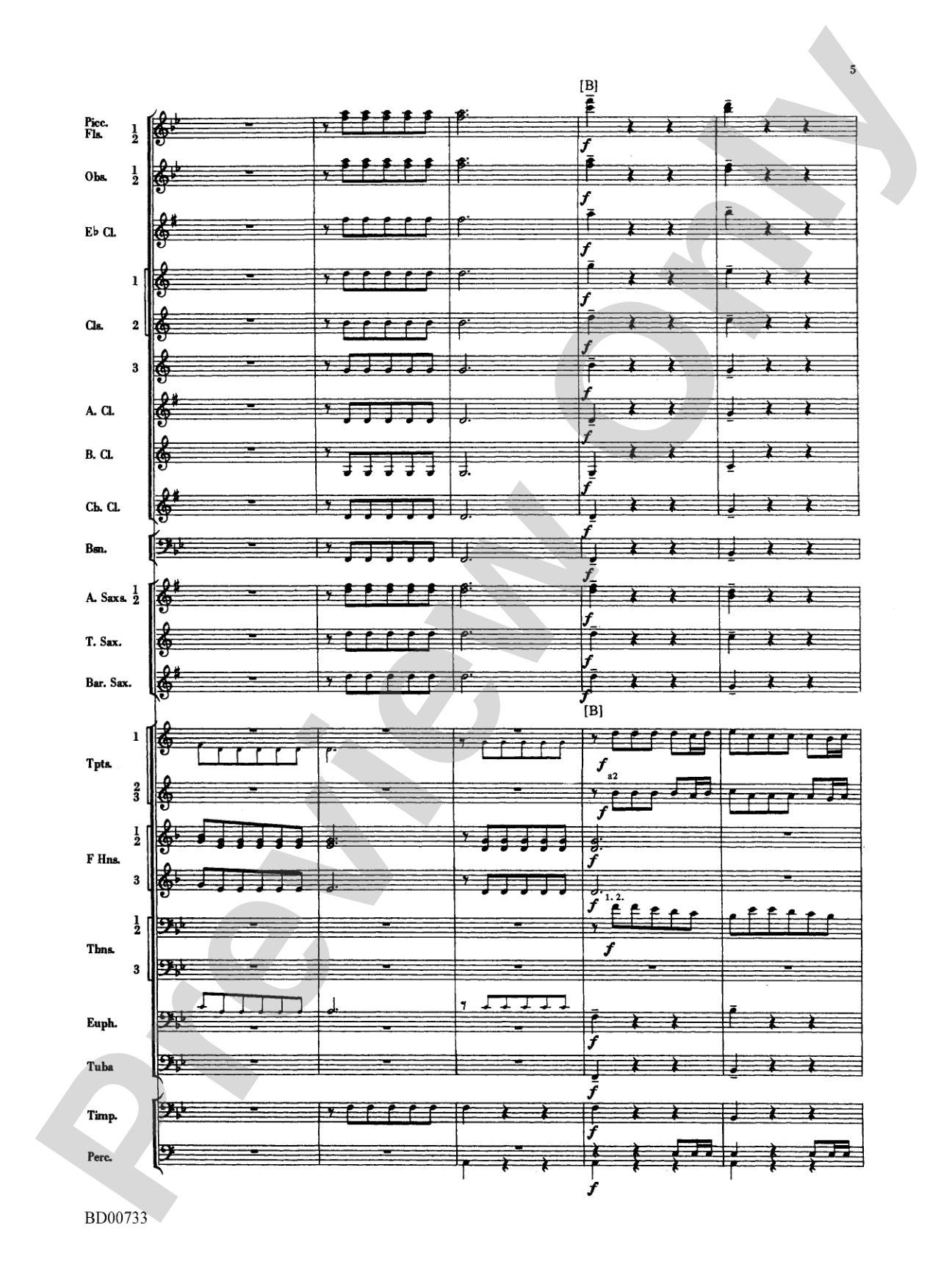
Consisting of three separate suites, Water Music is undoubtedly the most famous and popular of all of Handel's instrumental works. This suite for band consists of six of the more popular movements. The style of the period is carefully reproduced with attention to careful musical notation.


Don't just read it, hear it, play along with it, and watch your students grow with it. In MakeMusic Cloud, Water Music Suite: Score comes alive with professional accompaniment, adjustable tempo, and built-in practice tools that turn solo practice into real progress.
Open in the Player
Jump straight in and assign it today.
Start Your Free Trial
Open this title and explore the full library in minutes.
Sample Audio
1
Audio File
--:--
0:00
0:00
Sample Video
No sample videos found.
Additional Details
Series:
Belwin Symphonic Band
Publisher:
Alfred Music
Page Count:
468
SKU:
00-PR-0003895
More about this title
About the Composer: George Frideric Handel
George Frideric Handel (1685-1759) was a German-born composer who became one of the most influential figures in Baroque music, spending much of his career in England. His instrumental works, particularly those written for royal occasions and public celebrations, showcase his gift for memorable melody and structural clarity. Water Music stands as one of his most enduring achievements, composed for outdoor performance and designed to delight both connoisseurs and general audiences.
Why we love this
Frank Erickson's arrangement captures the brilliance of Handel's original conception while making it genuinely playable for concert bands at the intermediate level. The six-movement selection spans the most recognizable and rewarding passages from the full suite, giving students a taste of Baroque grandeur without the density of the complete work. This score delivers genuine musical substance: clean counterpoint, tuneful melodies that sit naturally across the band, and the kind of material that contests and audiences consistently reward.
What to expect
Water Music radiates courtly elegance and outdoor pageantry. The movements sparkle with Baroque clarity and ornamental grace, featuring dance rhythms that propel the music forward with charm rather than weight. There's an immediate sense of occasion and celebration in the melodies, making it music that sounds refined but remains accessible to listener and performer alike.
Who it's for
This arrangement works for strong intermediate bands (Grade 4) with solid fundamentals and enough musicianship to handle multi-voice independence. It suits high school concert bands preparing for festival or contest, as well as advanced middle school programs ready to move beyond beginner-level classics.
How to get the most out of it
- Shape the melodic lines with clear phrasing and gentle dynamic contours rather than treating Baroque material as static or neutral; these melodies were written to sing, and your band should reflect that.
- Balance the inner voices carefully, especially where accompanying figures or countermelodies sit in alto saxophones, horns, and middle woodwinds. Erickson's orchestration depends on hearing the full texture.
- Maintain rhythmic clarity and forward motion in the dance movements; Baroque style thrives on a steady pulse with articulate attacks, not heavy or dragging interpretation.
- Use the recorded accompaniment if available to refine ensemble precision and confirm that balances are working across the score.
How to use it
Program this suite as a standalone feature on a concert program dedicated to Baroque or "Classical Heritage" themes, or pair it with other Erickson arrangements or period repertoire to create a thematic set. Its fanfare-like character and transparent scoring make it ideal for opening a concert, while the variety across six movements sustains interest without requiring a full evening commitment.
Skills your students will build
- Baroque articulation and phrasing conventions
- Balance and blend in multi-voice textures
- Dance meter and rhythmic drive in 3/8 and 6/8 time
- Independence of inner voice lines
- Stylistically appropriate dynamics and tempo relationships across contrasting movements