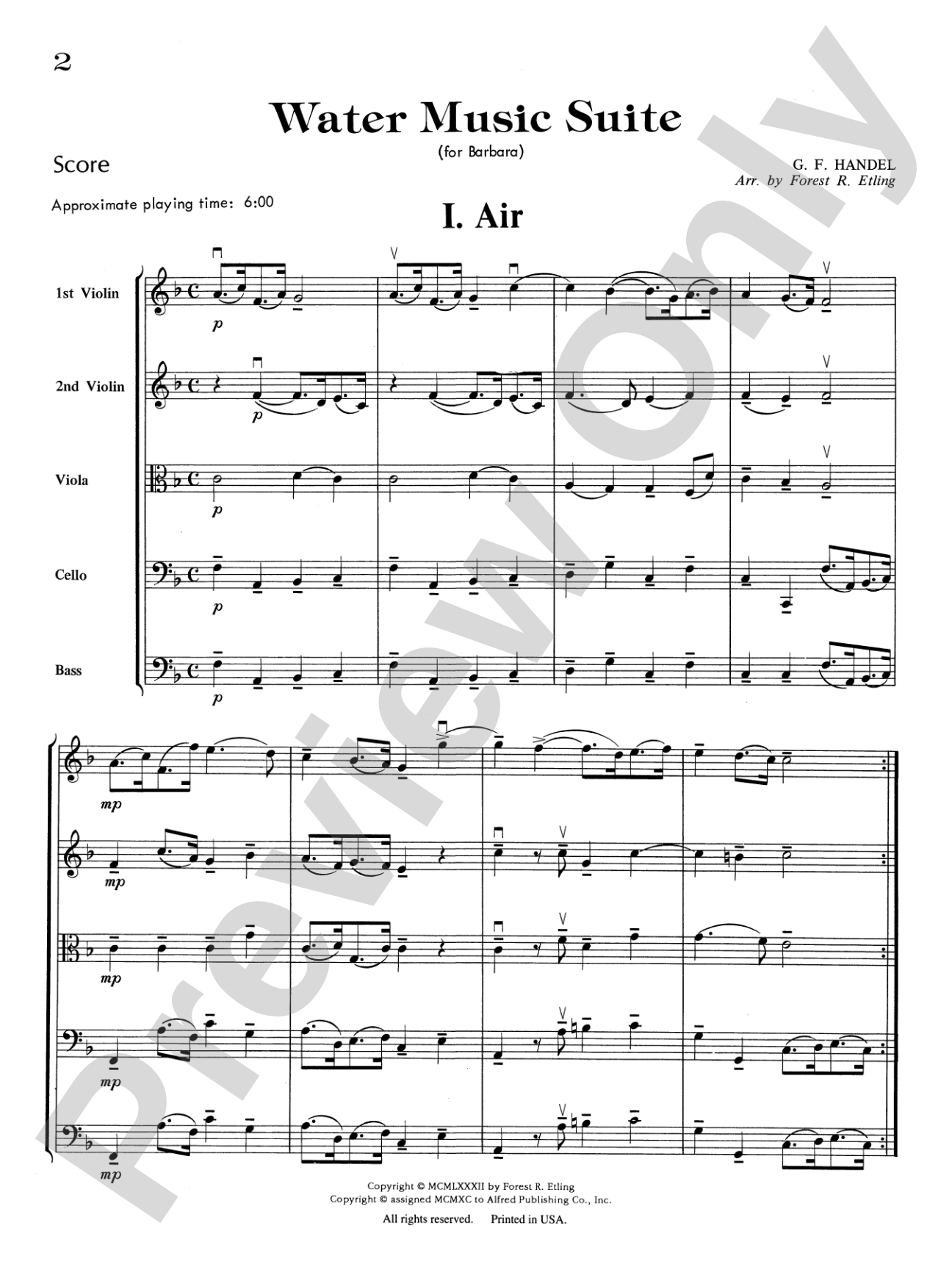
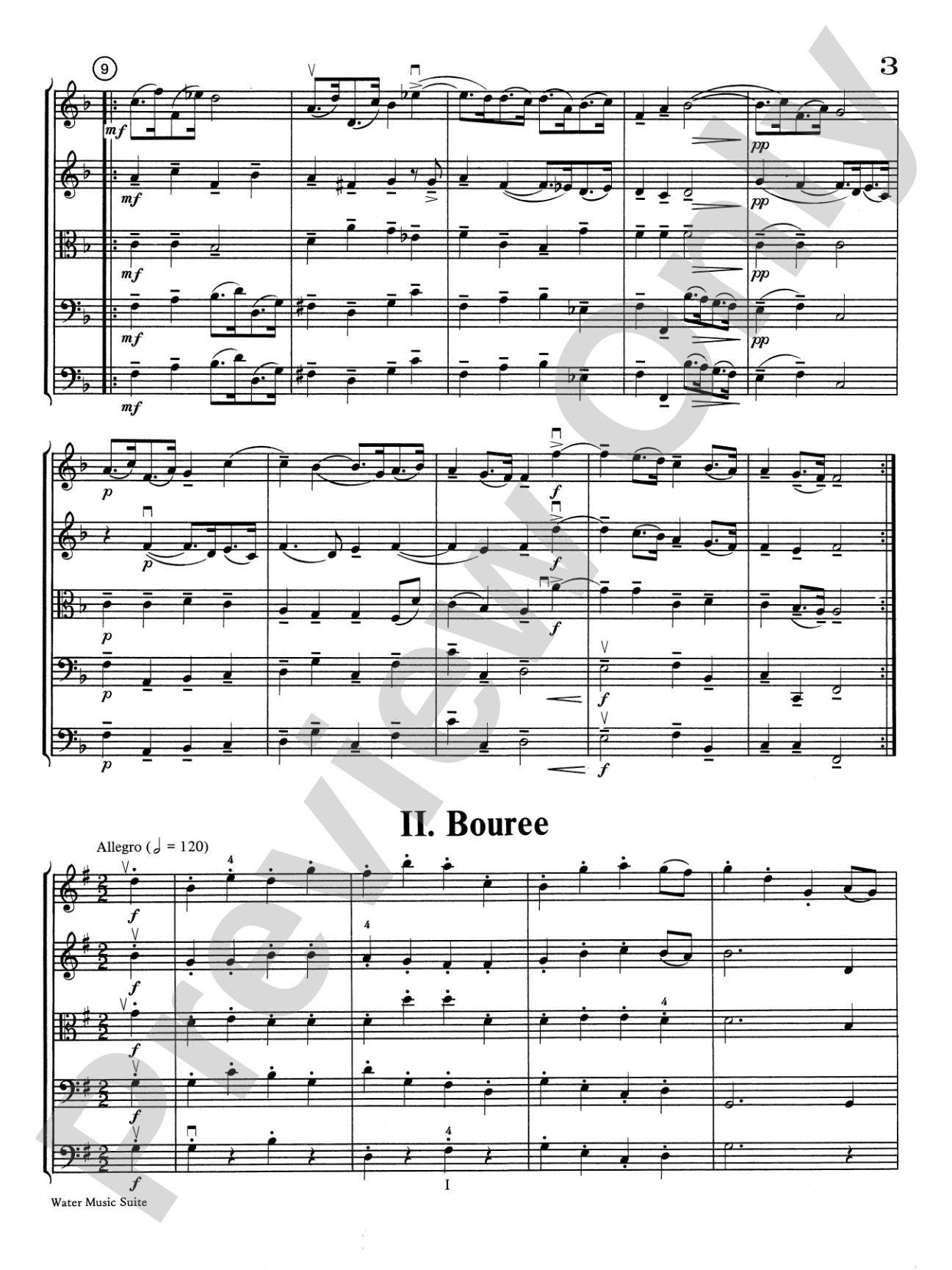
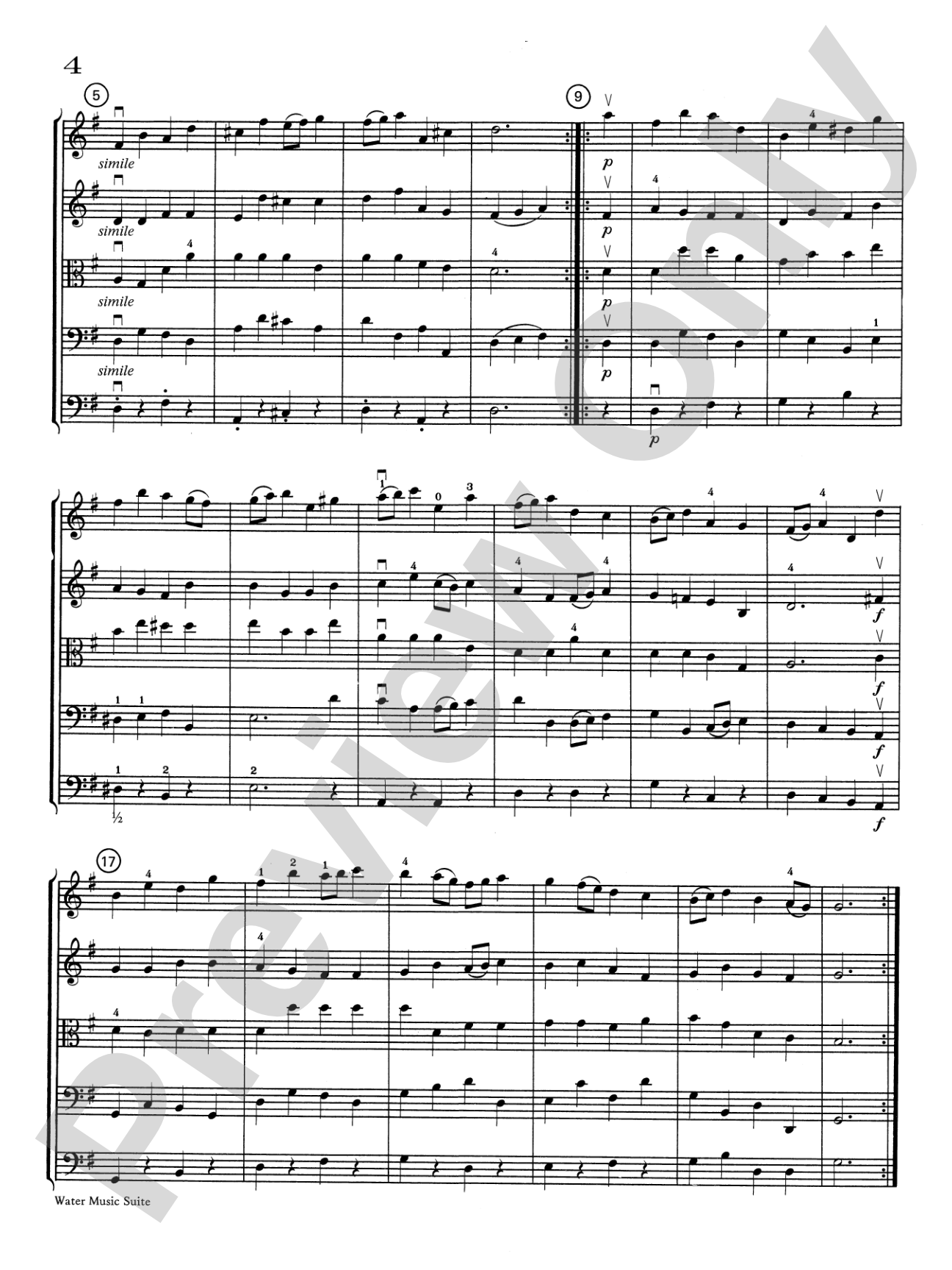
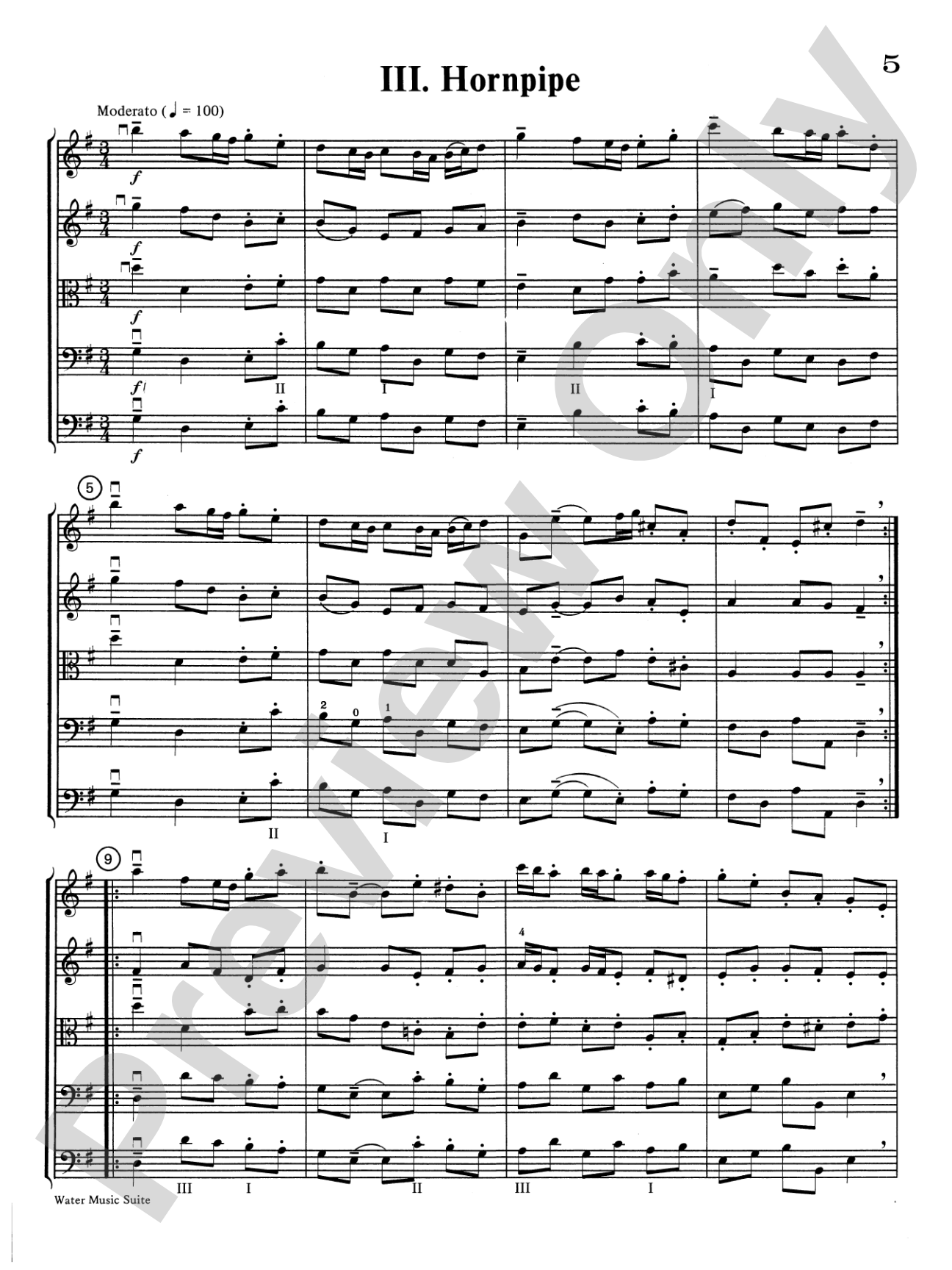
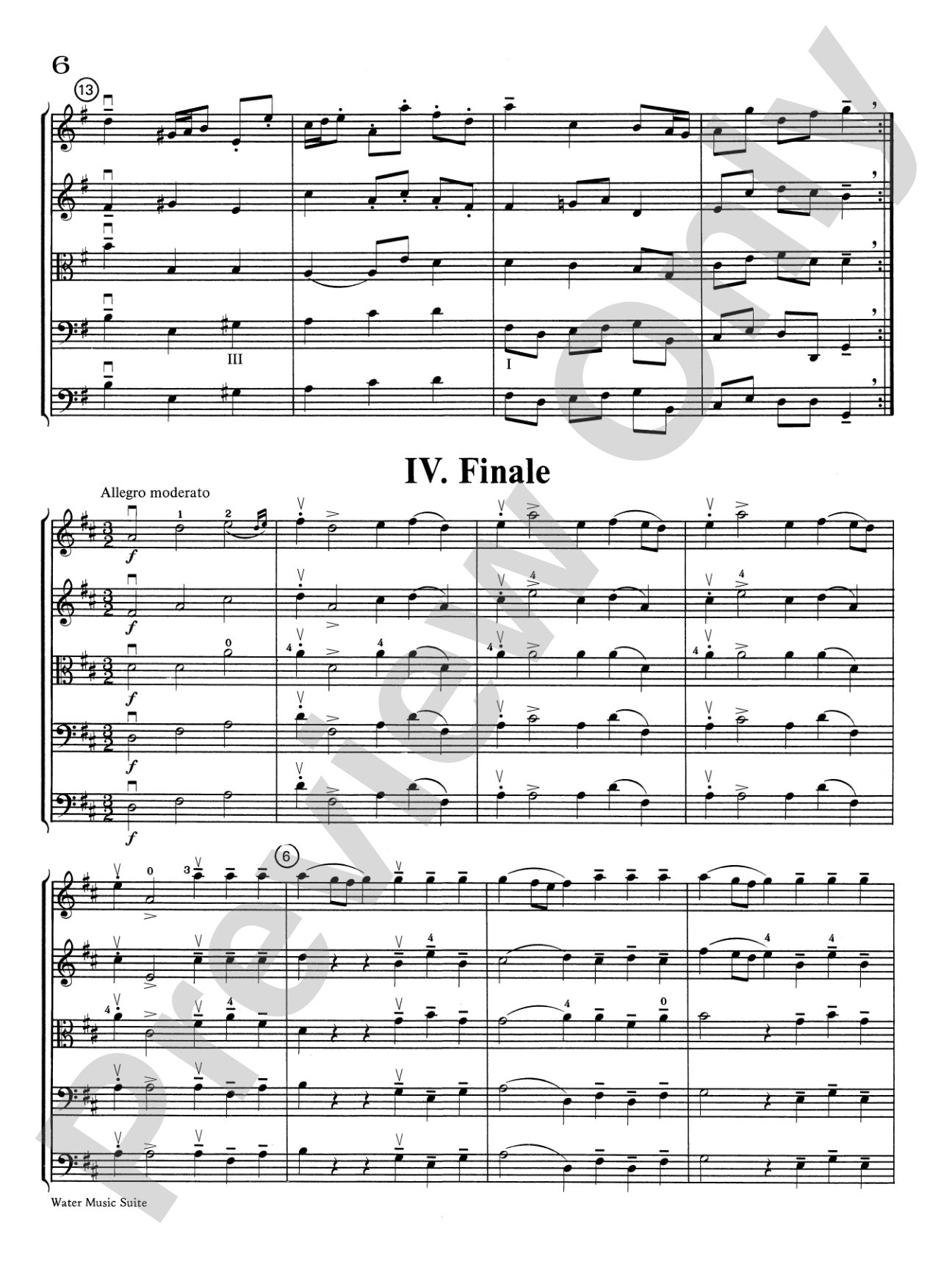
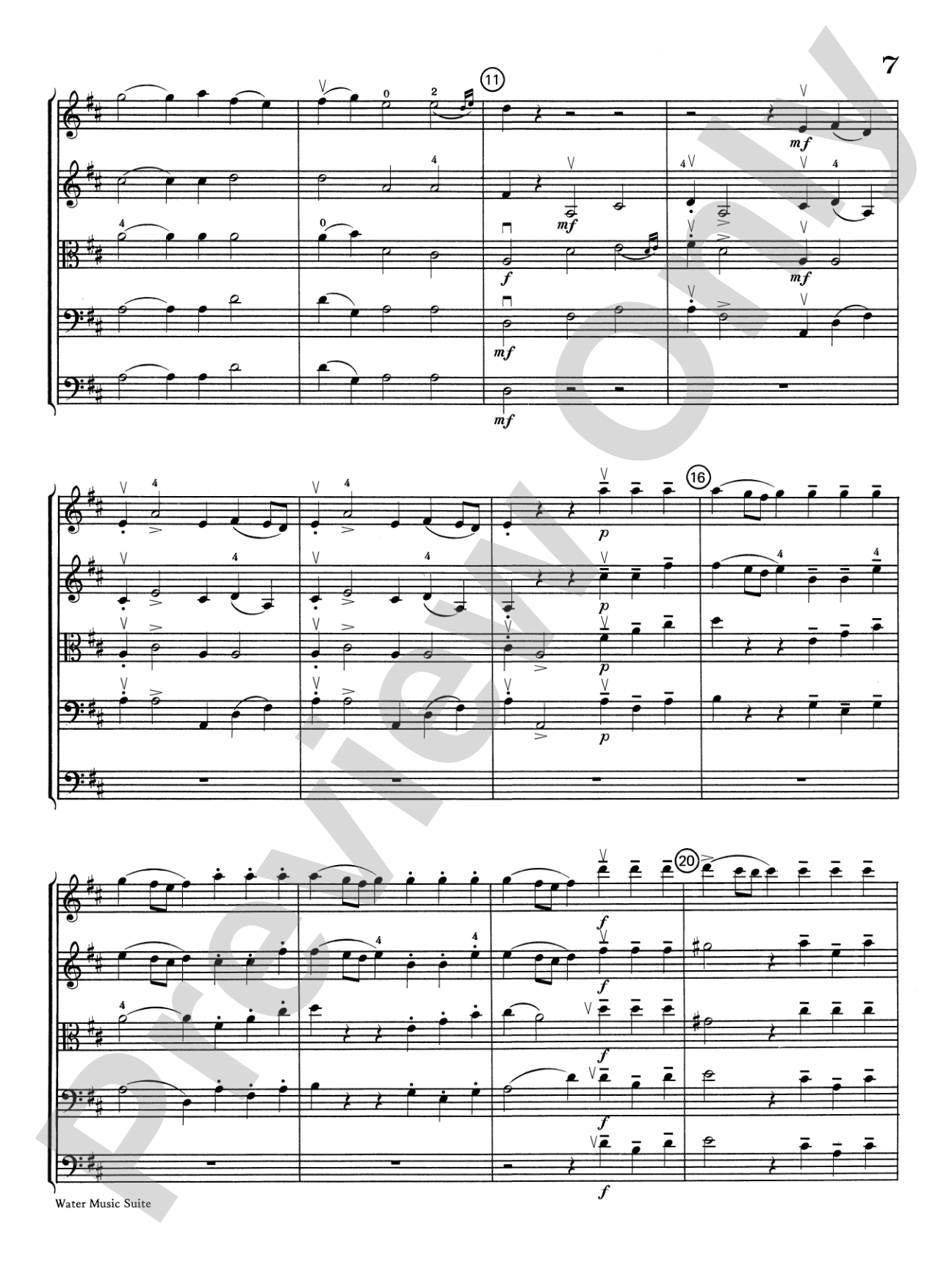
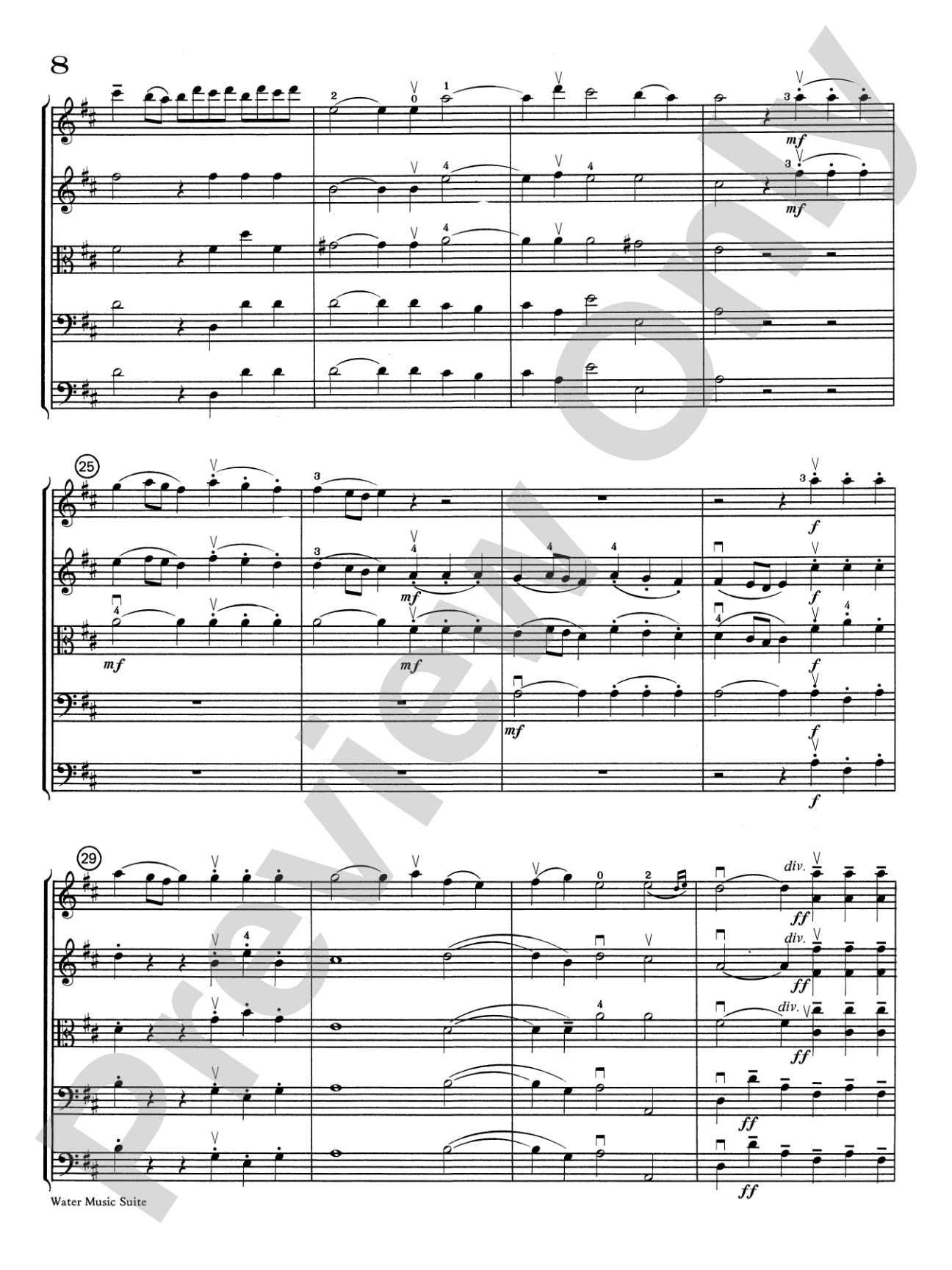
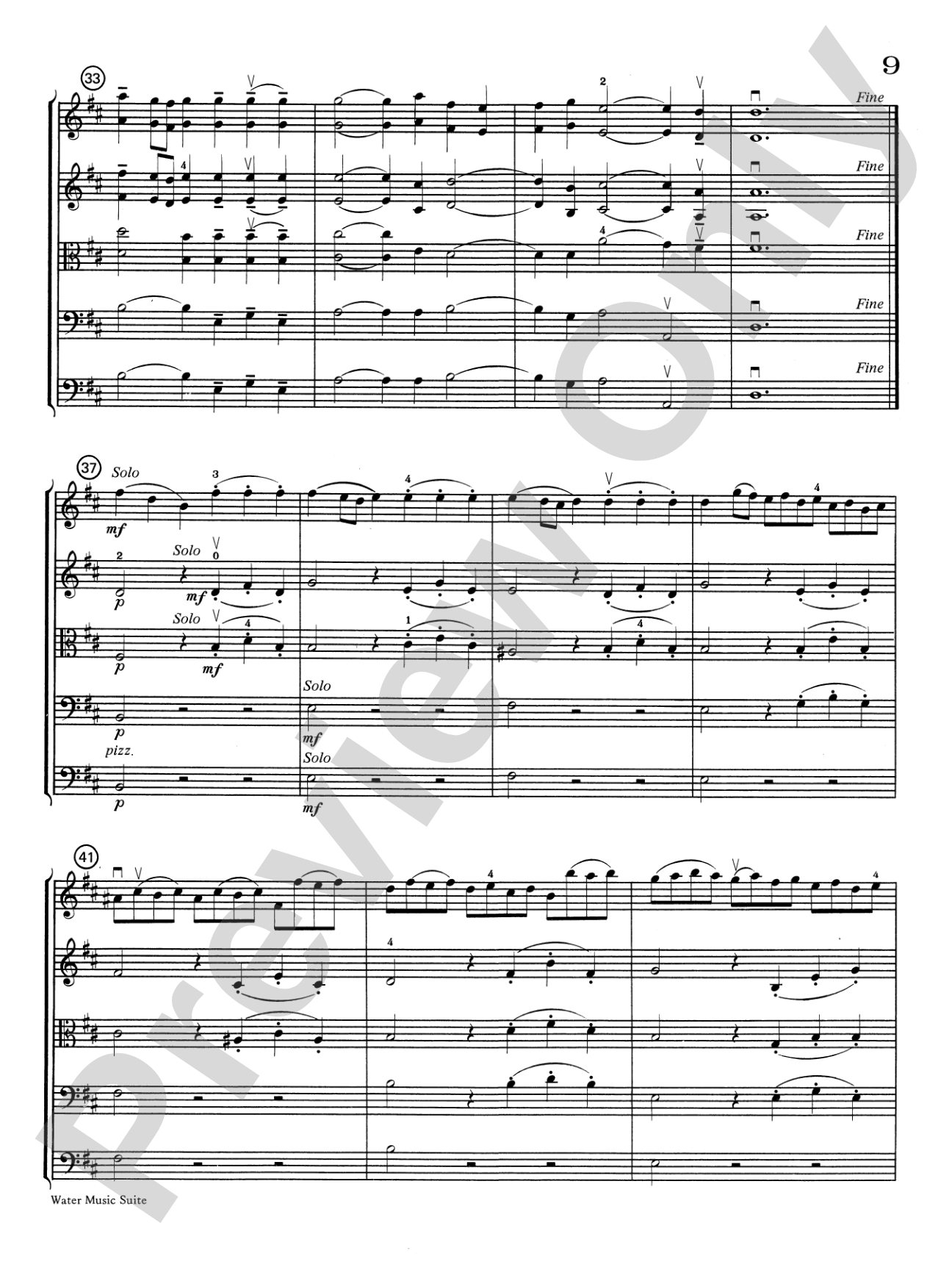
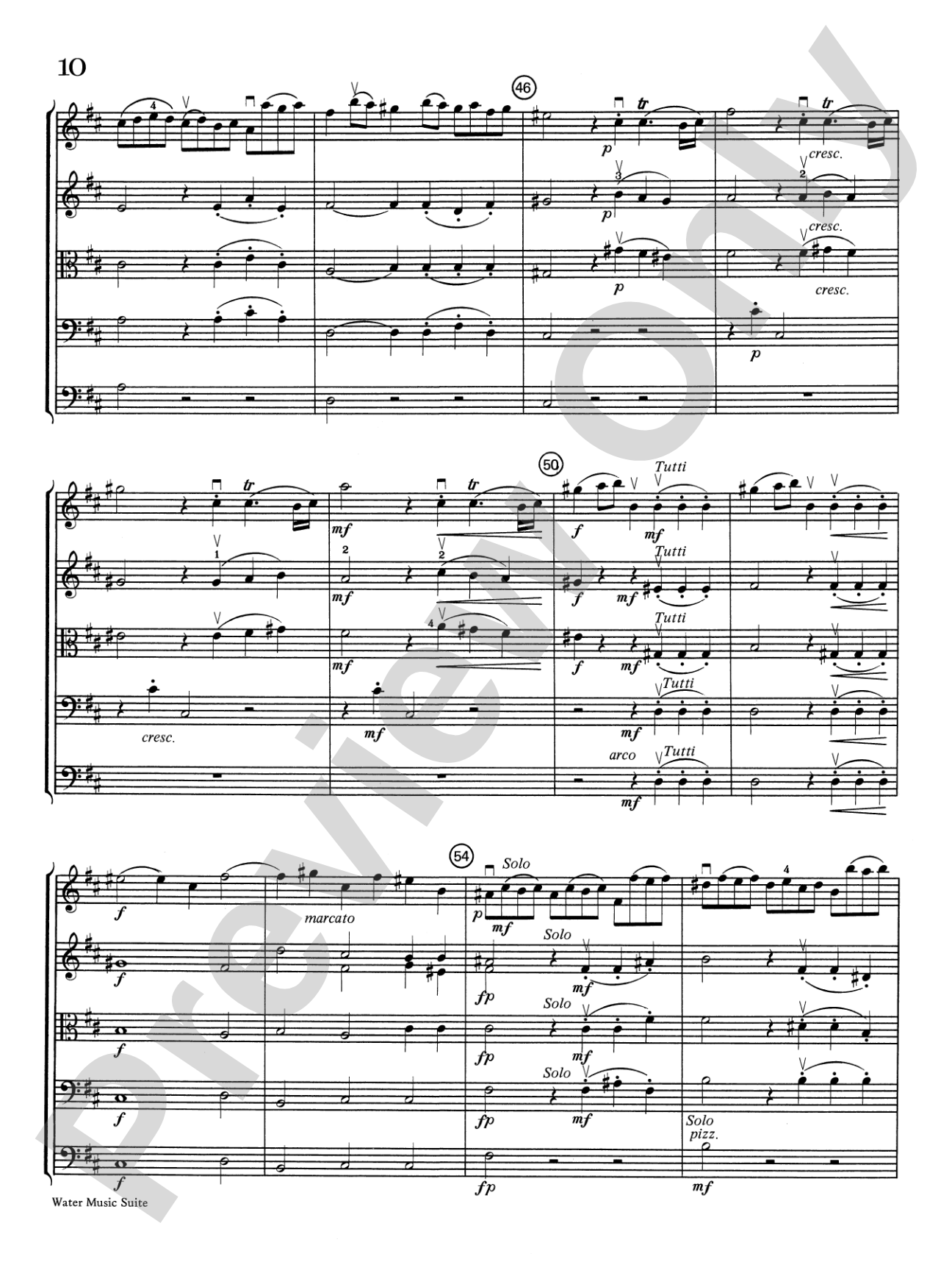
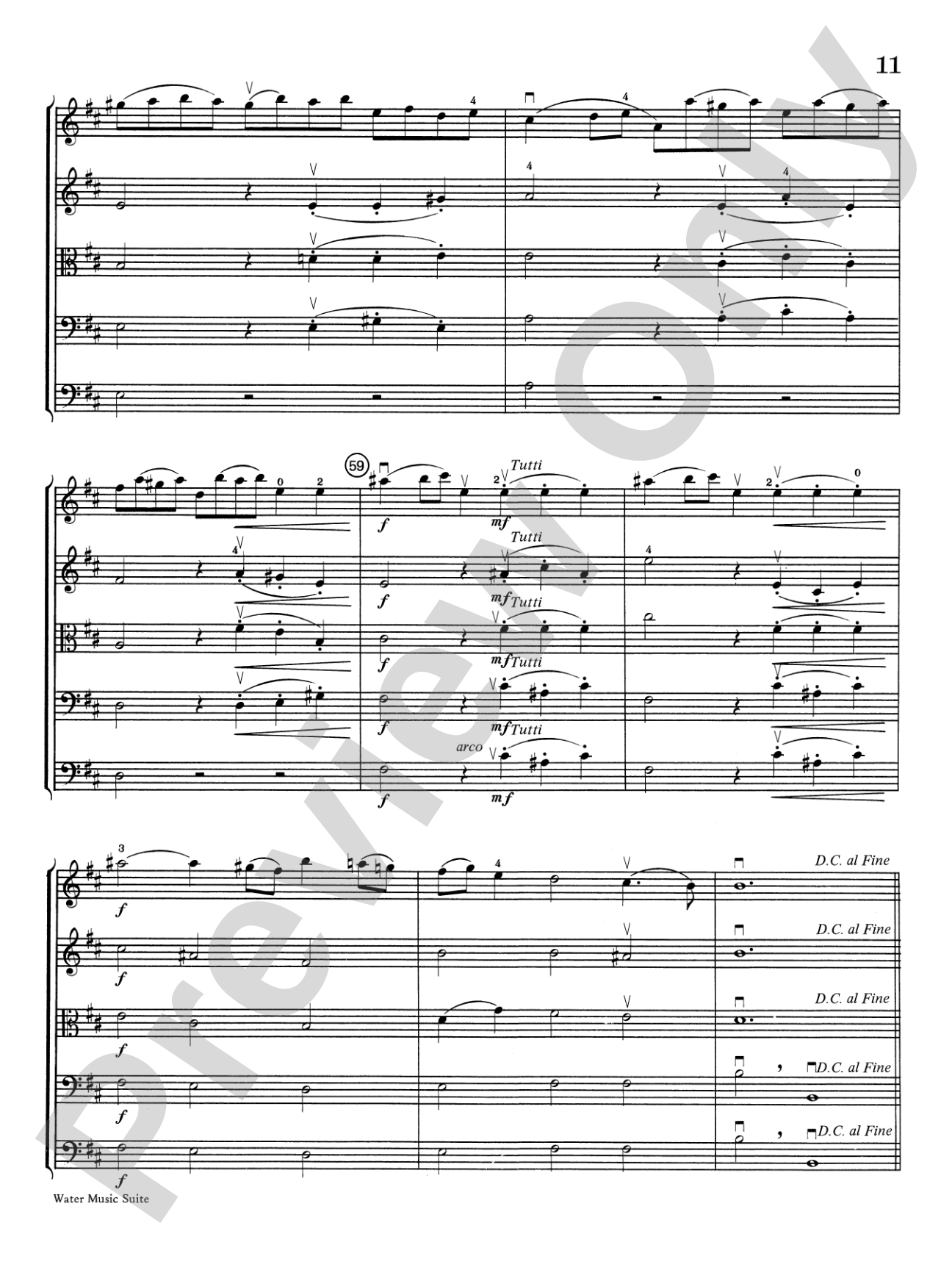
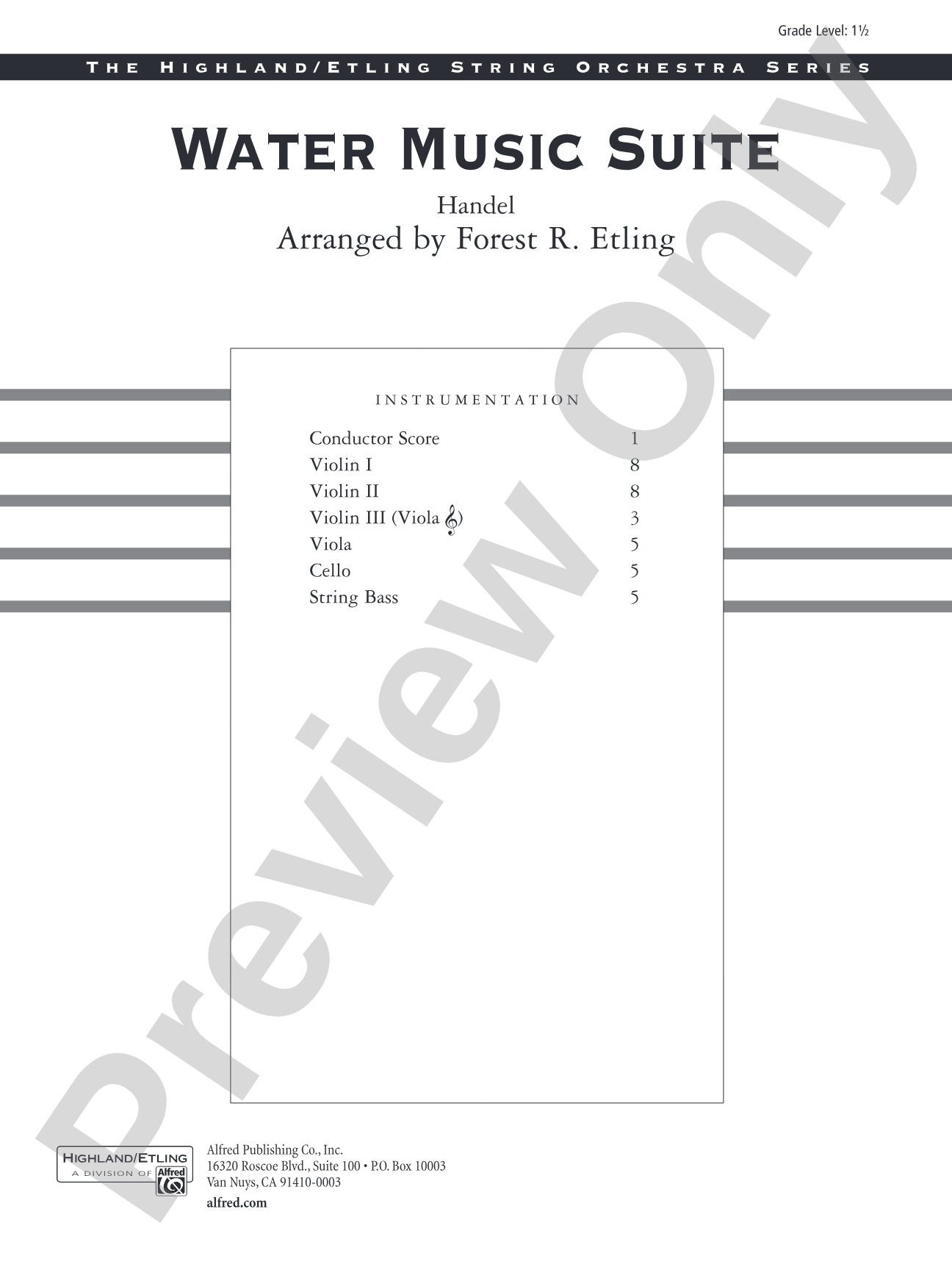
Water Music Suite: Score Sheet Music Preview

Water Music Suite: Score

By George Frideric Handel / arr. Forest Etling

Grade: 3

Item: 00-PR-0000111

Digital Download
$9.00
Description

Don't just read it, hear it, play along with it, and watch your students grow with it. In MakeMusic Cloud, Water Music Suite: Score comes alive with professional accompaniment, adjustable tempo, and built-in practice tools that turn solo practice into real progress.

Sample Audio
No sample audio found.
Sample Video
Additional Details
Series: Highland/Etling String Orchestra
Publisher: Alfred Music
Page Count: 136
SKU: 00-PR-0000111

More about this title

About the Composer: George Frideric Handel

George Frideric Handel (1685–1759) stands as one of the Baroque era's most prolific and celebrated composers. Born in Halle, Germany, he spent much of his career in England, where he became a dominant force in opera, oratorio, and instrumental music. His gift for memorable melody and structural clarity made his work immediately popular and enduringly teachable.

Why we love this

Etling's arrangement preserves the infectious energy and rhythmic vitality of Handel's original while scaling the orchestration intelligently for young string players. Grade 3 students get to inhabit genuinely important repertoire without drowning in technical demands, and the suite's sectional structure keeps rehearsals engaging and gives you natural performance segments if a full concert run isn't feasible.

What to expect

Water Music exudes courtly elegance and rhythmic buoyancy. The suite moves between stately sections and bright, dancing passages with unfailing grace. Students will feel the structural inevitability of Baroque form while enjoying the pure pleasure of playing something that sounds confident and complete.

Who it's for

String orchestras in grades 3 and up looking for Baroque repertoire with immediate gratification and lasting musicality. This works equally well for contest preparation, concert programming, or as a cornerstone piece in a curriculum that values historical literacy alongside technical growth.

How to get the most out of it

  • Anchor the rhythm section (cellos and basses) early. These players carry the harmonic foundation that lets violins shine, so lock in their part before layering the upper voices.
  • Shape the phrases with forward motion rather than strict meter. Baroque style benefits from subtle breathing between sections and gentle dynamic swells that follow the natural arc of each melody.
  • Balance transparency over volume. Young orchestras often push too hard; let the clarity of individual lines speak. Handel's orchestration thrives when you hear each voice.
  • Record a sectional run-through for your orchestra to hear. Students benefit enormously from understanding how the parts fit together before they tackle the full ensemble sound.

How to use it

Open a concert with the first movement for immediate polish and audience engagement, or program the full suite as a centerpiece that demonstrates your orchestra's range of style and articulation. The piece also serves beautifully as a festival or contest selection; it's well-known enough to impress judges but flexible enough in interpretation to feel fresh every time.

Skills your students will build

  • Baroque articulation and phrasing conventions
  • Clear part independence within homophonic textures
  • Rhythmic coordination across divided strings
  • Sustained tone control and intonation in longer phrases
  • Reading and balancing multiple independent melodic lines

You May Also Like