
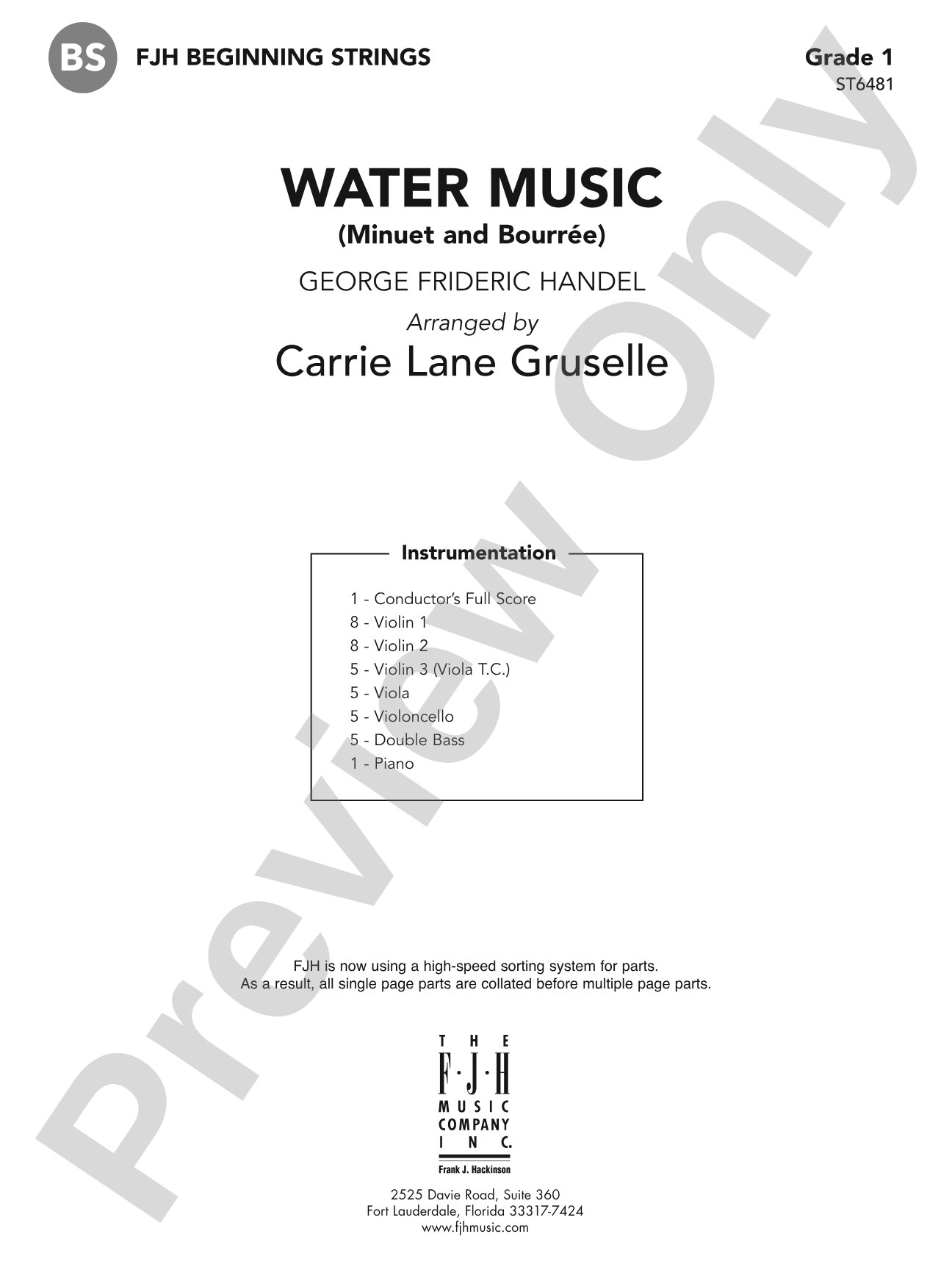
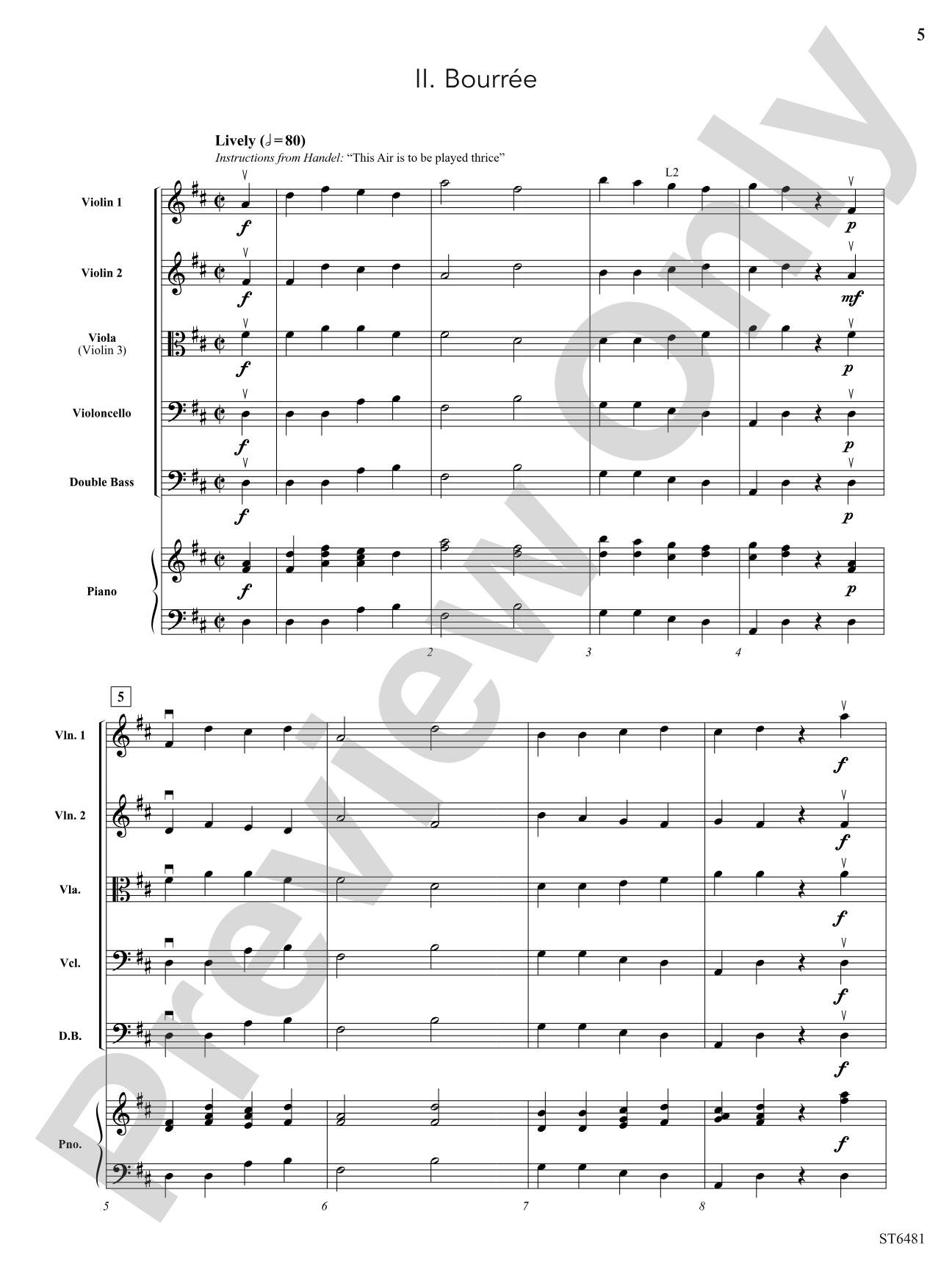
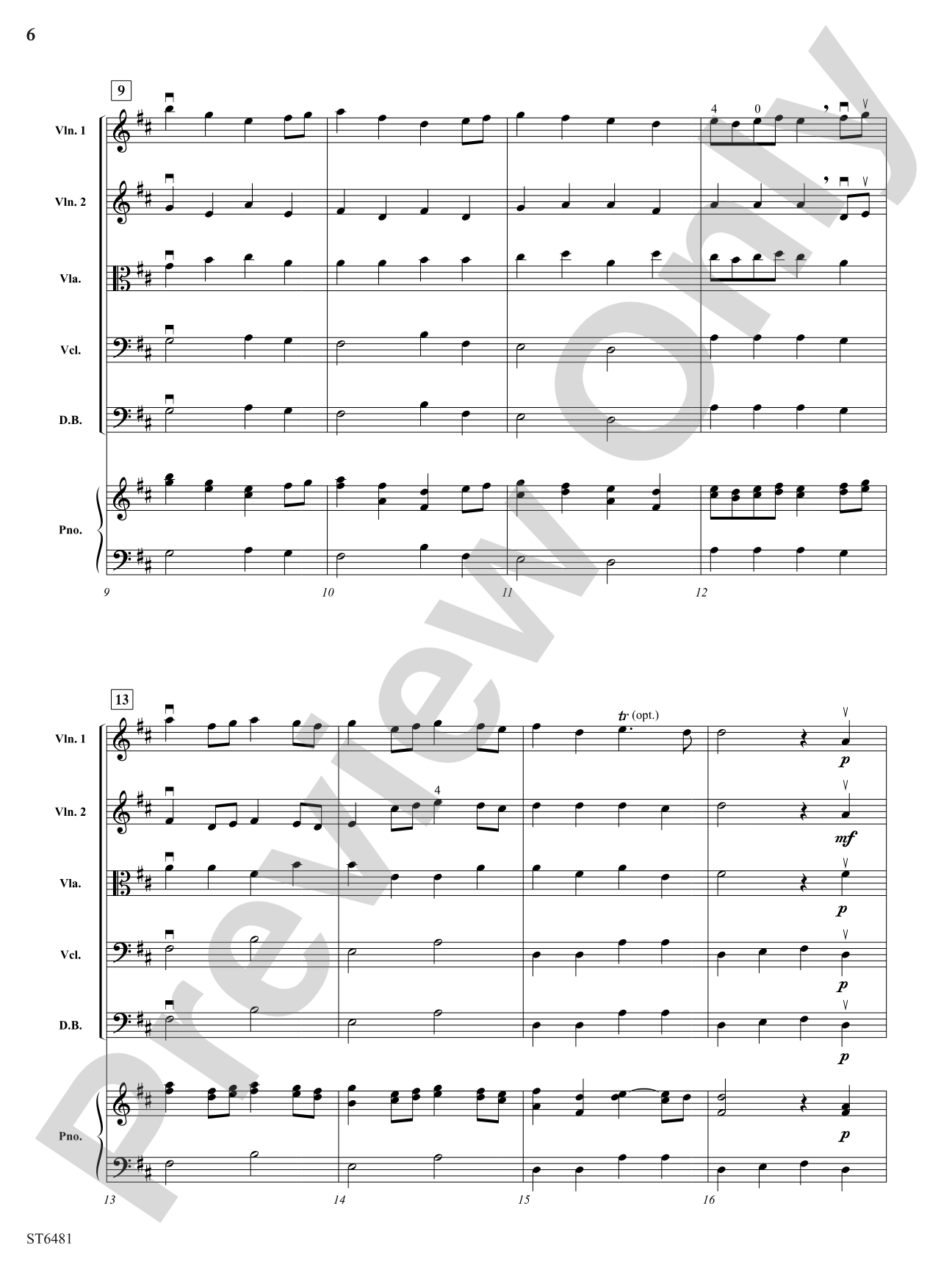
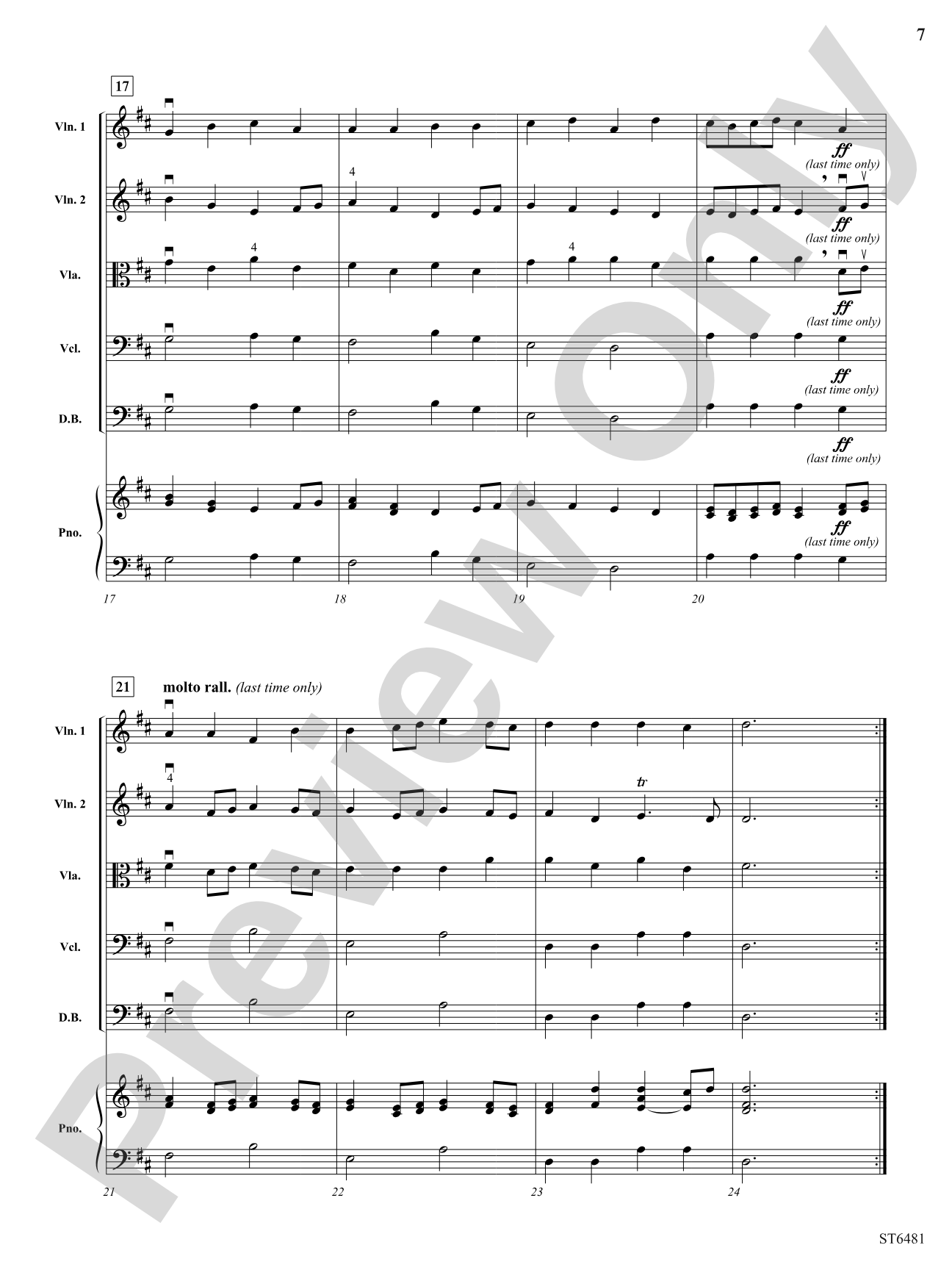

Water Music: String Orchestra Conductor Score & Parts
By George Frideric Handel / arr. Carrie Lane Gruselle
Grade: 1
Item: 98-DST6481
$45.00
Pickup currently not available
Buy Extra Parts (Digital PDF Download)
| Product | Price | Quantity |
|---|---|---|
| Water Music: Score | $5.00 | |
| Water Music: Violin 1 | $7.00 | |
| Water Music: Violin 2 | $7.00 | |
| Water Music: Violin 3 (Viola T.C.) | $7.00 | |
| Water Music: Viola | $7.00 | |
| Water Music: Violoncello | $7.00 | |
| Water Music: Double Bass | $7.00 | |
| Water Music: Piano | $7.00 |
Parts Added to Cart!
Description
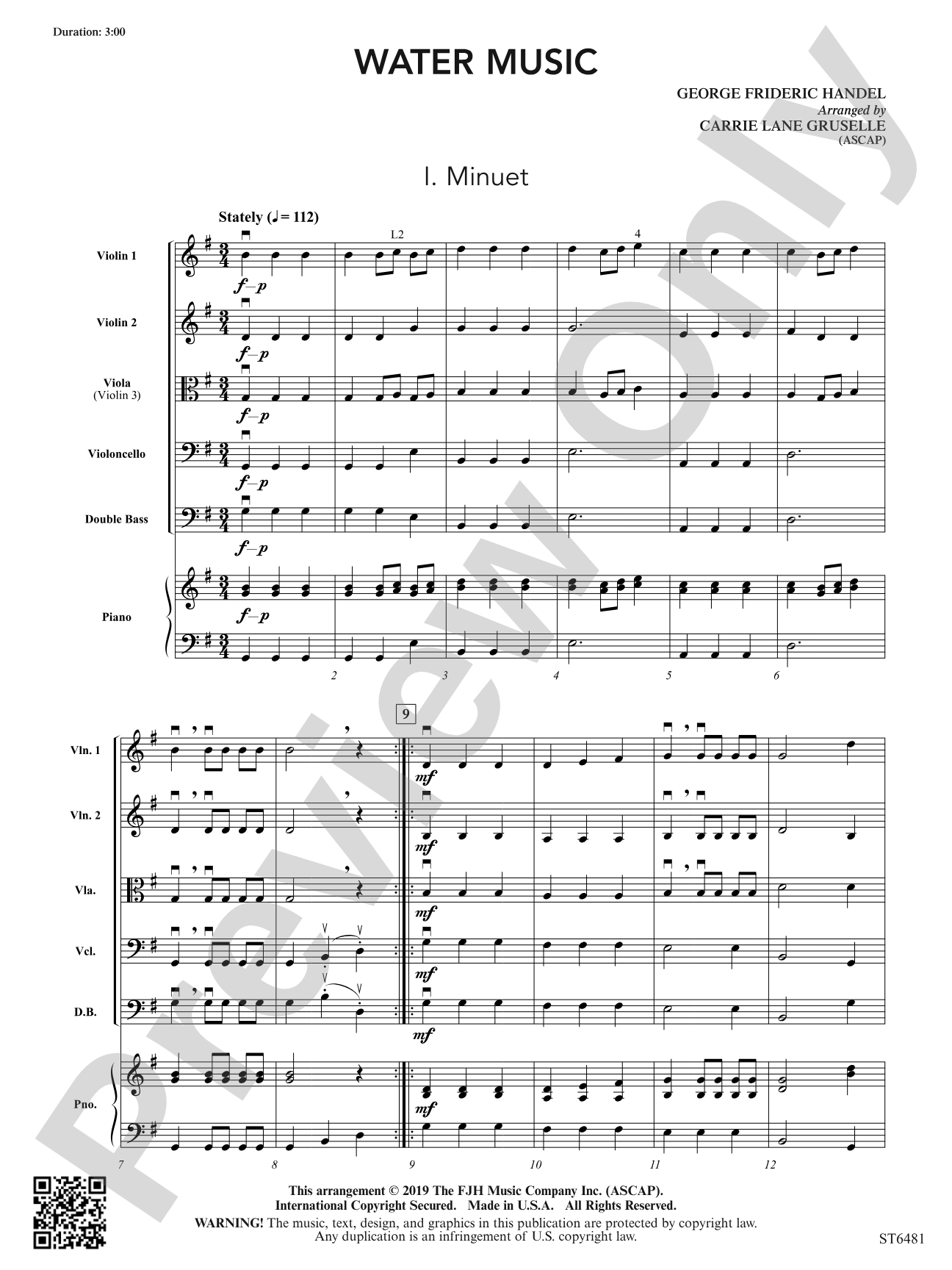
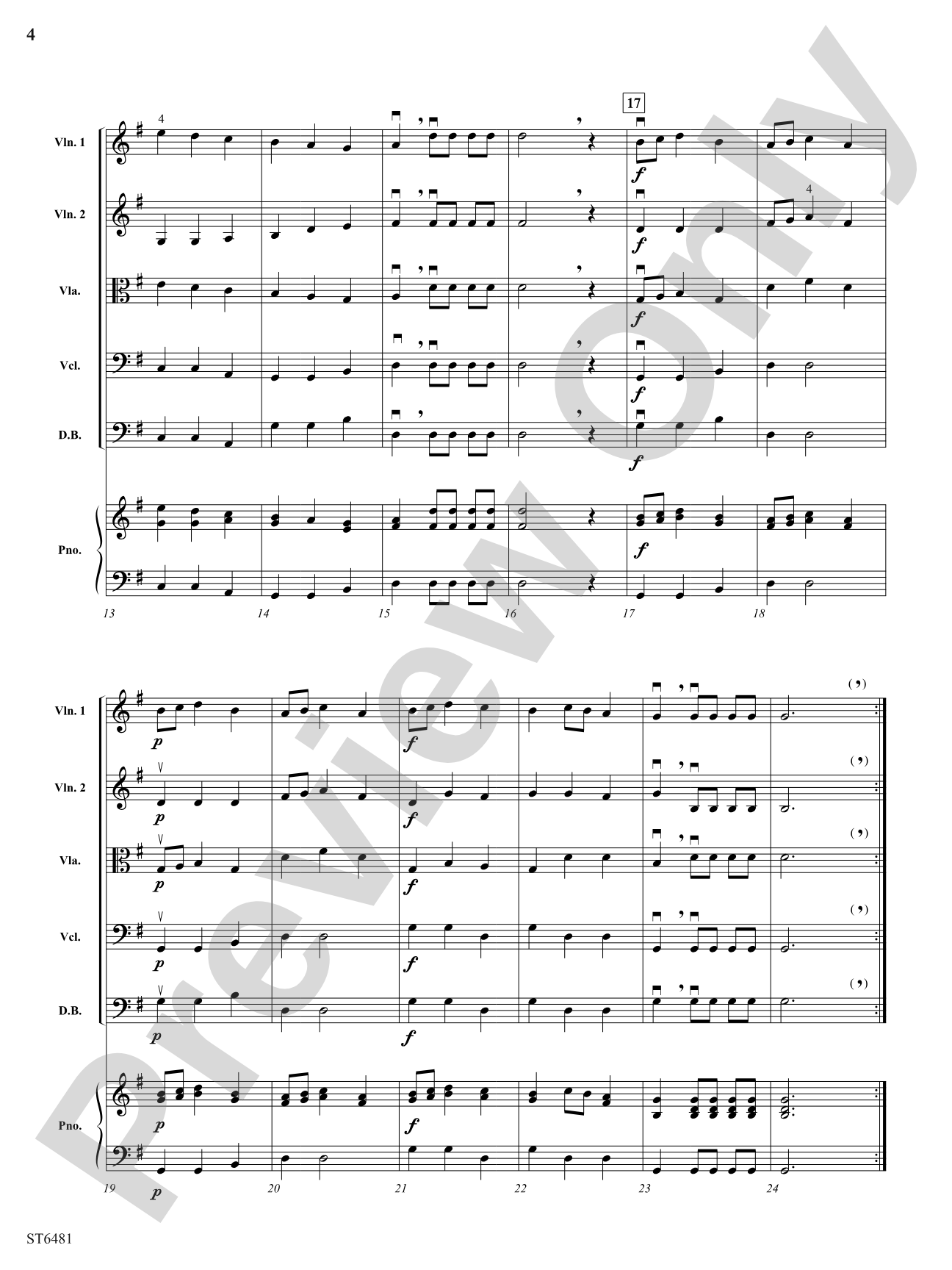
Feature this amazingly authentic arrangement of a Baroque masterpiece! Two movements from Handel's Water Music Suite No. 2 highlight some of the most famous music from the Baroque era while falling well within the technical capability of a young orchestra. Wonderful music with a vast amount of teaching opportunities!


Water Music: String Orchestra Conductor Score & Parts isn't in MakeMusic Cloud just yet...but it could be. Let us know you'd like to see it, and you'll help shape what comes next. In the meantime, start a free trial and dive into thousands of interactive titles your students can play along with today.
Request This Title
Tell us you want it.
Start Your Free Trial
Explore everything that's ready to play right now.
Sample Audio
1
Audio File
--:--
0:00
0:00
Sample Video
Additional Details
Series:
FJH Beginning Strings
Publisher:
The FJH Music Company, Inc.
SKU:
98-DST6481
More about this title
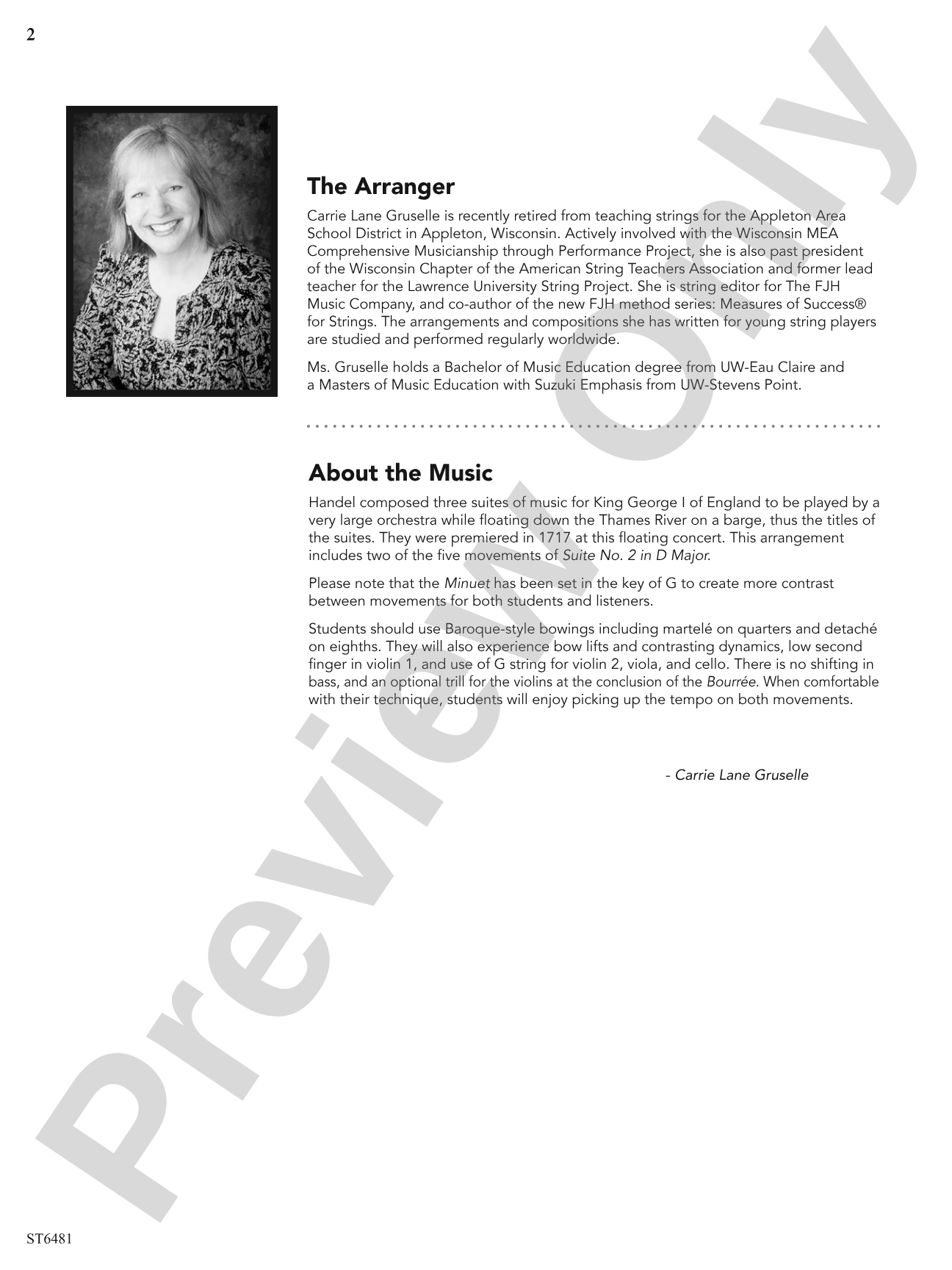
About the Composer: George Frideric Handel
George Frideric Handel (1685-1759) was a German-born composer who spent much of his career in England, where he became one of the most celebrated musicians of the Baroque era. His prolific output spanned operas, oratorios, concertos, and orchestral suites, many of which remain cornerstones of the classical repertoire today.
Handel's Water Music, composed around 1717, represents the pinnacle of his orchestral writing. Originally performed during an outdoor concert on the River Thames for King George I, the work showcases Handel's gift for memorable melody, elegant counterpoint, and orchestration that feels both grand and accessible. For young musicians, Handel's clarity of form and transparent textures make his music an ideal introduction to Baroque compositional principles.
Why we love this
This arrangement captures everything that makes Water Music irresistible to audiences while respecting what beginning string players can actually accomplish. Carrie Lane Gruselle has preserved Handel's distinctive melodic contours and harmonic language while keeping technical demands minimal, so your students experience the genuine sound of a Baroque masterpiece rather than a simplified facsimile. Programming authentic literature this early in an orchestra's development builds musicians' confidence and deepens their connection to repertoire that will appear throughout their musical lives.
What to expect
Water Music radiates joy and elegance in equal measure. These two movements sparkle with the rhythmic vitality of Baroque dance forms while maintaining a courtly refinement that feels timeless. Your students will feel the satisfaction of playing music that sounds complete and intentional, not simplified.
Who it's for
Beginning string orchestras and young ensembles ready to explore masterwork literature. This Grade 1 arrangement works beautifully for orchestras in their first or second year, as well as community and school orchestras seeking repertoire that sounds substantial without requiring advanced techniques.
How to get the most out of it
- Shape phrases with gentle dynamic swells rather than sudden changes; Baroque elegance depends on smooth, logical phrasing that reflects the natural rise and fall of the melodies.
- Maintain light articulation on shorter note values to let the dance rhythms breathe; avoid heaviness that obscures the piece's buoyant character.
- Balance the first violin line clearly against the inner voices so audiences hear Handel's memorable themes without drowning out the harmonic foundation.
- Keep tempo steady and dance-like; resist the urge to linger on long notes, as Baroque style values forward motion even in slower passages.
How to use it
Feature this arrangement as a window into Baroque style within a concert exploring different historical periods, or use it to open a program and immediately establish a polished, sophisticated tone. The piece also works well as a bridge between the earliest repertoire in your season and more complex works, demonstrating that young orchestras can tackle literature from the concert canon with style and accuracy.
Skills your students will build
- Baroque articulation and phrasing conventions
- Playing with stylistic clarity and elegance
- Balancing melody against accompaniment voices
- Maintaining steady tempo through dance-like rhythms
- Reading and performing two-part writing with accuracy