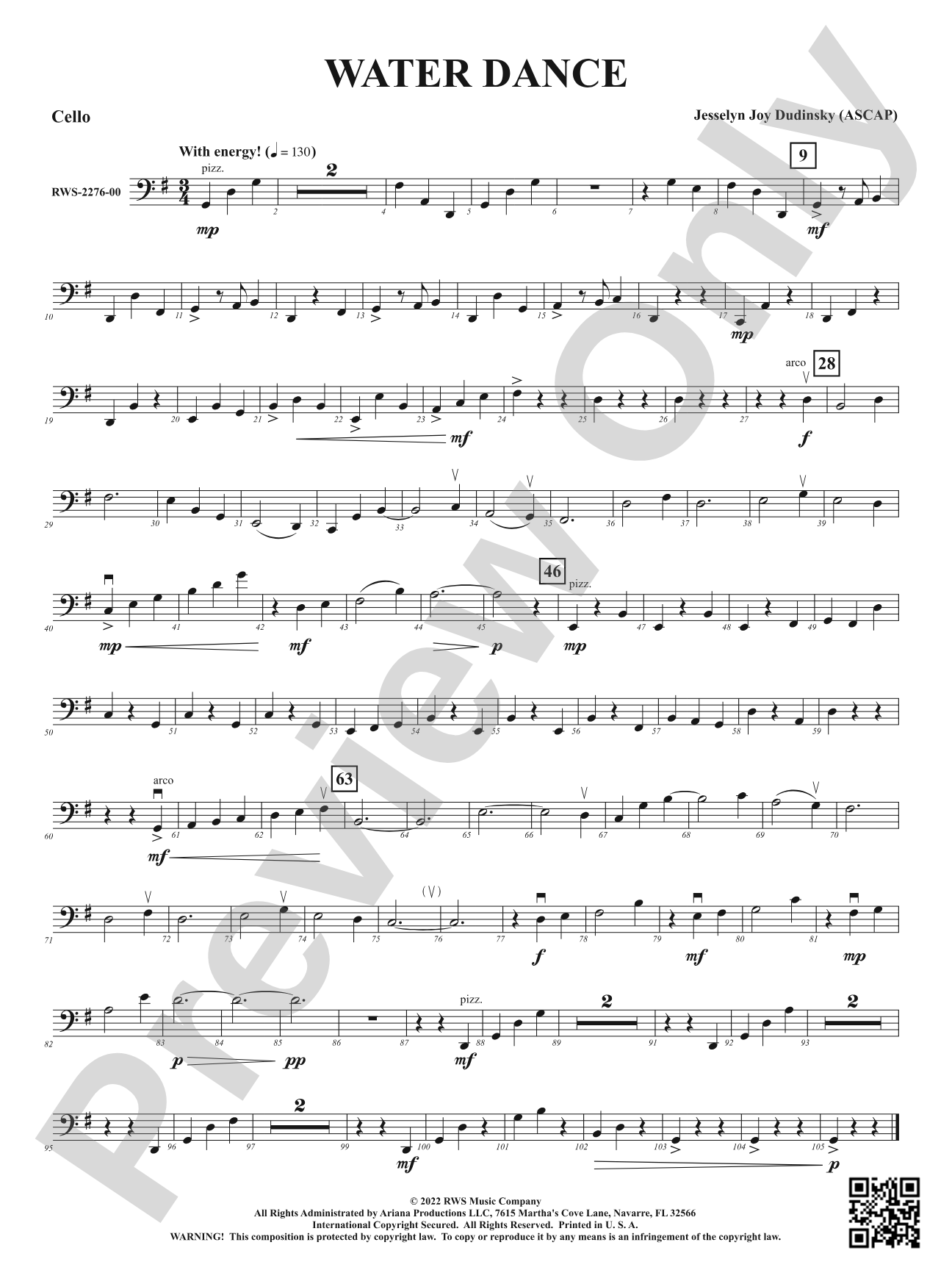
Water Dance: Cello Sheet Music Preview

Water Dance: Cello

By Jesselyn Joy Dudinsky

Grade: 3

Item: 98-PC-RWS2276_VC1

Digital Download
$5.99
Description
"Water Dance" is a whimsical string orchestra piece that helps players smoothly navigate between pizzicato and arco techniques. The piece follows a rondo pattern that carries different themes. "Water Dance" draws inspiration from a vision of droplets creating rippled images in the water, reflecting light and colors that swirl together with the rising mist.

Original Item#: RWS-2276-00

Water Dance: Cello isn't in MakeMusic Cloud just yet...but it could be. Let us know you'd like to see it, and you'll help shape what comes next. In the meantime, start a free trial and dive into thousands of interactive titles your students can play along with today.

Sample Audio
0:00
0:00
Sample Video
Additional Details
Series: RWS - Concert Strings
Publisher: RWS Music Company
SKU: 98-PC-RWS2276_VC1

More about this title

Why we love this

Dudinsky writes with genuine understanding of what string players need to develop technique without sacrificing musicality. The rondo structure gives conductors natural rehearsal points while the pizzicato-to-arco transitions feel organic rather than mechanical, making this a smart choice for building ensemble confidence at Grade 3.

What to expect

Whimsical and impressionistic, with pizzicato passages that sparkle and arco sections that shimmer. The rondo design creates a sense of returning themes dancing across rippling water, full of color and movement without demanding technical virtuosity.

Who it's for

String orchestras at Grade 3 working on technique refinement and stylistic variety. This piece fits well in rehearsals focused on pizzicato control and smooth transitions between articulation styles, and it performs equally well in light concert settings.

How to get the most out of it

  • Establish a clear pulse in the opening pizzicato section; lock the rhythm section first, then layer in the melodic voices so the texture builds with control.
  • Mark your transition points between pizzicato and arco in the score so players can watch your cues. A slight breath or prep gesture helps synchronize the shift.
  • Balance the returning themes in each rondo statement. When material repeats, encourage violins to shape the melody slightly differently to keep the piece from feeling static.
  • Let the imagery of light rippling on water guide your interpretation of dynamics and articulation. Droplets suggest quick attacks; mist suggests softer releases.

How to use it

Program this in a spring or pops concert where lighter, character-driven pieces balance more serious repertoire. It also works beautifully as a standalone opener that immediately showcases your orchestra's rhythmic precision and tonal variety.

Skills your students will build

  • Pizzicato articulation and clarity
  • Smooth transitions between pizzicato and arco
  • Rondo form recognition and thematic recall
  • Dynamic shaping and tone color variation
  • Ensemble balance across changing textures

You May Also Like