Washburn County: Piano Accompaniment Sheet Music Preview

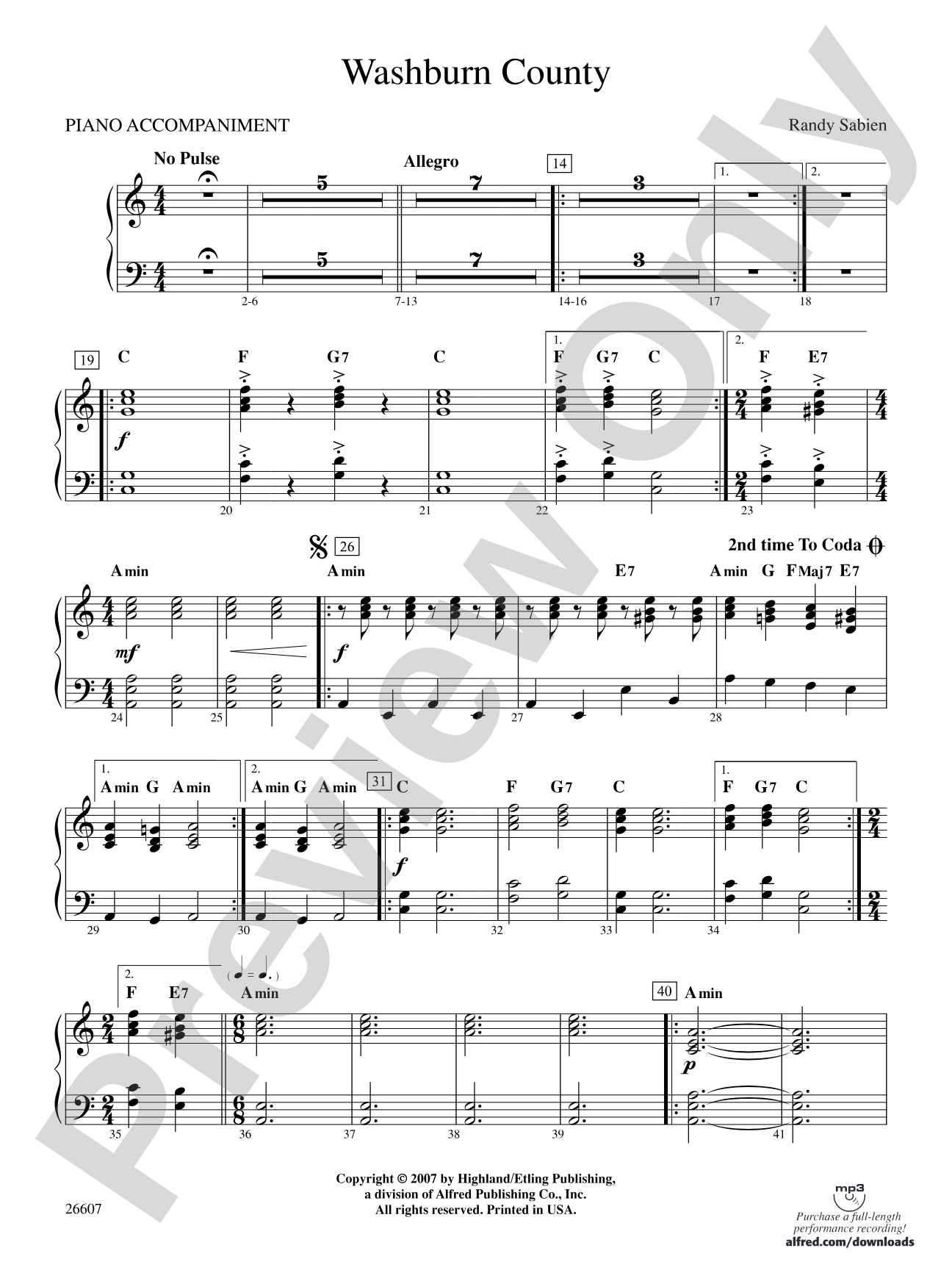
Washburn County: Piano Accompaniment

By Randy Sabien

Grade: 2.5

Item: 00-PC-0001111_K

Digital Download
$5.99
Description
This title is available in MakeMusic Cloud.

Don't just read it, hear it, play along with it, and watch your students grow with it. In MakeMusic Cloud, Washburn County: Piano Accompaniment comes alive with professional accompaniment, adjustable tempo, and built-in practice tools that turn solo practice into real progress.

Sample Audio
0:00
0:00
Sample Video
Additional Details
Series: Highland/Etling String Alternatives
Publisher: Alfred Music
Page Count: 70
SKU: 00-PC-0001111_K

More about this title

About the Composer: Randy Sabien

Randy Sabien is a prolific composer and arranger whose work has become a staple in school string programs across the country. Known for crafting accessible yet musically substantial pieces, Sabien writes with deep understanding of what student orchestras can achieve at each level, balancing technical challenge with genuine musical reward.

Why we love this

Sabien builds genuine orchestral texture from a 2.5-level palette without relying on unison doublings or thin scoring. The folk idiom gives students a culturally grounded piece to sink their teeth into, and the contest/festival designation means your group will have a standard-repertoire option that adjudicators know and respect.

What to expect

Washburn County carries the warmth and familiarity of American folk music, with the kind of melodic clarity and regional character that makes students feel like they're playing something real rather than an exercise. The orchestration brings out the story in the tune, moving between intimate moments and fuller passages with a natural, unhurried pacing.

Who it's for

String orchestra directors preparing a group at the intermediate level for contest, festival, or concert performance. The piece works equally well for directors seeking a folk-based selection that sits solidly in Grade 2.5 without oversimplification.

How to get the most out of it

  • Establish a strong rhythmic foundation in the lower strings early in rehearsal; once your cellos and basses lock in, the entire piece settles.
  • Balance the melody carefully between first and second violins to ensure the folk theme cuts through without the accompaniment receding into the background.
  • Pay attention to dynamic contrast between sections; folk arrangements thrive on clear statement-and-response phrasing that breaks up the texture.
  • Use the score's articulation markings to shape individual lines; they're written in, so honor them rather than smoothing everything out.

How to use it

Program this as a standalone folk statement or pair it with other American repertoire for a concert segment. It also serves as a strong festival piece that sits comfortably in the middle-of-the-pack slot, giving your ensemble a confidence builder before tackling more demanding works.

Skills your students will build

  • Articulation control across the string family
  • Part independence in viola and cello voices
  • Dynamic shaping within a diatonic folk melody
  • Rhythmic precision in accompaniment figures
  • Balancing melody and accompaniment textures

You May Also Like