
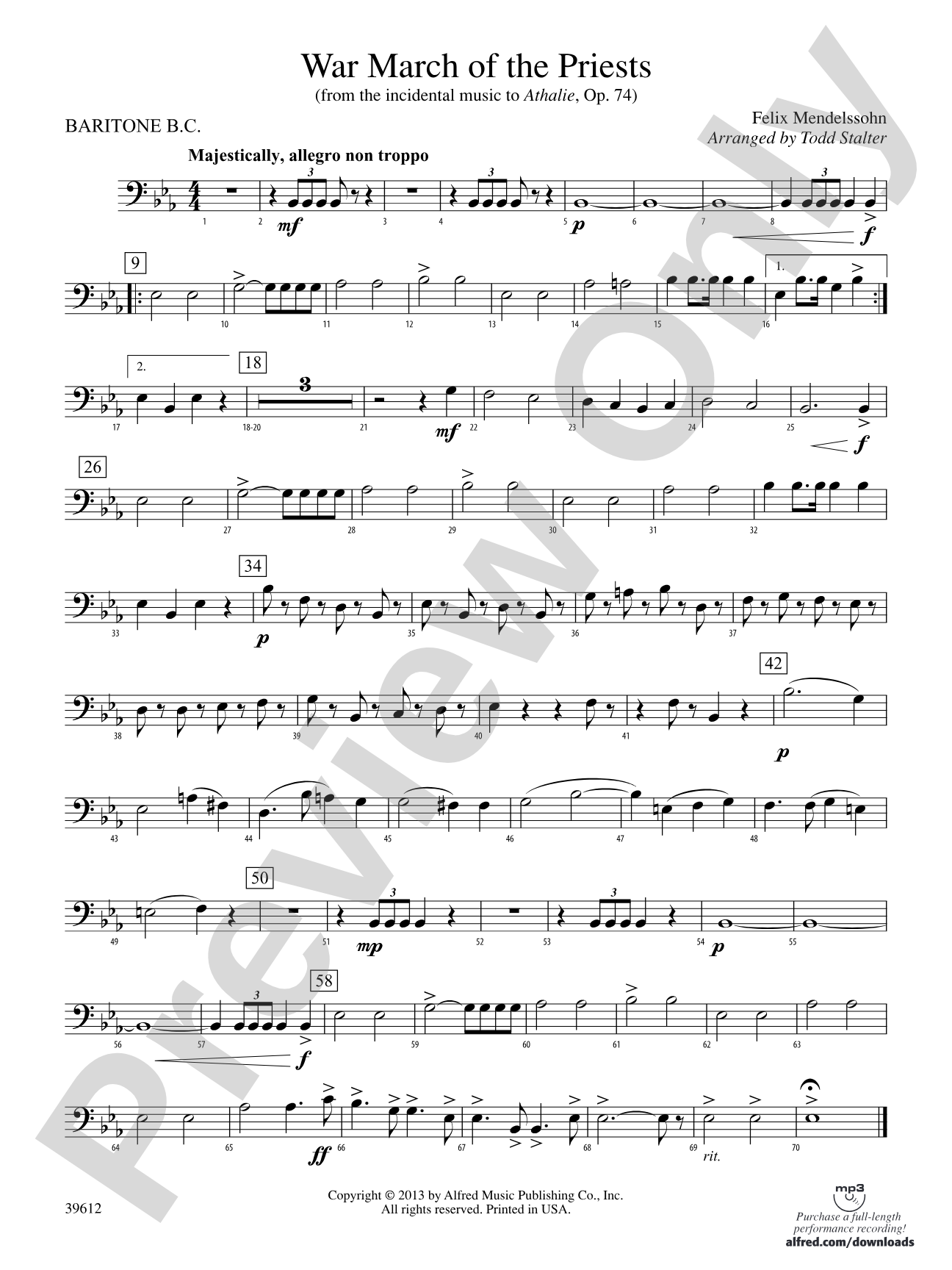

War March of the Priests: Baritone B.C.
By Felix Mendelssohn / arr. Todd Stalter
Grade: 1.5 (Easy)
Item: 00-PC-0015887_BBC1
$3.00
Pickup currently not available
Description
Although more famous for his incidental music to A Midsummer Night's Dream, Mendelssohn was commissioned by the King of Prussia to provide music for Racine's religious drama Athalie, which includes the "War March of the Priests." The march tune draws its energy from a repeating triplet figure in the introduction, and features a nice legato contrasting section. A great opportunity to teach style and nuance! (2:45)


Don't just read it, hear it, play along with it, and watch your students grow with it. In MakeMusic Cloud, War March of the Priests: Baritone B.C. comes alive with professional accompaniment, adjustable tempo, and built-in practice tools that turn solo practice into real progress.
Open in the Player
Jump straight in and assign it today.
Start Your Free Trial
Open this title and explore the full library in minutes.
Sample Audio
1
Audio File
--:--
0:00
0:00
Sample Video
No sample videos found.
Additional Details
Series:
Challenger Band Series
Publisher:
Alfred Music
Page Count:
120
SKU:
00-PC-0015887_BBC1
More about this title
About the Composer: Felix Mendelssohn
Felix Mendelssohn (1809-1847) was a German Romantic composer who bridged classical form with expressive, lyrical melody. His gift for orchestration and his fluency across genres—from symphonies and concertos to incidental music and choral works—made him one of the most performed composers of his era and beyond. In the concert band world, his music remains a cornerstone of the repertoire because it demands musicianship without sacrificing accessibility.
Mendelssohn's commissions for dramatic works shaped his approach to functional music. When he wrote the incidental score for Racine's Athalie, he crafted music that served the drama while standing on its own as concert pieces. The "War March of the Priests" is one of those rare arrangements that proves a composer's brilliance transfers seamlessly across instrumentation.
Why we love this
This arrangement captures everything that makes Mendelssohn essential: a memorable march tune anchored by sophisticated rhythmic energy, a genuinely lyrical middle section that contrasts without losing momentum, and transparent orchestration that lets young players hear what they're building. At Grade 1.5, it teaches real conducting and ensemble concepts (style shifts, legato phrasing, triplet rhythmic control) without overwhelming early-intermediate bands.
What to expect
The march marches with purpose, propelled forward by the insistent triplet figure that never lets energy flag. When the legato section arrives, the mood becomes noble and song-like, offering a genuine breath before the return to rhythmic vitality. It feels like ceremony and grandeur distilled into a piece that early-intermediate players can actually own.
Who it's for
This is ideal for early-intermediate concert bands preparing for festival circuits or community concerts. It works for any program that needs a substantial march with musical integrity, and it's particularly valuable for conductors teaching their ensembles the difference between a march with direction and a march with style.
How to get the most out of it
- Shape the triplet figures in the introduction as the heartbeat of the piece. They need clarity and consistency to generate momentum for the march section, but not so much emphasis that they sound mechanical.
- Bring the legato contrasting section into focus by asking the ensemble to think of it as a song rather than a march. Encourage sustained tone, careful dynamic shaping, and phrase-driven playing.
- Balance the harmonic weight between melody and accompaniment voices. Young bands often bury melodic lines under thick harmonies, so mark your scores and insist on transparency.
- Use the march's repeat as an opportunity for slight reshaping. The second time through can build intensity through dynamic layering or articulation choices without altering the basic character.
How to use it
Program this as a concert opener or as a bridge between a lyrical work and something heavier in the program. It also makes an excellent festival selection because it demonstrates the band's range across contrasting musical characters within a single, compact piece. The 2:45 duration means it won't dominate your concert or festival set time.
Skills your students will build
- Controlling triplet figures with even subdivision and musical intent
- Distinguishing between rhythmic march style and legato melodic playing
- Balancing transparent harmonic textures so melody reads clearly
- Shaping contrasting sections within a single piece without losing architectural unity
- Reading from conductor score and individual parts in a Romantic-era arrangement