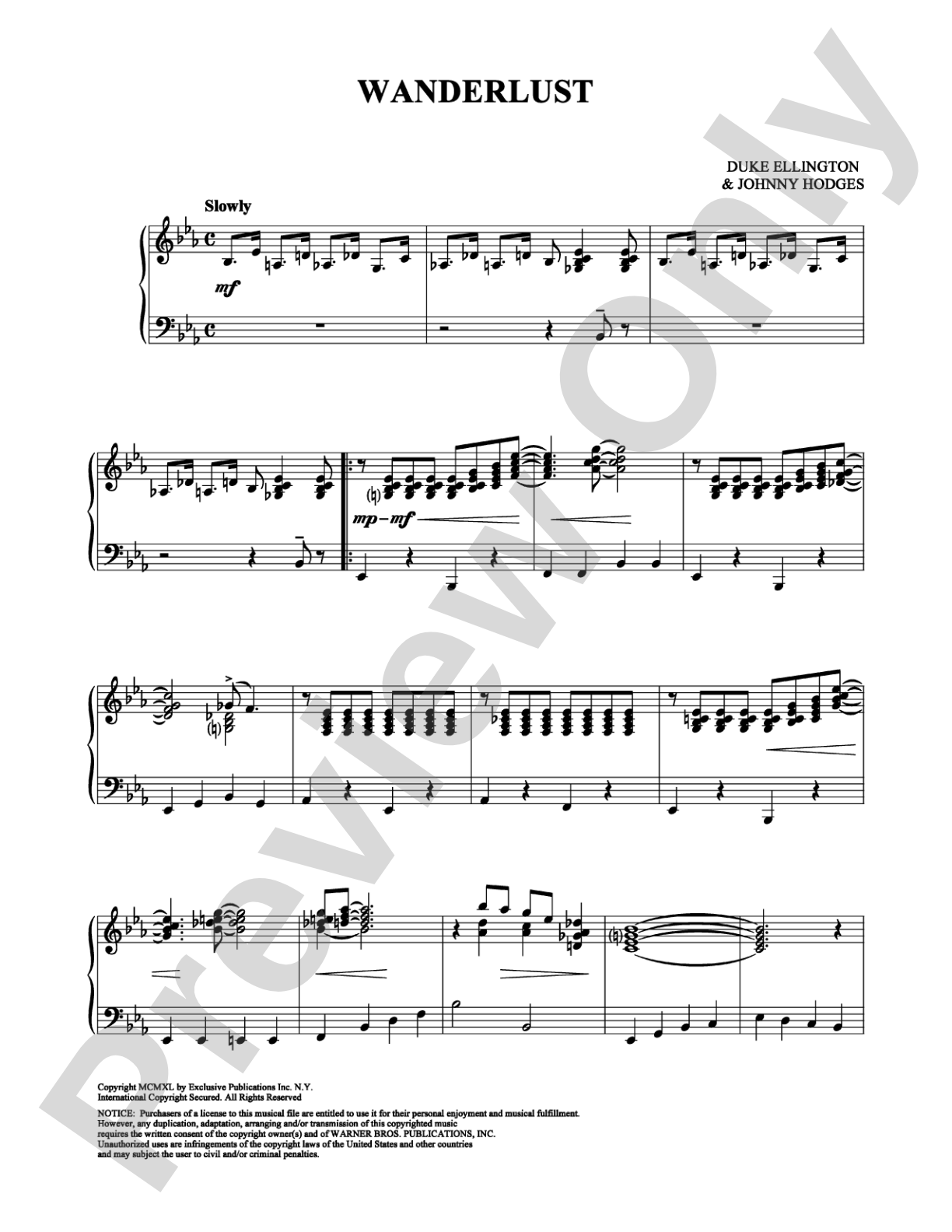
Wanderlust: Piano Digital Sheet Music

Wanderlust: Piano Digital Sheet Music

Johnny Hodges, Duke Ellington

Item: 00-PS-0008214

Digital Download
$3.99
Description

Wanderlust: Piano Digital Sheet Music isn't in MakeMusic Cloud just yet...but it could be. Let us know you'd like to see it, and you'll help shape what comes next. In the meantime, start a free trial and dive into thousands of interactive titles your students can play along with today.

Sample Audio
No sample audio found.
Sample Video
Additional Details
SKU: 00-PS-0008214

More about this title

About the Artist: Duke Ellington

Duke Ellington (1899-1974) stands as one of the most prolific and influential composers in American music history. His output spanned nearly five decades and encompassed not just jazz standards but extended works, film scores, and sacred music, all crafted with sophisticated harmonic language and orchestral imagination that elevated jazz to concert hall status.

Why we love this

Ellington's compositions offer pianists a masterclass in jazz voicing and harmonic movement. This digital format makes his work instantly accessible for students exploring the American songbook, and the sophistication of his writing rewards both careful study and expressive interpretation.

What to expect

Sophisticated and urbane, with an underlying sense of forward motion despite its unhurried pacing. Ellington's writing combines romantic elegance with subtle harmonic sophistication, creating a sound that feels both historically rooted and timelessly expressive.

Who it's for

Pianists with intermediate to advanced jazz facility who want to deepen their understanding of jazz harmony and composition. Studio instructors teaching jazz repertoire will find this essential for students ready to move beyond lead sheets and explore Ellington's actual voicings and harmonic thinking.

How to get the most out of it

  • Pay close attention to Ellington's chord substitutions and upper-structure voicings; they define the sound more than the melody line does.
  • Approach the left hand with rhythmic independence. The comping patterns should breathe and respond to the harmonic content, not merely keep time.
  • Balance transparency with harmonic density. Ellington wrote for both intimate solo settings and full orchestras; find the right weight for your touch and venue.
  • Allow space for rubato in the melody without losing the swing feel underneath. Ellington's pieces reward a conversational, almost vocal approach to phrasing.

How to use it

Feature this in a jazz recital or American standards program where you want to anchor the evening with a composer of undeniable stature. Pairing it with other Ellington compositions highlights the breadth of his melodic and harmonic invention.

Skills your students will build

  • Jazz voicing and upper-structure harmony
  • Left-hand comping patterns and rhythmic independence
  • Harmonic analysis of substitutions and chromatic movement
  • Interpretive phrasing and rubato in a jazz context

You May Also Like