
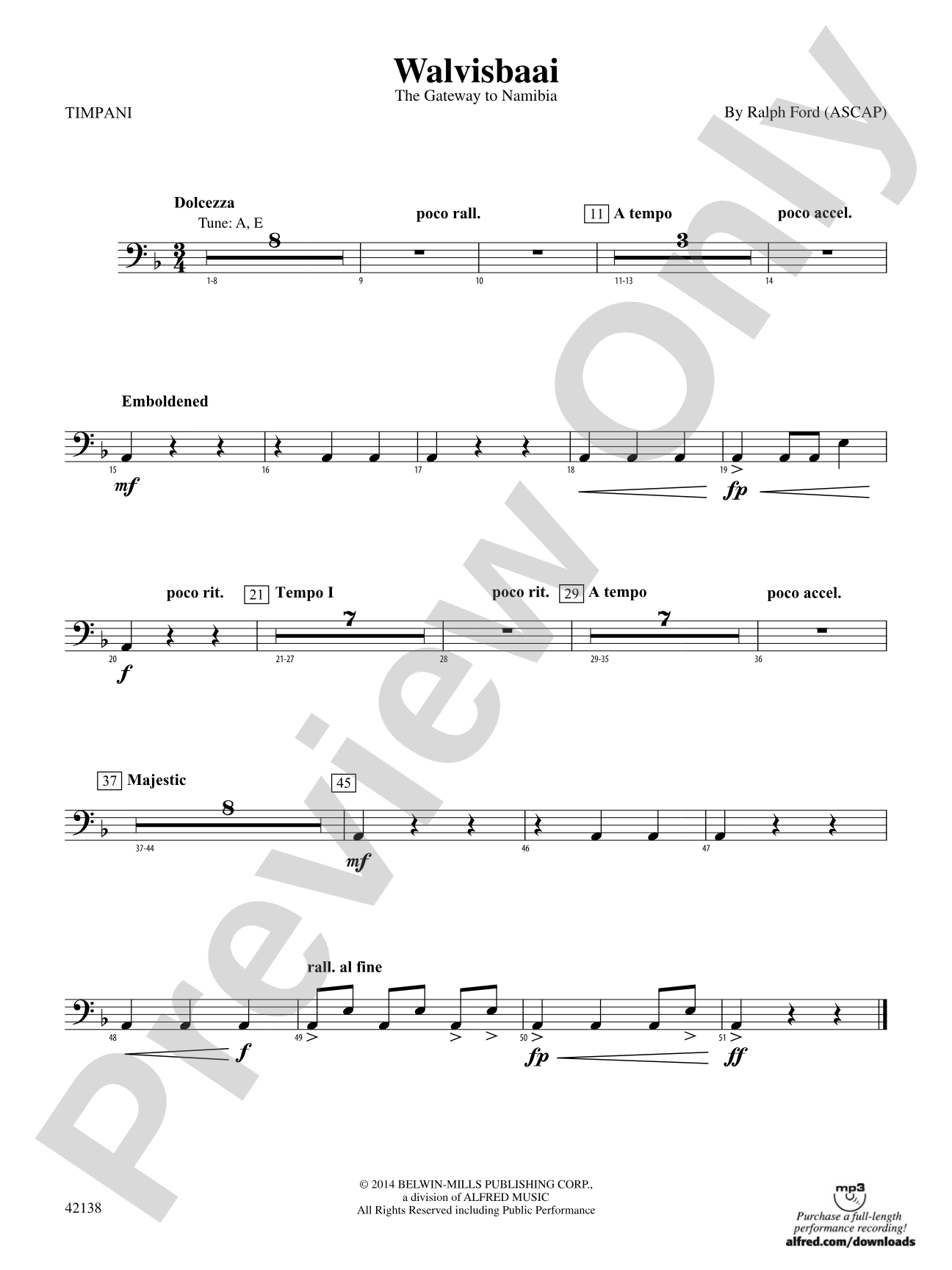

Walvisbaai: Timpani
The Gateway to Namibia
By Ralph Ford
Grade: 1.5 (Very Easy to Easy)
Item: 00-PC-0016518_TMP
$3.00
Pickup currently not available
Description
Inspired by the Namibian harbor town located on a wide lagoon that contains many natural wonders: thousands of sea birds, pelicans, and flamingos surrounded by the massive dunes of the Namib Desert. This serene 3/4 time composition offers many musical opportunities. (2:30) This title is available in MakeMusic Cloud.


Don't just read it, hear it, play along with it, and watch your students grow with it. In MakeMusic Cloud, Walvisbaai: Timpani comes alive with professional accompaniment, adjustable tempo, and built-in practice tools that turn solo practice into real progress.
Open in the Player
Jump straight in and assign it today.
Start Your Free Trial
Open this title and explore the full library in minutes.
Sample Audio
1
Audio File
--:--
0:00
0:00
Sample Video
No sample videos found.
Additional Details
Series:
Belwin Beginning Band
Publisher:
Alfred Music
Page Count:
134
SKU:
00-PC-0016518_TMP
More about this title
About the Composer: Ralph Ford

Ralph Ford brings three decades of university teaching alongside a prolific career as a composer and arranger for film, television, and concert media. Since 1999, he has worked as an exclusive composer and arranger for the Belwin division of Alfred Music, creating over 250 titles across orchestra, concert band, jazz ensemble, and marching band that have been performed by university, military, professional, and school ensembles internationally.
Ford's musical foundation was shaped early through arranging work that began at age fifteen, and deepened during his time at Troy State University, where he served as Director of Jazz Ensemble I and staff arranger while completing his undergraduate and master's degrees. His experience spans orchestration, theory, jazz studies, and applied brass instruction, alongside extensive work in broadcast media including live radio, television production, and commercial scoring.
Why we love this
Ford writes with a director's sensibility for young bands, crafting music that sounds mature without demanding virtuosity. The 3/4 meter and serene harmonic language give your ensemble genuine musical character to shape and express, while the grade 1.5 voicing keeps technical barriers low enough that rehearsal time stays focused on phrasing and ensemble blend rather than mechanics.
What to expect
Serene and contemplative, Walvisbaai evokes the stillness of a wide lagoon under expansive sky. The 3/4 waltz meter gives the piece an almost pastoral character, unfolding gently with the kind of unhurried grace that invites listeners into a specific landscape rather than demanding their attention through drama.
Who it's for
Beginning concert bands working at grades 1-2 will find this piece solidly within their technical range while offering genuine musical substance. It works equally well for younger bands seeking concert repertoire with programmatic appeal and for more advanced ensembles looking for a relaxing, high-success reading that develops sensitivity to tone and phrasing.
How to get the most out of it
- Shape the melodic lines with subtle dynamic arcs that follow the natural contour of the phrases; let the waterfront imagery guide your ensemble's breath and pacing rather than driving toward constant crescendos.
- Balance the lower woodwinds and brass carefully in the harmonic passages, since the writing supports detail at this level without requiring aggressive dynamic contrasts.
- Keep the 3/4 meter flowing and lyrical; young bands often rush waltzes, so establish a tempo that gives students time to hear and shape individual phrases clearly.
- Use the conductor score to study where ford doubles parts across sections; understanding these doublings helps you manage entrances cleanly and maintain tonal cohesion across the ensemble.
How to use it
Pair this with other nature-inspired works to build a concert theme around landscapes and imagery, or program it early in a concert where its calming character can settle an audience. The 2:30 duration makes it ideal filler between longer works, and its accessibility means it never demands apologies for the repertoire choice.
Skills your students will build
- Sustaining lyrical phrasing in 3/4 meter
- Listening for harmonic balance and blend across sections
- Reading and balancing divided parts in young band voicing
- Responding to conductor direction that shapes contour rather than drives tempo