Waltzes Sheet Music Preview

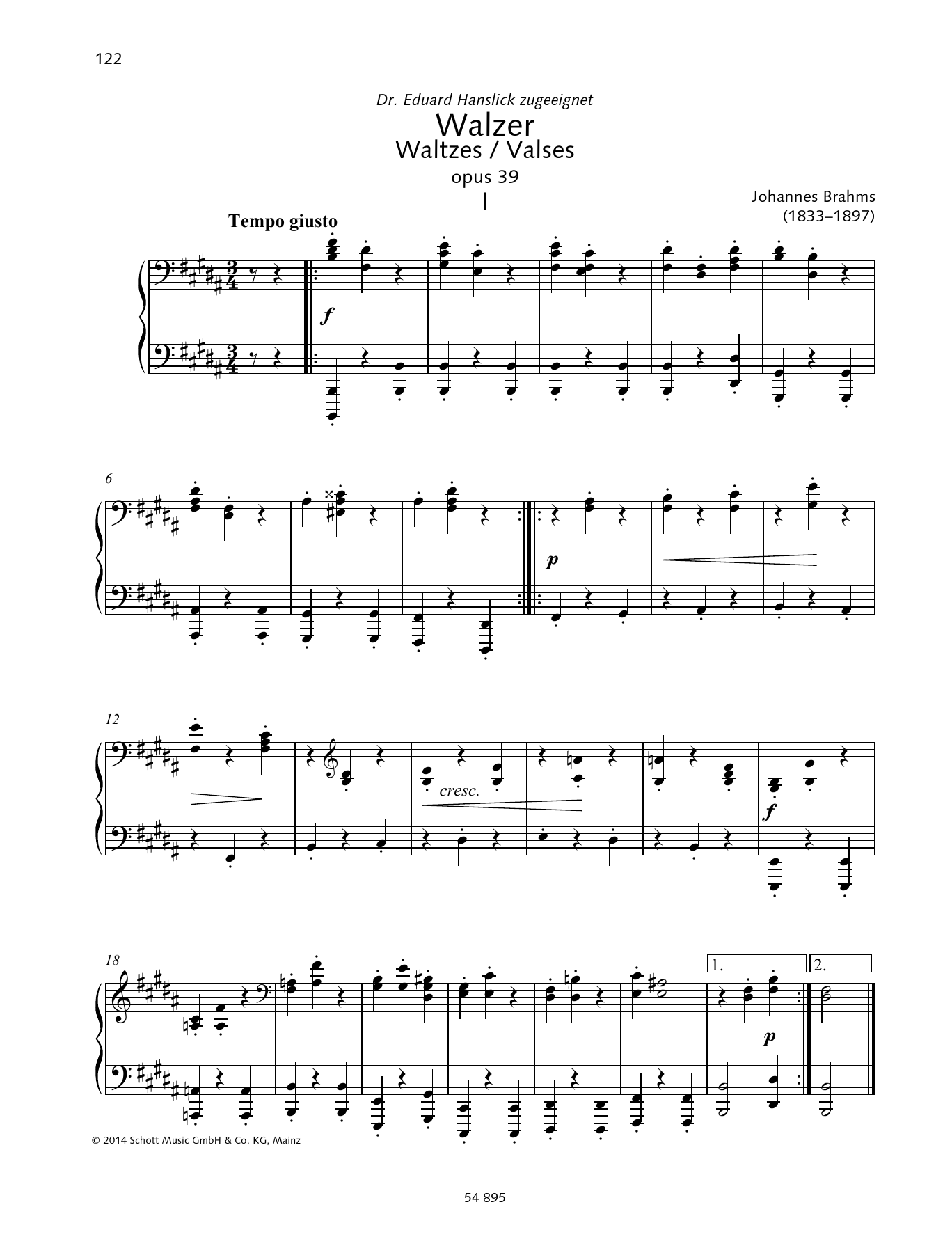
Waltzes: Piano Duet

By Johannes Brahms / Edited by Monika Twelsiek

Item: 35-DS00370519

Digital Download
$4.99
Description

Discover MakeMusic Cloud: thousands of interactive titles your students can play along with today.

Sample Audio
No sample audio found.
Sample Video
Additional Details
Publisher: Hal Leonard
Page Count: 18
SKU: 35-DS00370519

More about this title

About the Composer: Johannes Brahms

Johannes Brahms (1833–1897) composed across all major genres while maintaining an almost scholarly approach to form and orchestration. His output includes symphonies, concertos, chamber music, and piano works that bridge Romantic expression with Classical architecture, making him a central figure in 19th-century music and essential study for understanding how composers of his era engaged with tradition.

For music educators, Brahms's body of work demonstrates how rigorous training in counterpoint and form yields music of genuine emotional depth rather than surface decoration. His waltzes in particular show students that genre pieces and popular dance forms can contain sophisticated harmonic thinking and refined melodic writing.

Why we love this

Brahms's waltzes occupy a unique pedagogical space: they are immediately appealing and idiomatically pianistic, yet they contain enough harmonic color and structural variety to sustain serious study. Teachers value this collection because students hear craft and intention in every phrase without feeling they're working through academic exercises.

What to expect

These waltzes evoke the warmth of Vienna's concert halls without the artifice of salon music. The writing is intimate and conversational, with enough harmonic sophistication to feel substantial while maintaining the essential lightness that makes a waltz dance.

Who it's for

Pianists at the intermediate to early advanced level will find these waltzes musically rewarding and technically accessible. Music students preparing for exams or recitals benefit from the blend of lyricism and structural clarity that Brahms provides.

How to get the most out of it

  • Identify the harmonic rhythm in each waltz and let it breathe; Brahms often shifts the harmonic pace between the A and B sections, and honoring those changes prevents the music from feeling metronomic.
  • Balance cantabile melody in the right hand with warm, conversational bass movement rather than letting the accompaniment become mere rhythmic padding.
  • Experiment with subtle rubato that emerges from the phrasing rather than imposed over it; Brahms's waltzes reward a flexible approach to tempo within each section.
  • Listen for interior countermotion and inner voices that add depth beyond the obvious top-line melody, especially in the developmental sections.

How to use it

Brahms's waltzes work beautifully as a bridge piece in a solo recital, offering contrast to heavier Romantic fare while avoiding the period-practice complications of earlier dance forms. They also serve as excellent material for demonstrating 19th-century approaches to form and harmony in music history or analysis courses.

Skills your students will build

  • Rubato and flexible tempo management within strict meter
  • Voicing independent melodic lines across registers
  • Recognizing and interpreting harmonic movement beyond functional harmony
  • Pedal technique for blending warm, resonant accompaniment
  • Structural listening across multi-section dance forms

You May Also Like