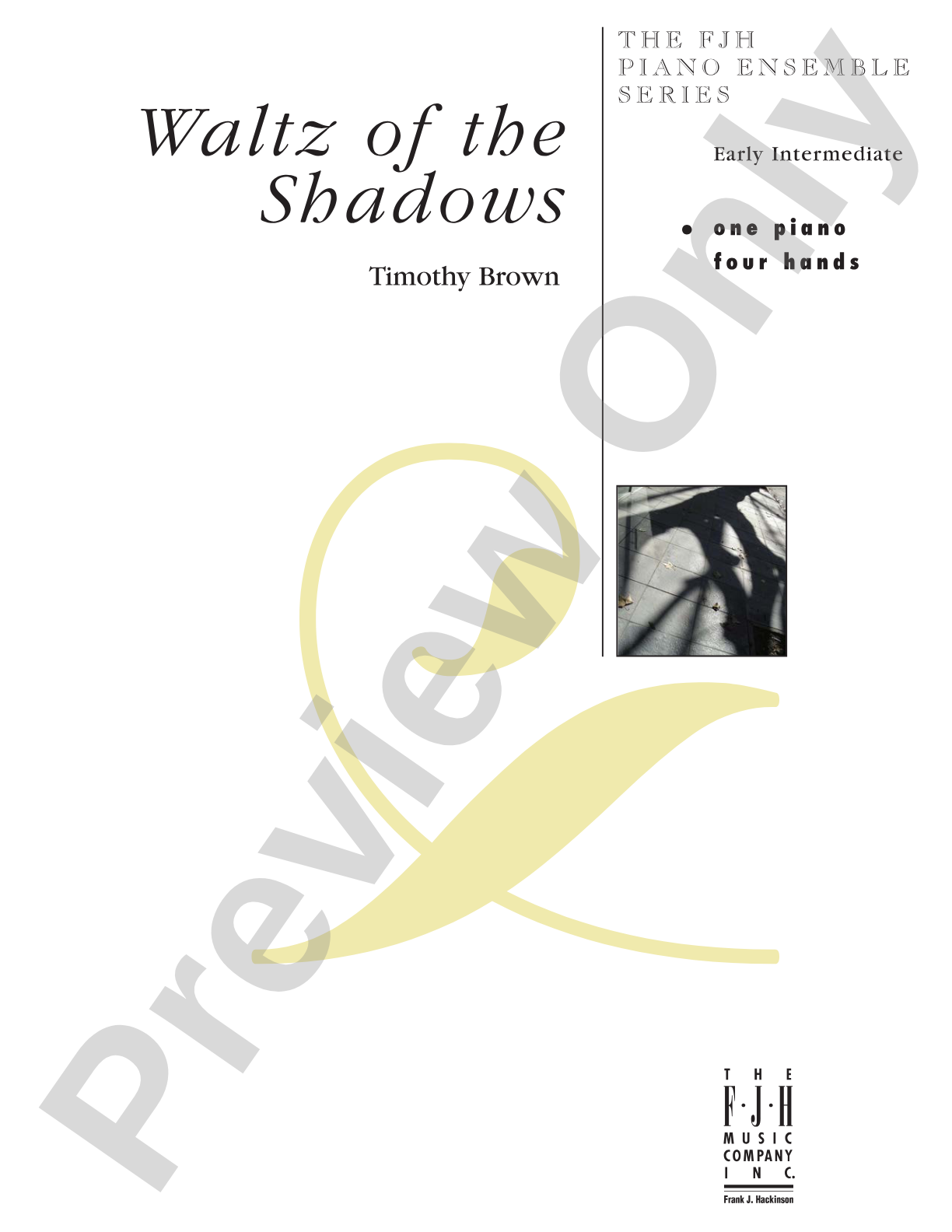
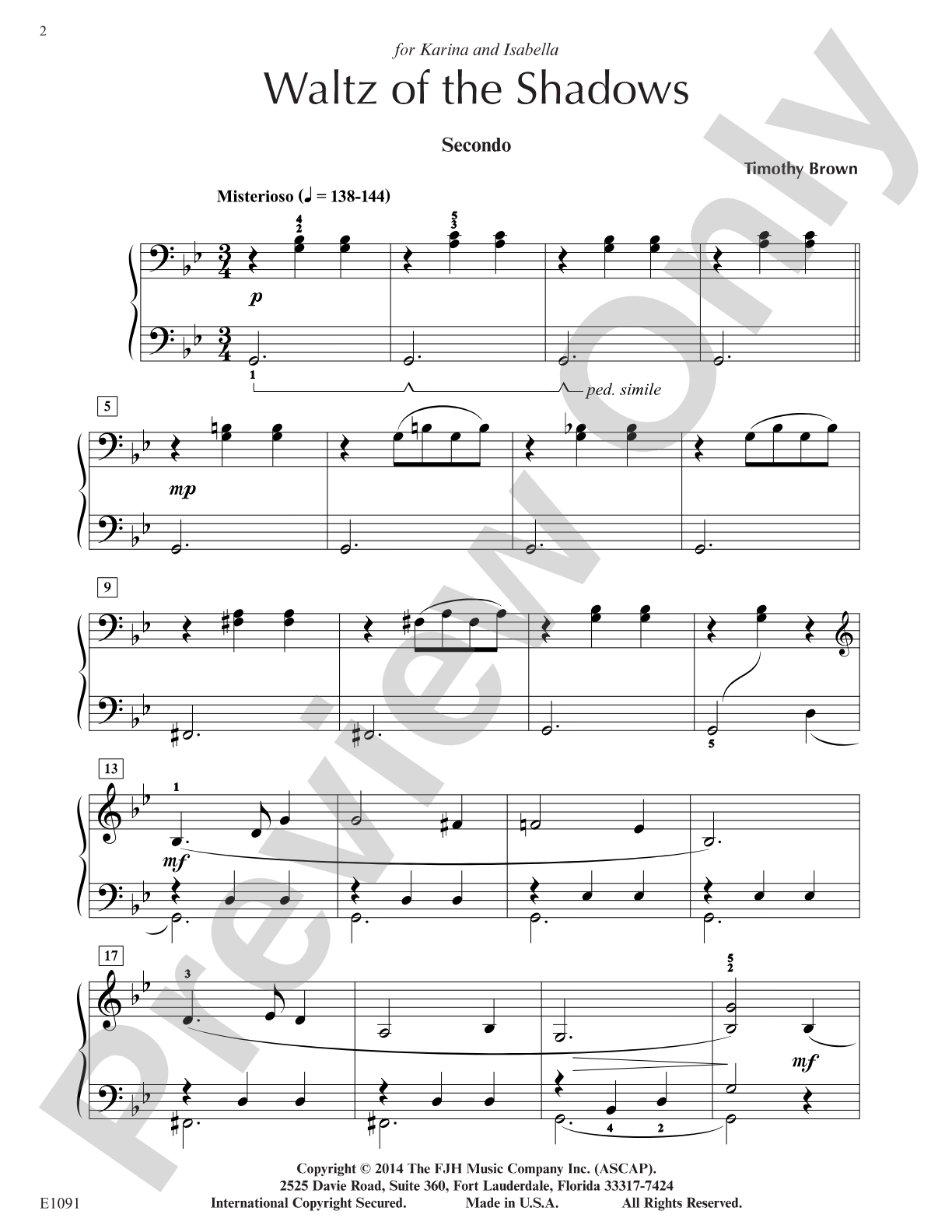
This waltz could be somewhat cheerful or slightly menacing, depending on your point of view. A marvelous recital piece for any time of the year with nice interplay between primo and secondo, this piece in G minor uses the whole range of the piano, and your students won’t find the ensemble playing difficult.
Discover MakeMusic Cloud: thousands of interactive titles your students can play along with today.
Brown captures that delicious ambiguity where a waltz can shimmer with charm one moment and hint at something darker the next. The primo and secondo share the melodic and harmonic weight so evenly that neither player feels like they're accompanying; both are driving the piece forward, which makes the ensemble experience genuinely collaborative rather than hierarchical.
What to expect
A waltz that lives in the space between light and shadow, elegant and intriguing. The piece dances forward with the expected grace of the genre while hinting at unexpected depths, creating an atmospheric quality that draws in both player and listener.
Who it's for
Piano teachers seeking a collaborative piece that challenges their intermediate students musically without burdening them technically. Duet pairs at the early intermediate to intermediate level will find the technical demands manageable while the interpretive choices remain engaging.
How to get the most out of it
Establish the waltz character early by feeling the three-beat pulse clearly in the opening measures; slight lift on beat one helps the rhythm breathe without rushing.
Balance the interplay between parts by having the primo player listen closely to where the secondo is carrying harmonic weight, then adjust dynamics accordingly so the texture remains transparent.
Explore the dramatic range the piece demands across the full piano keyboard; use the lower register to deepen the slightly menacing quality, then lighten the touch as you move higher.
Decide together whether the overall mood leans more playful or shadowed, then commit to that interpretation consistently so the piece doesn't shift tone unexpectedly between sections.
How to use it
This works as an excellent recital opener or closer since its moderate length and flexible mood allow it to set or punctuate the tone of a student performance. Pair it with contrasting repertoire to highlight its subtle ambiguity, or program two duet pairs on the same recital to showcase ensemble work as a cornerstone of your studio.
Skills your students will build
Balancing melodic and harmonic responsibility between two players
Maintaining steady waltz rhythm and pulse across full pieces
Reading and performing across the full range of the piano keyboard
Interpreting mood and character through dynamic and tempo control
Listening actively to an ensemble partner while managing your own part
You May Also Like
Scan to Complete Your Purchase
Use your phone's camera to scan the code below
You'll log in on your phone and the order will be added to your account