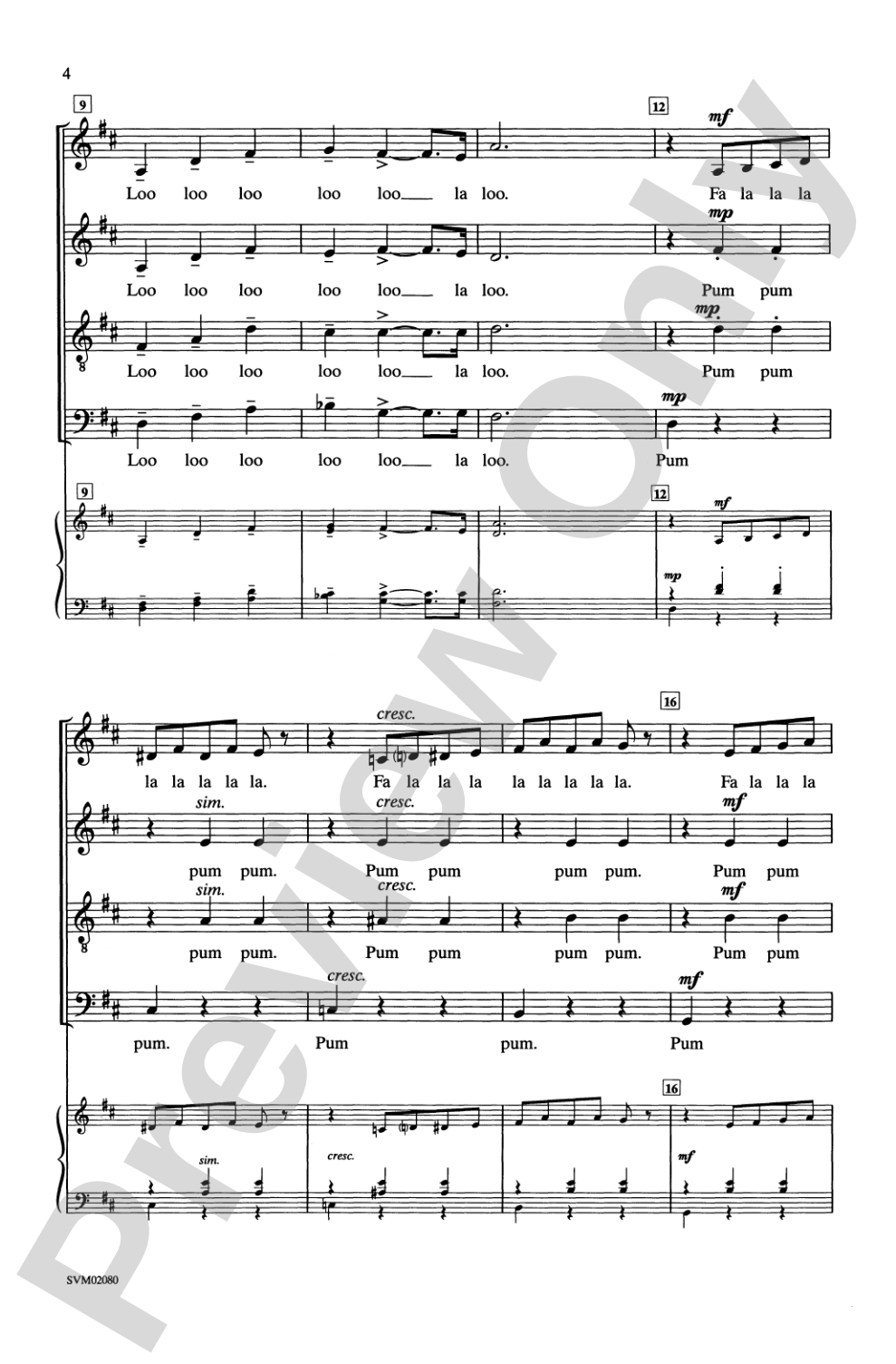
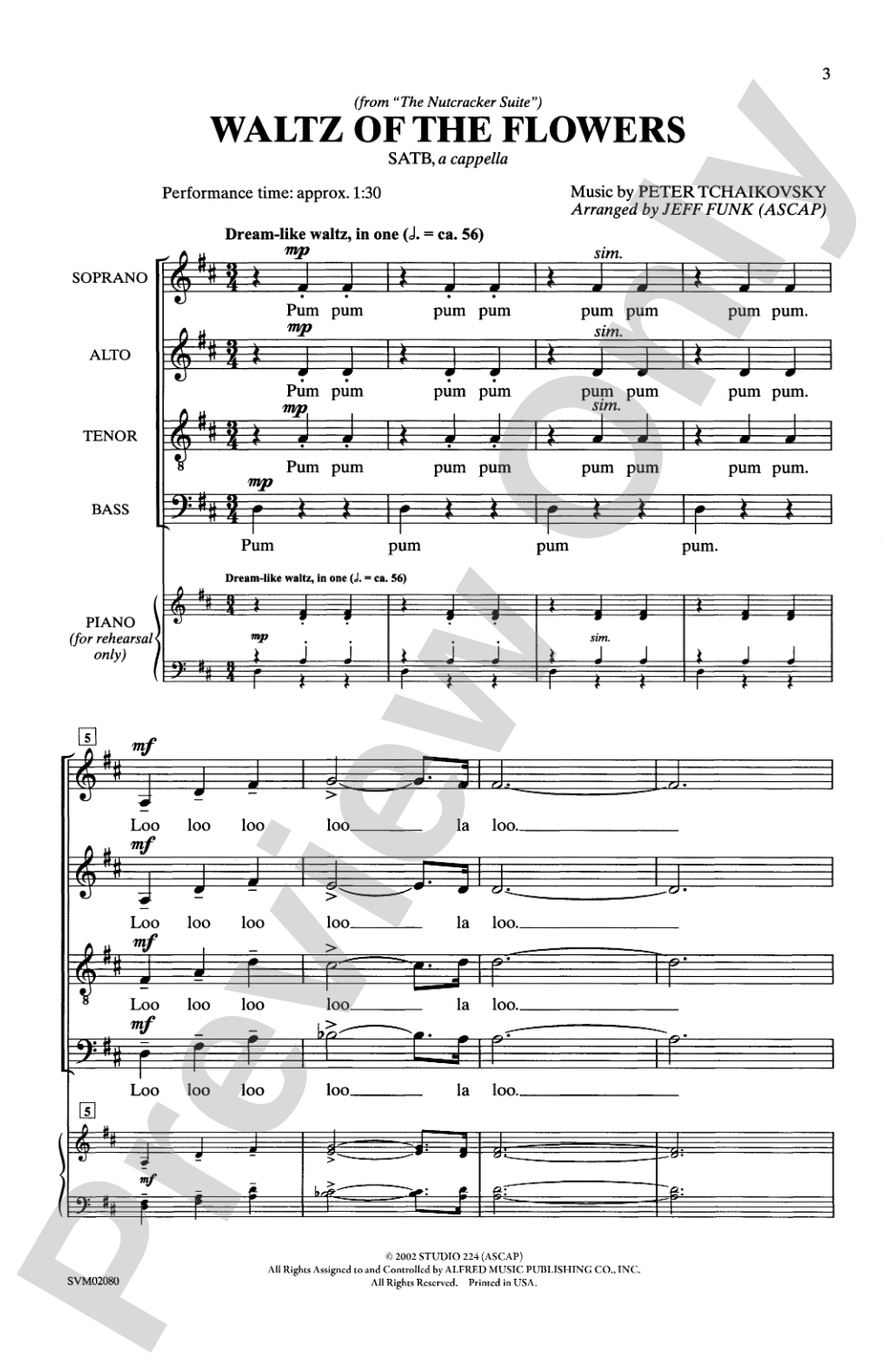
Waltz of the Flowers Sheet Music Preview

Waltz of the Flowers: SATB, a cappella Choral Octavo

Music by Peter Ilyich Tchaikovsky / arr. Jeff Funk

Level: Moderate

Item: 00-PO-0005367

Digital Download
$2.25

Minimum order quantity: 20 copies

Description
Bring a touch of the Nutcracker to your next holiday concert with this classy bit of humor. Much of Tchaikovsky's original material is used in this a cappella setting.

Waltz of the Flowers: SATB, a cappella Choral Octavo isn't in MakeMusic Cloud just yet...but it could be. Let us know you'd like to see it, and you'll help shape what comes next. In the meantime, start a free trial and dive into thousands of interactive titles your students can play along with today.

Sample Audio
0:00
0:00
Sample Video
Additional Details
Series: Alfred Archive Edition: Studio PR Catalog
Publisher: Alfred Music
Page Count: 12
SKU: 00-PO-0005367

More about this title

About the Composer: Peter Ilyich Tchaikovsky

Peter Ilyich Tchaikovsky (1840-1893) stands as one of the most performed composers in the orchestral and ballet repertoire. His ability to craft memorable melodies and emotionally direct orchestrations made him a bridge between Russian national music and European classical forms. For music educators, his works remain essential not only as concert staples but as gateways to understanding 19th-century compositional technique and the expressive possibilities of the Romantic era.

Tchaikovsky's ballets, particularly The Nutcracker, have become inseparable from holiday traditions worldwide. This familiarity makes his music especially valuable in the choral classroom, where students encounter sophisticated harmony and orchestral color reimagined for the voices they already know.

Why we love this

Jeff Funk's arrangement preserves the orchestral brilliance of Tchaikovsky's famous waltz while leaning into the humor and warmth that makes this piece so beloved in holiday programming. Moderate difficulty paired with sophisticated harmonic material means your singers get to own a recognizable masterwork without excessive technical demands, and the a cappella format keeps rehearsal flexible. Holiday audiences light up instantly when these opening phrases land.

What to expect

Graceful and sparkling, with the kind of effervescent charm that makes people smile the moment they hear it. The familiar melody floats above shifting harmonies that feel both supportive and gently surprising, capturing the whimsy Tchaikovsky embedded in the original.

Who it's for

Choirs at the intermediate level who want to program something audiences recognize instantly while building musicianship around harmonic color and vocal balance. This works for holiday concerts, multi-choir festivals, and any director seeking accessible repertoire with genuine musical substance.

How to get the most out of it

  • Balance the melodic line across voices (typically in soprano with harmonic support below) so the iconic waltz tune cuts through even when all four parts are singing. This clarity is what audiences come for.
  • Shape the phrase endings with slight rhythmic lift rather than letting them fall flat. Waltz character lives in gentle buoyancy, not stiffness.
  • Let articulation breathe. Avoid over-enunciating consonants in rapid passages; crisp diction serves the melodic line better than aggressive attacks.
  • Mark dynamic shifts clearly in rehearsal. The contrast between sections is what gives this arrangement its personality and prevents the piece from settling into one mood.

How to use it

Position this as a lighter moment in a holiday concert, perhaps between more dramatic sacred or secular pieces. Its familiarity and moderate length (12 pages) make it ideal for sharing a concert with other winter repertoire, and the wit embedded in the arrangement appeals to audiences who might not attend a purely classical program.

Skills your students will build

  • Balancing melody and harmony across SATB voicing
  • Maintaining rhythmic precision in waltz meter (3/4) across all voice parts
  • Shape and phrasing without instrumental support
  • Reading and executing dynamic contrast in a cappella context
  • Intonation stability in close-voiced harmony

You May Also Like