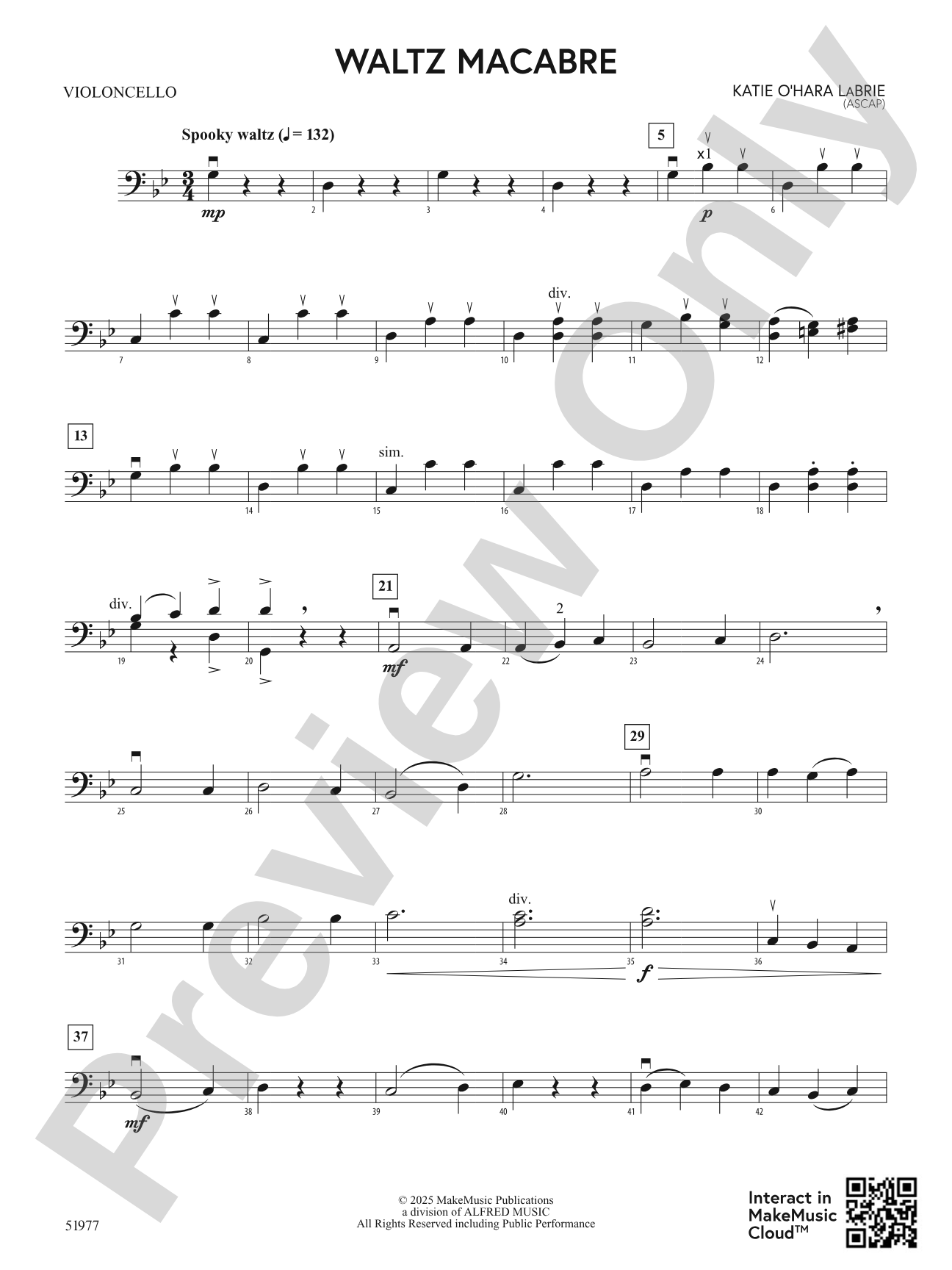
In a haunted, moonlit ballroom, ghosts emerge from the shadows to dance a mysterious waltz. Waltz Macabre by Katie O'Hara LaBrie captures the eerie elegance and playful mischief of this ghostly dance in a unique work for strings, designed to work seamlessly with the concert band version to create your very own full orchestra! (2:00)
Discover MakeMusic Cloud: thousands of interactive titles your students can play along with today.
Katie O'Hara LaBrie brings fifteen years of orchestra teaching experience from Fairfax County, Virginia to her work as a composer and conductor. She studied music education at St. Olaf College under Steven Amundson and earned her master's degree in instrumental conducting from George Mason University with Anthony Maiello. Her compositions consistently appear on J.W. Pepper Editor's Choice lists and have been performed at the Midwest Band and Orchestra Directors Clinic and American String Teachers Association Conference. In 2022, Yamaha recognized her as one of their "40 Under 40" for her impact on music education.
LaBrie composes with a clear pedagogical mission: her music must be educationally valuable, engaging for audiences, and above all, enjoyable for the musicians playing it. Drawing inspiration from family, nature, and her years in the classroom, she writes work that teaches students to practice intentionally. She is the founding conductor of the Fairfax Chamber Players and co-creator of "the Big IDEA" practice method.
Why we love this
Waltz Macabre delivers exactly what intermediate string orchestras need: accessible orchestration that doesn't sacrifice musical sophistication, plus a concept engaging enough to capture student imagination and audience delight. The ability to combine this with the concert band version creates a genuine full-orchestra experience at a level most programs can actually achieve. LaBrie's writing reflects her teaching background, resulting in parts that challenge without overwhelming and harmonies that sound polished even at Grade 2.
What to expect
Picture a moonlit ballroom where shadows take human shape and begin to sway. The music captures both the mystery and the lightness of that moment—eerie and playful in equal measure. Waltzing rhythms pull the listener in while unusual harmonic turns and atmospheric string writing create an unsettling elegance that lingers.
Who it's for
String orchestras at the Grade 2 level, including middle school groups developing independence and groups looking for a short, engaging concert piece with genuine musical substance. This work works equally well for programs seeking Halloween programming or a contest selection that doesn't demand advanced technique.
How to get the most out of it
Balance the haunting melody against sustained accompaniment by shaping phrases around the pulse of the waltz rather than playing metronomically. Slight rubato in the ghostly sections enhances the eerie character without losing the rhythmic integrity of the dance.
Blend pizzicato and arco transitions carefully; mark these shifts in rehearsal so players execute them together and the timbral changes feel intentional, not accidental.
Dial up articulation clarity in faster passages to maintain the playful mischief beneath the spooky surface. Crisp bow attacks define the character.
Use the conductor score to shape dynamics across the whole ensemble, especially when the melody passes between sections. Track where the story lives moment to moment rather than thinking of it as a single thread.
How to use it
Program this as a stand-alone short work on a Halloween concert for immediate audience engagement, or pair it with your concert band's version of the same piece to create a full-orchestra moment that demonstrates how the same musical idea works across ensembles. At two minutes, it works as a palate cleanser between larger works or as a festival piece where impact matters more than duration.
Skills your students will build
Sustaining tone quality and musical shape across longer notes
Executing smooth transitions between pizzicato and arco playing
Reading and responding to dynamic and expressive markings
Blending within and between string sections to create cohesive sound
Playing with stylistic understanding of waltz rhythm and phrasing
Balancing melody against harmonic accompaniment
You May Also Like
Scan to Complete Your Purchase
Use your phone's camera to scan the code below
You'll log in on your phone and the order will be added to your account