Waltz in B minor, Op. 69 No. 2 (Encore Plus, Book 4) Sheet Music Preview

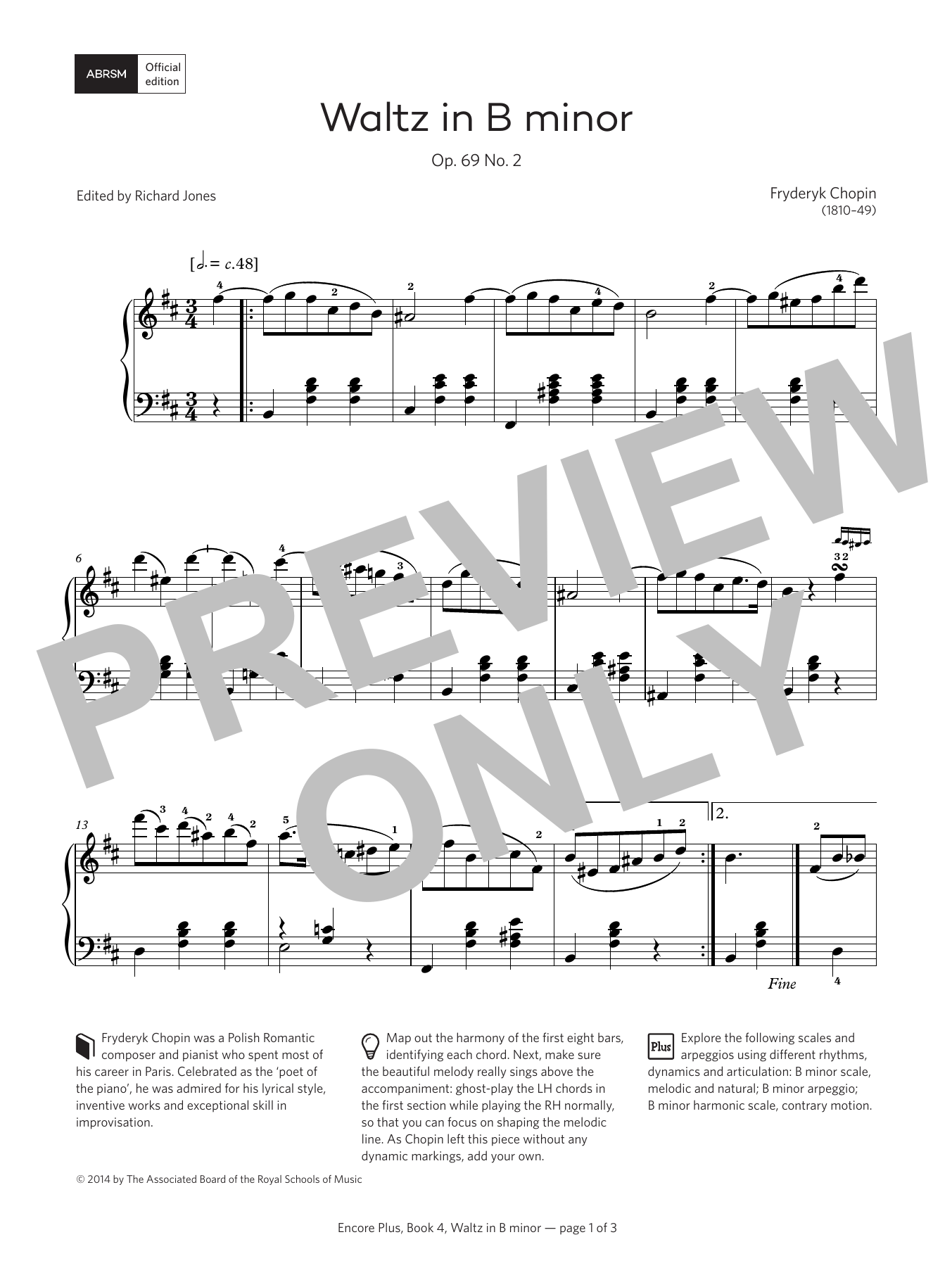
Waltz in B minor, Op. 69 No. 2 (Encore Plus, Book 4): Piano Solo

By Fryderyk Chopin

Grade: 8

Item: 35-DS01989431

Digital Download
$4.99
Description

Discover MakeMusic Cloud: thousands of interactive titles your students can play along with today.

Sample Audio
No sample audio found.
Sample Video
Additional Details
Publisher: Hal Leonard
Page Count: 3
SKU: 35-DS01989431

More about this title

About the Composer: Fryderyk Chopin

Fryderyk Chopin (1810-1849) was a Polish composer and pianist who fundamentally shaped the sound of 19th-century music. His approach to the piano was revolutionary: he wrote idiomatically for the instrument's capabilities while expanding its expressive range far beyond what his contemporaries thought possible. His waltzes, nocturnes, études, and ballades remain central to the repertoire because they balance technical brilliance with genuine emotional depth.

Chopin's influence on music pedagogy is direct and lasting. Teachers assign his work because it demands musicianship alongside technique. His compositions teach students how to voice chords independently across the registers, how to shape long melodic lines with the pedal, and how to find poetry in rhythmic precision. The waltzes in particular offer students access to concert repertoire that sounds sophisticated without requiring the heroic virtuosity of the études or ballades.

Why we love this

Grade 8 students rarely get to play Chopin waltzes that feel like real Chopin rather than simplified substitutes. This one delivers the genuine article: authentic voice leading, that signature left-hand accompaniment figure, and a melody that rewards careful shaping. It's the kind of piece that reminds students why they started playing piano in the first place.

What to expect

A waltz that carries a minor-key wistfulness rather than celebration. The left-hand pulse gives it the ballroom context, but the melody leans into introspection and yearning. It's intimate despite the formal waltz structure, like you're eavesdropping on something private unfolding at a candlelit salon.

Who it's for

Grade 8 pianists with solid technique and enough musical maturity to handle rubato and harmonic nuance. This piece sits at that sweet spot where students can access genuine Chopin without needing a doctorate in pedal technique or hand position.

How to get the most out of it

  • Shape the melody with your fingers, not just your wrist. Chopin's waltz themes sing because each note has direction and weight. Think in phrases, not individual notes.
  • Let the left-hand waltz figure breathe. The oom-pah-pah pattern needs enough space to avoid sounding metronomic. Slight rubato in the accompaniment serves the melody.
  • Use the sustain pedal sparingly and with intention. Change it between harmonic shifts, not on every beat. The piece breathes better when the harmonies stay clear.
  • Listen for where the melody wants to pull forward and where it settles back. Minor key waltzes have a restless quality that Chopin built into the phrasing itself.

How to use it

Slot this into a recital alongside other Romantic solo works to give your advancing students a chance to program something with real historical weight. It works equally well as a standalone encore or paired with other Chopin pieces in a thematic program.

Skills your students will build

  • Independent voice leading between melody and accompaniment
  • Sensitive pedal technique with strategic harmonic color changes
  • Phrasing and rubato in a minor-key melodic line
  • Waltz rhythm with elegance and restraint
  • Reading and executing Chopin's notational conventions

You May Also Like