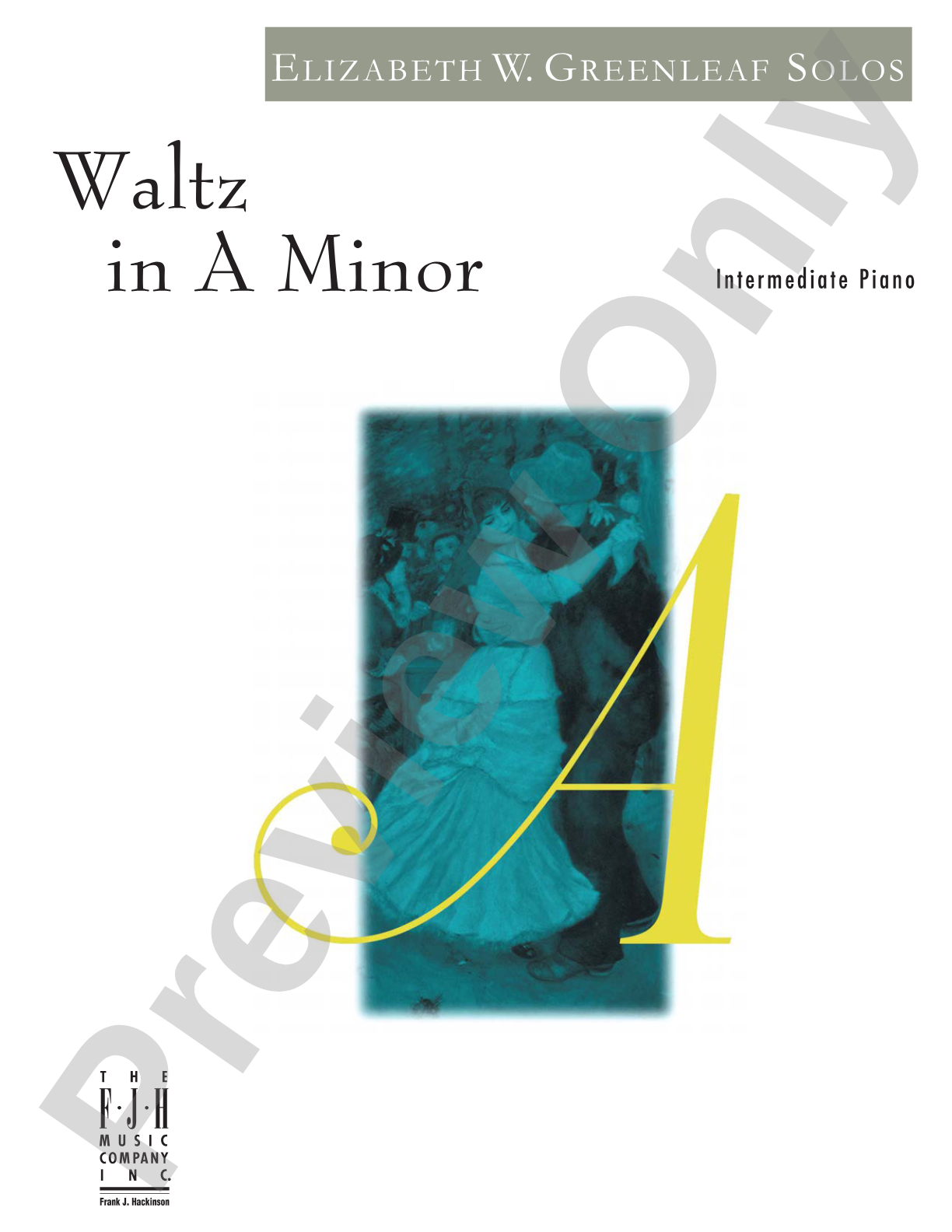
The Waltz in A Minor is an intermediate level solo that would be an excellent choice as an introduction to the 19th century waltz literature. The lyrical style is reminiscent of the expressive romantic melodies of the Chopin waltzes.
Discover MakeMusic Cloud: thousands of interactive titles your students can play along with today.
Greenleaf captures the essential character of 19th century waltz writing without demanding the virtuosic passage work that can intimidate intermediate pianists. The piece sits at that sweet spot where students encounter genuine romantic idiom while building real musicality within their technical reach. It's a legitimate introduction to the literature, not a watered-down approximation.
What to expect
Graceful and reflective. The A minor tonality gives it an introspective quality that sets it apart from brighter waltz literature. There's a touch of melancholy woven through the gentle three-beat motion, creating a piece that feels both accessible and emotionally substantive.
Who it's for
Intermediate pianists ready to explore the romantic era through solo literature. This piece works especially well for students who respond to lyrical melody and want to develop expression beyond technical exercises.
How to get the most out of it
Shape the melody with a singing tone that breathes at natural phrase endings. Think of how a violinist would shape this line; your pedal and touch should mirror that vocal quality.
Keep the waltz pulse steady but never mechanical. A slight lift at beat three creates the lift that makes the form feel alive rather than metronomic.
Balance the accompaniment so it supports without overwhelming the melody. The harmonic context matters, but the tune is what listeners will remember.
How to use it
Include this in a student recital as a standalone piece or pair it with other intermediate romantic solos to create a brief period study. Its moderate length and accessible difficulty make it ideal for a student showcase or informal performance where you want to feature growing musicianship alongside technical competency.
Skills your students will build
Phrasing in three-beat meter
Romantic period style and expressive technique
Voice leading between melody and accompaniment
Pedal use to support harmonic color without muddying texture
Shaping a lyrical line with rubato and dynamic nuance
You May Also Like
Scan to Complete Your Purchase
Use your phone's camera to scan the code below
You'll log in on your phone and the order will be added to your account