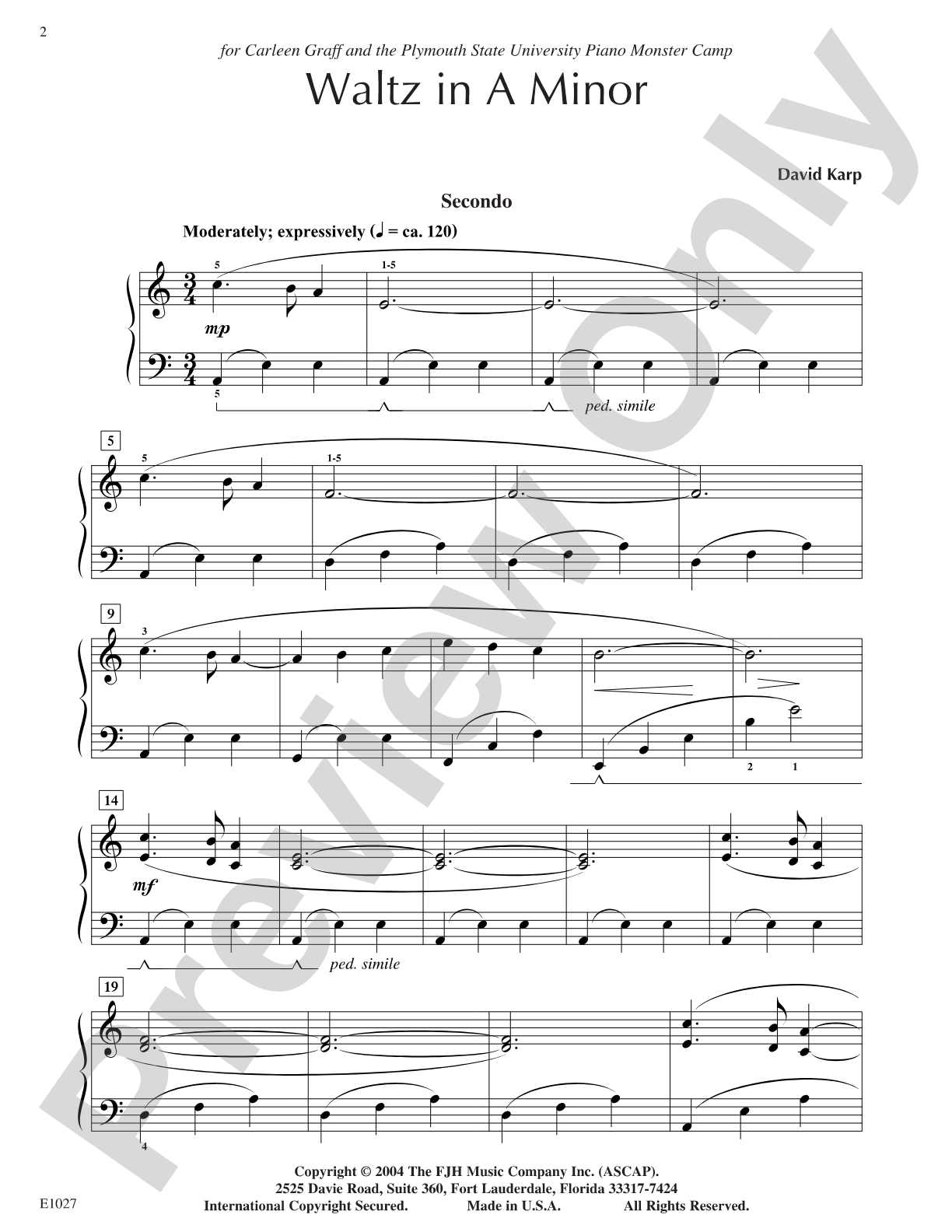
Waltz in A Minor Sheet Music Preview

Waltz in A Minor: Piano

By David Karp

Item: 98-DE1027

Digital Download
$3.50
Description
The moving melody of this ensemble piano piece sings a melancholy song in the secondo, with sustained, four-measure phrasing. The theme is lightly answered with dancing eighth notes in the primo, which add depth of expression. A countermelody is introduced in time for primo to take over the theme. Consider this waltz as a wonderful invitation to experience the sweep of 3/4 meter, and its dramatic effects.

Waltz in A Minor: Piano isn't in MakeMusic Cloud just yet...but it could be. Let us know you'd like to see it, and you'll help shape what comes next. In the meantime, start a free trial and dive into thousands of interactive titles your students can play along with today.

Sample Audio
No sample audio found.
Sample Video
Additional Details
Series: The FJH Piano Ensemble Series
Publisher: The FJH Music Company, Inc.
SKU: 98-DE1027

More about this title

About the Composer: David Karp

David Karp is a respected composer and arranger whose work appears across the FJH Music Publishing catalog, with a particular gift for writing accessible yet musically substantial pieces for young pianists. His compositions balance technical clarity with genuine expressive demands, making them favorites among piano teachers who want their students to experience real musical growth rather than mere technical exercise.

Why we love this

Karp's writing for the secondo part gives the lower voice genuine musical responsibility rather than relegating it to accompaniment duty. The four-measure phrasing creates natural breath points that help students understand phrase architecture, while the dialogue between primo and secondo voices teaches ensemble listening without requiring either player to sit passively.

What to expect

This waltz has an introspective quality that lives in A minor rather than its major relative. The sustained melody in the secondo creates a wistful, almost nostalgic atmosphere that the dancing eighth notes in primo gently complicate, giving the piece a quiet complexity beneath its elegant surface.

Who it's for

Intermediate pianists ready to tackle ensemble playing with real musicality, or duet partners at slightly different technical levels since the primo and secondo parts differentiate by texture and character rather than equal difficulty. Teachers looking to introduce students to Romantic-era waltz style and the expressive possibilities of minor keys.

How to get the most out of it

  • Shape the secondo melody with a singing tone that anchors the piece emotionally; the eighth-note figurations in primo should feel like commentary rather than the main event.
  • Establish a steady, flowing 3/4 pulse before rehearsal begins; use a slow tempo to let students feel the natural sweep of the waltz rather than rushing through it.
  • Balance the dynamic relationship carefully when the primo takes over the theme. The secondo's countermelody needs breathing room without disappearing entirely.
  • Experiment with slight rubato as the piece unfolds; waltzes benefit from gentle give-and-take that respects the melodic contour.

How to use it

Pair this with other Karp ensemble pieces or other intermediate waltz literature for a recital that explores Romantic character pieces. It works especially well as a transitional piece between technical studies and more demanding contemporary repertoire, showing students that music from the Romantic era can feel both accessible and sophisticated.

Skills your students will build

  • Phrasing in four-measure units and understanding how to shape longer melodic lines
  • Listening and balancing between primo and secondo voices in ensemble
  • Expressive playing in minor keys and creating character through harmonic color
  • Coordinating 3/4 meter with confident, flowing accompaniment figures
  • Managing the technical and musical demands of dancing eighth-note patterns

You May Also Like