
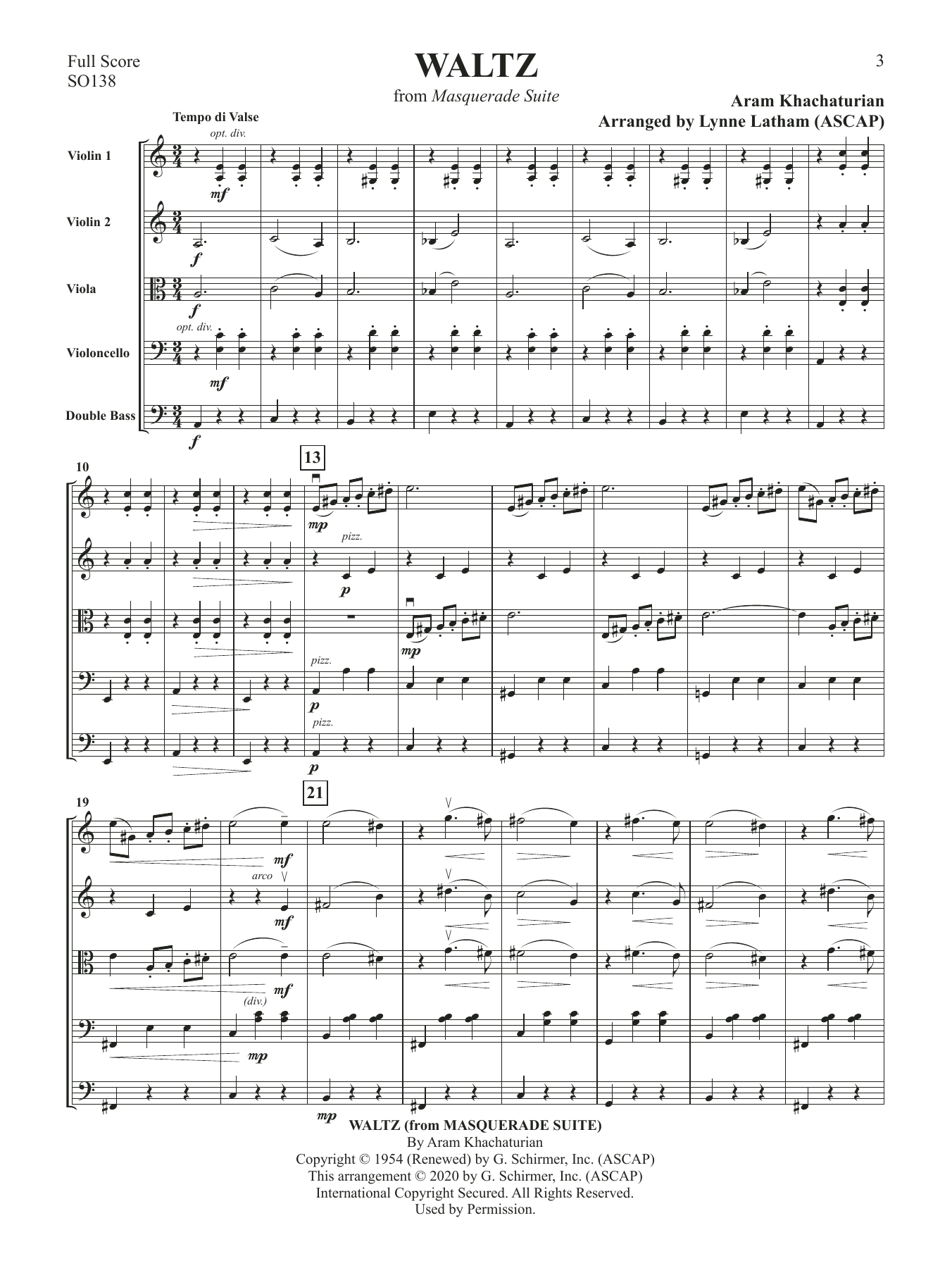

Waltz from Masquerade Suite (Intermediate arrangement): String Orchestra Conductor Score & Parts
By Aram Khachaturian / Arranged by Lynne Latham
Grade: 3
Item: 35-PK01467230
$75.00
Pickup currently not available
Buy Extra Parts (Digital PDF Download)
Parts Added to Cart!
Description
The whimsical main theme, with its augmented 2nd, is perfect for teaching intervals and chromatic fingerings (the violas will play in 1/2 position). The first violins will shift to and stay in 3rd position for the 2nd theme, which the cellos and violas will share first. The middle section of the work has been omitted. A great addition to any Halloween concert for mid-level high school or community orchestra. A more advanced full transcription for string orchestra is also available from the publisher.


Waltz from Masquerade Suite (Intermediate arrangement): String Orchestra Conductor Score & Parts isn't in MakeMusic Cloud just yet...but it could be. Let us know you'd like to see it, and you'll help shape what comes next. In the meantime, start a free trial and dive into thousands of interactive titles your students can play along with today.
Request This Title
Tell us you want it.
Start Your Free Trial
Explore everything that's ready to play right now.
Sample Audio
No sample audio found.
Sample Video
No sample videos found.
Additional Details
Publisher:
Hal Leonard
SKU:
35-PK01467230
More about this title
About the Composer: Aram Khachaturian
Aram Khachaturian (1903-1978) was an Armenian composer whose music brilliantly blended folk traditions with modern orchestral colors. His signature use of folk melodies, exotic intervals, and rhythmic vitality made his concert works instantly recognizable and deeply influential across the Soviet musical world.
The Masquerade Suite, originally written for a 1941 theatrical production, became one of Khachaturian's most performed works. Its themes are direct and memorable, making them ideal teaching vehicles for young orchestras learning to navigate unconventional intervals and shifting position work.
Why we love this
This arrangement respects Khachaturian's distinctive voice while staying within reach of intermediate ensembles. The augmented 2nd interval that defines the main theme is instantly recognizable and immediately demands bow control and intonation focus from your first violins. The strategic use of positional shifts and the shared material between sections create natural opportunities for ensemble listening without overwhelming younger players.
What to expect
Whimsical and theatrical, like stepping into a masquerade where the music keeps hinting at something exotic and slightly mysterious. The main theme has an angular charm that catches listeners immediately; the second theme settles into lyrical warmth before the whole thing dissolves back into playful intrigue.
Who it's for
String orchestras at the high school and community level looking for recognizable concert material with real pedagogical value. This works especially well for ensembles comfortable with positional shifts and minor intonation challenges but not yet ready for full Grade 4 literature.
How to get the most out of it
- Isolate the augmented 2nd interval in rehearsal before tackling full phrases. Have students sing the interval first, then play it with exaggerated length to internalize the sound.
- Mark the viola shift to 1/2 position clearly in the parts. Give them a full measure to settle into the position before entering; rushing the transition will expose intonation problems immediately.
- Balance the cello and viola unison at the start of the second theme carefully. These lines often get swallowed by first violins, so don't be afraid to ask them to sing out.
- Use the middle section's omission as a feature, not a shortcut. The arrangement flows directly from exposition to return, which can feel jarring unless you taper slightly into the transition.
How to use it
Program this for a Halloween or fall concert where the theatrical associations serve the mood. It also sits naturally in a classical-era survey concert alongside Mozart or Beethoven arrangements, offering a modern twist that keeps audiences engaged while showing off your orchestra's range.
Skills your students will build
- Playing augmented 2nd intervals with secure intonation
- Viola shifting between first and second position
- First violin shifts to and maintenance of third position
- Balancing shared melodic material across multiple sections
- Navigating chromatic fingerings in upper extensions