Waltz for Band and Water Glasses (with Apologies to Johann Strauss): E-flat Alto Saxophone Sheet Music Preview

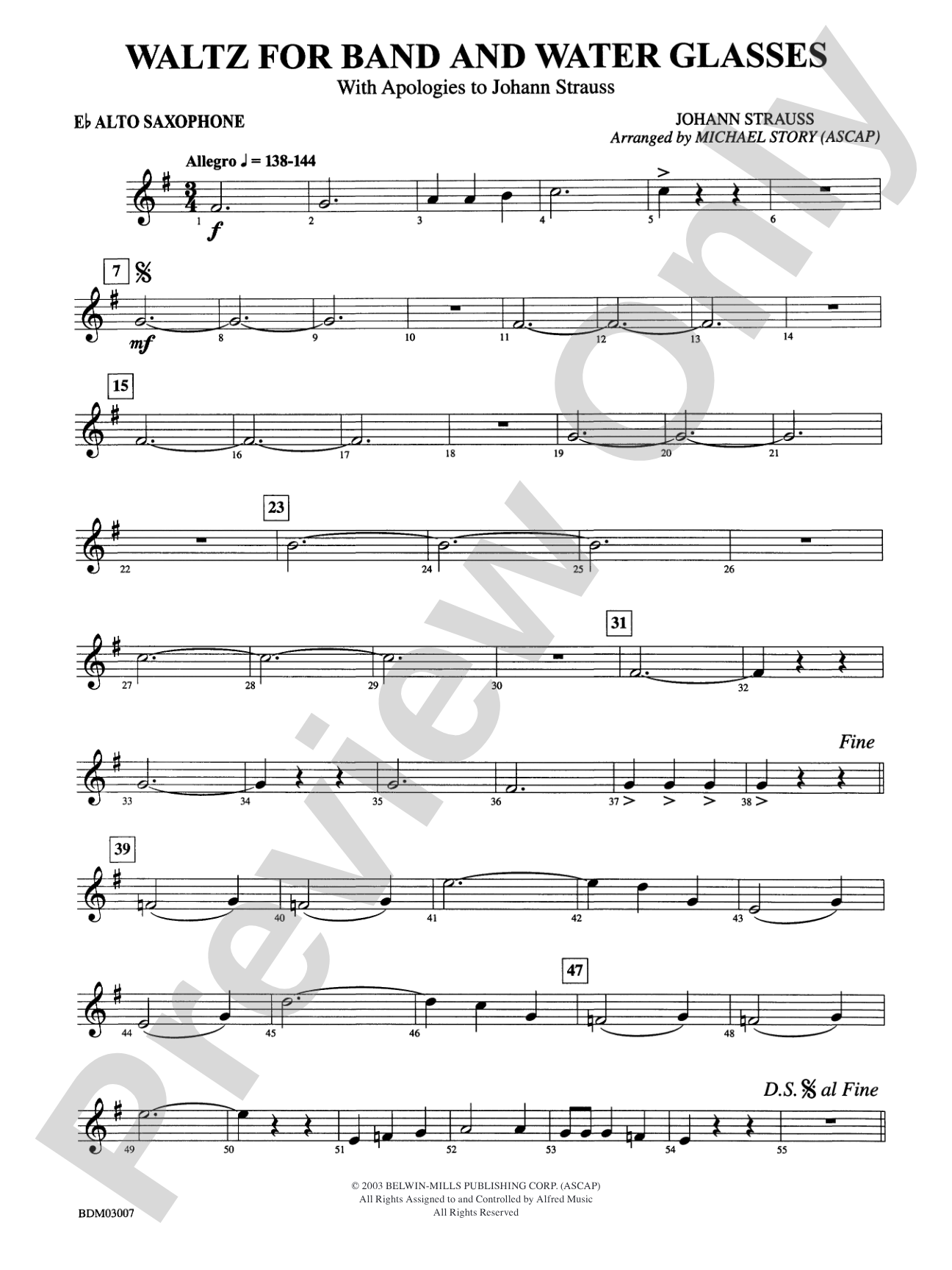
Waltz for Band and Water Glasses (with Apologies to Johann Strauss): E-flat Alto Saxophone

By Johann Strauss / arr. Michael Story

Grade: 0.5 (Very Easy)

Item: 00-PC-0016613_AX1

Digital Download
$3.00
Description
Get ready to place your tongue in your cheek with this three-four classic in an all new light; the traditional Strauss waltz melody is clanked out on water glasses. Prepared for the first year players during their second semester, this one is great fun. Teach about Strauss and have some fun with this exciting rendition. (1:44)

Don't just read it, hear it, play along with it, and watch your students grow with it. In MakeMusic Cloud, Waltz for Band and Water Glasses (with Apologies to Johann Strauss): E-flat Alto Saxophone comes alive with professional accompaniment, adjustable tempo, and built-in practice tools that turn solo practice into real progress.

Sample Audio
0:00
0:00
Sample Video
Additional Details
Series: Belwin Very Beginning Band
Publisher: Alfred Music
Page Count: 138
SKU: 00-PC-0016613_AX1

More about this title

About the Composer: Johann Strauss

Johann Strauss II (1825-1899) earned his reputation as the "Waltz King" by composing over 150 waltzes that defined the sound of 19th-century Vienna. His melodies became so ubiquitous and beloved that they remain instantly recognizable today, making them ideal material for music education and creative reinterpretation. Strauss elevated the waltz from a simple dance form into a sophisticated concert genre, blending Romantic-era orchestration with memorable, singable themes that work beautifully across all levels of ensemble playing.

Why we love this

Michael Story's arrangement transforms a canonical waltz into pure pedagogical comedy while keeping the iconic melody front and center. First-semester players get to perform a "real" piece of music history, and the water glass novelty element guarantees engagement, laughter, and memory that outlasts the rehearsal. It's the kind of arrangement that reminds young musicians that concert band can be joyful and playful without sacrificing musicianship.

What to expect

The familiar lilt of a Strauss waltz meets vaudeville charm as water glasses clink out the beloved melody in three-four time. There's something both earnest and gleeful about hearing this Romantic classic reduced to household percussion, creating a moment of shared musical joy that feels both sophisticated and utterly silly.

Who it's for

This is built for first-year concert band students in their second semester, after they've developed basic reading and ensemble skills. It works equally well as a rehearsal morale booster, a concert novelty that delights audiences, or a teaching tool to introduce students to both Romantic-era masterworks and the creative possibilities of arrangement.

How to get the most out of it

  • Assign water glasses to students who can handle the melodic line confidently; this becomes a special section feature rather than a gimmick.
  • Strike the glasses with mallets or spoons early in rehearsal so the band hears the sound before dress rehearsal creates surprises.
  • Balance the water glass melody against the supporting band parts; the novelty works only if the tune remains clear and musical throughout.
  • Use the piece to discuss Strauss's original orchestration and how arrangement choices affect both sound and learning outcomes.

How to use it

Position this as a lighter moment in a concert that otherwise features standard concert band repertoire; it rewards the audience after a serious work and gives your ensemble a chance to show their personality. It also works beautifully at holiday programs, spring concerts, or any context where you want to celebrate how far your beginning musicians have come while keeping the energy high.

Skills your students will build

  • Performing recognizable melody with stylistic clarity in waltz meter (3/4)
  • Reading and performing as a section feature (water glass players)
  • Balancing independent parts against a featured melodic line
  • Understanding arrangement as a creative musical choice, not just transcription
  • Developing ensemble precision in a piece where rhythmic coordination directly affects the comedic impact

You May Also Like