
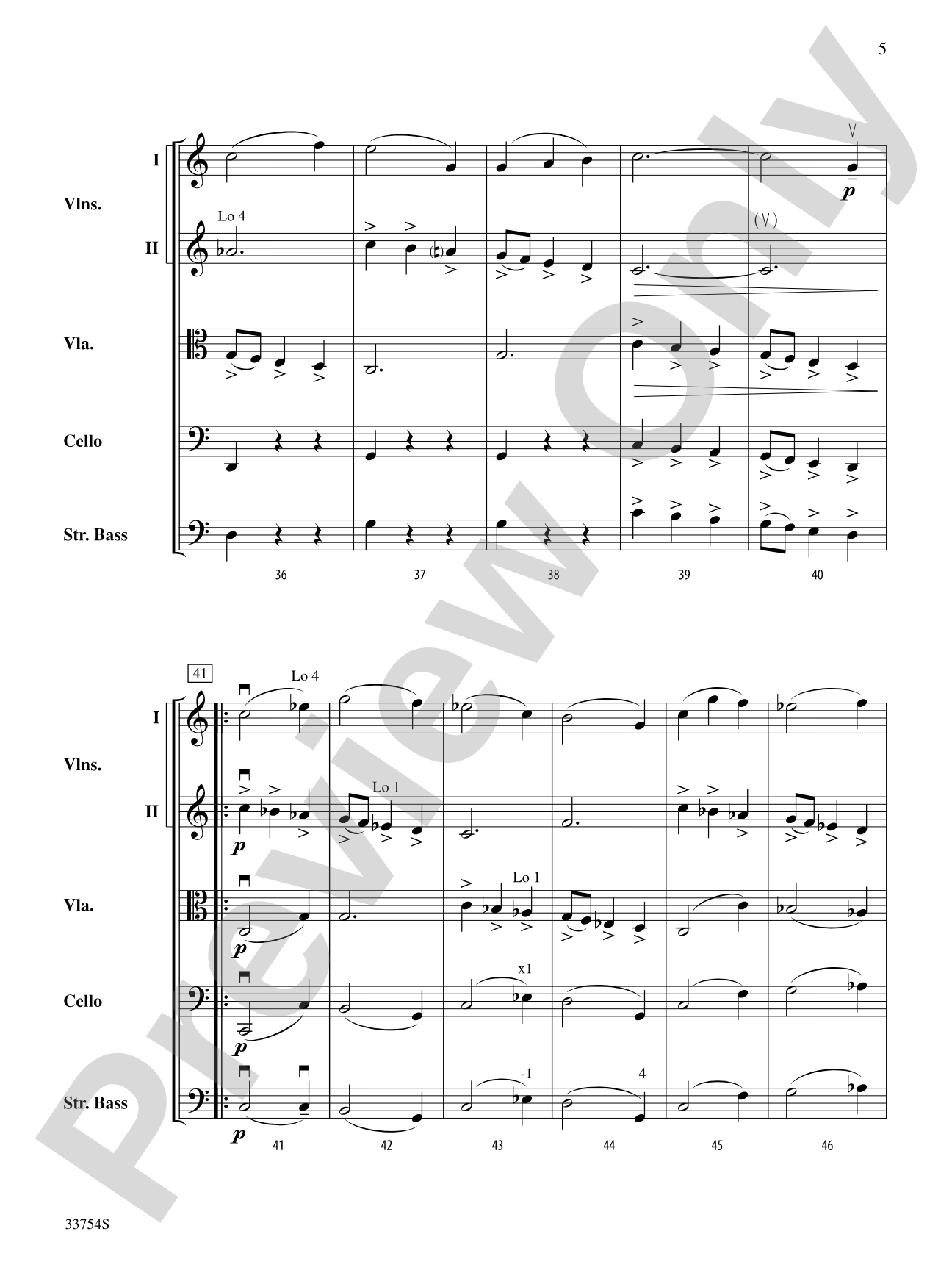
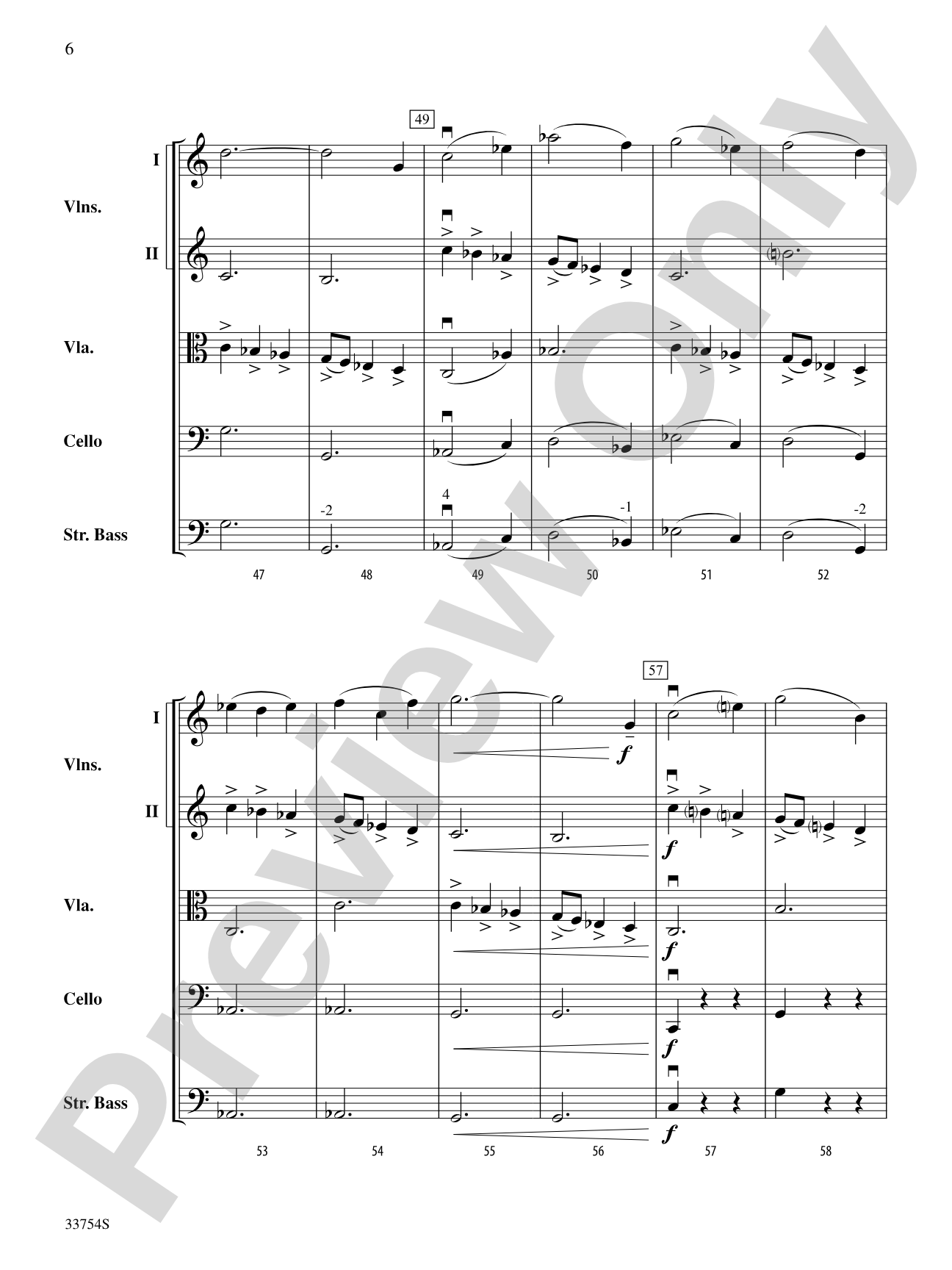
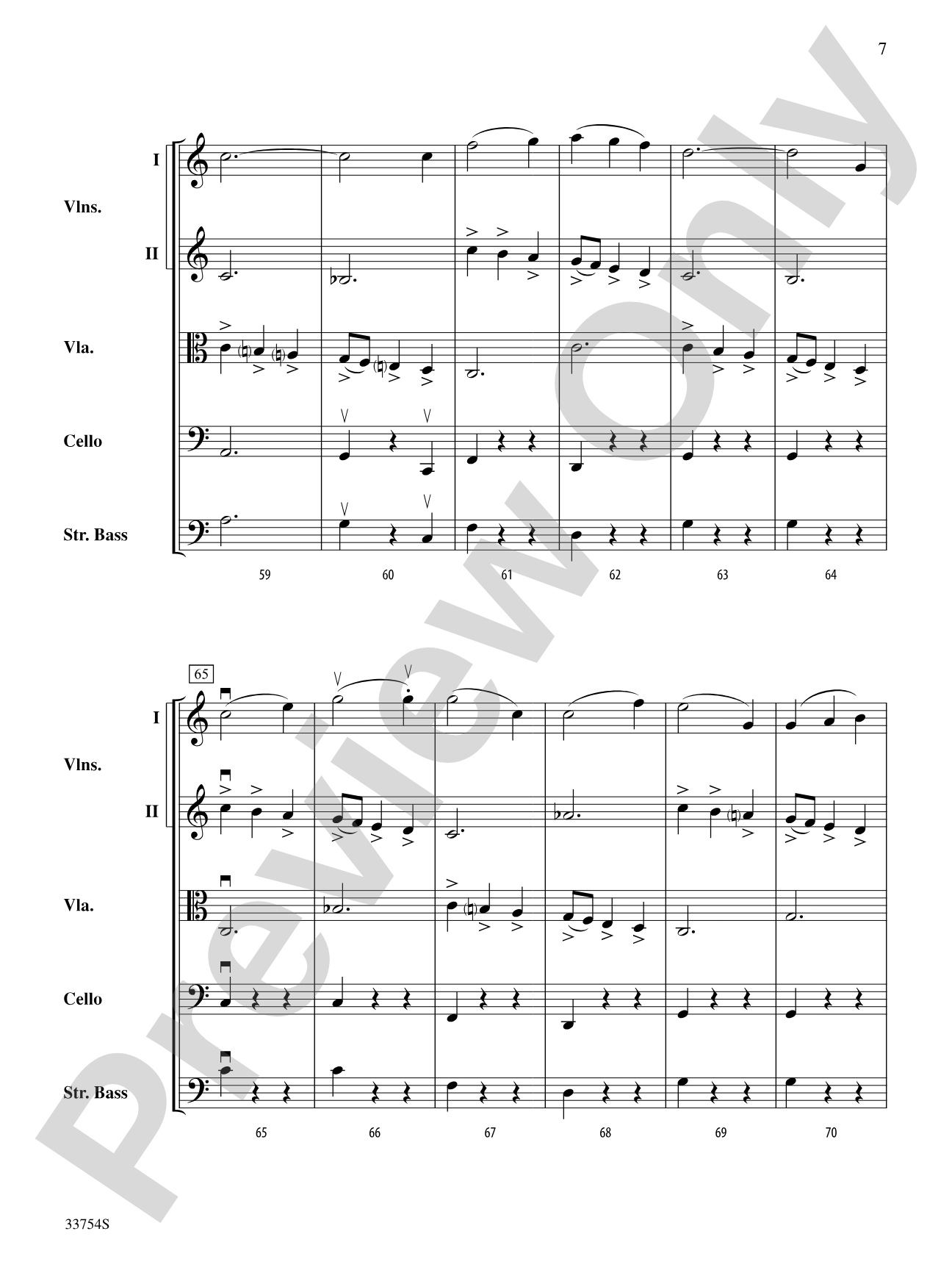
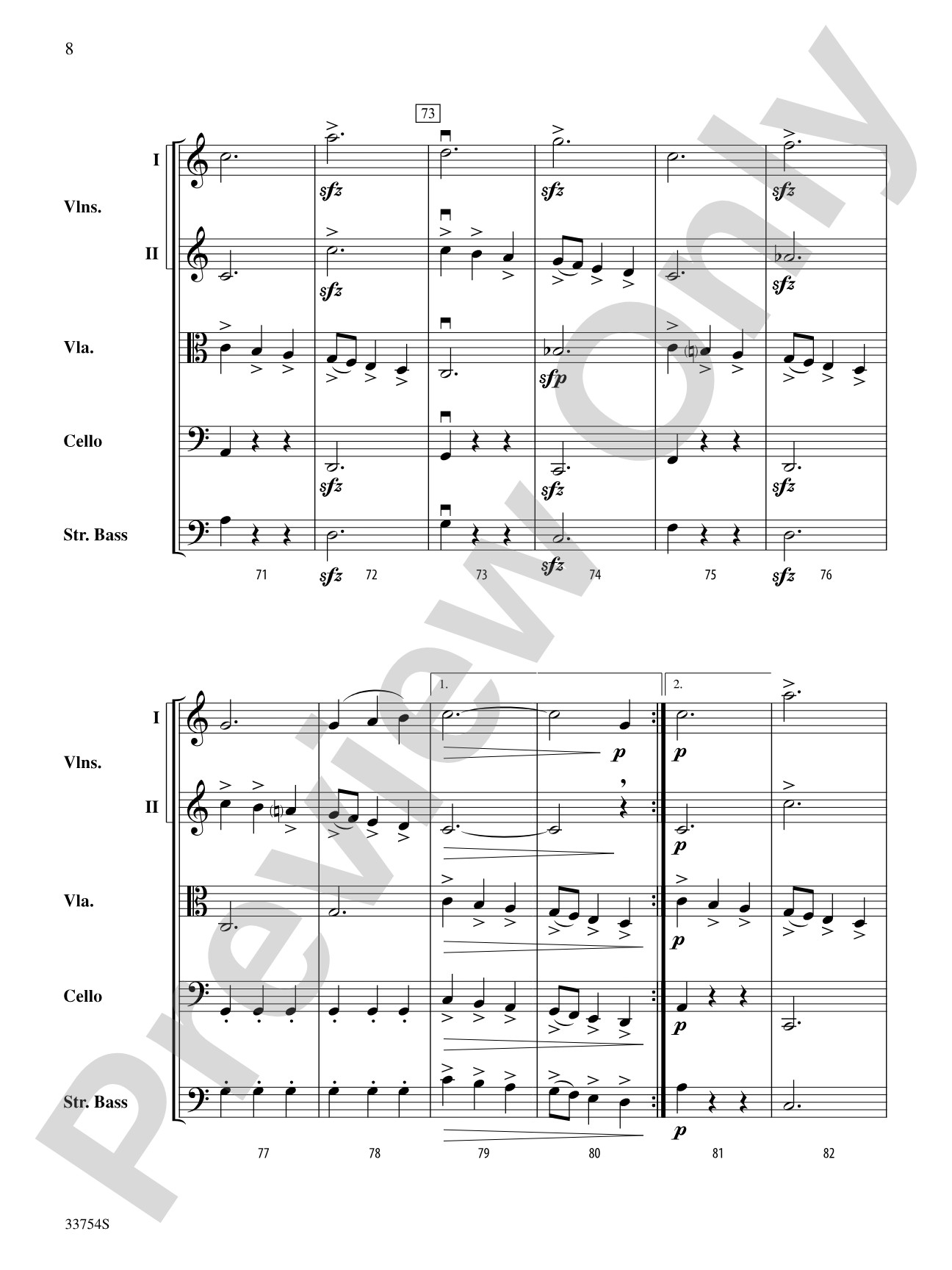



Waltz Around the Scale: String Orchestra Conductor Score & Parts
By Leroy Anderson / arr. Bob Phillips
Grade: 3
Item: 00-PK-0004242

$60.00
Pickup currently not available
Buy Extra Parts (Digital PDF Download)
| Product | Price | Quantity |
|---|---|---|
| Waltz Around the Scale: Score | $9.00 | |
| Waltz Around the Scale: 1st Violin | $5.99 | |
| Waltz Around the Scale: 2nd Violin | $5.99 | |
| Waltz Around the Scale: Viola | $5.99 | |
| Waltz Around the Scale: Cello | $5.99 | |
| Waltz Around the Scale: String Bass | $5.99 |
Parts Added to Cart!
Related Items
Waltz Around the Scale: String Orchestra Conductor Score |
$9.00
|
View |
Description
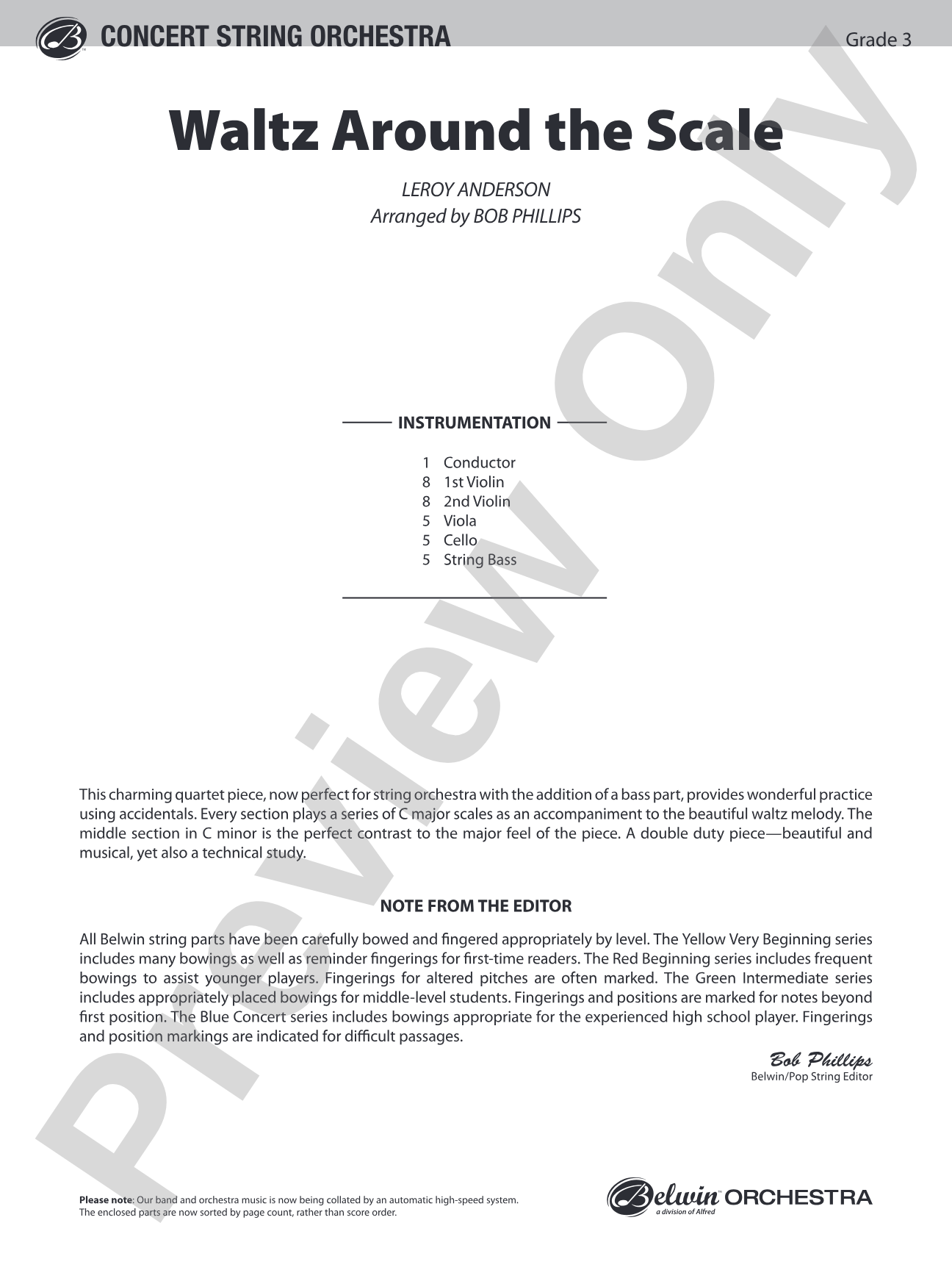
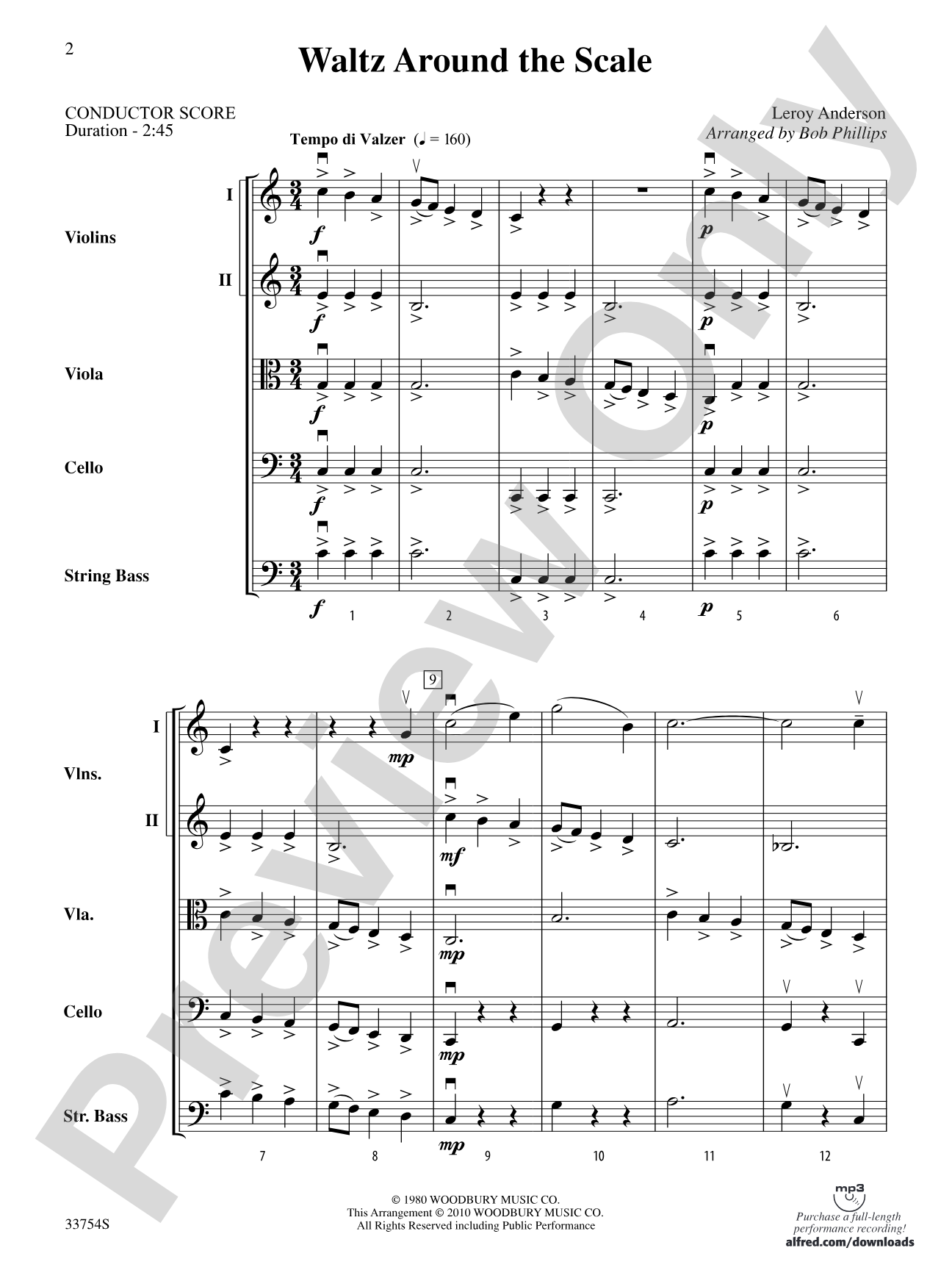
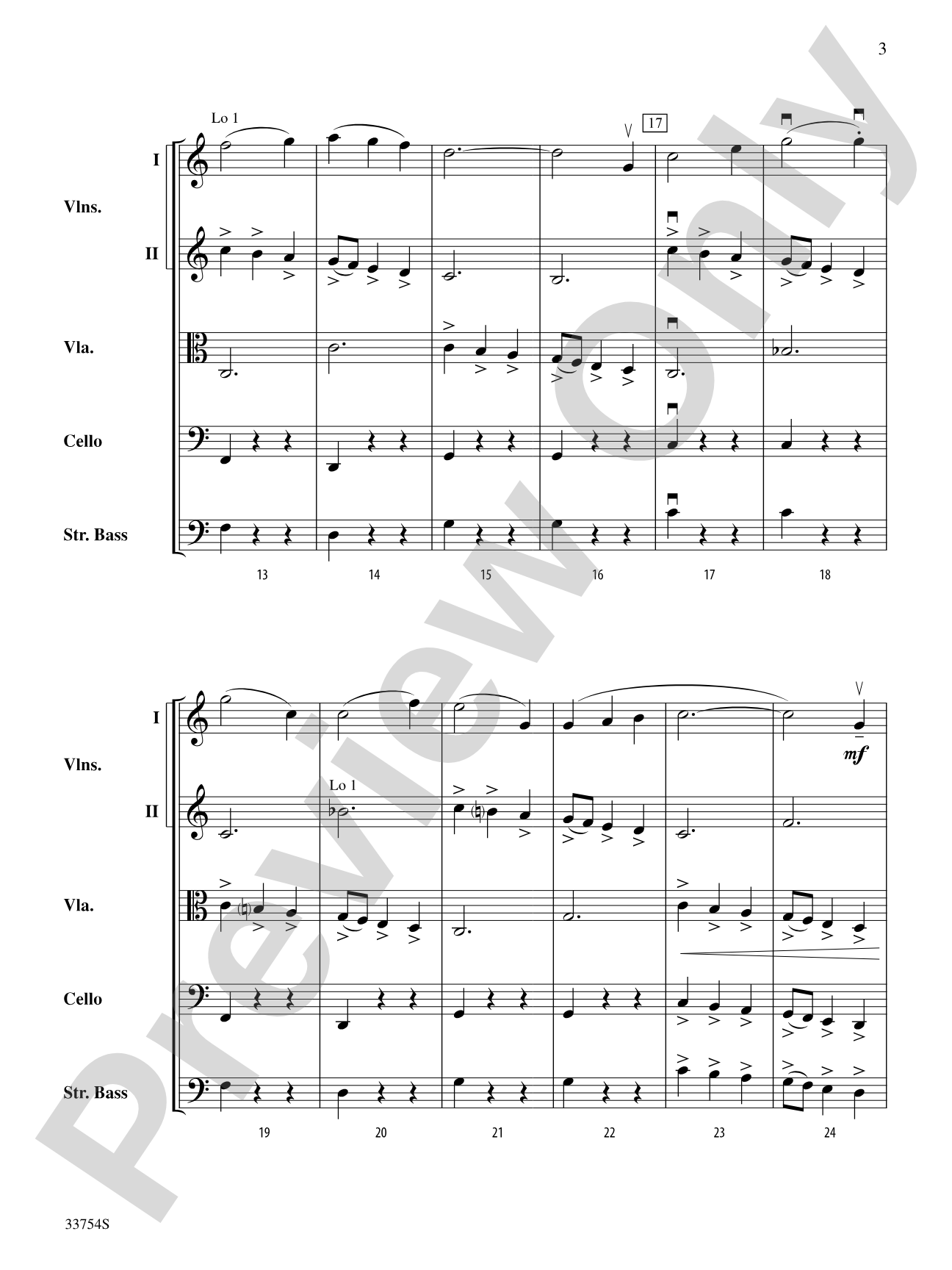
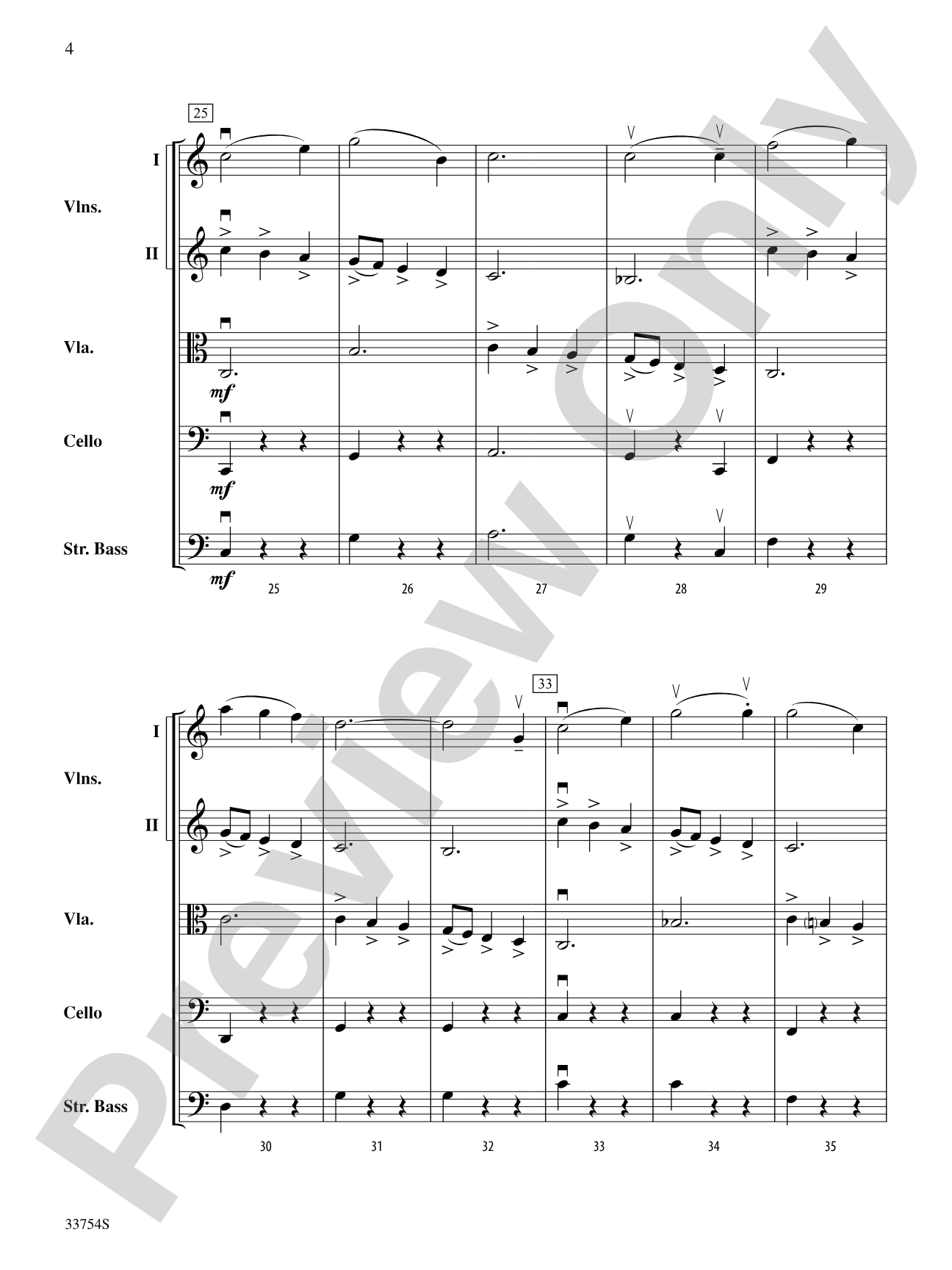
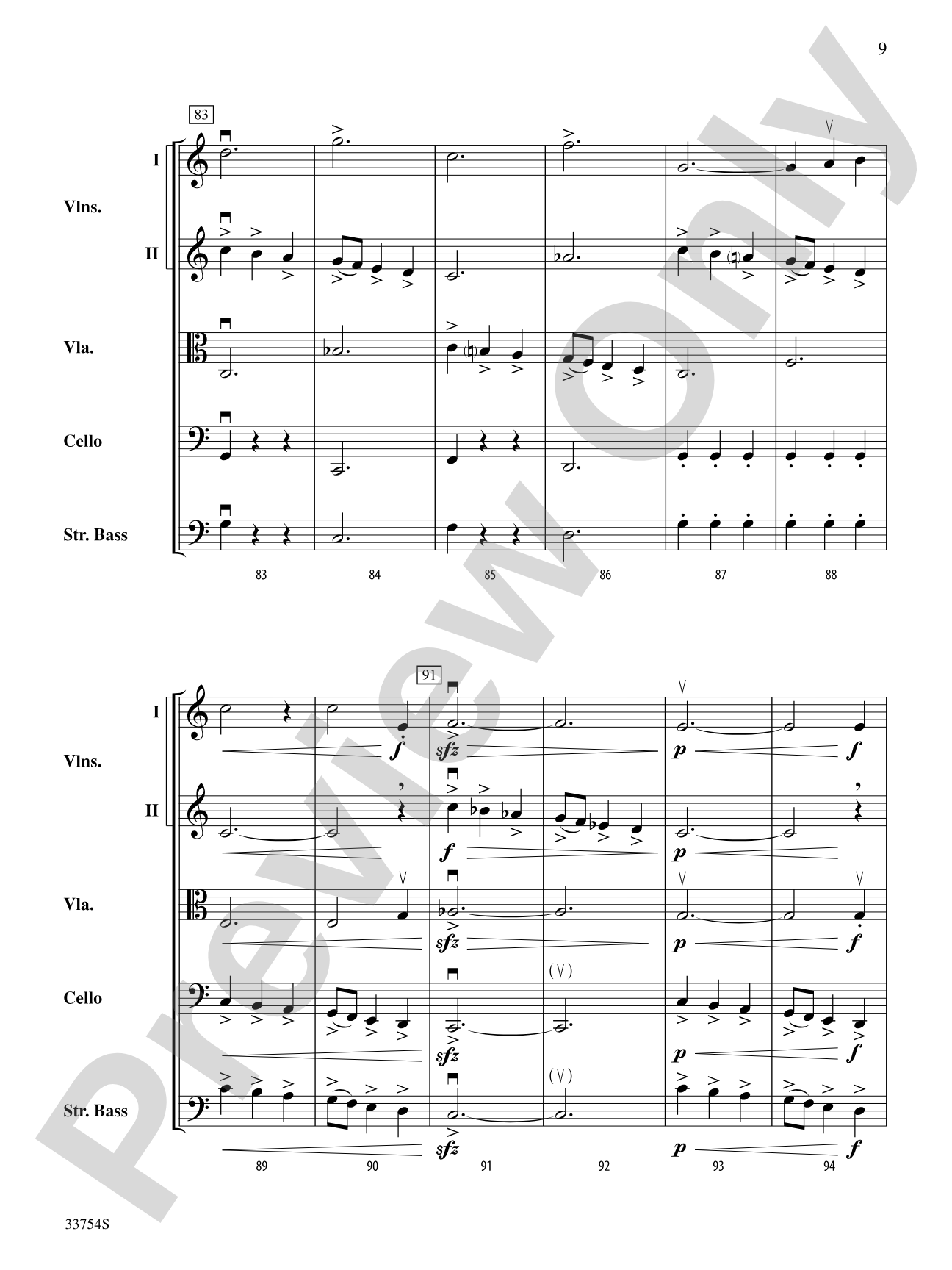
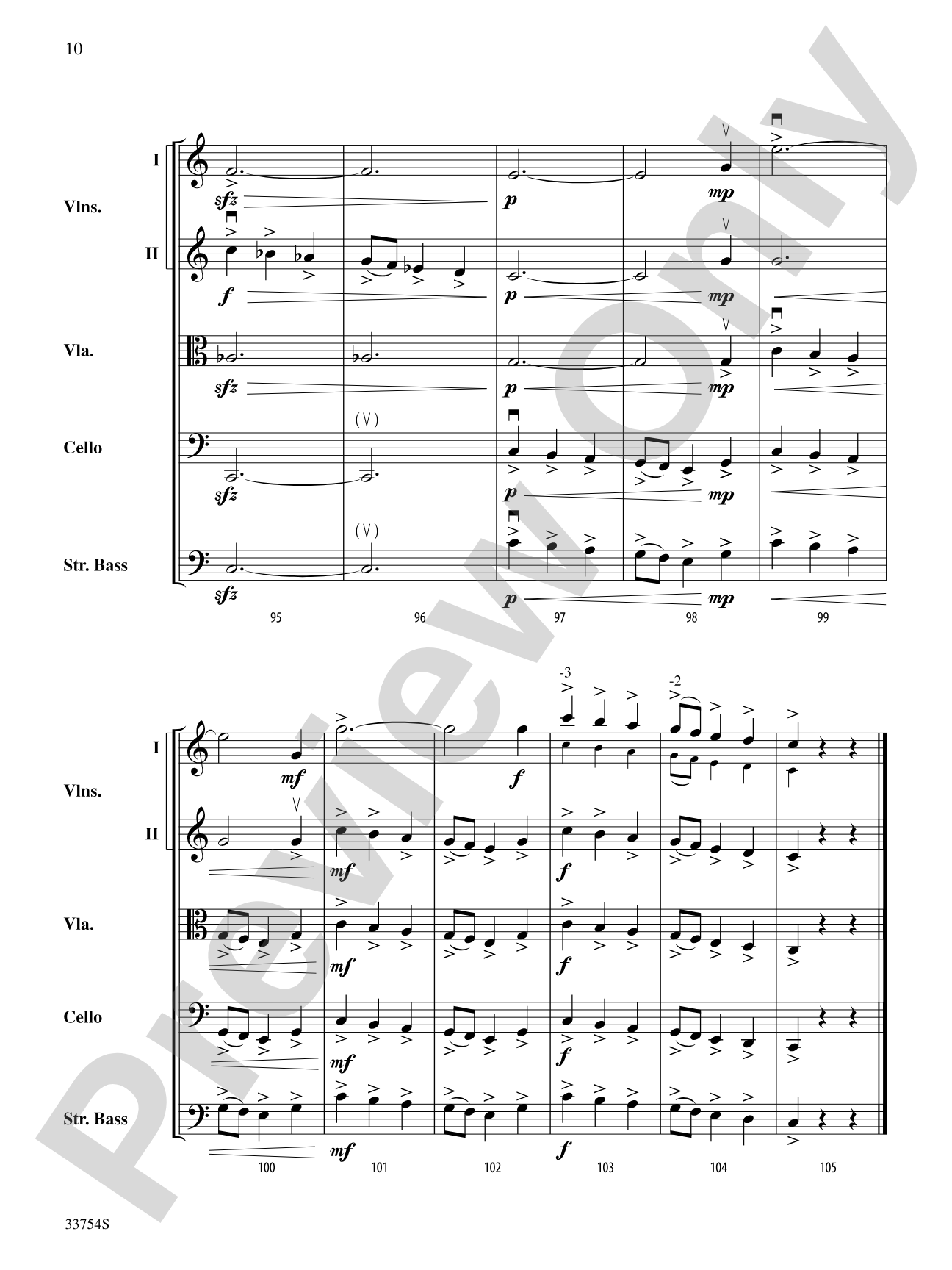
This charming quartet piece, now perfect for string orchestra with the addition of a bass part, provides wonderful practice using accidentals. Every section plays a series of C major scales as an accompaniment to the beautiful waltz melody. The middle section in C minor is the perfect contrast to the major feel of the piece. A double duty piece---beautiful and musical, yet also a technical study.


Don't just read it, hear it, play along with it, and watch your students grow with it. In MakeMusic Cloud, Waltz Around the Scale: String Orchestra Conductor Score & Parts comes alive with professional accompaniment, adjustable tempo, and built-in practice tools that turn solo practice into real progress.
Open in the Player
Jump straight in and assign it today.
Start Your Free Trial
Open this title and explore the full library in minutes.
Sample Audio
1
Audio File
--:--
0:00
0:00
Sample Video
No sample videos found.
Additional Details
Series:
Pop Concert String Orchestra
Publisher:
Alfred Music
Page Count:
124
SKU:
00-PK-0004242
More about this title
About the Composer: Leroy Anderson
Leroy Anderson (1908, 1975) was an American composer and conductor whose gift for melody and orchestration made him a fixture of mid-twentieth-century concert music. He studied composition and languages at Harvard University, then spent decades writing accessible, sophisticated pieces for band and orchestra that appealed equally to audiences and musicians. His catalog includes hundreds of works, from quirky character pieces to full-length symphonic suites, all marked by his characteristic wit, clarity, and genuine warmth.
Anderson's influence on music education runs deep. Teachers gravitated toward his work because he never talked down to students or audiences. His pieces sound deceptively simple but reward careful listening and solid musicianship. For school orchestras and bands, Anderson represented a middle path: serious craft without pretension, musical substance without unnecessary complexity.
Why we love this
Anderson's melodies are instantly engaging, and this arrangement by Bob Phillips expands the original concept brilliantly by adding a bass part and adapting it for full string orchestra. You get a piece that sounds mature and polished in concert while simultaneously functioning as a rigorous technical study in accidentals and scale work. String orchestras at this level rarely find repertoire that balances musical reward with pedagogical clarity so effectively.
What to expect
Elegant and unhurried, with the gentle charm of a Viennese waltz filtered through Anderson's distinctly American sensibility. The piece floats effortlessly on scales that shimmer beneath a lyrical melody, then pivots into a more shadowed minor section before returning to sunlit major tonality.
Who it's for
String orchestra directors at the Grade 3 level seeking repertoire that teaches accidental reading and scale facility while maintaining genuine musical appeal. This works for groups developing confidence in sight-reading chromatic passages and those looking for accessible yet substantial concert material.
How to get the most out of it
- Keep the scale passages in the accompaniment texture light and rhythmically precise. These sections should support the melody without becoming heavy or mechanical.
- Shape the waltz melody with clear phrase direction and gentle dynamic contours. Anderson's melodies reward conductor nuance even when the harmonic foundation is a straightforward scale.
- Use the C minor middle section to demonstrate tonal contrast. Approach it as a distinct emotional moment, not simply a key change, so the return to C major feels genuinely refreshing.
- Balance the double stops and chromatic alterations carefully during rehearsal. Mark individual accidentals in parts if needed, and check intonation on the altered scale degrees.
How to use it
Program this as a centerpiece of a pops concert or light classical showcase where it pairs well with other Anderson works or other accessible orchestral fare. It also fits naturally into a concert highlighting American composers, where Anderson's pops credentials and serious craftsmanship both deserve recognition.
Skills your students will build
- Reading and performing accidentals with accuracy and consistency
- Playing diatonic and chromatic scale passages with secure intonation
- Distinguishing tonal contrast between major and minor keys
- Balancing melody and accompaniment texture within a single ensemble
- Shaping waltz rhythm with appropriate phrasing and rubato