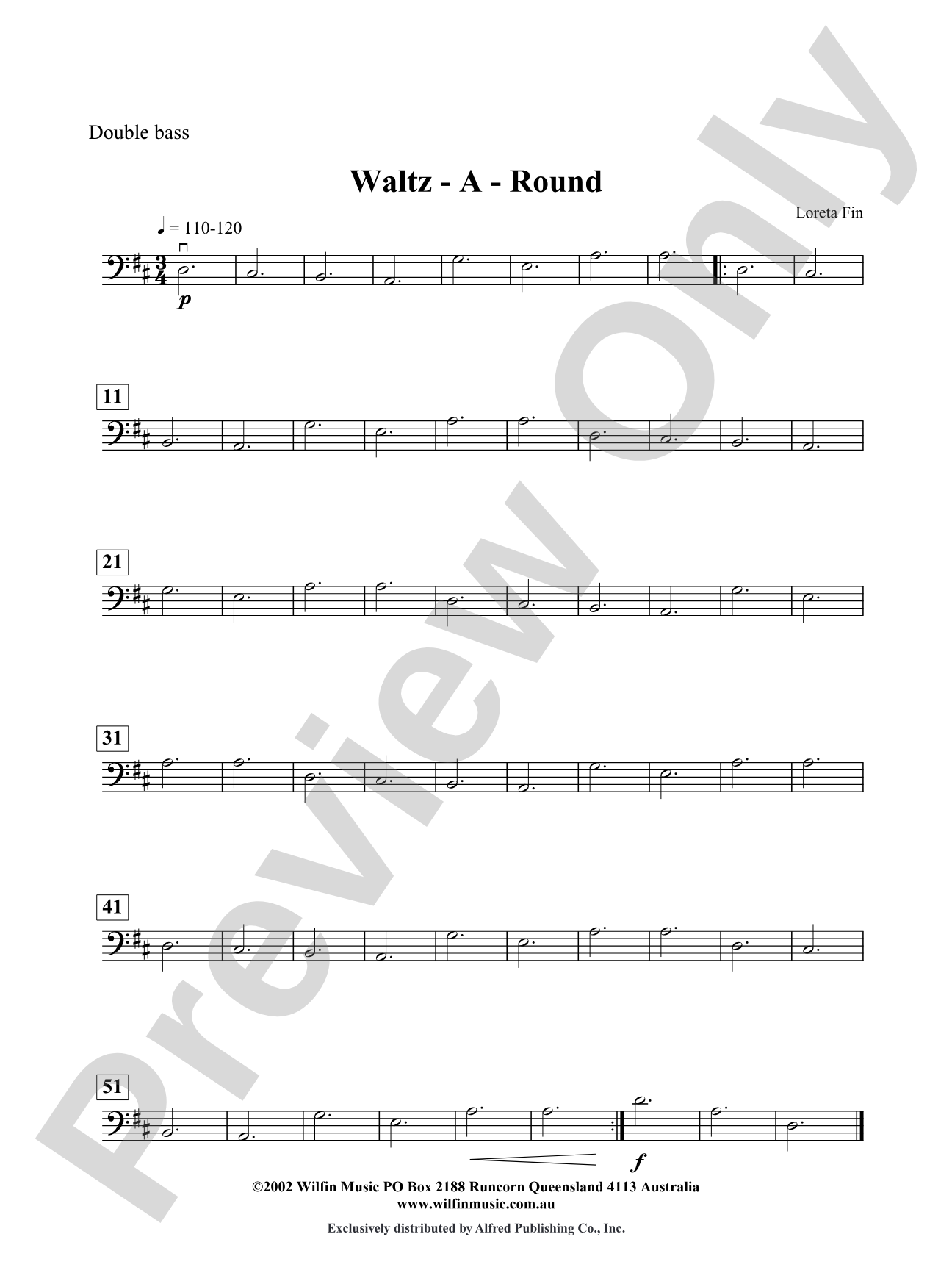
Waltz-A-Round: String Bass Sheet Music Preview

Waltz-A-Round: String Bass

By Loreta Fin

Grade: 2

Item: 76-PC-0000017_SB

Digital Download
$5.99
Description
The title says it all. This is a waltz, with the first, second and third parts played in a round or canon. Therefore the parts can be taught simultaneously. Very pretty melody and easy to play.

Waltz-A-Round: String Bass isn't in MakeMusic Cloud just yet...but it could be. Let us know you'd like to see it, and you'll help shape what comes next. In the meantime, start a free trial and dive into thousands of interactive titles your students can play along with today.

Sample Audio
No sample audio found.
Sample Video
Additional Details
Series: Wilfin String Orchestra: Young String Ensemble Series
Publisher: Wilfin Music
Page Count: 66
SKU: 76-PC-0000017_SB

More about this title

About the Composer: Loreta Fin

Loreta Fin

Loreta Fin AM is a violist and string educator based in Brisbane, Australia, with deep roots in both performance and pedagogy. A graduate of the Sydney Conservatorium of Music, she served as Principal Viola with the Queensland Pops Orchestra for over 25 years while maintaining an active chamber music practice. She has directed the string program at Somerville House School since 1993 and has presented her work at numerous Australian and American string teaching conferences.

As a composer, Fin has published over 100 works for string orchestra through Alfred Music, earning international distribution. Her contributions to string education extend to examining for the Australian Music Examinations Board, advising the Queensland Symphony Orchestra's education initiatives, and conducting state and national honours ensembles programs since 2015. In recognition of her sustained impact on string teaching in Australia, she received the National Award for Services to Music and String Teaching and was nominated for an ARIA Award for teaching excellence.

Why we love this

Fin understands exactly how young string orchestras learn, and this waltz puts that knowledge to work. By setting the same melody in canon across three parts, she eliminates the need for separate rehearsal tracks while building ensemble independence and listening skills naturally. The result is a piece that feels musically complete and gratifying even with minimal rehearsal.

What to expect

The waltz unfolds with grace and warmth, its straightforward melody inviting players into a gently swirling musical conversation. As each section enters with the same tune, the texture expands from single voice to three-part harmony, creating a satisfying sense of musical architecture that students can hear building beneath their fingers.

Who it's for

Grade 2 string orchestras ready to explore ensemble interdependence through a familiar musical form. This score works equally well for classroom instruction and concert performance, making it ideal for programs that need accessible material with genuine musical substance.

How to get the most out of it

  • Establish a clear conductor's beat and maintain steady tempo through the round entries; the staggered entrances will feel chaotic without a secure pulse from the podium.
  • Begin with all three sections playing in unison to establish the melody, then gradually layer in the canon at full speed to build confidence.
  • Balance the viola and cello entries against the first violins; young players often play softer than they intend, so ask lower voices to project with the same weight as the top line.
  • Let the waltz breathe between phrases; resist the urge to rush, which is a common instinct with younger ensembles when multiple parts are moving.

How to use it

Program this as a spring concert centerpiece or use it early in the year to introduce canon technique without the cognitive load of learning new rhythmic concepts. The piece also serves as an excellent bridge between unison playing and genuine ensemble independence, making it particularly useful for ensembles integrating new players.

Skills your students will build

  • Playing in canon and maintaining independence while hearing other parts
  • Steady pulse and tempo maintenance in a waltz meter (3/4)
  • Dynamic balance and projection in three-part texture
  • Listening to and matching the entry of staggered part entries

You May Also Like