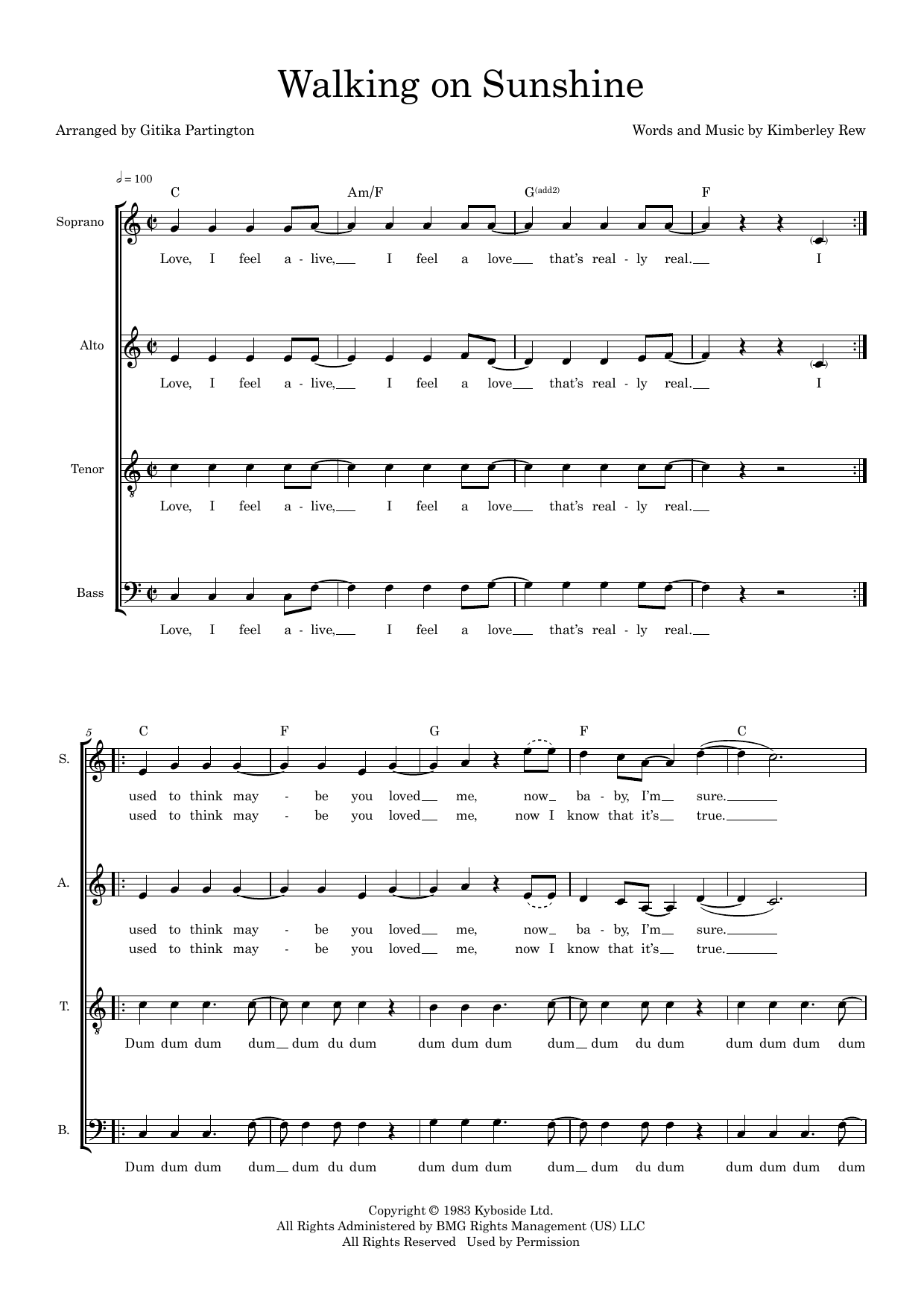
Walking On Sunshine (arr. Gitika Partington) Sheet Music Preview

Walking On Sunshine (arr. Gitika Partington): SATB Choral Octavo

As performed by Katrina And The Waves / Arranged by Gitika Partington

Item: 35-DS01533649

Digital Download
$1.99
Description

Walking On Sunshine (arr. Gitika Partington): SATB Choral Octavo isn't in MakeMusic Cloud just yet...but it could be. Let us know you'd like to see it, and you'll help shape what comes next. In the meantime, start a free trial and dive into thousands of interactive titles your students can play along with today.

Sample Audio
No sample audio found.
Sample Video
Additional Details
Publisher: Hal Leonard
Page Count: 8
SKU: 35-DS01533649

More about this title

About the Artist: Katrina And The Waves

Katrina and the Waves burst onto the 1980s pop landscape with infectious energy and genuine warmth. The band's breakthrough hit "Walking On Sunshine" became a global anthem of pure joy, earning them a Grammy Award and cementing their place in pop history. Their music has remained a staple of feel-good playlists and cultural moments for over four decades.

For music educators, Katrina and the Waves represent a crucial chapter in accessible pop songwriting. Their melodies sit naturally in the voice, their lyrics carry real emotion beneath the surface optimism, and their songs respond beautifully to choral arrangement. This track demonstrates why certain pop standards deserve a place in the concert repertoire alongside more traditional fare.

Why we love this

Gitika Partington's arrangement captures the contagious spirit of the original without sacrificing the sophistication your singers need to invest in. Four parts move with independence and purpose, making space for genuine four-part writing rather than falling into the trap of homophonic pop arrangements. Your choir will feel the joy of singing this, and audiences will respond to the familiarity paired with fresh harmonic color.

What to expect

Pure optimism wrapped in four-part harmony. The arrangement radiates the original's unbridled positivity while creating moments of genuine musicality that reward careful singing. Your choir will experience the satisfaction of transforming a pop standard into something that feels both familiar and newly discovered.

Who it's for

Choirs at the intermediate to advanced level looking for contemporary repertoire that engages audiences without alienating singers. Directors programming concerts with a mix of classical and popular material will find this octavo bridges both worlds effectively. Any ensemble seeking an accessible, uplifting closer or pick-me-up moment in rehearsal.

How to get the most out of it

  • Lock into the rhythmic feel early in rehearsals. This song lives in its groove, so establish the pulse through body movement and foot-tapping before diving into the four-part texture.
  • Pay attention to vowel consistency across parts. When sections carry similar rhythms in different octaves, unified vowels create the cohesion this arrangement deserves.
  • Lean into dynamic contrast between verse and chorus. The arrangement likely builds momentum, so resist singing the verses at full volume. Save your energy for where Partington's writing peaks.
  • Balance soprano and alto lines when they split. The upper voices probably carry melodic interest, but don't let them overshadow the harmonic foundation underneath.

How to use it

Use this as a concert finale or standalone pop selection to showcase your ensemble's versatility and connection with contemporary music. Pair it with one other uplifting pop arrangement to build a concert segment that reminds audiences why they came, or program it near the spring concert's end when singers have the confidence to perform with full joy. The eight-page length makes it manageable for learning without derailing your rehearsal schedule.

Skills your students will build

  • Sustaining independent vocal lines while listening to other parts
  • Maintaining rhythmic precision in pop idioms with syncopation
  • Shaping dynamics and phrasing in contemporary music
  • Balancing melody and harmony in four-part pop arrangements

You May Also Like