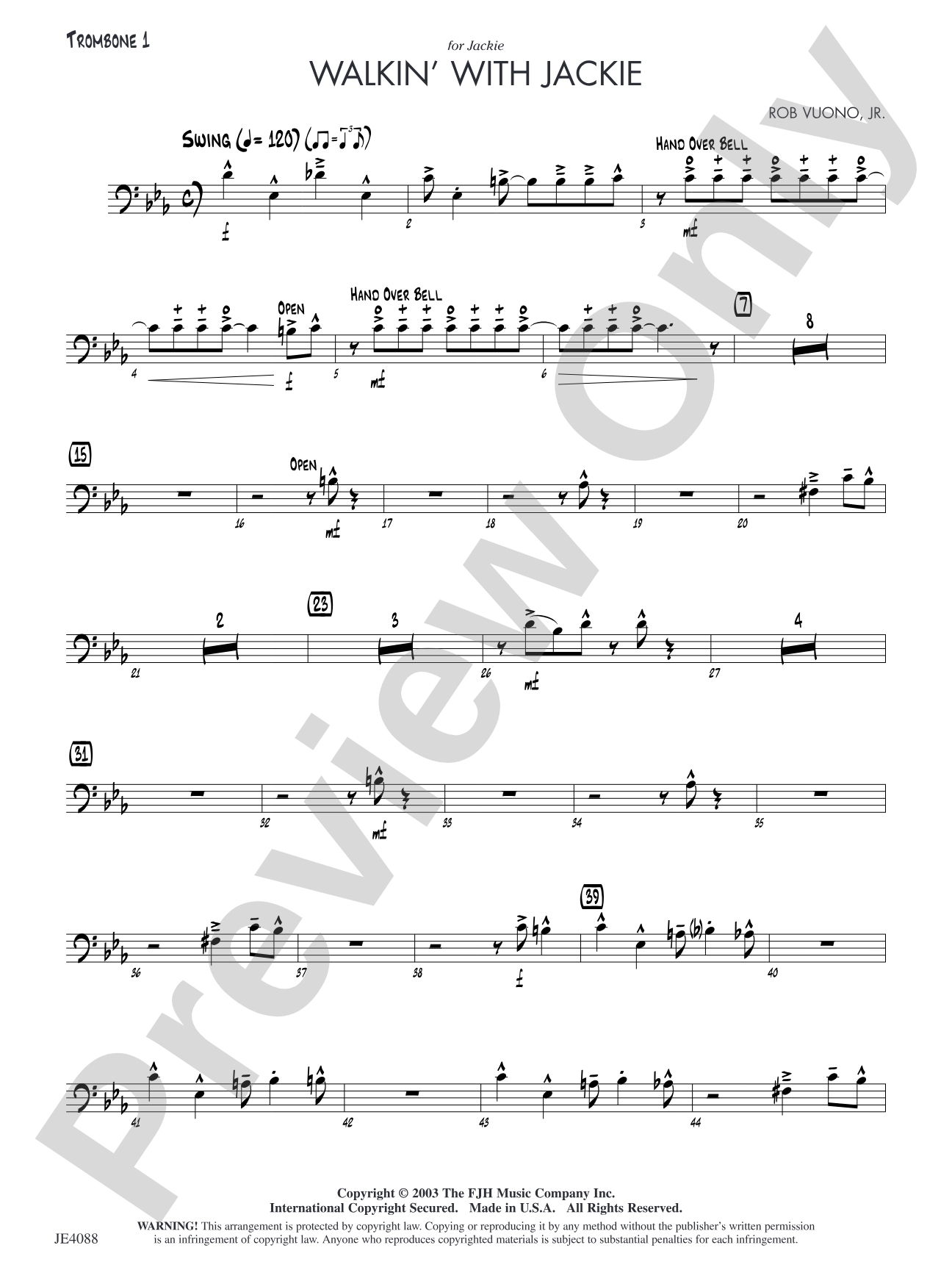
Rob Vuono has consistently had his beginning jazz charts performed at Midwest. Written for his daughter, this phenomenal easy swing chart is full of energy. Trombones have some optional plunger work that really enhances the overall effect. Occasional piano fills are written out along with the rest of the rhythm. Consider this strongly for your next performance.
Discover MakeMusic Cloud: thousands of interactive titles your students can play along with today.
Rob Vuono Jr. has built a reputation as a composer who understands what beginning jazz ensembles need: accessible writing that doesn't talk down to young players. His charts regularly appear on Midwest Jazz Festival programs, earning consistent recognition for their musical substance and playability.
Why we love this
Vuono understands what beginning jazz ensembles need: accessible voicings that sound mature and grooves that keep students engaged. The optional plunger work on trombones gives you flexibility while offering a genuine sonic upgrade when your section is ready, and written-out piano fills prevent the rhythm section from having to improvise their way through early rehearsals.
What to expect
Pure, infectious swing energy with a groove that pulls the whole ensemble forward. The rhythmic bounce and occasional piano flourishes create a performance that feels polished and intentional, even in a first-year program.
Who it's for
Beginning jazz ensemble directors who need a Grade 1.5 chart that sounds bigger than it plays. Your students get real swing vocabulary and ensemble listening experience without charts that demand advanced improvisation or tricky voicings.
How to get the most out of it
Lock the swing feel in your rhythm section first. Even at this level, the pocket matters; have bass and drums establish the groove before layering in horns.
The optional trombone plungers work best when your section commits to the dynamic control they require. If you use them, rehearse the mute transitions separately so slides stay clean.
Balance the written piano fills against your ensemble size. They're notated specifically to support the band, so don't let them disappear under the horns.
Keep the energy consistent throughout. This chart's appeal lies in its unrelenting swing; avoid the temptation to drag or lose momentum in the quieter sections.
How to use it
Program this early in your concert season to build momentum and audience engagement. It works equally well as an opening number to energize the room or as a bridge between classical selections and more complex jazz repertoire later in your set.
Skills your students will build
Swing articulation and phrasing
Reading jazz notation and syncopated rhythms
Ensemble balance in a jazz voicing
Plunger mute technique (trombones)
Listening and responding to rhythm section groove
Performance confidence at accessible repertoire level
You May Also Like
Scan to Complete Your Purchase
Use your phone's camera to scan the code below
You'll log in on your phone and the order will be added to your account