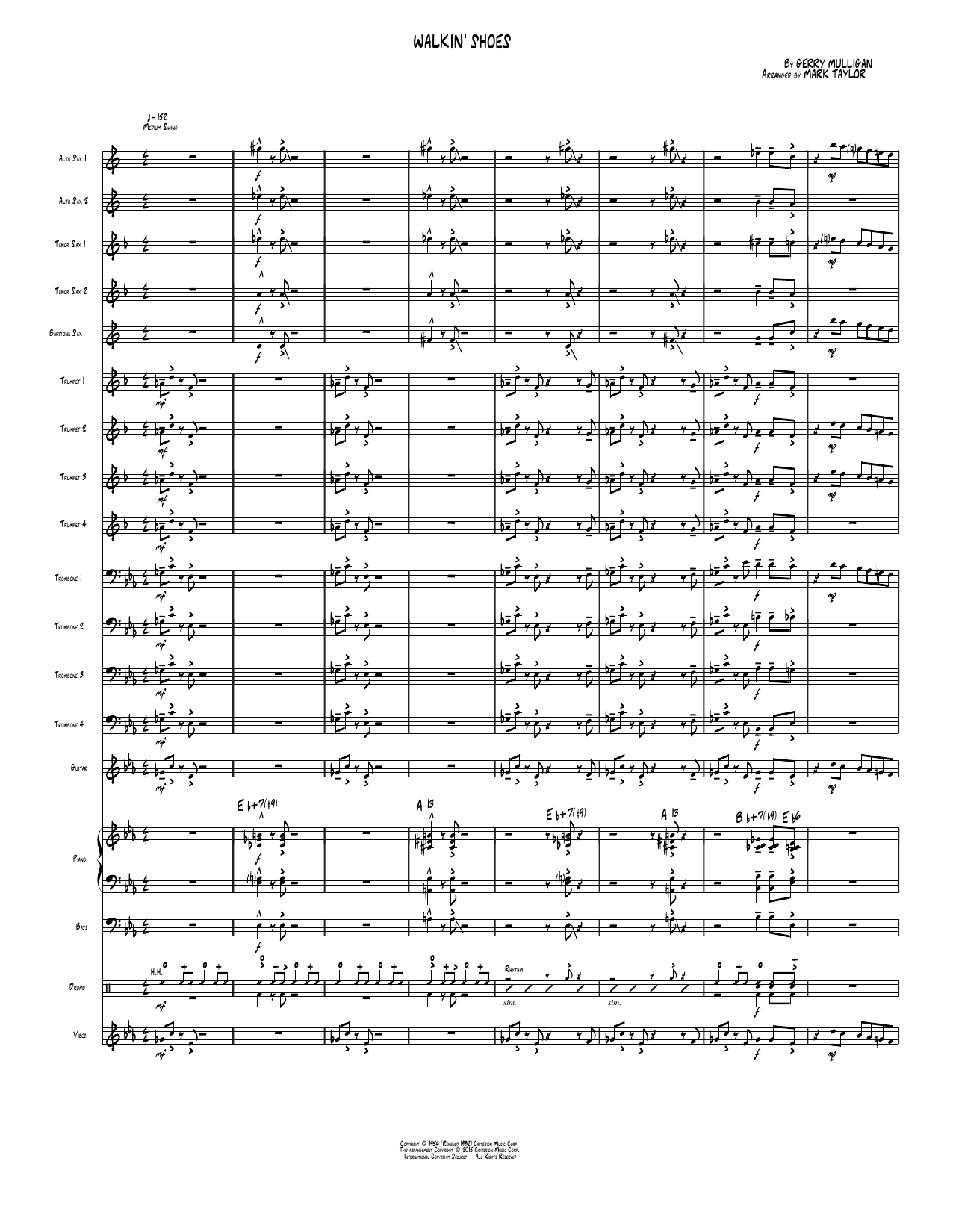
Walkin' Shoes Sheet Music Preview

Walkin' Shoes: Jazz Ensemble Conductor Score & Parts

By Gerry Mulligan / Arranged by Mark Taylor

Grade: 3

Item: 35-PK00426970

Digital Download
$45.00

Buy Extra Parts (Digital PDF Download)

Product Price Quantity
Walkin' Shoes - Full Score $45.00

Parts Added to Cart!

Description
Walkin' Shoes

Walkin' Shoes: Jazz Ensemble Conductor Score & Parts isn't in MakeMusic Cloud just yet...but it could be. Let us know you'd like to see it, and you'll help shape what comes next. In the meantime, start a free trial and dive into thousands of interactive titles your students can play along with today.

Sample Audio
No sample audio found.
Sample Video
Additional Details
Publisher: Hal Leonard
SKU: 35-PK00426970

More about this title

About the Composer: Gerry Mulligan

Gerry Mulligan (1927-1996) was a baritone saxophonist and composer who fundamentally reshaped how jazz ensembles could sound. Moving beyond the big band tradition, he pioneered the "cool jazz" movement with chamber-like voicings that prioritized clarity and melodic sophistication. His arrangements and compositions remain touchstones in jazz education because they demonstrate how thoughtful orchestration and singable lines can serve both artistic depth and accessibility.

Mulligan's writing for jazz ensemble balances harmonic complexity with intuitive ensemble parts. His pieces invite musicians to listen actively to one another while learning the core vocabulary of jazz repertoire. For student ensembles, his work offers a masterclass in how ensemble jazz can be structured, voiced, and performed with intention.

Why we love this

Mark Taylor's arrangement captures the swagger and forward momentum of a Mulligan composition while keeping the ensemble parts singable and logically voiced for students. The Grade 3 level sits in that sweet spot where your ensemble can tackle genuine jazz idiom without drowning in technical complexity. Bands consistently come away from learning this piece with a clearer understanding of how jazz ensembles balance section responsibility with individual voice.

What to expect

Propulsive and assured. There's a sense of easy confidence in the melody and changes, with enough rhythmic pocket to make the ensemble feel grounded. The voicings have warmth without being heavy, and the overall affect is inviting rather than precious.

Who it's for

Jazz ensemble directors looking for repertoire that teaches genuine jazz vocabulary without excessive technical hurdles. This works for ensembles with developing soloists and section players who are still building their fluency in ensemble jazz conventions.

How to get the most out of it

  • Build independence in the rhythm section by rehearsing drums, bass, and chords as a unit before full ensemble runs. The groove has to lock first.
  • Listen for the walking bass line. Once it feels secure, have the ensemble phrase off it rather than against it.
  • Encourage soloists to use the ensemble as a conversation partner. The accompaniment is written to support, not bury, whoever is featured.
  • Map out the form clearly in your score and make sure everyone can identify the head, solos, and hits. Jazz ensembles need structural landmarks.

How to use it

Fit this into a concert program where you want to showcase ensemble jazz in a more intimate context. It pairs well with either more playful numbers or slightly more complex arrangements, giving audiences a taste of mid-century jazz sophistication at a student-friendly scale. It also serves as an excellent teaching piece for a jazz history unit focused on the cool jazz era.

Skills your students will build

  • Jazz articulation and phrasing conventions
  • Reading chord symbols and improvising over changes
  • Ensemble listening and rhythmic interdependence in jazz settings
  • Interpretation of written jazz voicings and section backgrounds
  • Recognizing and executing swing feel in a contemporary jazz context

You May Also Like