
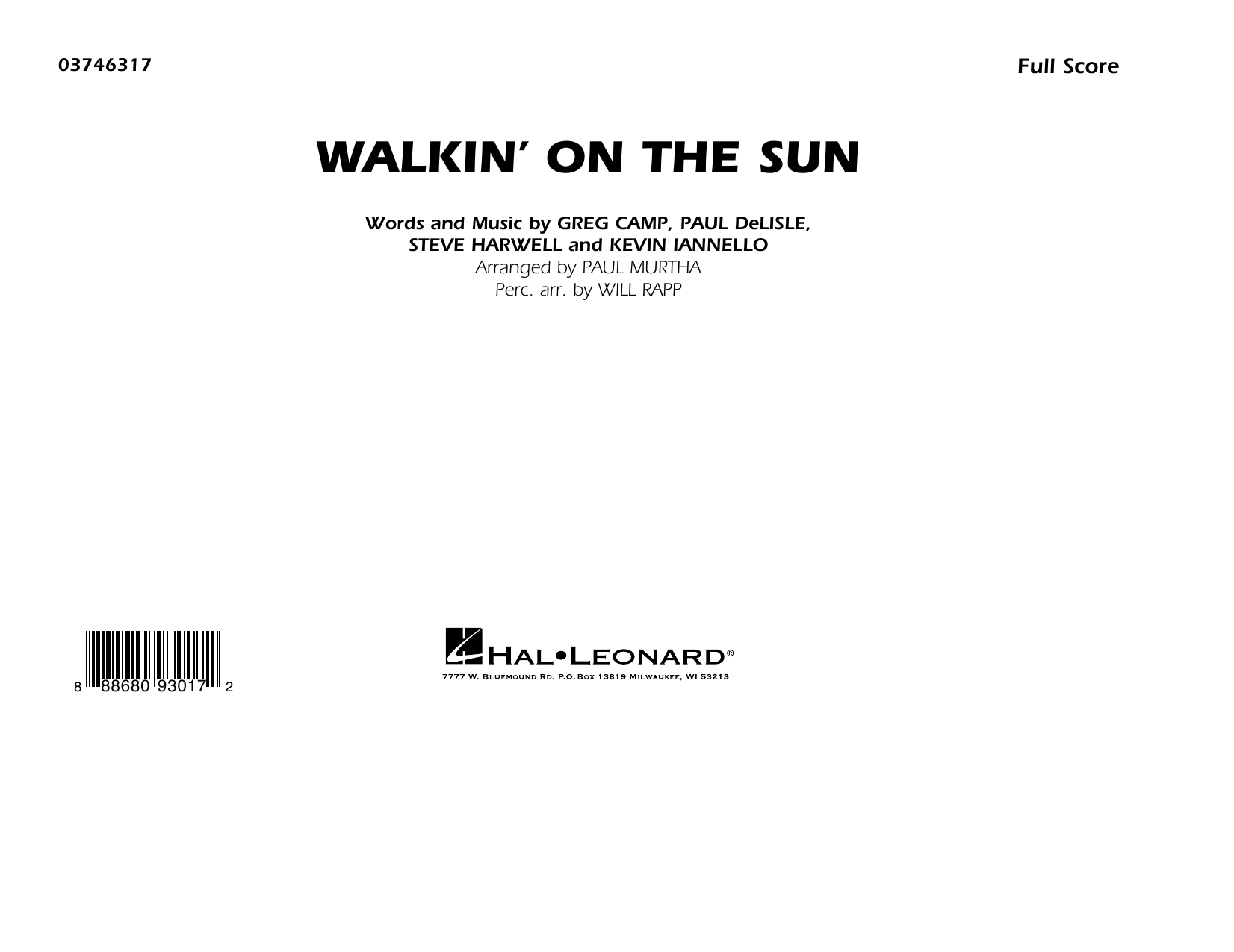

Walkin' on the Sun (arr. Paul Murtha): Marching Band Conductor Score & Parts
As performed by Smash Mouth / Arranged by Paul Murtha
Grade: 2-3
Item: 35-PK00431954
$55.00
Pickup currently not available
Buy Extra Parts (Digital PDF Download)
Parts Added to Cart!
Description
Instantly recognizable and featuring a strong melody and moderate rock pulse, this 1997 Smash Mouth hit is still heard in video games, TV shows, and movies. Fun for the stands or the field!


Walkin' on the Sun (arr. Paul Murtha): Marching Band Conductor Score & Parts isn't in MakeMusic Cloud just yet...but it could be. Let us know you'd like to see it, and you'll help shape what comes next. In the meantime, start a free trial and dive into thousands of interactive titles your students can play along with today.
Request This Title
Tell us you want it.
Start Your Free Trial
Explore everything that's ready to play right now.
Sample Audio
No sample audio found.
Sample Video
No sample videos found.
Additional Details
Publisher:
Hal Leonard
SKU:
35-PK00431954
More about this title
About the Artist: Smash Mouth
Smash Mouth formed in San Jose, California in 1994 and became one of the defining pop rock acts of the late 1990s. "Walkin' on the Sun" arrived in 1997 as their breakthrough single, landing on the Billboard Hot 100 and cementing the band's place in popular culture through its infectious energy and upbeat delivery.
For music educators, Smash Mouth represents an accessible entry point into arranging contemporary pop for student ensembles. Their straightforward melodic writing and driving rhythmic foundation translate remarkably well to marching band format, making them an ideal vehicle for engaging students with music they recognize and enjoy.
Why we love this
Paul Murtha's arrangement captures every ounce of the original's charm without overcomplicating the instrumentation, leaving room for your students to shine on a melody that's been lodged in the public consciousness for over two decades. The moderate rock pulse keeps things accessible for grades 2-3 while the strong melodic hook ensures your audience remains engaged whether you're performing in stands or field show context. Best of all, this is the kind of selection that reminds students why they joined band in the first place.
What to expect
This is pure, unbridled positivity delivered through a rock lens. The melody bounces forward with infectious optimism, supported by a steady rhythmic groove that feels instantly familiar. There's swagger in the accompaniment and sunshine in every phrase.
Who it's for
Any marching band program looking to program accessible, recognizable music that excites both performers and audiences. Students at grades 2-3 gain confidence and enjoyment from playing something they genuinely know, while directors appreciate an arrangement that delivers instant gratification without requiring virtuosic execution.
How to get the most out of it
- Lock the rhythmic foundation early in rehearsals by isolating the steady eighth-note pulse in the mid-section and battery before layering in the melody and countermelodies.
- Emphasize the contrast between verses and the chorus by shaping dynamics carefully; the understated beginning builds legitimacy for the explosive lift when the full ensemble enters.
- Balance the rock sensibility with clean articulation in the melodic line so the tune cuts through without sounding overblown or cartoon-like.
- Stage this strategically so your strongest sight-readers are carrying the main melodic voice; the straightforward harmonic language means the accompaniment voices can focus entirely on locking rhythm and blend.
How to use it
Drop this into a late-season or spring concert to provide relief and levity alongside more substantial repertoire, or feature it as a standalone field show highlight when you want the crowd energized and on their feet. It pairs naturally with other late-90s/early-2000s pop selections if you're building a themed program, and serves as a confidence builder when performed early in the rehearsal season to get students excited about their capability.
Skills your students will build
- Maintaining steady pulse within a rock/pop rhythmic context
- Balancing strong melodic presence with supporting harmonic voices
- Executing clean articulation across ensemble textures
- Shaping dynamics across section versus chorus structures
- Responding to recognized melody with ensemble unity