Walkin' Line: Piano Digital Sheet Music

Walkin' Line: Piano Digital Sheet Music

Dave Brubeck

Item: 00-PS-0000768

Digital Download
$3.99
Description

Walkin' Line: Piano Digital Sheet Music isn't in MakeMusic Cloud just yet...but it could be. Let us know you'd like to see it, and you'll help shape what comes next. In the meantime, start a free trial and dive into thousands of interactive titles your students can play along with today.

Sample Audio
No sample audio found.
Sample Video
Additional Details
SKU: 00-PS-0000768

More about this title

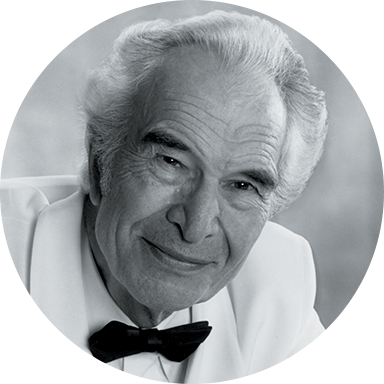
About the Artist: Dave Brubeck

Dave Brubeck

Dave Brubeck stands as one of jazz's most inventive pianists and a composer whose work bridged the worlds of improvisation and formal composition. Beyond his legendary status in jazz, he created an expansive catalog spanning choral works, orchestral pieces, chamber music, and solo compositions across multiple instruments. His mass To Hope! has traveled internationally from Germany to Russia, while works like Pange Lingua Variations and the oratorios The Voice of the Holy Spirit and Beloved Son were recorded by the London Symphony Orchestra and London Voices, demonstrating the classical rigor underlying his artistic vision.

Brubeck studied under French composer Darius Milhaud at Mills College after World War II, an influence that shaped his lifelong commitment to merging jazz language with classical structure. He earned widespread recognition for "Take Five" and the groundbreaking album Time Out, the first jazz record to sell over a million copies. Throughout his career, Brubeck also became a pivotal figure in breaking racial barriers in mid-twentieth-century America, earning honors including a Grammy Lifetime Achievement Award, the Presidential Medal of the Arts, and induction into the American Classical Music Hall of Fame in 2003.

Why we love this

Brubeck's piano writing combines the rhythmic sophistication and harmonic density of his jazz background with clear, playable melodies that students can sink their teeth into. The piece offers pianists a chance to explore jazz vocabulary within a notated framework, making it accessible for those learning to navigate swing feels, jazz voicings, and syncopated phrasing without requiring deep improvisational experience.

What to expect

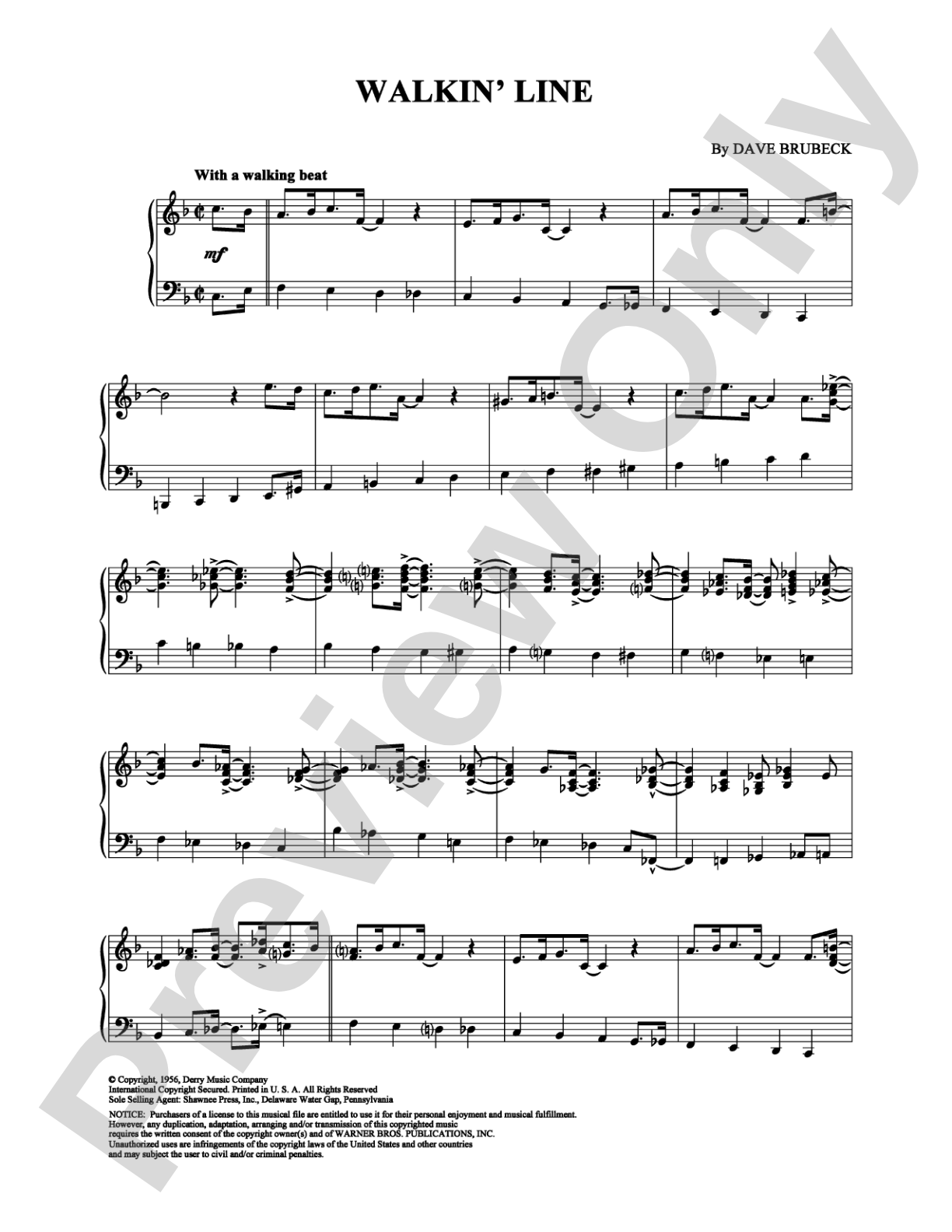
Walkin' Line carries the easy stride and infectious forward motion of classic Brubeck, with the kind of melodic warmth and harmonic sophistication that made his compositions so enduring. The piece invites you into the rhythmic world of cool jazz, where each phrase unfolds with an almost conversational ease that belies the careful craftsmanship beneath.

Who it's for

Piano students and performers with solid sight-reading skills who want to explore jazz repertoire within a notated context. Advanced high school pianists, college jazz piano students, and accomplished adult learners will find this piece offers meaningful work in jazz interpretation without requiring extensive improvisation.

How to get the most out of it

  • Shape the melody with a relaxed touch; Brubeck's lines have a conversational quality that works against mechanical precision
  • Establish a steady groove by locking into the underlying pulse rather than rushing syncopated figures
  • Let the left hand anchor the harmonic movement with clarity, especially in passages with walking bass patterns
  • Explore the dynamic range available at your instrument; Brubeck's compositions reward expressive control across the full spectrum

How to use it

Feature this as a solo recital centerpiece for jazz-focused piano students or as part of a concert that blends classical and jazz repertoire. The piece works particularly well in programs exploring twentieth-century American composers or in educational settings where students are learning to bridge notated jazz and improvisational thinking.

Skills your students will build

  • Reading and executing swing eighth notes and jazz rhythmic figures
  • Understanding jazz harmony and voicing structures in a notated context
  • Interpreting swing feel and relaxed phrasing in melodic lines
  • Managing left-hand accompaniment patterns characteristic of jazz piano
  • Balancing rhythmic precision with the expressive looseness of jazz performance

You May Also Like