Walkin' After Midnight Sheet Music Preview

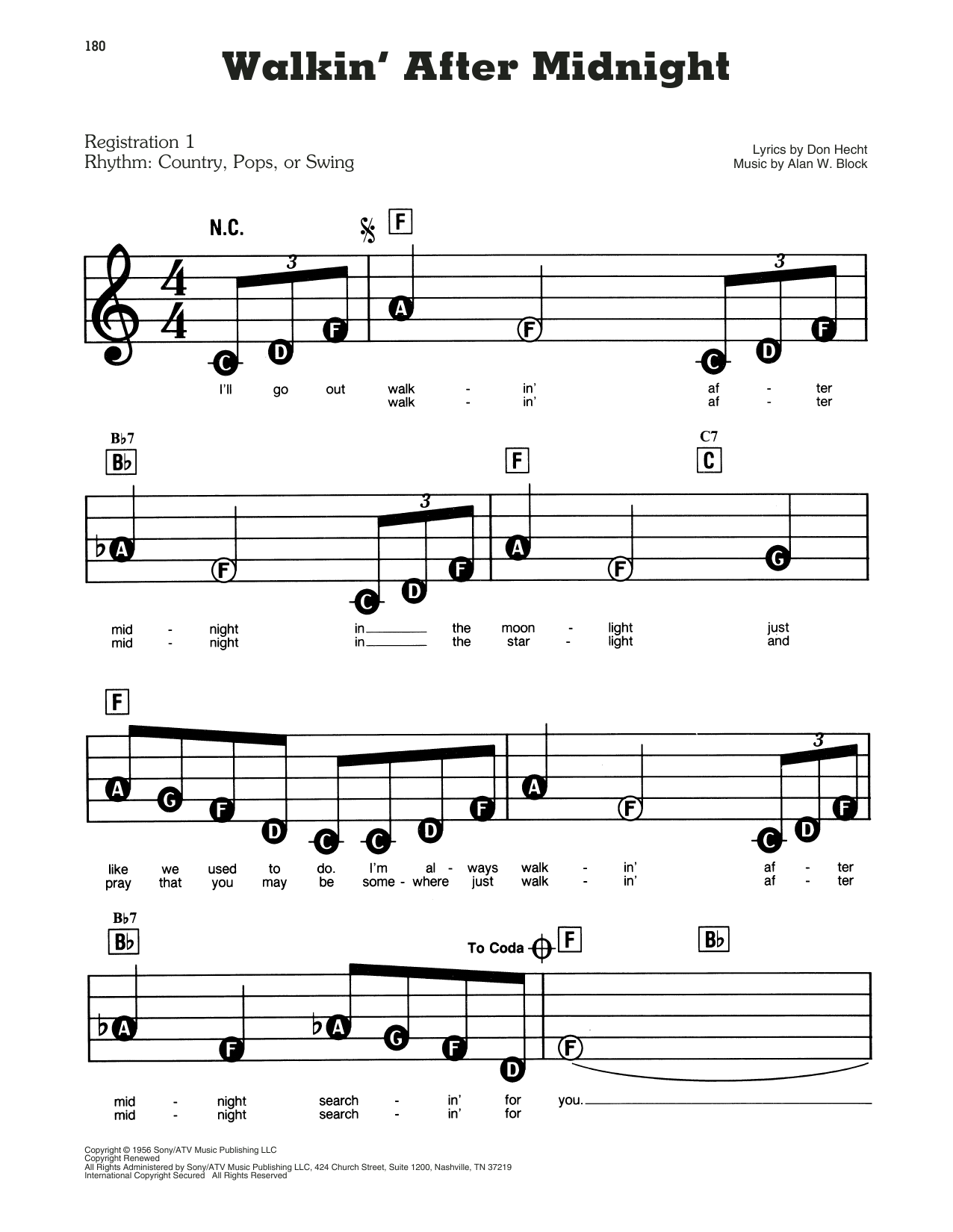
Walkin' After Midnight: E-Z Play Today

As performed by Patsy Cline

Item: 35-DS00459869

Digital Download
$4.99
Description

Walkin' After Midnight: E-Z Play Today isn't in MakeMusic Cloud just yet...but it could be. Let us know you'd like to see it, and you'll help shape what comes next. In the meantime, start a free trial and dive into thousands of interactive titles your students can play along with today.

Sample Audio
No sample audio found.
Sample Video
Additional Details
Publisher: Hal Leonard
Page Count: 3
SKU: 35-DS00459869

More about this title

About the Artist: Patsy Cline

Patsy Cline stands as one of country music's most influential vocalists, bridging the gap between traditional honky-tonk and the pop charts with her rich, sophisticated alto voice. Her career, though cut short by a tragic plane crash in 1963, established her as a crossover artist whose emotional delivery and impeccable phrasing earned respect across genre lines.

Cline's interpretive gifts and willingness to work with lush orchestral arrangements made her recordings timeless. She remains a touchstone for singers studying how to balance authentic country roots with mainstream accessibility, and her approach to phrasing and dynamics continues to inform vocal pedagogy.

Why we love this

Cline's sultry torch-song approach translates beautifully to piano, and this E-Z Play arrangement captures the wistful vulnerability that made the original so enduring. Students get to explore how a strong melody can carry emotional weight even in a simplified setting, and the straightforward layout means they can focus on interpretive nuance rather than wrestling with notation.

What to expect

Intimate and late-night. The song unfolds like a memory, intimate and tinged with longing. Cline's signature warmth comes through in the phrasing and harmonic choices, creating an atmosphere that feels both introspective and gently swaying.

Who it's for

Piano students who want to explore classic American popular song without the technical demands of a full concert grand arrangement. It works equally well for singers seeking a simple but tasteful accompaniment, or for anyone building a collection of standards arranged for accessibility.

How to get the most out of it

  • Shape the melody with a gentle rubato in the verses; the accompaniment figures are simple enough to flex slightly when the vocal line needs room to breathe
  • Let the left hand lay back dynamically so the melody can sit forward; resist the urge to treat bass and chords as equally weighted
  • Pay close attention to any dynamic markings around the bridge or final chorus, as these moments define the song's emotional arc
  • Sustain longer notes with care, as they often carry the emotional crux of a phrase

How to use it

Nest this into a jazz or American standards unit to show how country vocalists shaped popular music. It pairs well with other crossover hits from the 1950s-60s and gives students a chance to play genuine repertoire that requires interpretive maturity rather than technical virtuosity.

Skills your students will build

  • Singing a well-defined melody over simplified harmonic accompaniment
  • Rubato and interpretive phrasing in a non-classical context
  • Dynamic balance between melody and accompaniment
  • Understanding of torch song conventions and emotional narrative structure

You May Also Like