Kirby Shaw brings three decades of choral innovation to every arrangement he creates. A formally trained conductor with a DMA from the University of Washington and degrees in Music Education and Choral Composition from San Jose State, Shaw has built his reputation on clarity, accessibility, and infectious energy in the classroom. He founded and directed the celebrated COS Vocal Jazz Ensemble at College of the Siskiyous and has held faculty positions at Colorado State University, the University of Missouri at Kansas City, and Southern Oregon University, where he now directs the Jefferson State Choral Coalition.
With over 2500 choral arrangements and compositions in print and nearly 20 million copies sold worldwide, Shaw has established himself as one of the most prolific voices in choral music education. His work has earned multiple ASCAP awards and continues to be performed in schools and concert halls across all 50 states and internationally. Beyond his arranging output, Shaw is an accomplished vocalist and improviser who has studied with jazz luminaries including Bobby McFerrin, Al Jarreau, and Jon Hendricks, bringing that jazz sensibility and improvisational spirit into his educational compositions.
Why we love this
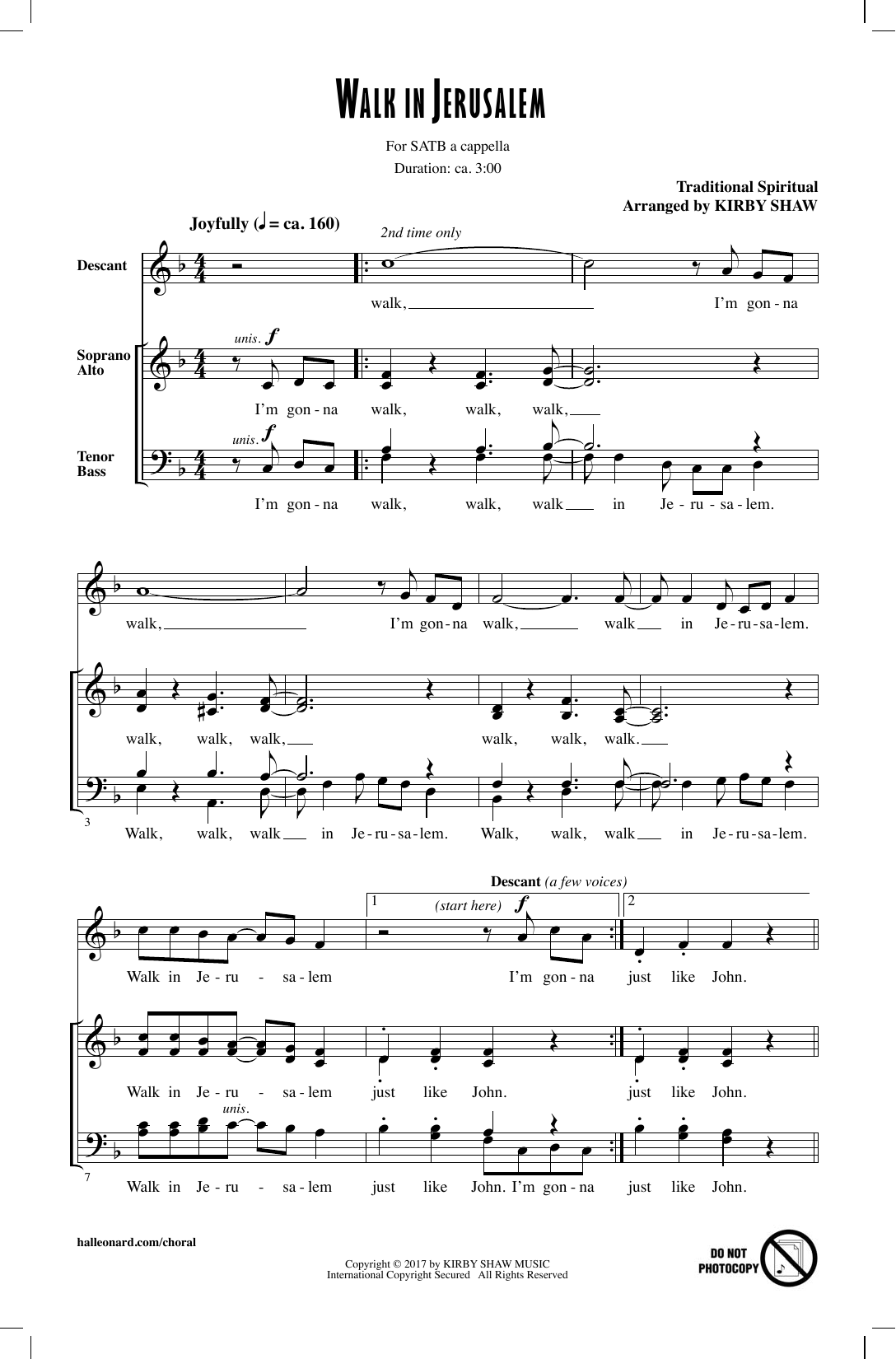
Shaw's arrangement strips away unnecessary complexity while preserving the spiritual depth and narrative power of this beloved spiritual. The setting sits comfortably in the middle of the choral range, making it accessible to developing singers without compromising musicianship or emotional impact. What makes this particularly valuable is how it works equally well in a liturgical program, a secular concert celebrating folk traditions, or a service of spirituals where you need something that sounds substantial but won't exhaust an ensemble.
What to expect
A journey undertaken with intention and faith. The piece unfolds with the steady confidence of a processional, combining the intimacy of a personal spiritual reflection with the communal warmth of voices moving together. There's both dignity and accessibility here, offering singers a chance to inhabit a tradition while remaining grounded in clear, singable writing.
Who it's for
This works for intermediate to advanced choirs seeking repertoire that connects to American spiritual traditions without requiring specialized historical knowledge or arrangement complexity. It's equally suitable for church choirs, school choirs, and community ensembles that want to program meaningful material across a diverse audience.
How to get the most out of it
Establish the spiritual's core character in early rehearsals by having singers listen to recorded spirituals in this tradition; help them understand the cultural and historical weight so their interpretation goes beyond notes on a page.
Balance the narrative impulse to rush with the spiritual's natural rhythmic meditation; this isn't a march but a processional, and the steady pulse should feel deliberate rather than hurried.
Layer dynamics carefully across the ensemble rather than moving all parts in lockstep; individual voice parts often contain their own expressive arc that should be honored.
How to use it
Place this in a program exploring American folk traditions or spirituals to ground the set musically and historically. Its six-page length makes it a substantial closing piece without becoming overwhelming, and it transitions well both to lighter folk material before it or to contrasting art songs that follow. Consider it for programs centered on themes of journey, faith, or cultural heritage.
Skills your students will build
Legit sustain and breath control in a spiritual style without vibrato-heavy affectation
Navigating SATB part independence while maintaining ensemble blend
Interpreting and performing African American spiritual traditions with cultural respect and musical authenticity
Text clarity and diction in rhythmically simple but emotionally loaded material
You May Also Like
Scan to Complete Your Purchase
Use your phone's camera to scan the code below
You'll log in on your phone and the order will be added to your account