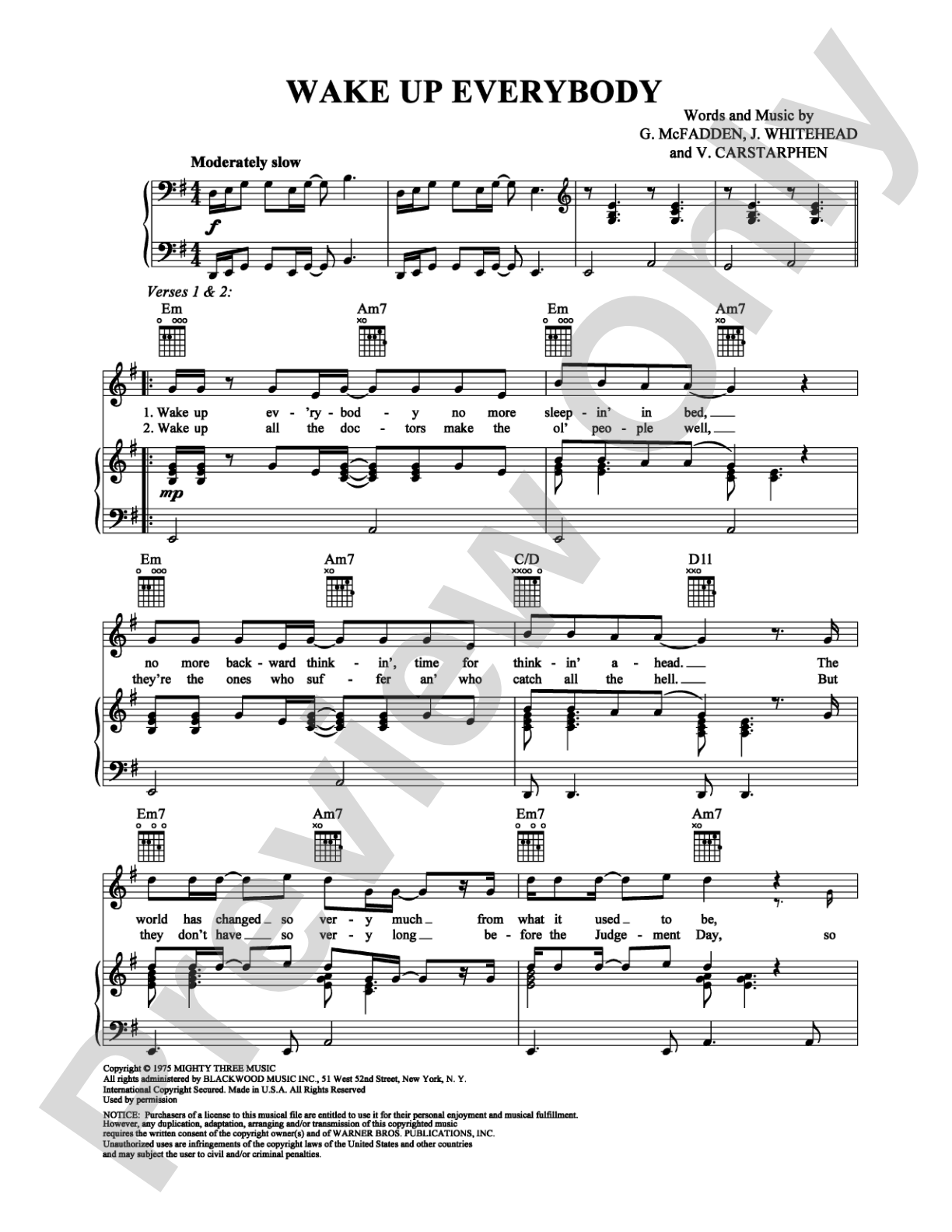
Wake Up Everybody: Piano/Vocal/Chords Digital Sheet Music

Wake Up Everybody: Piano/Vocal/Chords Digital Sheet Music

Gene McFadden, John Whitehead, Victor Carstarphen, Harold Melvin and the Blue Notes

Item: 00-PS-0001190

Digital Download
$3.99
Description

Wake Up Everybody: Piano/Vocal/Chords Digital Sheet Music isn't in MakeMusic Cloud just yet...but it could be. Let us know you'd like to see it, and you'll help shape what comes next. In the meantime, start a free trial and dive into thousands of interactive titles your students can play along with today.

Sample Audio
No sample audio found.
Sample Video
Additional Details
SKU: 00-PS-0001190

More about this title

About the Artist: Harold Melvin and the Blue Notes

Harold Melvin and the Blue Notes emerged from Philadelphia in the late 1960s as one of soul music's most influential vocal groups. Their signature sound blended smooth harmonies with socially conscious lyrics, creating a template for soul and R&B that influenced generations of singers and songwriters. The group's work remains essential listening for vocalists seeking to understand phrasing, ensemble blend, and the emotional depth that defines classic soul music.

Why we love this

"Wake Up Everybody" stands as a masterclass in vocal arrangement and melodic storytelling. Singers encounter sophisticated chord changes and a narrative arc that demands emotional intelligence, while accompanists navigate the interplay between voice and piano that defines soul music at its finest. This is the kind of standard that deepens musicianship across every role.

What to expect

Warm, sophisticated, and deeply rooted in groove. The arrangement carries the weight of genuine soul music, not nostalgic recreation, but the real thing with all its harmonic richness and emotional directness.

Who it's for

Singers preparing recitals, jazz vocal students, and music theater performers benefit from this song's accessible but sophisticated approach to soul phrasing. Pianists studying pop and soul accompaniment styles will find genuine material that develops harmonic awareness and rhythmic flexibility. Vocal ensembles can use this as a stepping stone into R&B and soul repertoire.

How to get the most out of it

  • Let the lyrics guide your phrasing rather than strict metronomic time. Soul singing lives in the spaces between the beat, so study how the original recording handles rubato and when to sit behind or ahead of the pulse.
  • Build dynamics gradually from verse through chorus. The arrangement gains urgency and emotional weight through accumulation, not sudden jumps in volume.
  • Coordinate with your pianist on the rhythmic placement of the chord changes. The piano voicings in this piece create harmonic colors that either support or cloud the vocal line depending on timing.
  • Listen closely to the original recording to understand how the Blue Notes achieved their blend. Pay attention to where voices double, where they split into harmony, and how ensemble members support the lead without overshadowing it.

How to use it

Pair this with other soul standards to build a recital that explores how R&B shaped American song. The piece works equally well as a teaching example in a vocal or piano technique class, where it demonstrates authentic style without requiring classical vocal training. Consider programming it alongside contemporary soul or neo-soul pieces to show the lineage of modern R&B.

Skills your students will build

  • Soul phrasing and rhythmic flexibility in vocal lines
  • Reading and voicing jazz-influenced chord changes
  • Accompanying singers through complex harmonic movement
  • Understanding the relationship between melody, harmony, and lyrical content
  • Ensemble blend and vocal balance in group contexts

You May Also Like