Wake Me Up When September Ends (arr. Frank de Vreeze) Sheet Music Preview

Wake Me Up When September Ends (arr. Frank de Vreeze): SAB Choral Octavo

As performed by Green Day / Arranged by Frank de Vreeze

Item: 35-DS00487283

Digital Download
$2.99

One moment…

Description

Wake Me Up When September Ends (arr. Frank de Vreeze): SAB Choral Octavo isn't in MakeMusic Cloud just yet...but it could be. Let us know you'd like to see it, and you'll help shape what comes next. In the meantime, start a free trial and dive into thousands of interactive titles your students can play along with today.

Sample Audio
No sample audio found.
Sample Video
Additional Details
Publisher: Hal Leonard
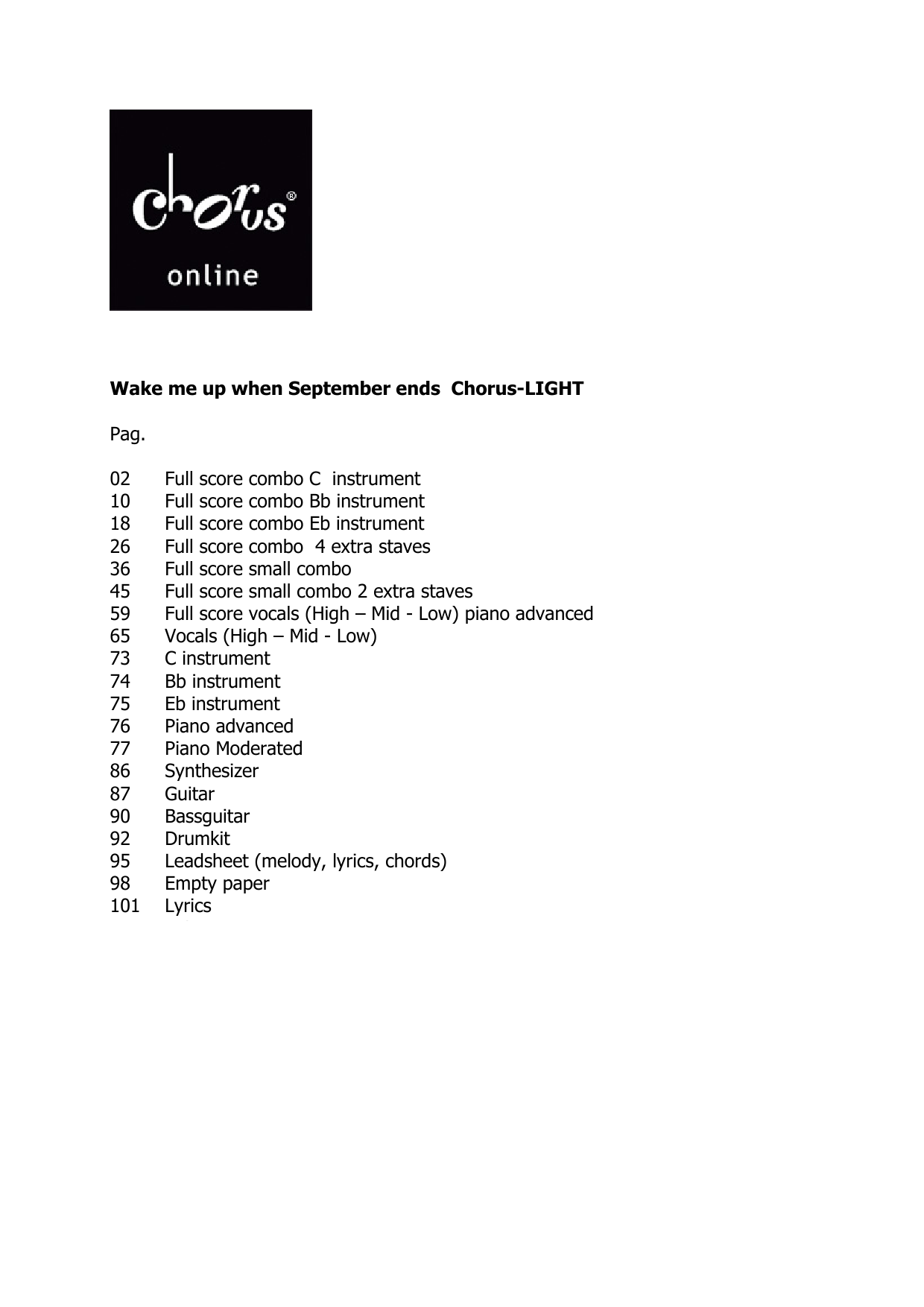
Page Count: 101
SKU: 35-DS00487283

More about this title

About the Artist: Green Day

Green Day emerged from the Berkeley punk scene in the early 1990s and became one of rock music's most commercially successful and culturally influential bands. Their 2004 album "American Idiot" marked a creative turning point, blending punk energy with theatrical storytelling and emotional depth. The band's ability to write songs that resonate across generations, combining technical musicianship with raw emotional honesty, has made their catalog a natural fit for choral arrangements.

Why we love this

Frank de Vreeze's arrangement captures the quiet introspection at the heart of this song while making it accessible for developing singers. Programming a Green Day classic signals to your students that contemporary music belongs in the choir room alongside traditional repertoire, and this piece does exactly that without sacrificing musical integrity.

What to expect

The arrangement preserves the song's meditative quality, letting silence and space carry as much weight as the sung lines. Beneath the restraint lies genuine emotion, and when your singers connect with the text about time and memory, that authenticity will reach the audience.

Who it's for

Choirs seeking repertoire that speaks to contemporary audiences without compromising musicality will find this arrangement invaluable. It works equally well for high school ensembles building confidence with modern material and community choirs wanting to engage younger listeners.

How to get the most out of it

  • Balance the melody across the three parts; soprano shouldn't overshadow alto and baritone lines, especially where they carry harmonic counterpoint.
  • Let the recorded accompaniment establish the tempo and groove rather than fighting against it. Your singers will feel more confident riding the pulse than leading it.
  • Shape phrases with restraint. This arrangement succeeds through understatement, so resist the urge to over-emote in the verses.
  • Mark breath points clearly in rehearsal. The text setting sometimes privileges phrasing over convenient resting places.

How to use it

This piece pairs beautifully on a concert exploring youth, nostalgia, or the passage of time. It could anchor a section of contemporary pop arrangements or stand alone as a bridge between your classical selections and a finale that leaves listeners thinking.

Skills your students will build

  • Singing mixed-meter phrases within a straightforward time signature
  • Balancing three-part harmony without doubling the melody in every measure
  • Performing contemporary text with clarity and intention
  • Responding to recorded accompaniment without losing independence
  • Sustaining long melodic lines with consistent support

You May Also Like