
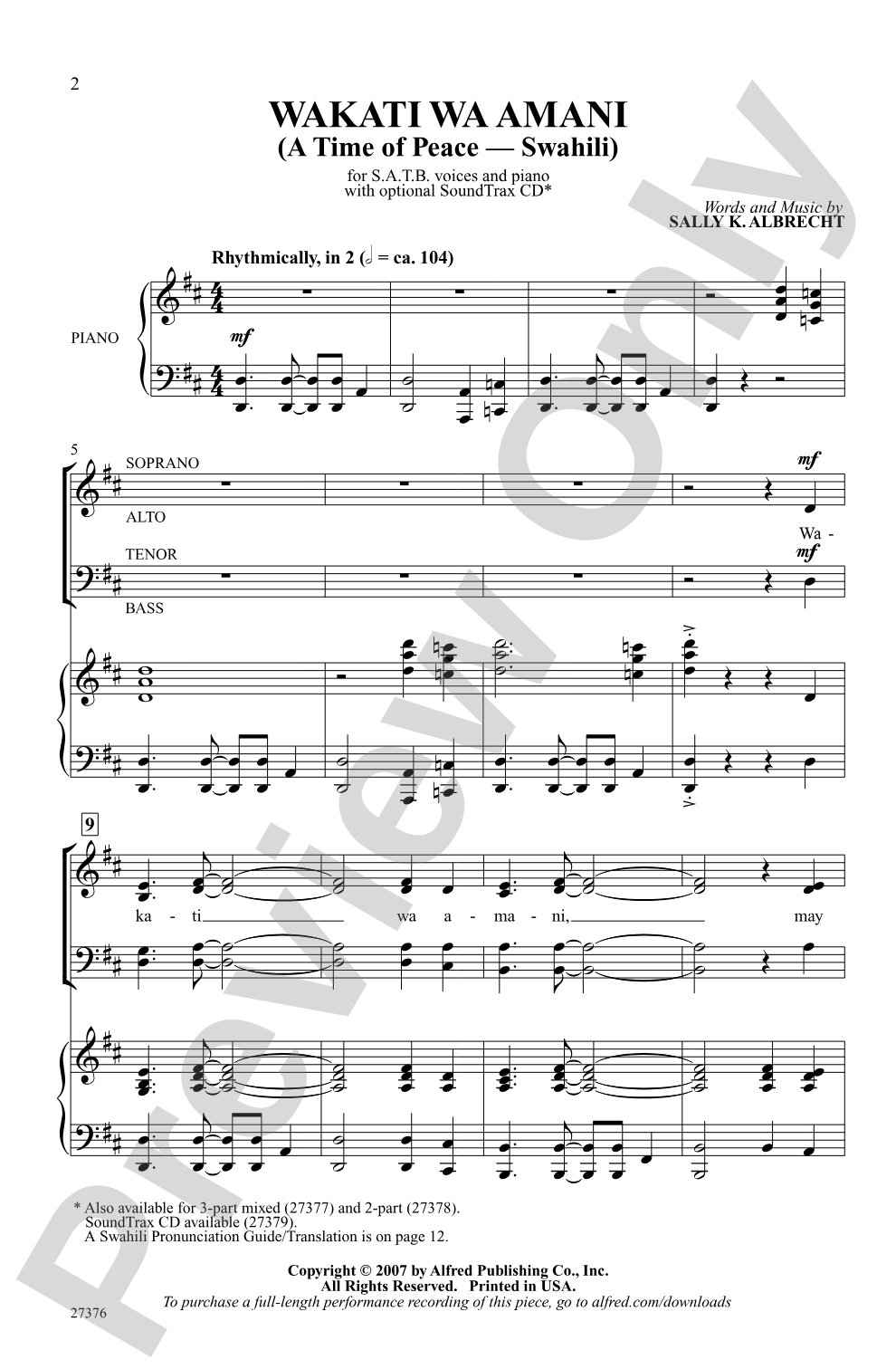
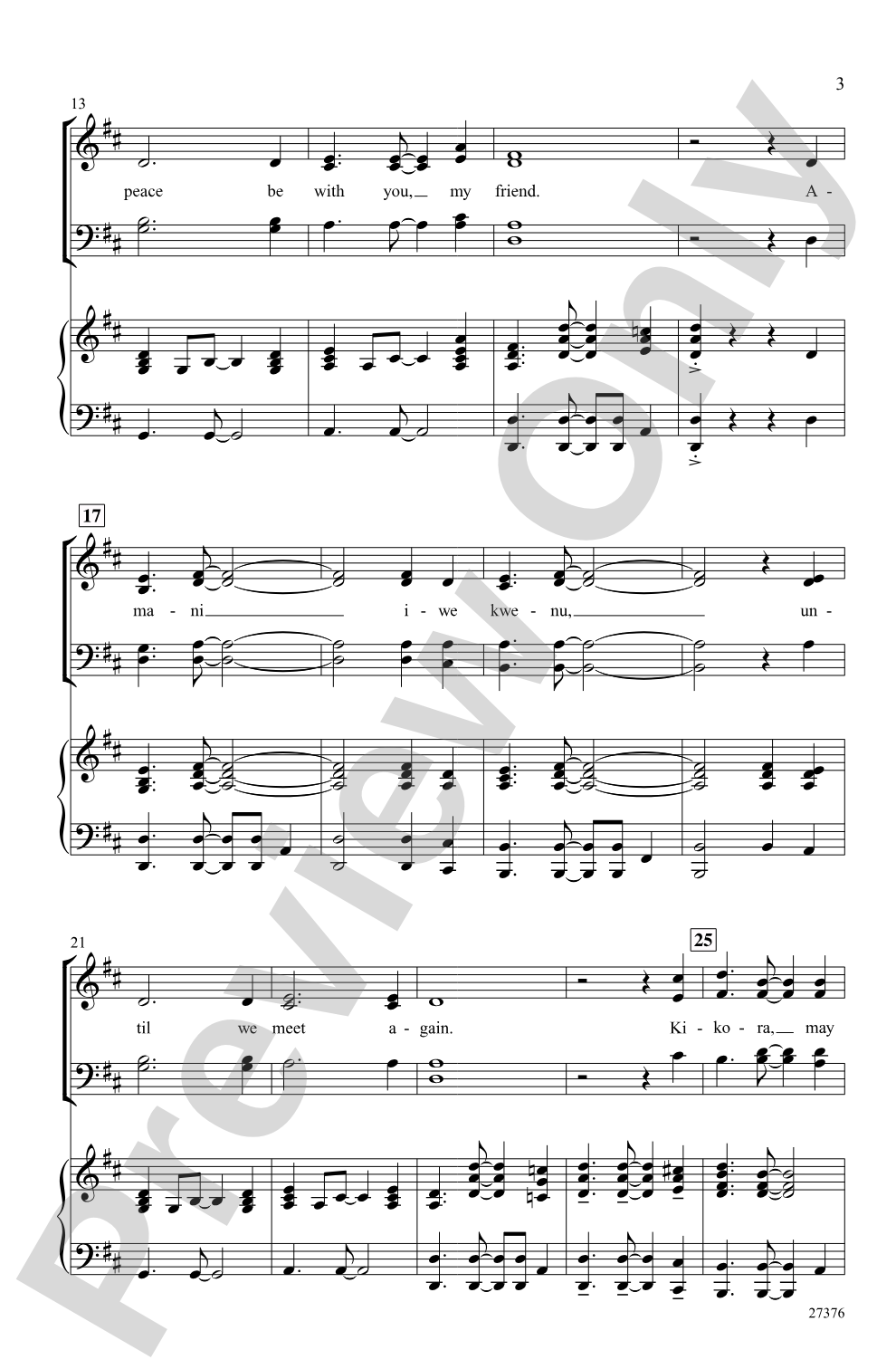
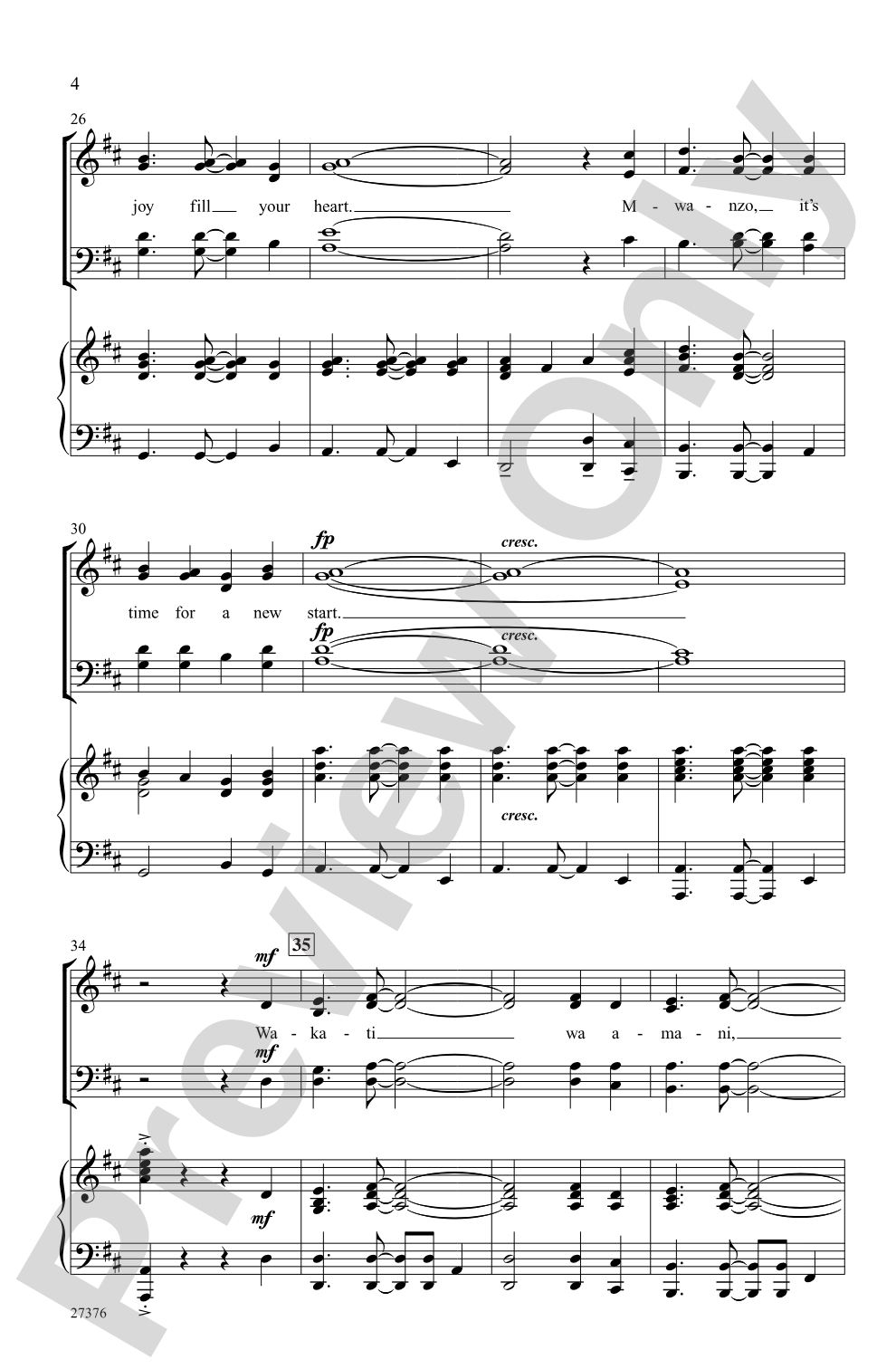

Wakati wa Amani (A Time of Peace - Swahili): SATB Choral Octavo
(A Time of Peace -- Swahili)
Words and music by Sally K. Albrecht
Item: 00-PO-0000392
$1.75
Minimum order quantity: 20 copies
Pickup currently not available
Related Items
Wakati wa Amani: SoundTrax Digital Audio Download |
$22.95
|
View | |
Wakati wa Amani (A Time of Peace - Swahili): 3-Part Mixed Choral Octavo |
$1.75
|
View | |
Wakati wa Amani (A Time of Peace - Swahili): 2-Part Choral Octavo |
$2.25
|
View | |
Wakati wa Amani: SATB Choral Octavo |
$1.75
|
View | |
Wakati wa Amani: 3-Part Mixed Choral Octavo |
$1.75
|
View | |
Wakati wa Amani: 2-Part Choral Octavo |
$2.25
|
View | |
Wakati wa Amani: Choral Octavo SoundTrax CD |
$22.95
|
View |
Description
In any language, peace is a beautiful thing. Perform this African-style rhythmic number for a great cross-cultural addition to any concert or festival. The text alternates between English and Swahili, with a pronunciation guide/translation included in the publication. "Peace be with you, my friend, until we meet again." Choreography featured on "Razzamatazz!" DVD (item 00-27430).


Wakati wa Amani (A Time of Peace - Swahili): SATB Choral Octavo isn't in MakeMusic Cloud just yet...but it could be. Let us know you'd like to see it, and you'll help shape what comes next. In the meantime, start a free trial and dive into thousands of interactive titles your students can play along with today.
Request This Title
Tell us you want it.
Start Your Free Trial
Explore everything that's ready to play right now.
Sample Audio
1
Audio File
--:--
0:00
0:00
Sample Video
No sample videos found.
Additional Details
Series:
Alfred Choral Designs
Publisher:
Alfred Music
Page Count:
12
SKU:
00-PO-0000392
More about this title
About the Composer: Sally K. Albrecht

Sally K. Albrecht has shaped American choral music for over four decades as a composer, conductor, and educator. A recipient of the ASCAP Special Music Award every year since 1987, she has published more than 600 choral works alongside 75 stage musicals and songbooks. She spent over thirty years developing choral publications at major educational music publishers, including Alfred Music, while also conducting honor choirs at prestigious venues such as Lincoln Center, Carnegie Hall, and The Kennedy Center.
Albrecht holds degrees from Rollins College (B.A. in Music and Theater, 1976), the University of Miami (M.A. in Drama, 1977; M.M. in Accompanying, 1979), and has taught at Oakland University, Jersey City State College, and Meredith College. Her work is distinguished by an inventive integration of movement and staging into choral performance. In 2021, she received the Distinguished Alumna Award from both the University of Miami Frost School of Music and Rollins College, where she serves on the Board of Trustees.
Why we love this
Albrecht brings her signature gift for choral movement to a piece that genuinely excites students about text and rhythm. The bilingual structure feels purposeful, not tokenistic, and the African-style grooves give your choir something rhythmically alive to sink their teeth into. Programming this sends a clear message about cultural authenticity and joy in your rehearsals.
What to expect
Rhythmic, grounded, and celebratory. The African-inspired pulse underneath the shifting languages creates a sense of gathering and connection, while the message of peace lingers warmly in the ears and hearts of both singers and audience.
Who it's for
This piece suits SATB choirs of all experience levels who want to expand their cultural repertoire and aren't afraid of movement-integrated performance. It works equally well in school concerts, community choirs, and festival settings where you want to program something with genuine cross-cultural resonance.
How to get the most out of it
- Establish the groove cleanly in the rhythm section (basses and tenors locked first, then altos). Let that pocket anchor the entire piece before adding layered parts.
- Work the Swahili pronunciation separately from the music. Have singers speak the phrases rhythmically as a group before singing them, so the language feels natural, not foreign.
- If you use the choreography from the Razzamatazz! DVD, rehearse movement and singing in alternating rehearsals at first. Once confident, weave them together gradually to avoid cognitive overload.
- Keep the dynamic energy consistent across the English and Swahili sections. The shift in language can tempt singers to drop intensity; resist that instinct.
How to use it
Pair this with other world music selections to build a thematic concert segment, or place it mid-program where its rhythmic energy and movement lift the mood. It also works beautifully as a closing piece in a concert centered on themes of unity or cultural dialogue, leaving your audience with both joy and reflection.
Skills your students will build
- Rhythmic precision in African-influenced grooves and layered ostinatos
- Swahili pronunciation and phrasing in a musical context
- Choreography integration and spatial awareness on stage
- Lyrical sensitivity across code-switched text (English and Swahili)
- Ensemble cohesion in groove-based rather than melody-driven writing