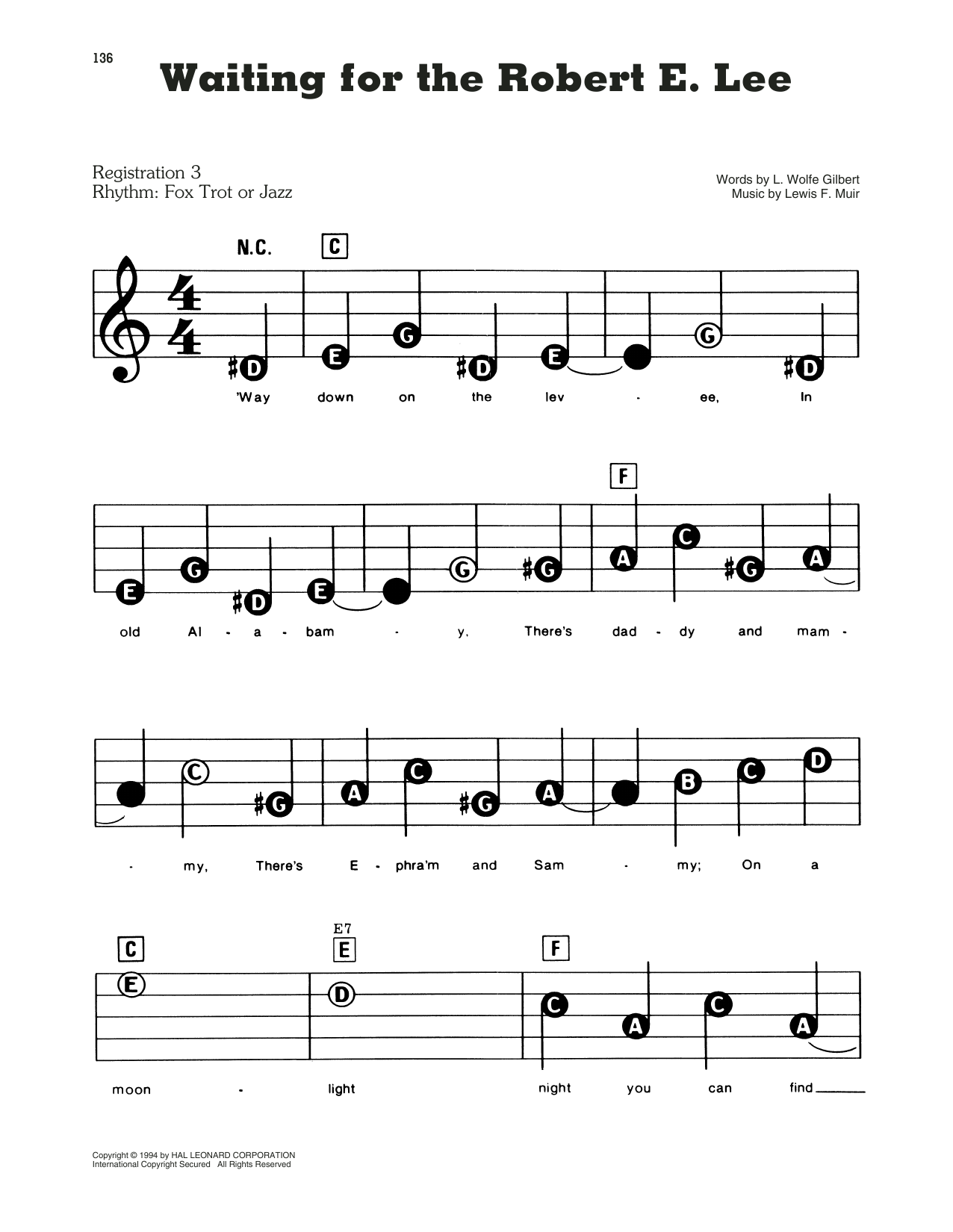
Waiting For The Robert E. Lee Sheet Music Preview

Waiting For The Robert E. Lee: E-Z Play Today

As performed by L. Wolfe Gilbert

Item: 35-DS00499332

Digital Download
$4.99
Description

Waiting For The Robert E. Lee: E-Z Play Today isn't in MakeMusic Cloud just yet...but it could be. Let us know you'd like to see it, and you'll help shape what comes next. In the meantime, start a free trial and dive into thousands of interactive titles your students can play along with today.

Sample Audio
No sample audio found.
Sample Video
Additional Details
Publisher: Hal Leonard
Page Count: 4
SKU: 35-DS00499332

More about this title

About the Artist: L. Wolfe Gilbert

L. Wolfe Gilbert was an American songwriter and lyricist working primarily in the early 20th century, when Tin Pan Alley dominated popular music composition. He wrote prolifically for theater, vaudeville, and the emerging recording industry, crafting melodies and lyrics that captured the spirit of jazz age America. His works became standards of the era, recorded countless times and performed in venues ranging from concert halls to dance halls.

Why we love this

This arrangement brings a genuine period piece into reach for pianists at an accessible level. The E-Z Play format preserves the character and harmonic flavor of the jazz standard without demanding advanced technique, making it ideal for students discovering early American songwriting traditions.

What to expect

Nostalgic and propulsive, with the infectious energy of a riverboat departure. The melody sits naturally under the fingers while the harmonic movement suggests the blues roots beneath the popular surface, creating a piece that feels both familiar and historically grounded.

Who it's for

Students preparing their first jazz standards, pianists building a collection of accessible Tin Pan Alley repertoire, and teachers looking for four-page pieces that don't require years of technique but do demand musicality. Anyone interested in understanding how early American songwriting shaped later jazz language will find value here.

How to get the most out of it

  • Let the stride bass inform your phrasing even if you're not executing a full stride pattern; the song's swing depends on rhythmic momentum in the left hand.
  • Treat the melodic ornamentation as optional rather than essential; clarity serves the tune better than cramming every flourish.
  • Align your tempo with the historical recordings if possible; the character shifts noticeably depending on whether you play it as a moderate jazz waltz or a brisk march.

How to use it

Consider pairing this with other early jazz standards in a thematic concert exploring American popular song from 1900 to 1925. It also serves well as an encore or as a bridge between classical and jazz study within a mixed recital.

Skills your students will build

  • Reading and interpreting jazz articulations and swing rhythm
  • Playing stride-influenced bass patterns
  • Understanding chord changes in a blues-inflected context
  • Balancing melodic ornamentation with phrase clarity

You May Also Like