Wade in the Water: 1st B-flat Trumpet Sheet Music Preview

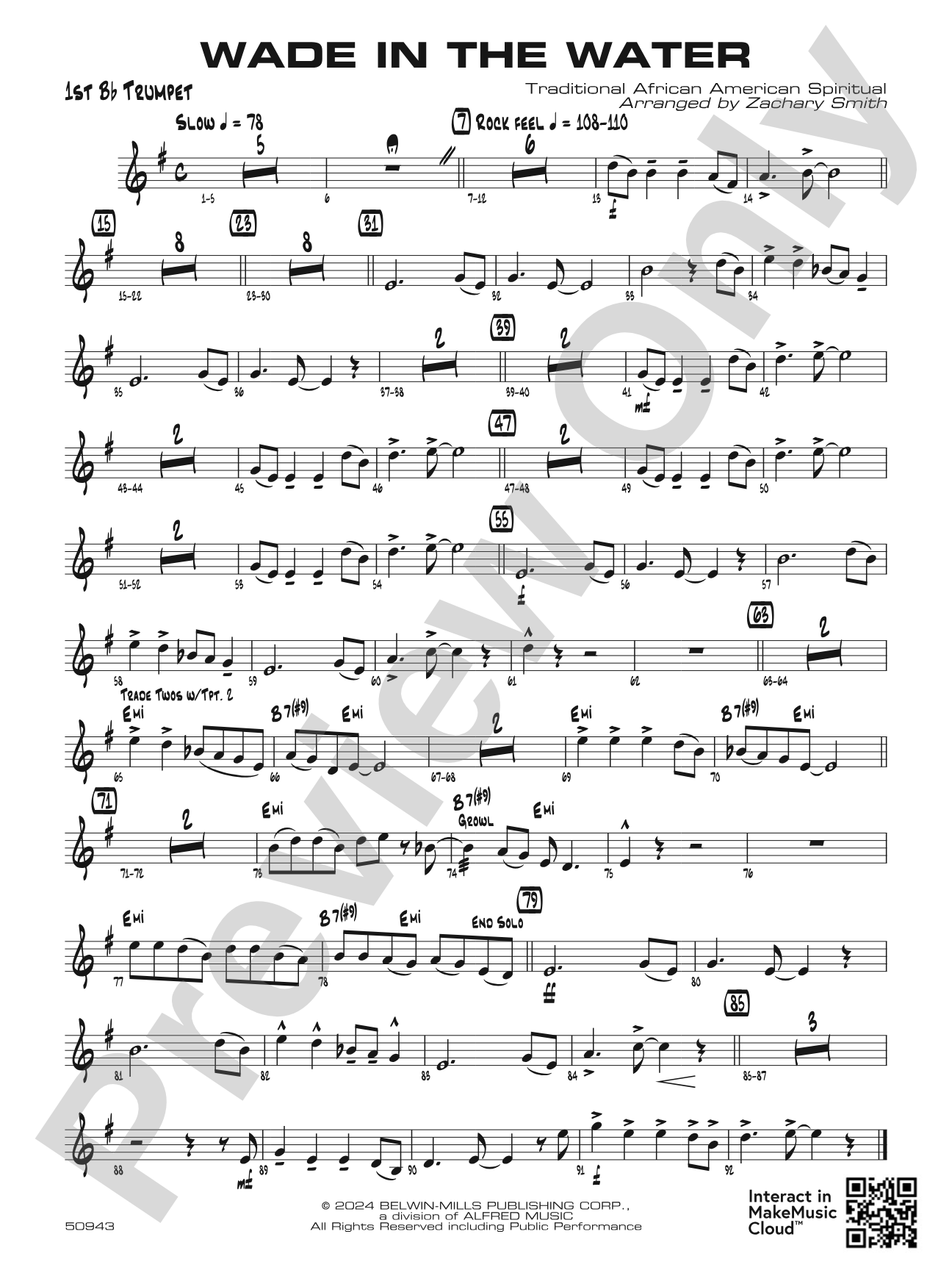
Wade in the Water: 1st B-flat Trumpet

Traditional / arr. Zachary Smith

Grade: 1

Item: 00-PC-0019352_T1

Digital Download
$3.00
Description
The well-known classic spiritual with a funky rock feel played around 110 BPM. Brief written solo statements from various players and modest trumpet 1 range to written E top space. Optional parts include flute, clarinet, horn, baritone horn, tuba, and vibes. This is a well-crafted and effective chart everyone will love! (3:35)

Don't just read it, hear it, play along with it, and watch your students grow with it. In MakeMusic Cloud, Wade in the Water: 1st B-flat Trumpet comes alive with professional accompaniment, adjustable tempo, and built-in practice tools that turn solo practice into real progress.

Sample Audio
0:00
0:00
Sample Video
Additional Details
Series: First Year Charts for Jazz Ensemble
Publisher: Alfred Music
SKU: 00-PC-0019352_T1

More about this title

Why we love this

Zachary Smith has taken a beloved spiritual and reimagined it with genuine groove and contemporary energy, creating something that feels fresh without losing the song's soul. The optional instrumentation means you can run this with a full big band or adapt it to whatever players you have on any given day. First-year ensembles need charts that sound professional and feel rewarding to perform, and this one delivers both.

What to expect

Funky and modern, with roots that run deep. The spiritual's familiar melody carries the weight of history, but the rock groove and jazz harmonies push it forward with energy and swagger. This is a piece that invites your ensemble to play with attitude.

Who it's for

Beginning jazz ensembles and first-year big band students who are ready for something more than a straight-ahead head chart. The modest trumpet range and accessible voicings make this achievable for young players while the contemporary feel keeps them engaged.

How to get the most out of it

  • Lock the rhythm section into that 110 BPM pocket from the first rehearsal. The groove lives or dies based on how solidly the drums, bass, and piano sit together.
  • Balance the solo statements carefully so each featured player can be heard without overshadowing the ensemble response. These conversations between soloist and band are what make the chart breathe.
  • Treat the optional parts strategically. If you have flute or vibes, they add color and sophistication; if not, the core arrangement stands on its own.

How to use it

Perfect for a festival or competition showcase where you want to demonstrate that young players can swing. You could also use this early in the season as a confidence builder, or program it alongside more traditional spirituals to show the range of what this music can become.

Skills your students will build

  • Playing with intentional groove and ensemble lock at a steady tempo
  • Trading solo statements with the ensemble and listening to chord changes
  • Balancing individual voice while supporting the ensemble texture
  • Reading and executing jazz articulation and phrasing conventions
  • Adapting to optional instrumentation and flexible voicings

You May Also Like