

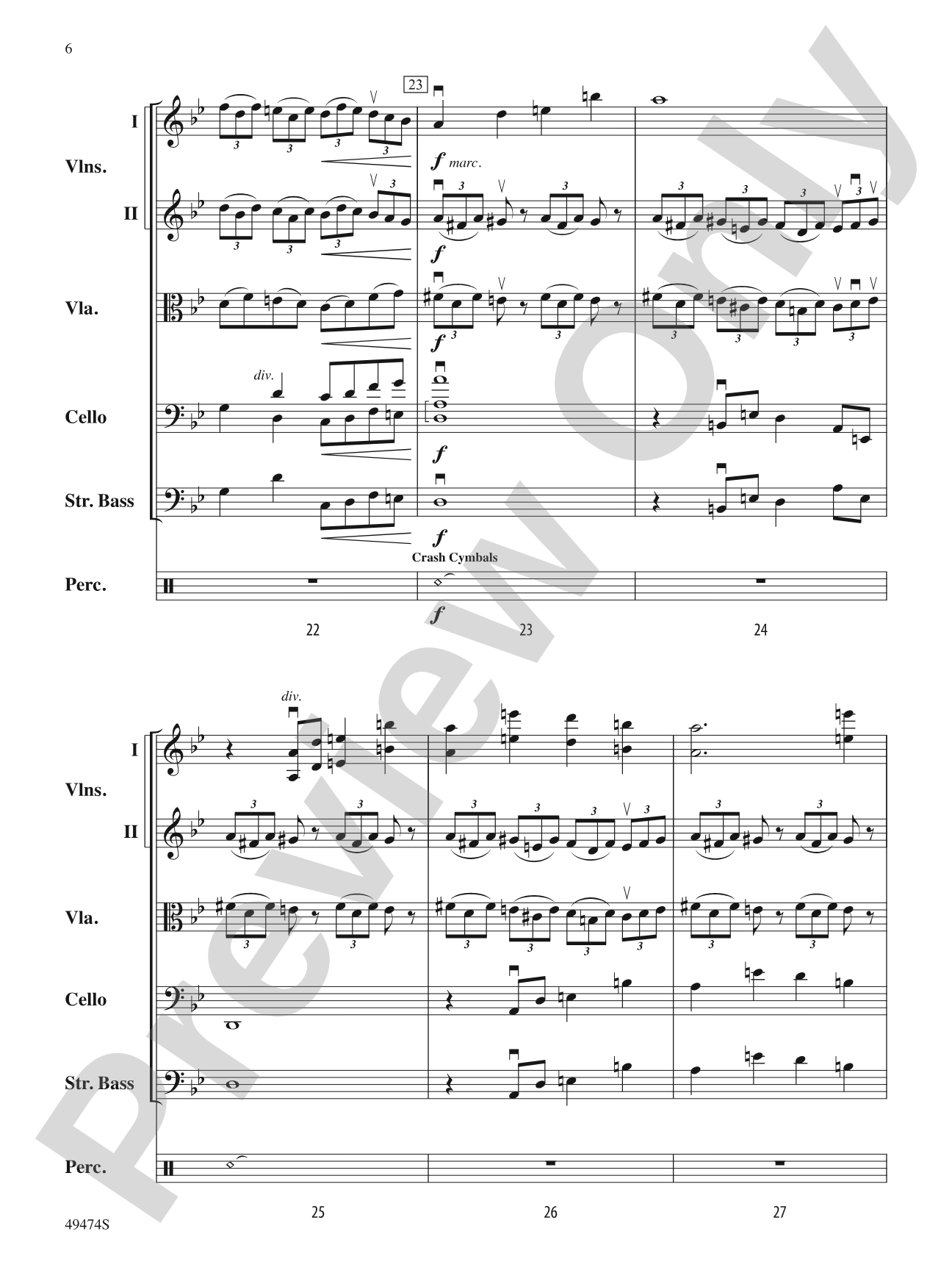
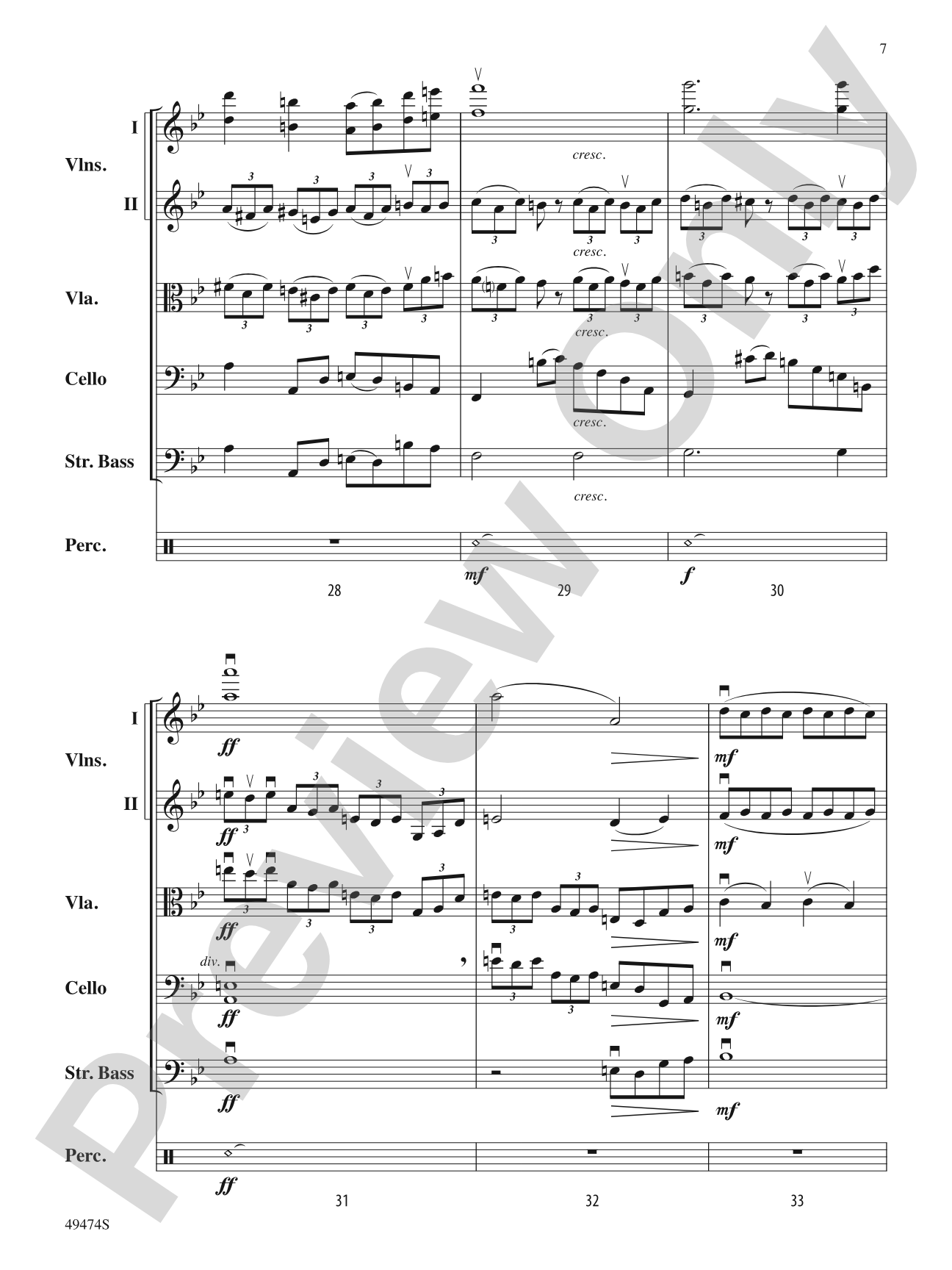
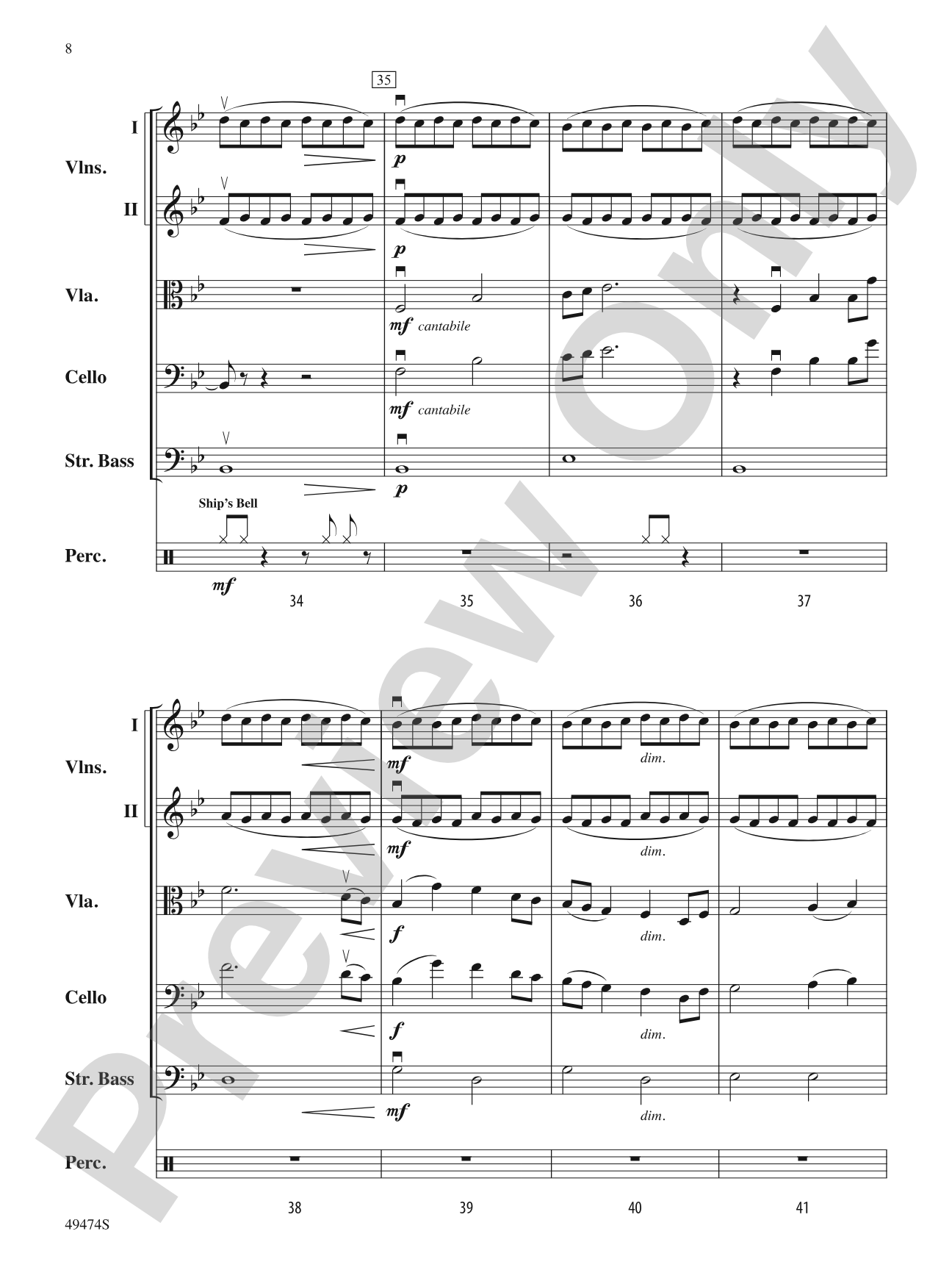
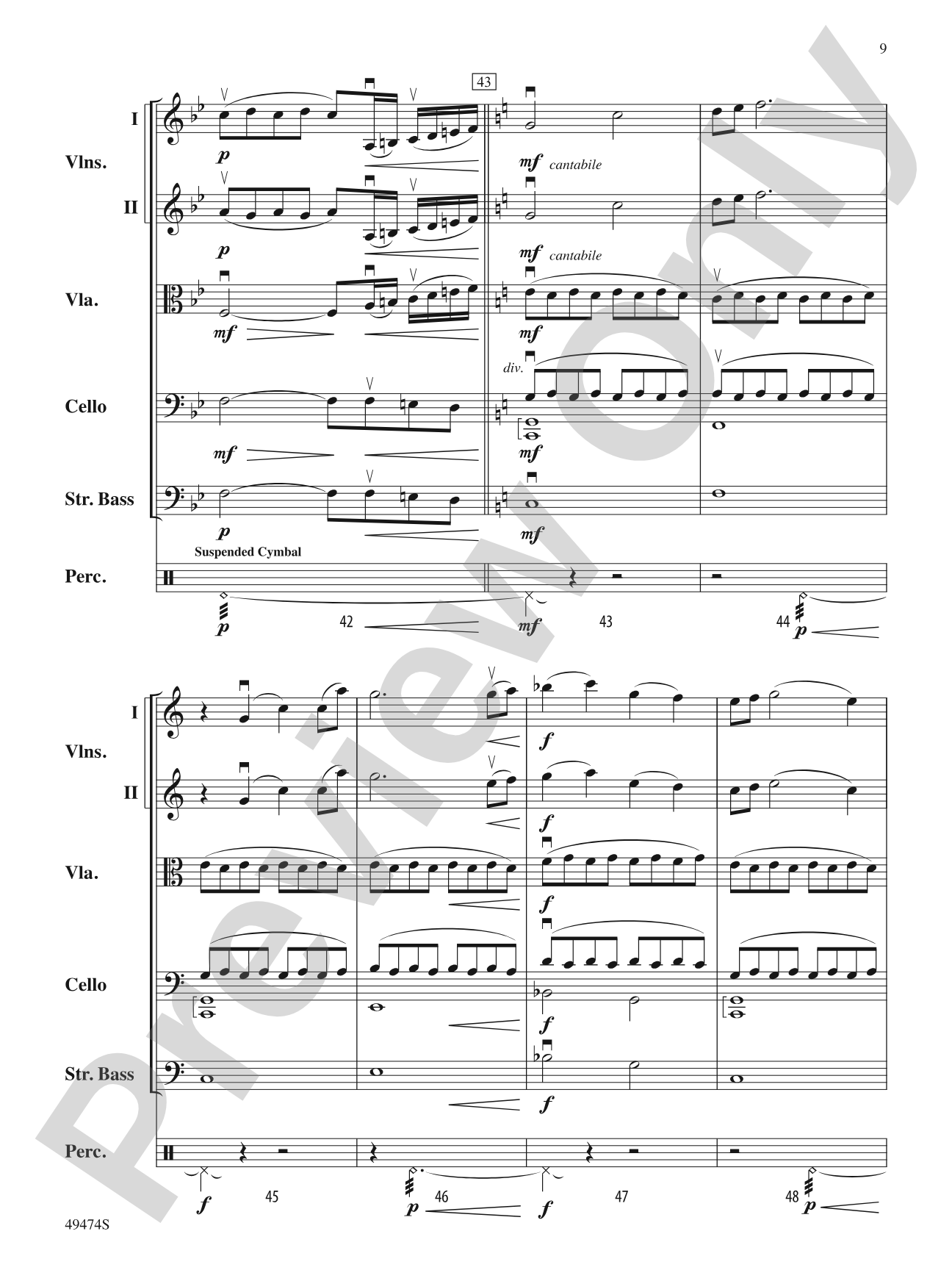
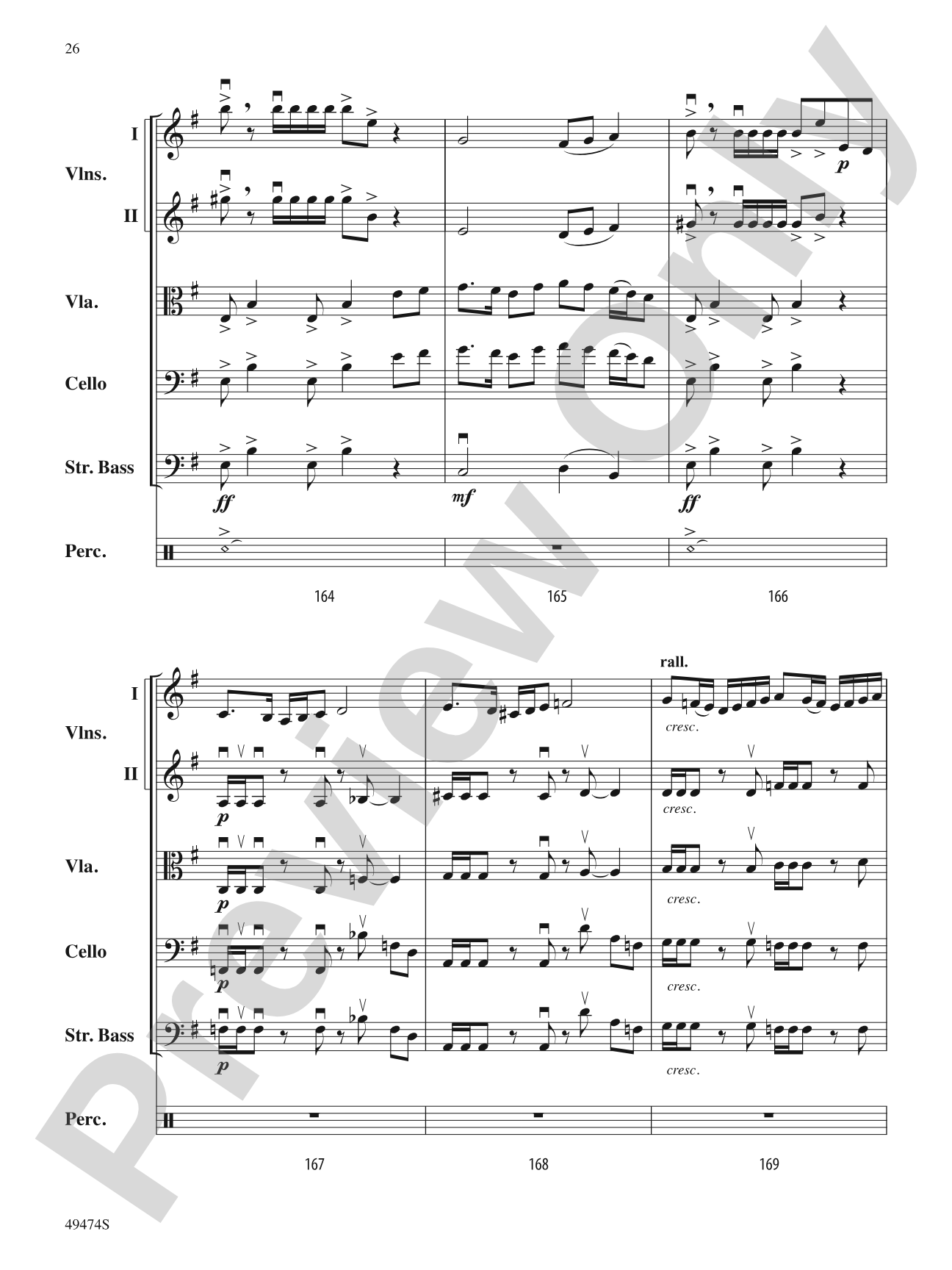
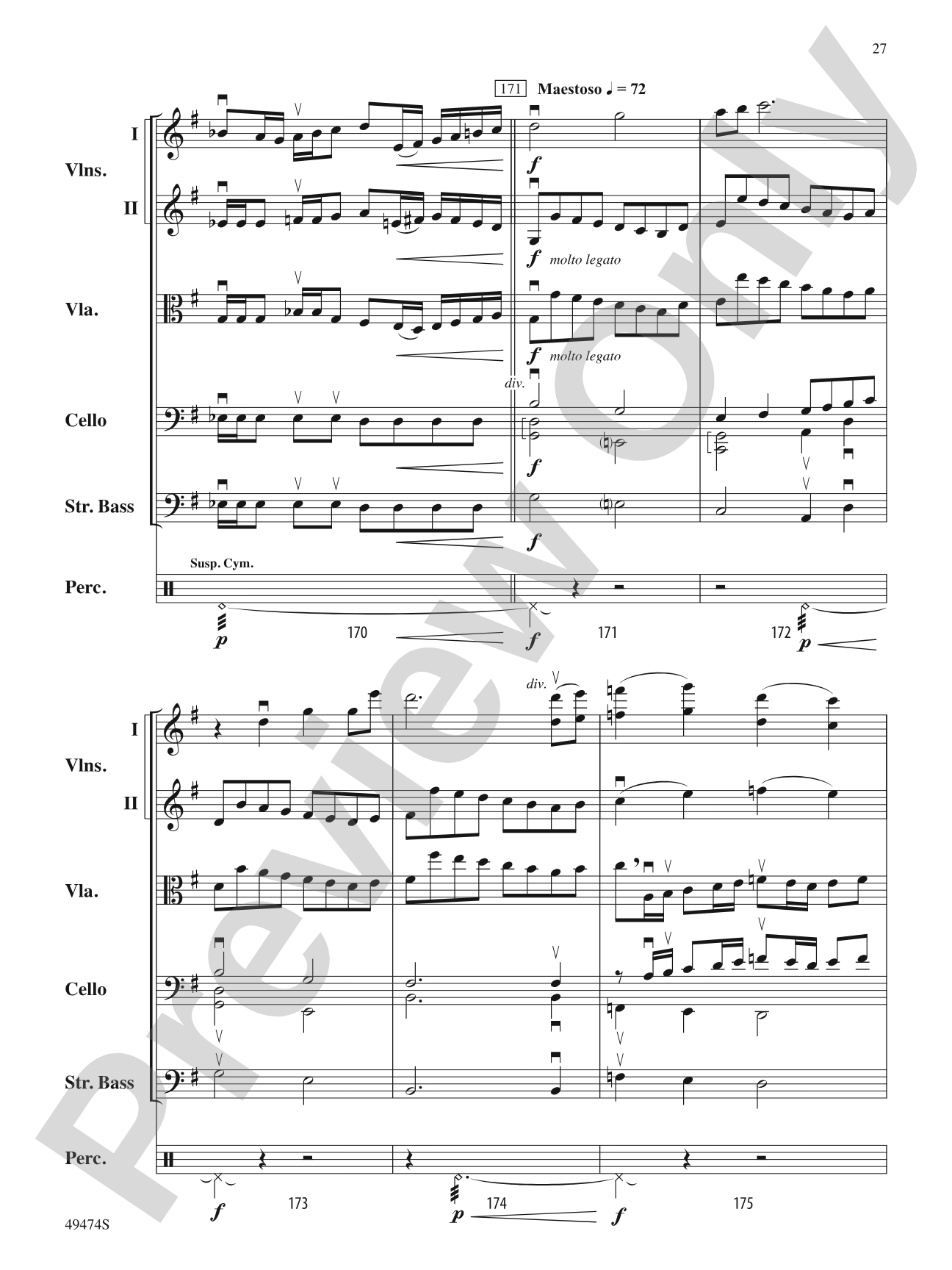
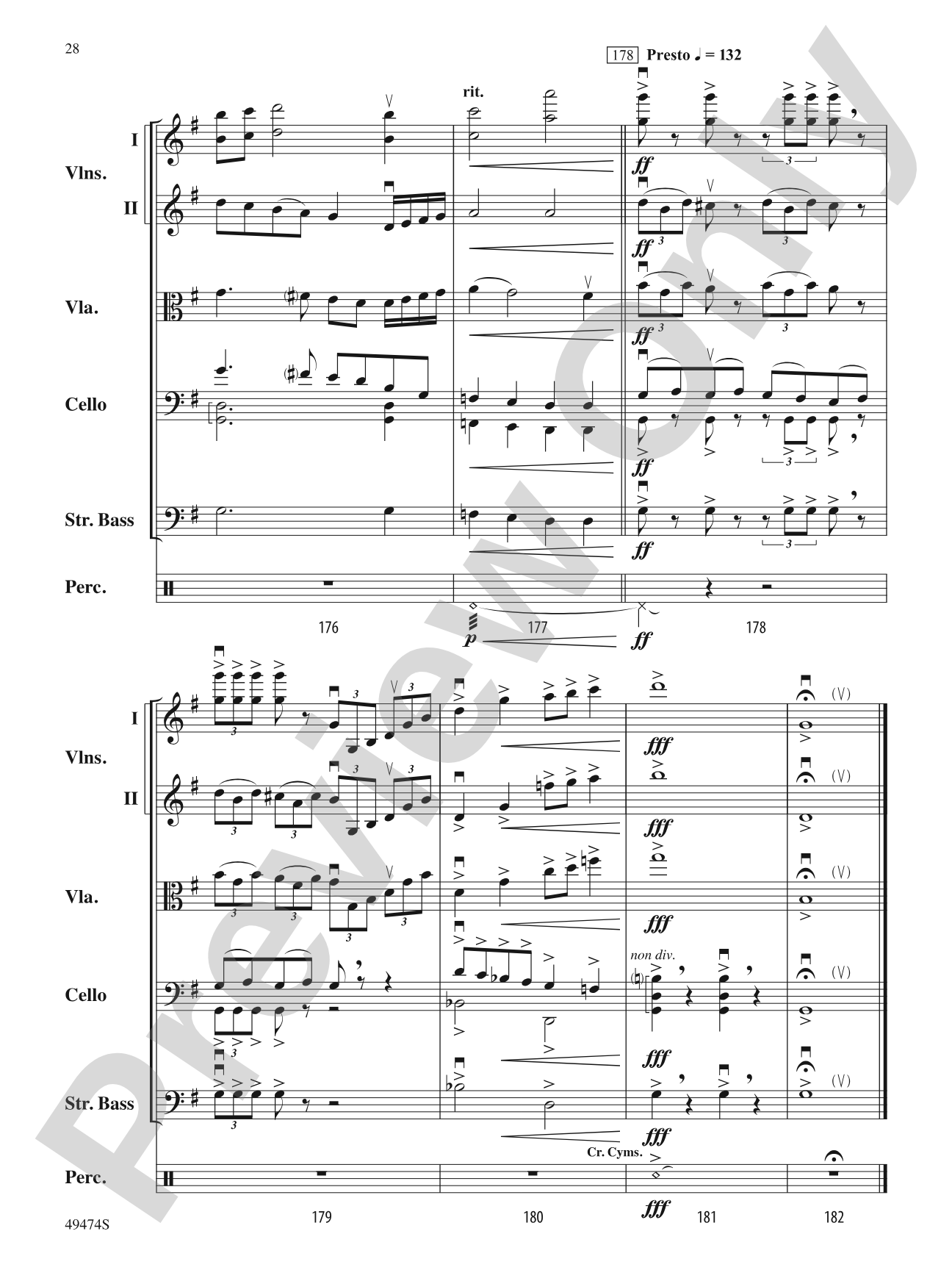

Voyagers We, Undaunted: Score
By Richard Meyer
Grade: 4
Item: 00-PR-0007047
$10.00
Pickup currently not available
Description
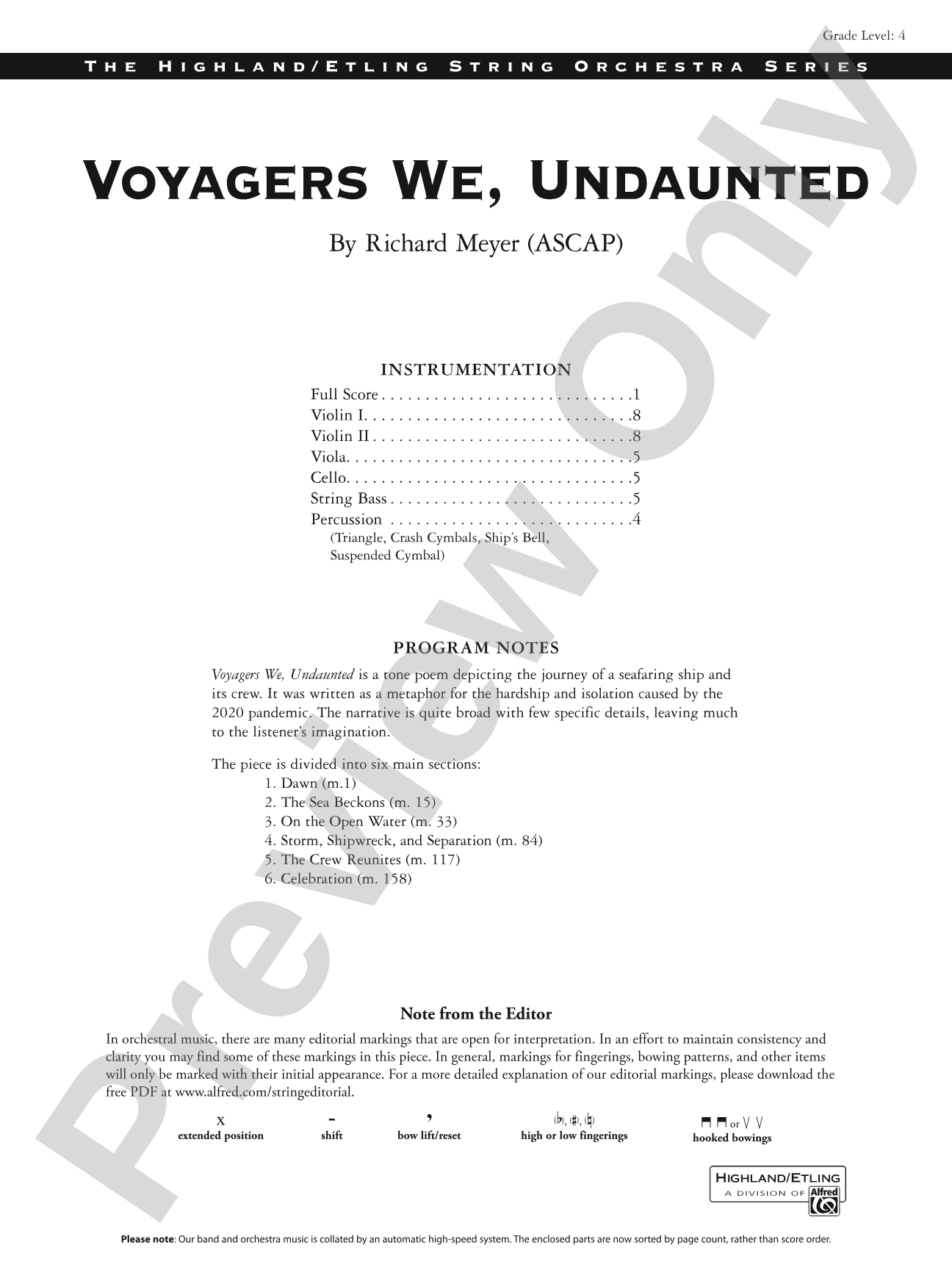
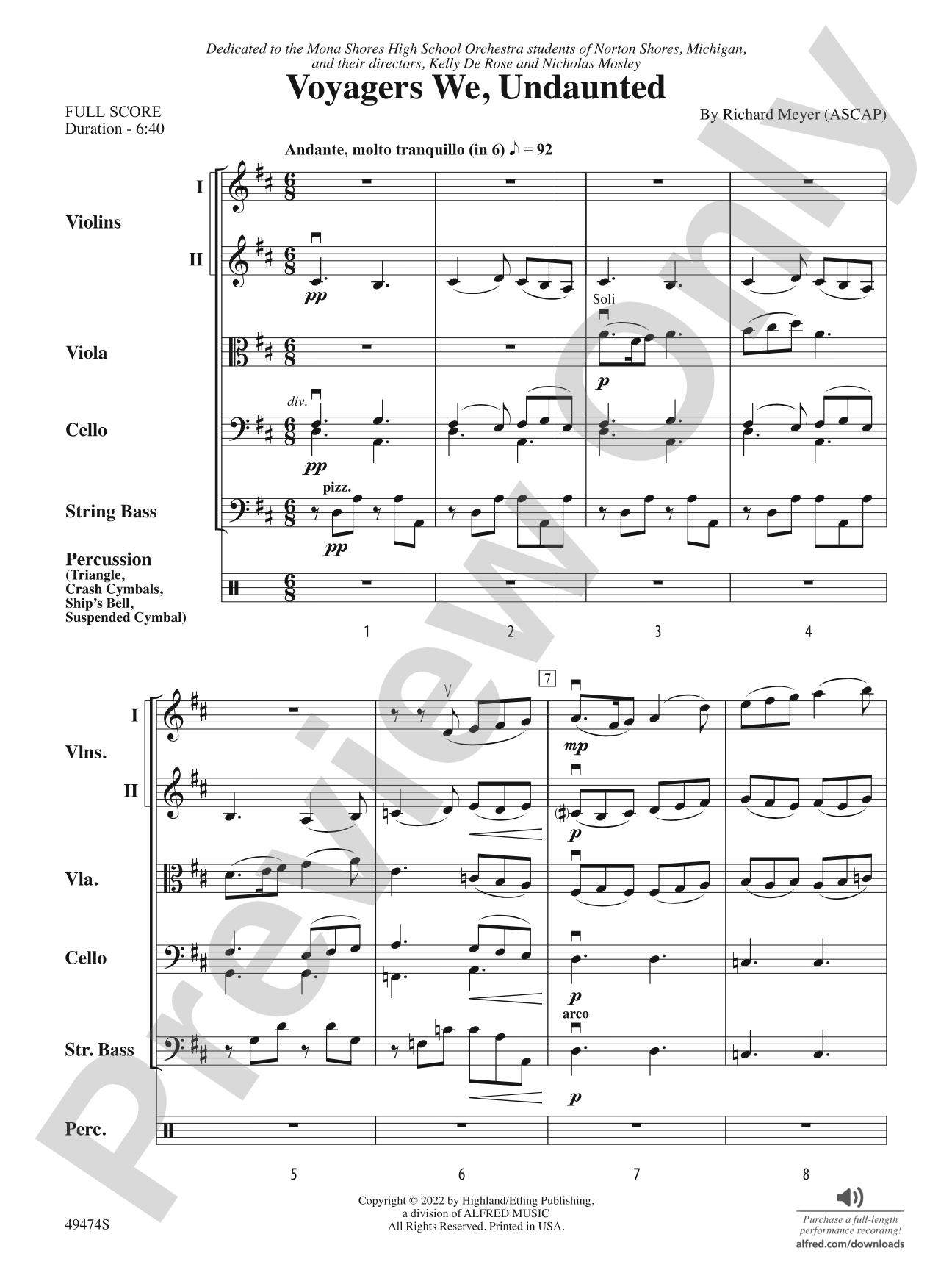
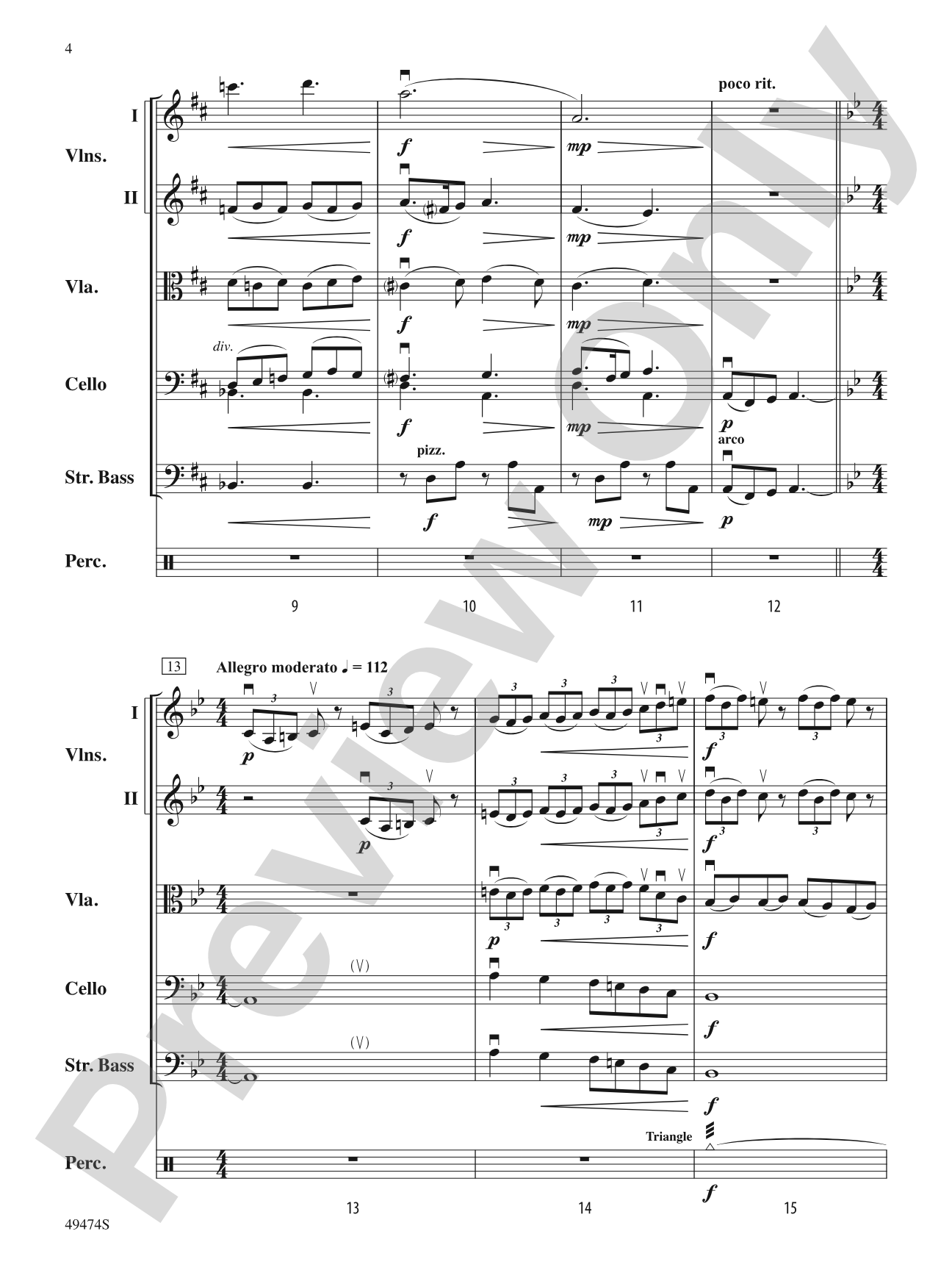
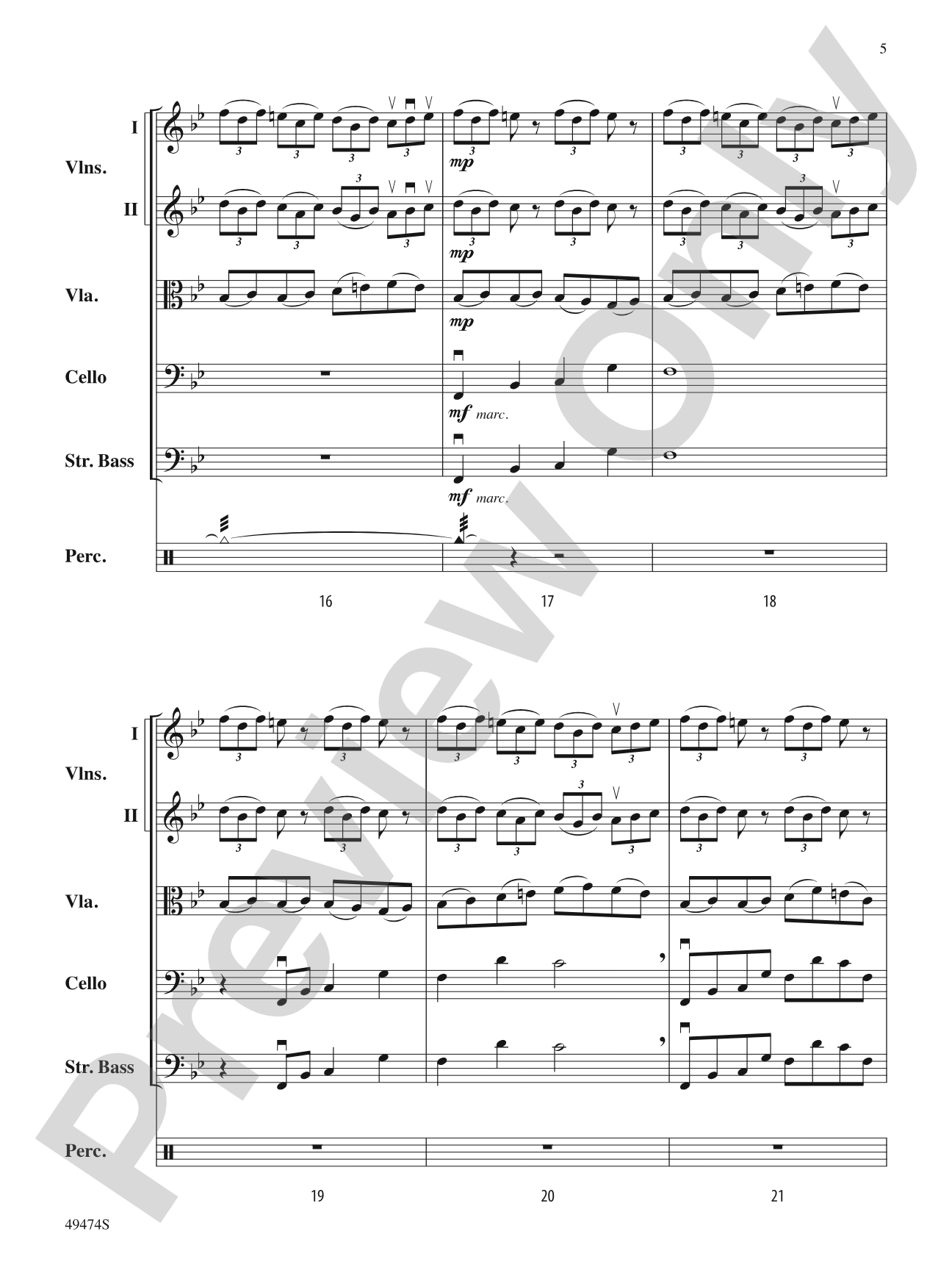
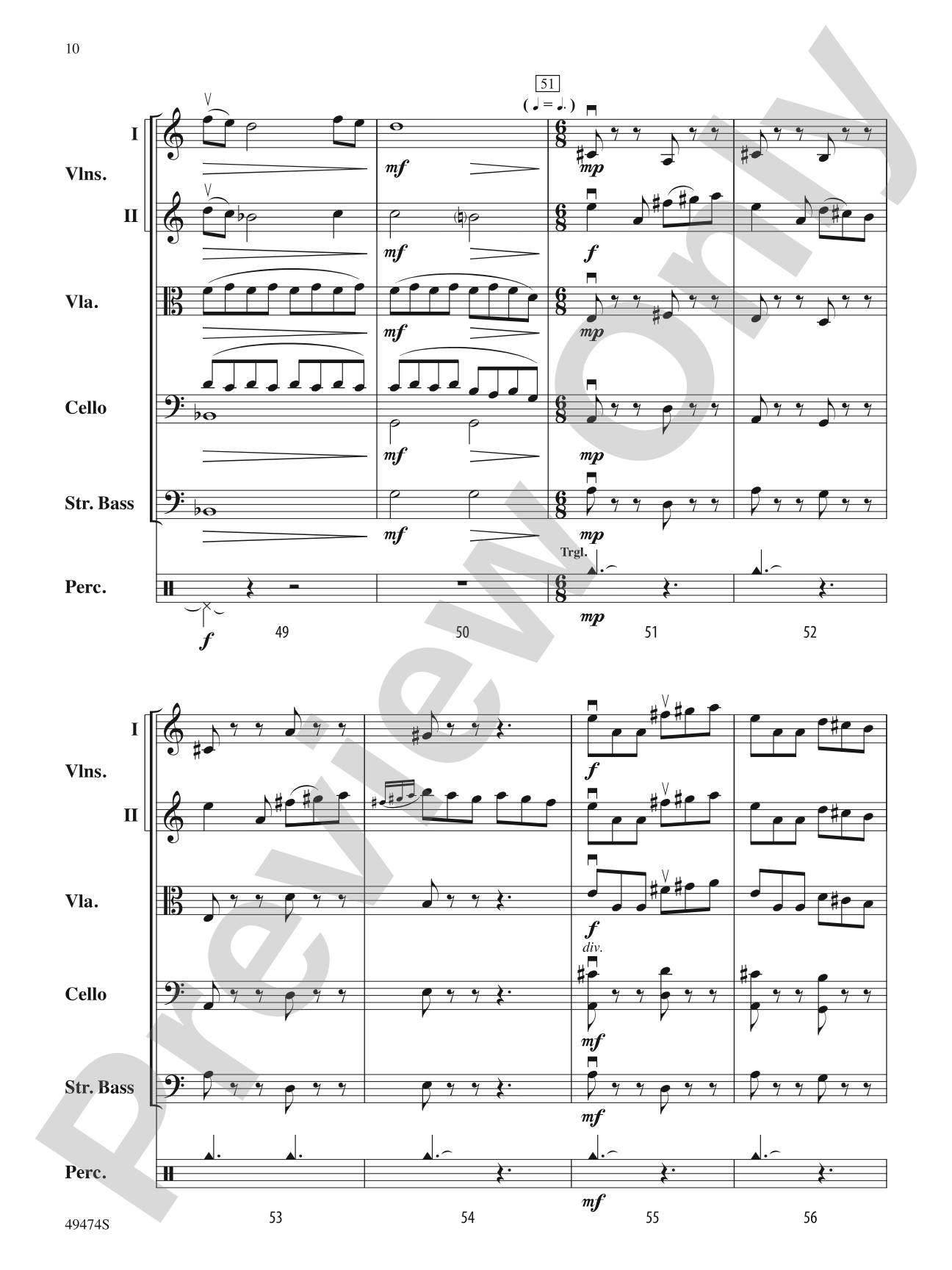
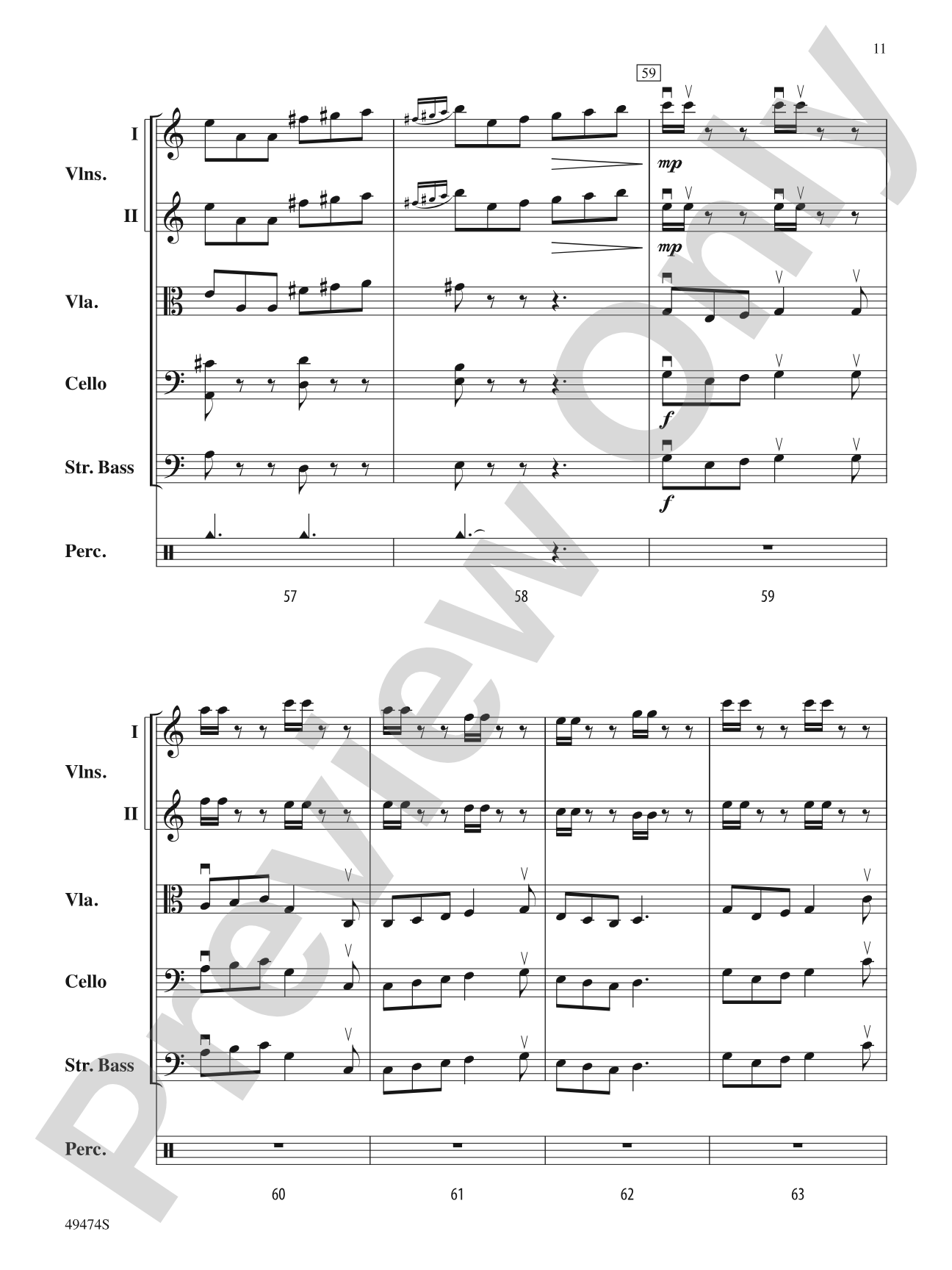
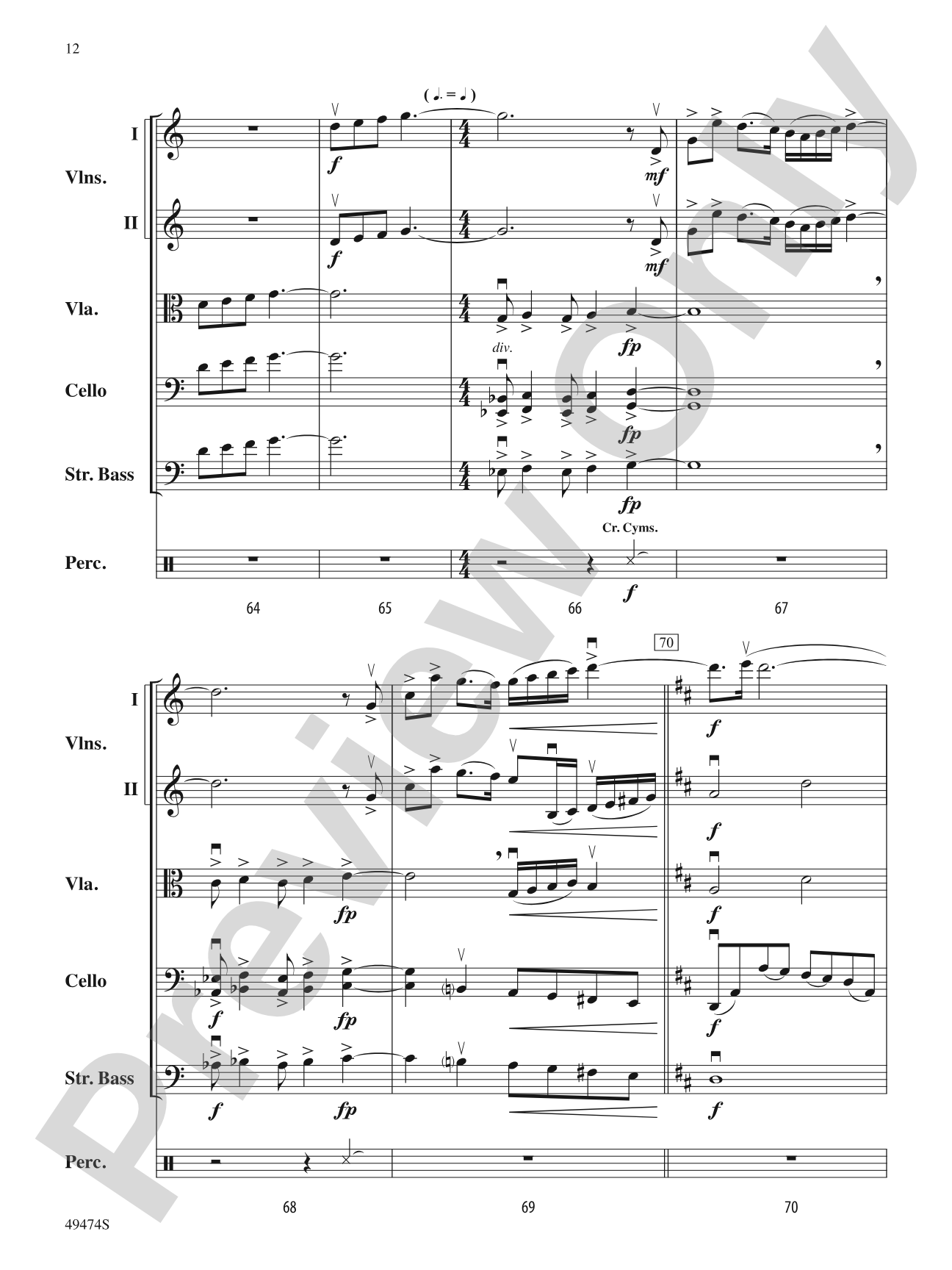
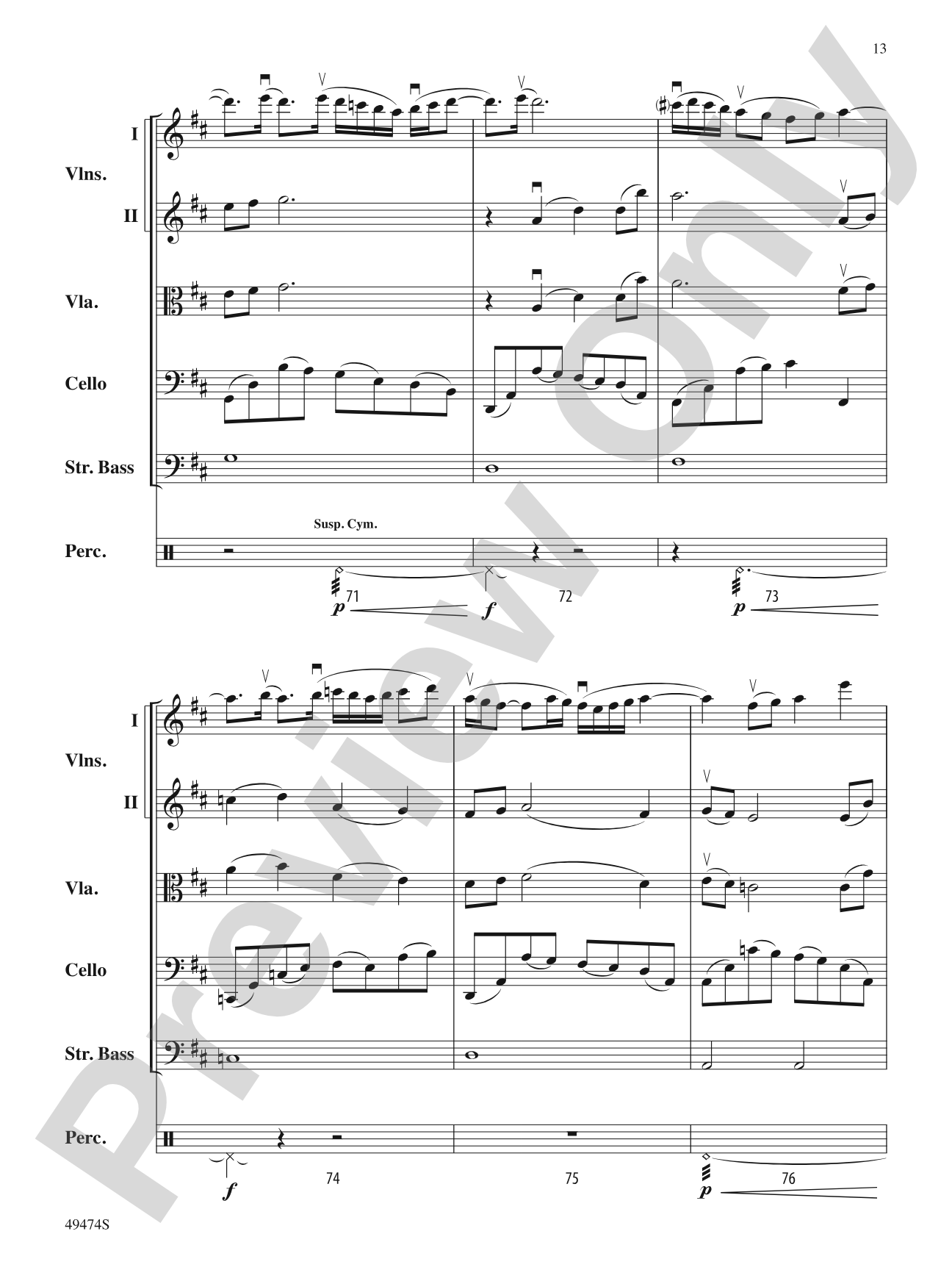
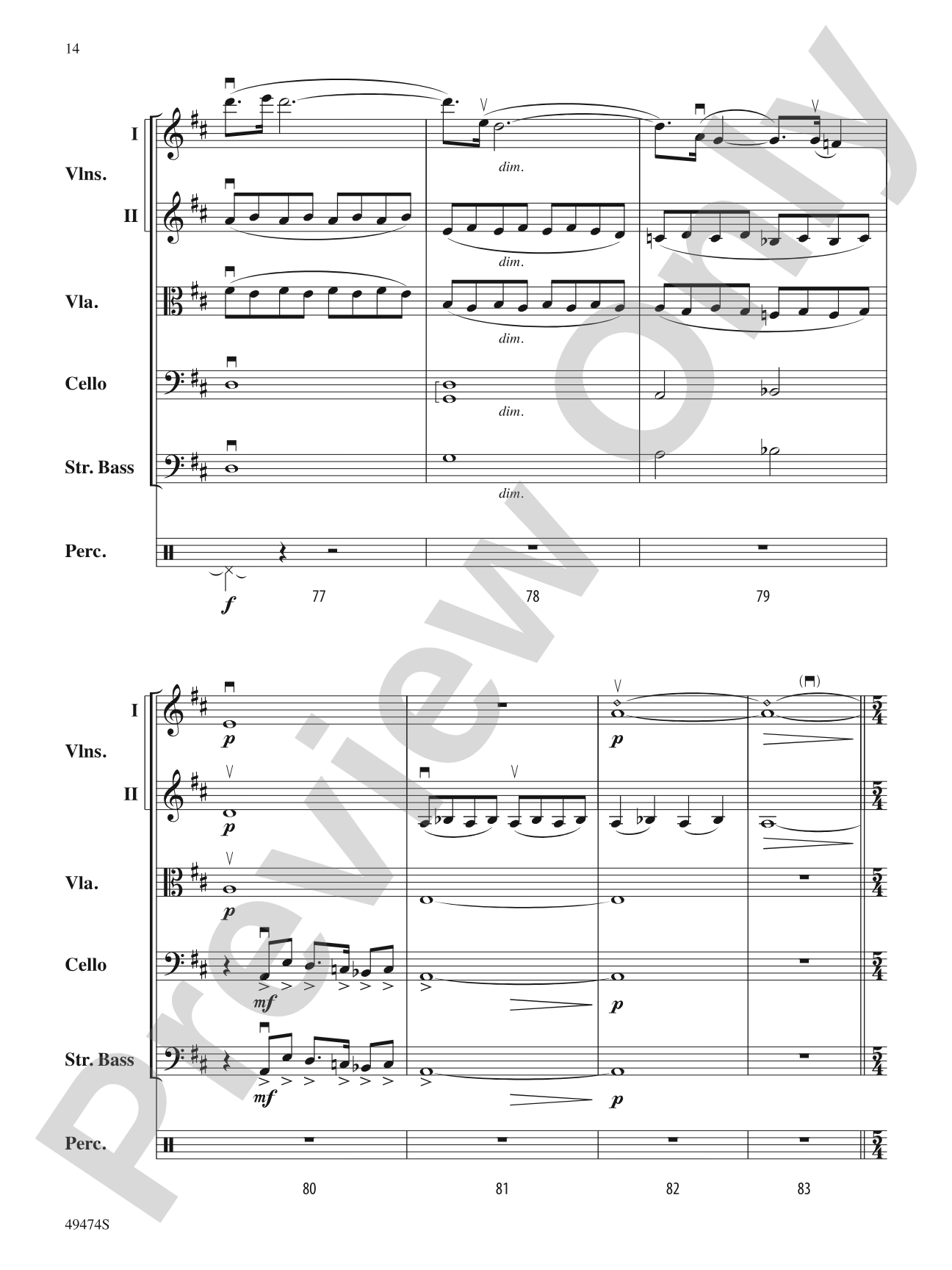
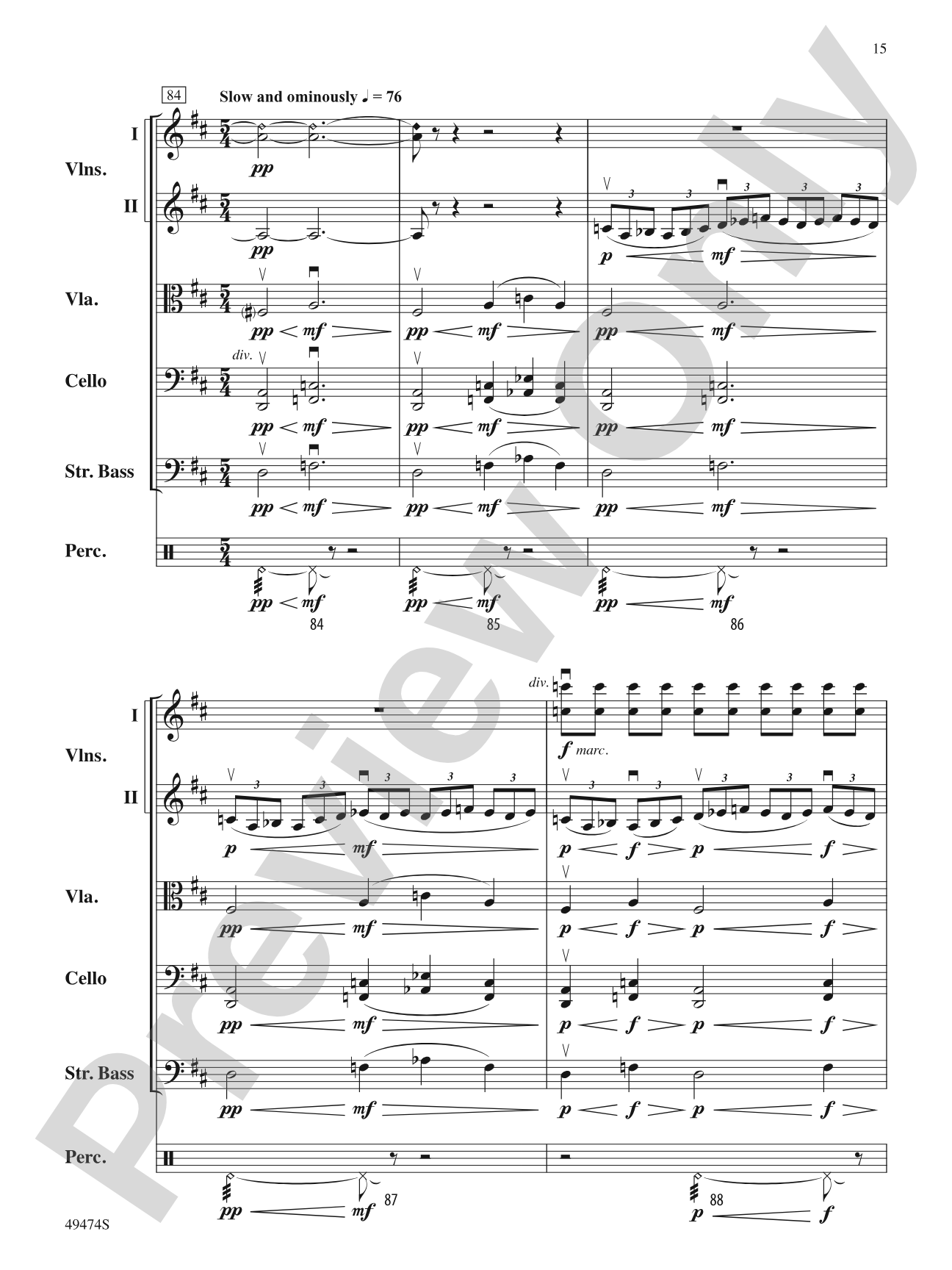
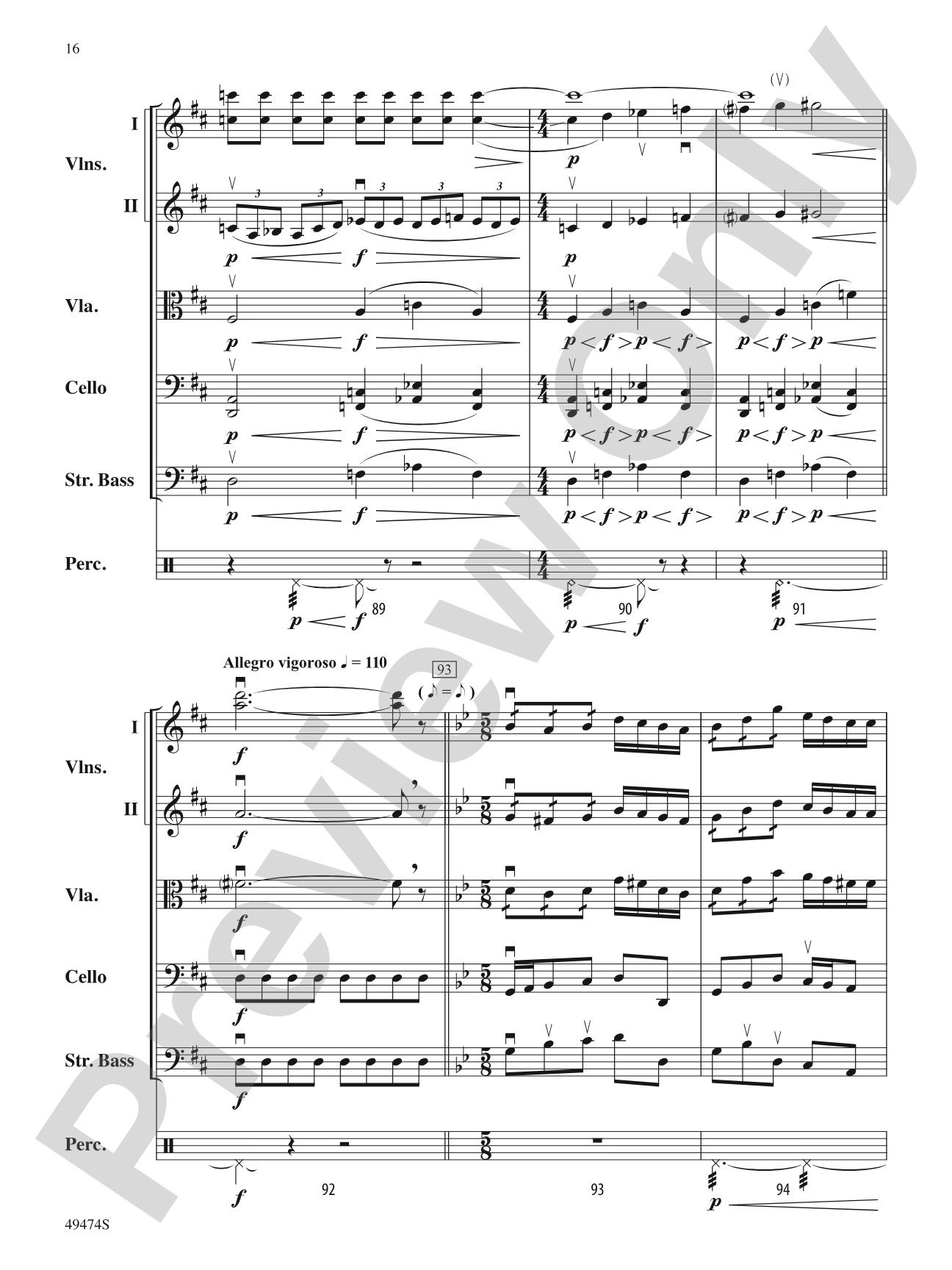
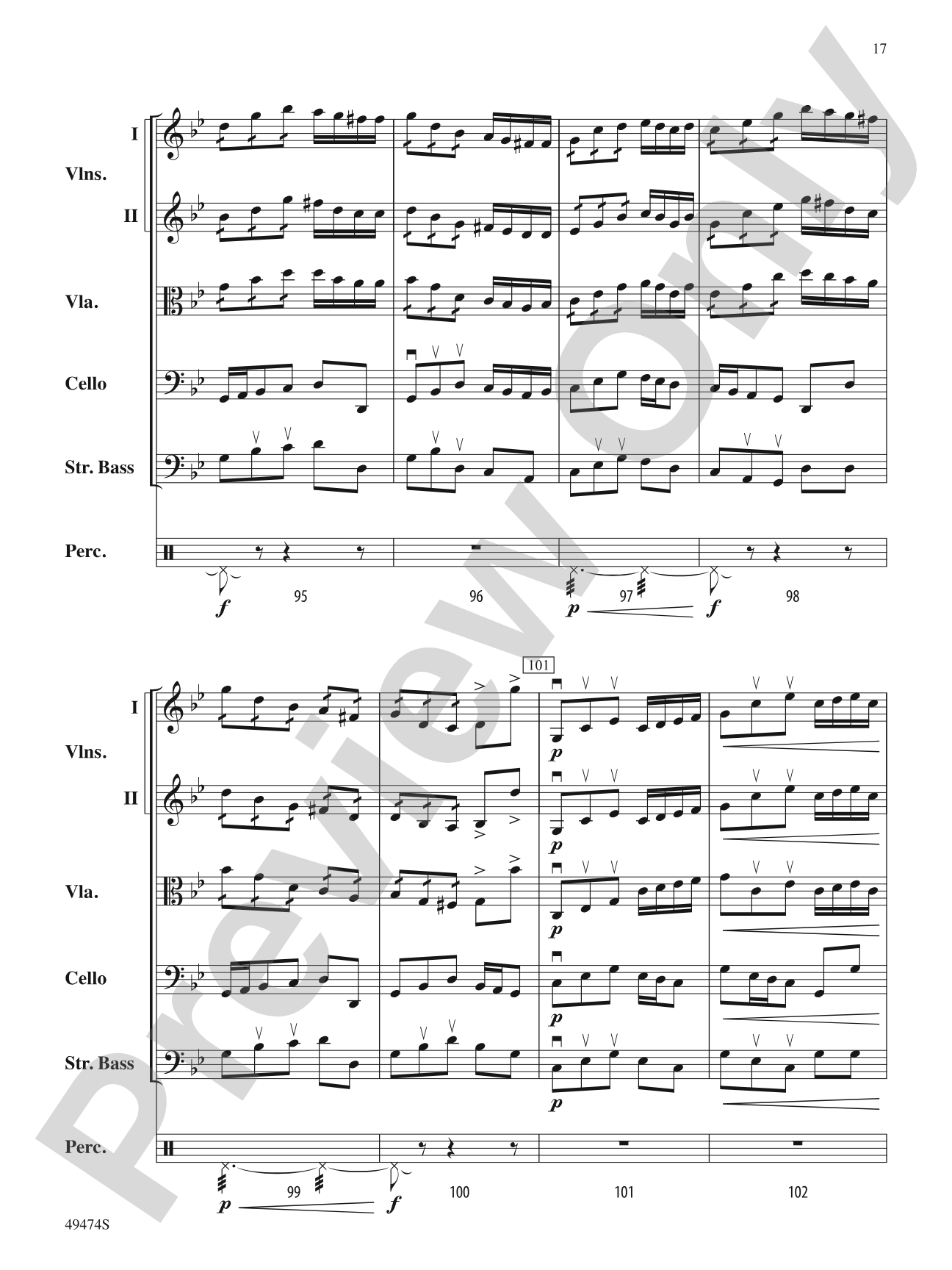
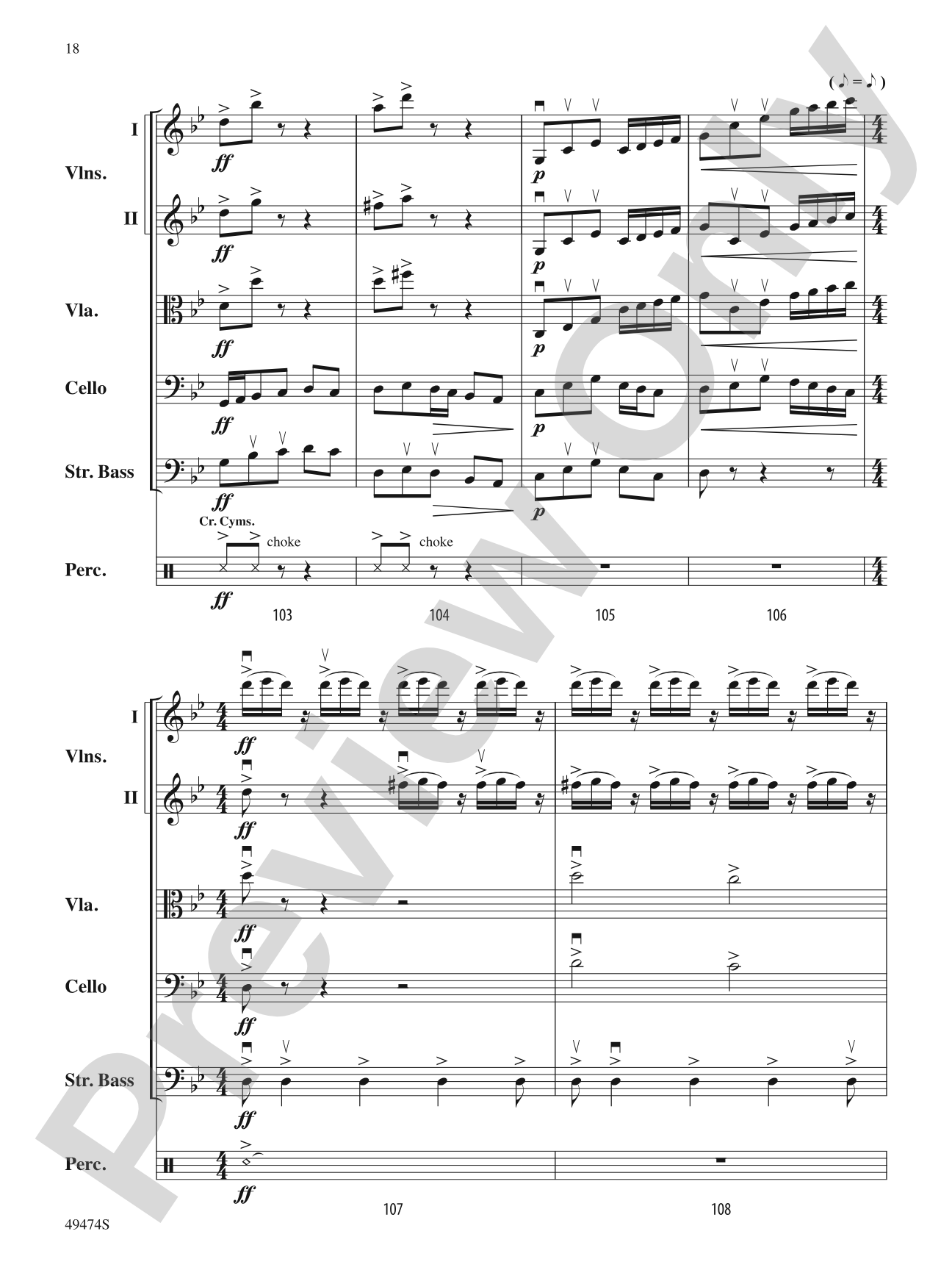
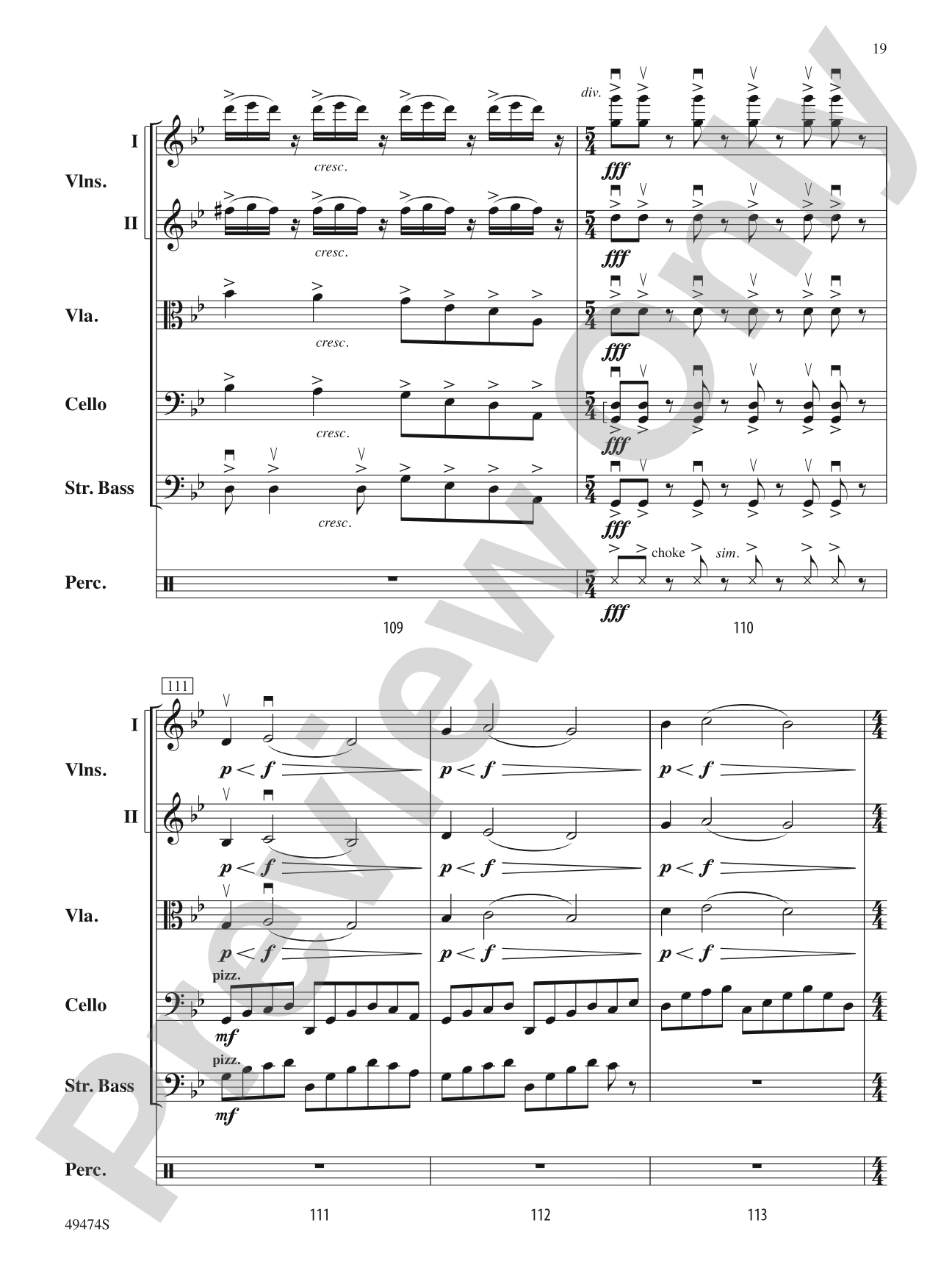
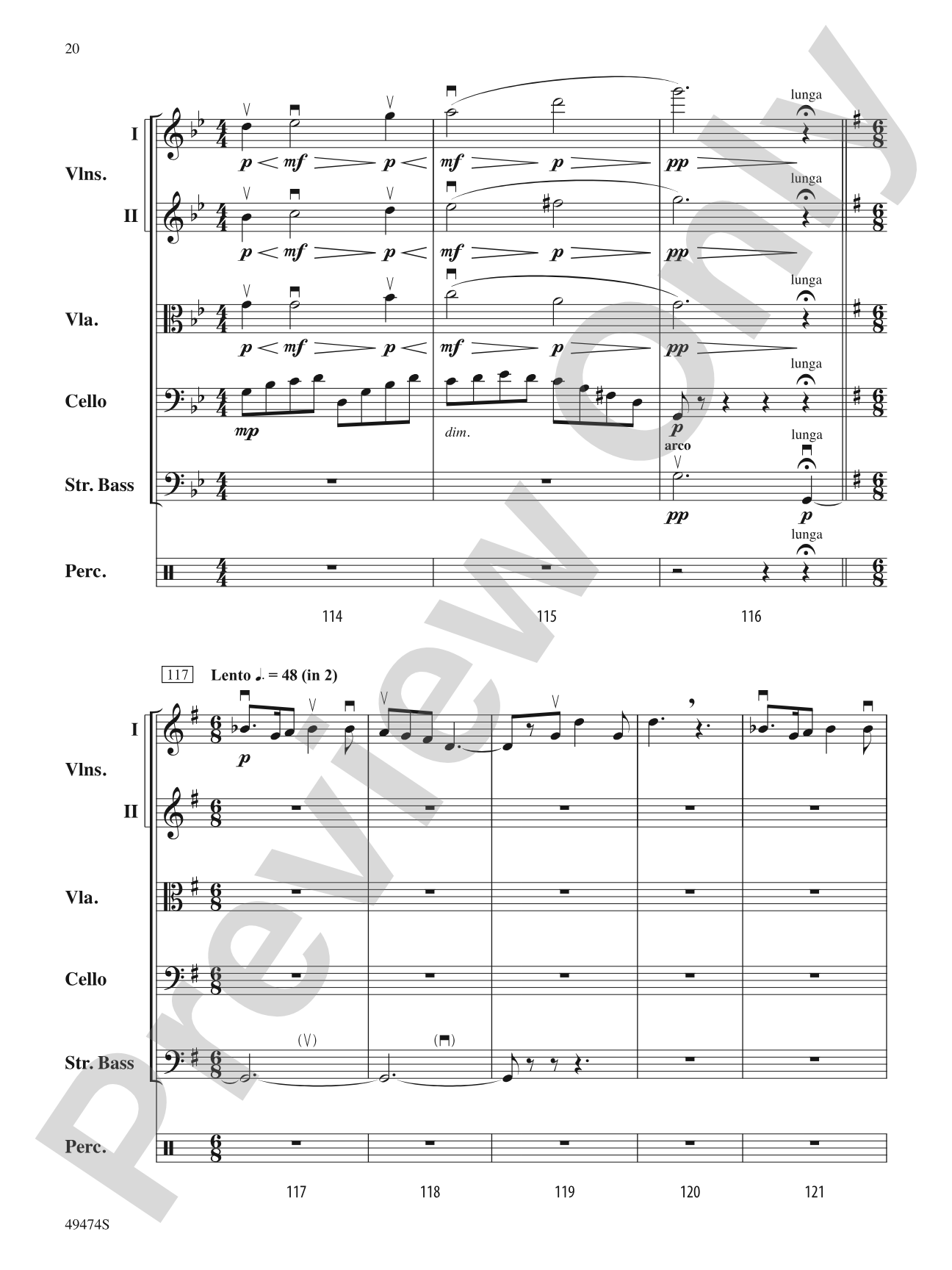
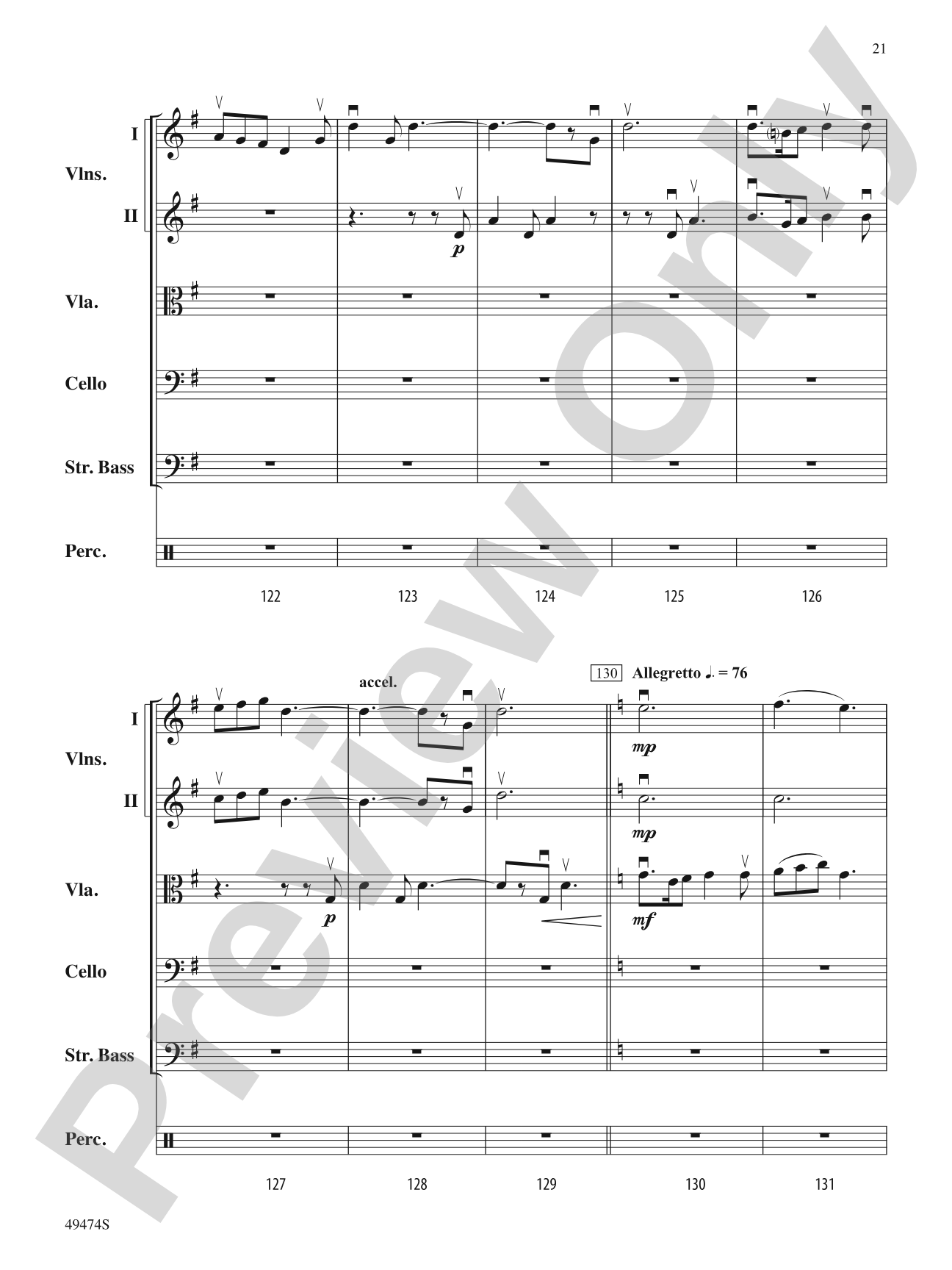
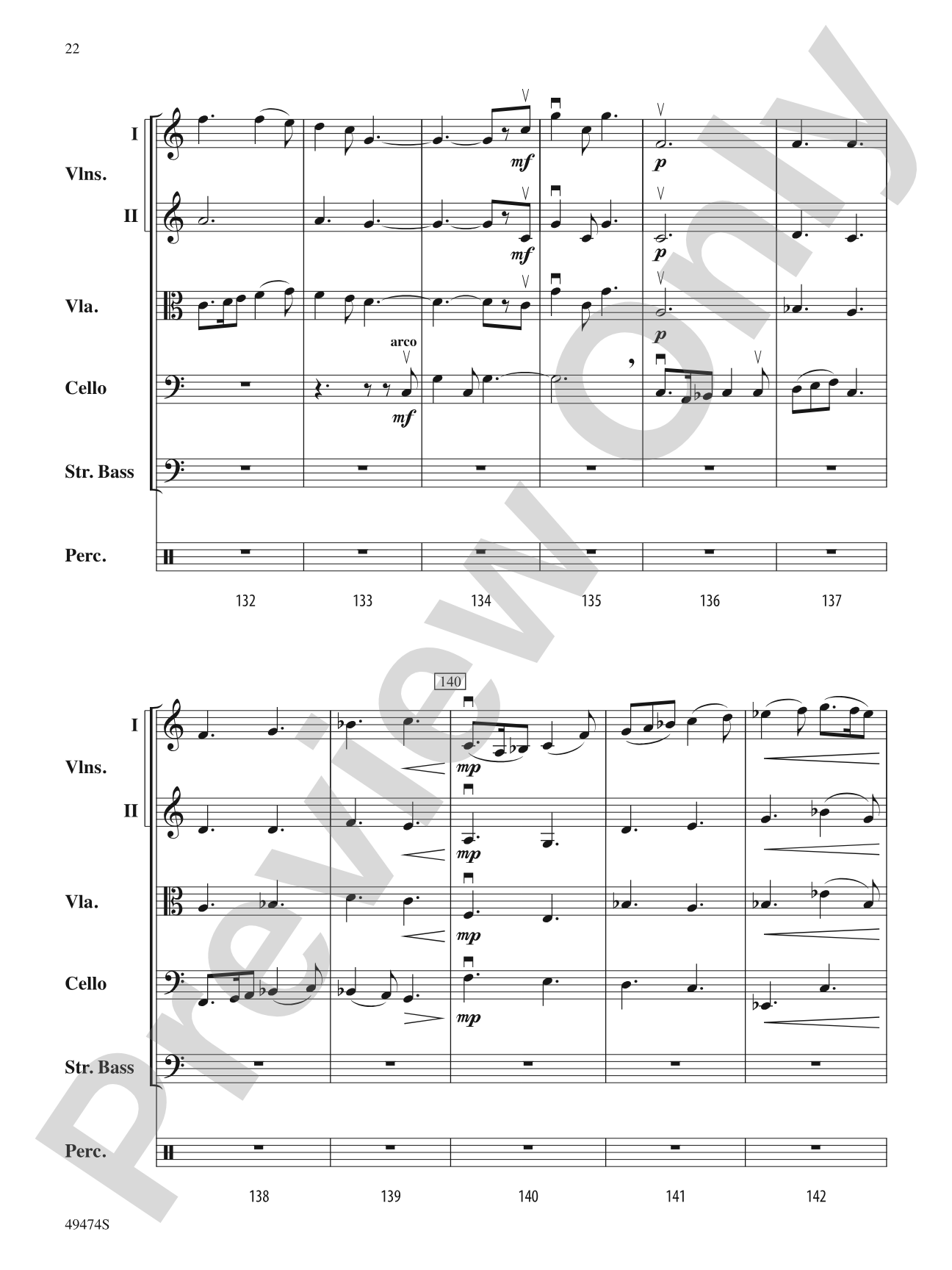
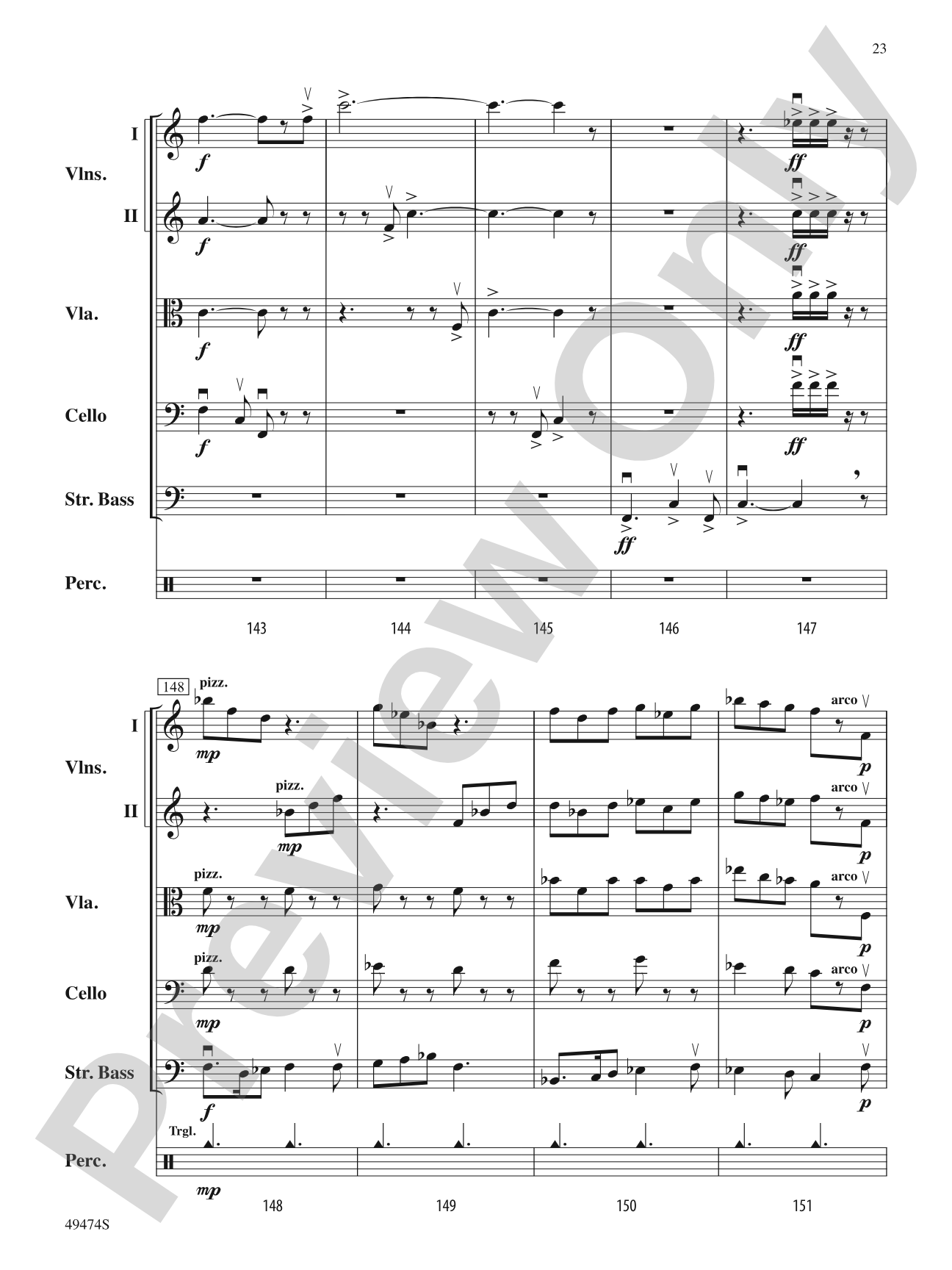
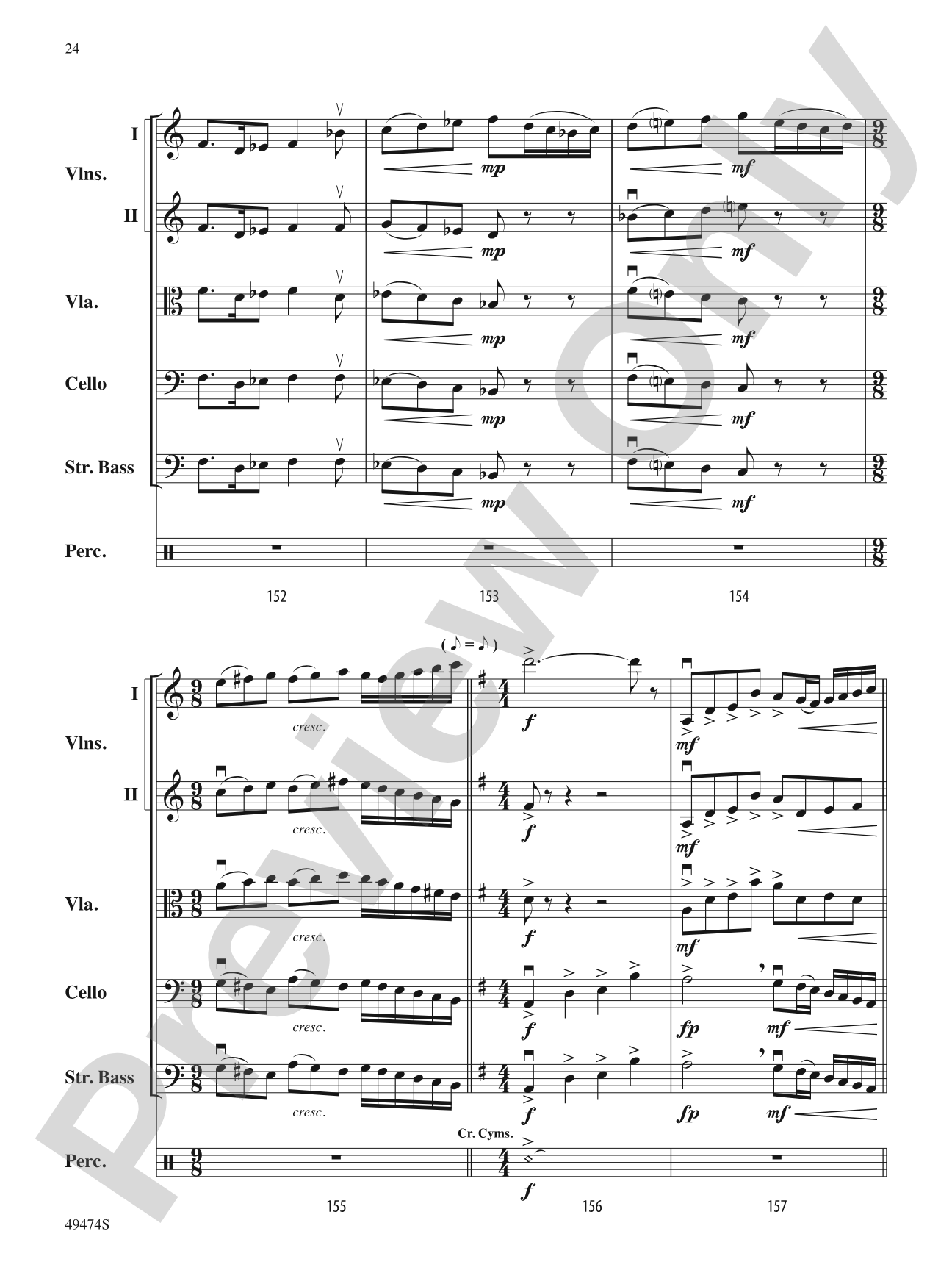
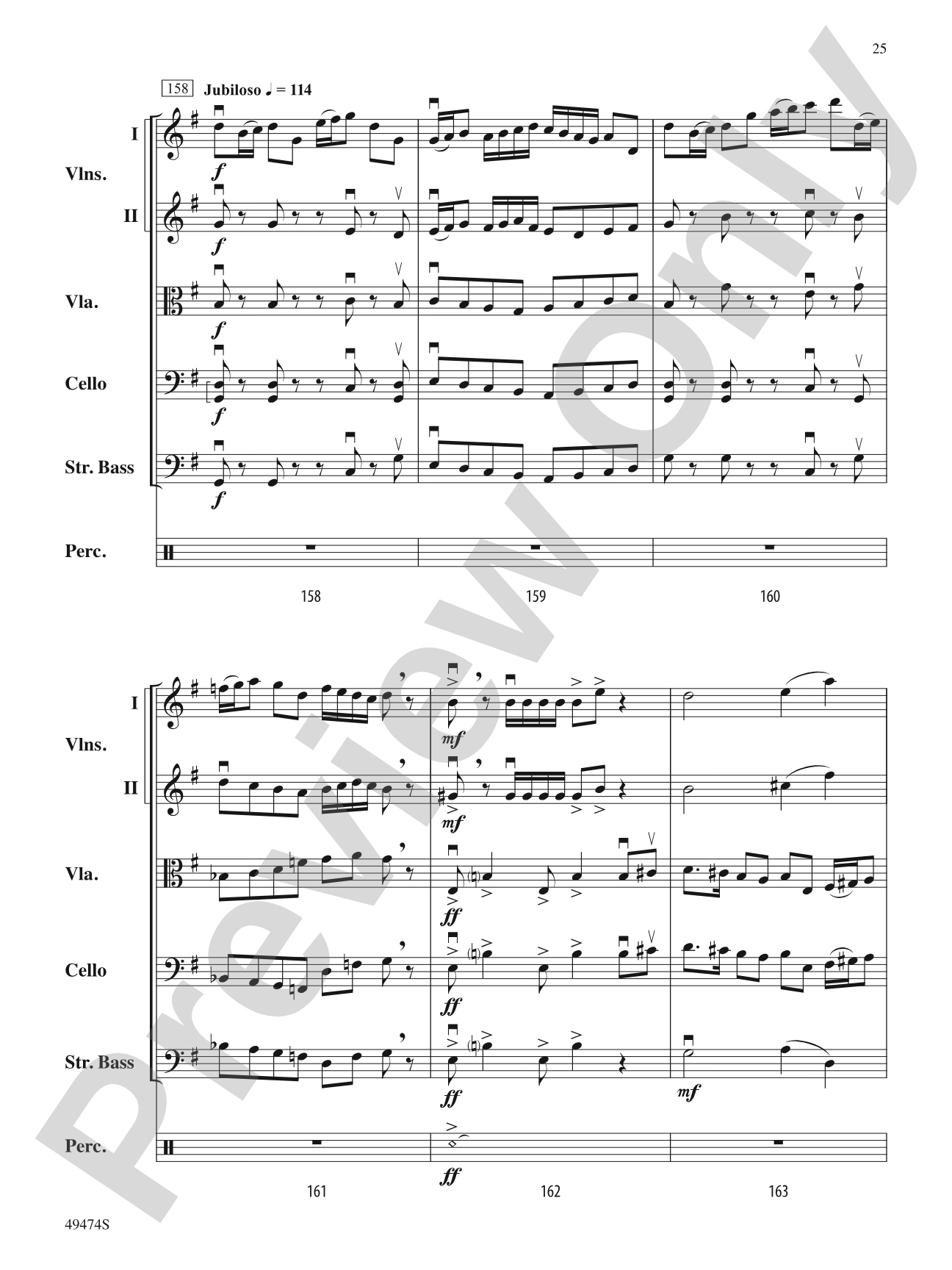
Written as a metaphor for the hardship and isolation caused by the 2020 pandemic, this dramatic tone poem is a testament to courage and the undaunted nature of the human spirit. The piece follows the voyage of a ship and its crew to the open sea and into a devastating storm resulting in the separation of the crew and its ultimate reunion. The memorable melodies and stirring harmonies are sure to peak your students' imaginations while a variety of key and time signatures will challenge every section of the advanced string orchestra. A percussion part has been included to add touches of nautical color, resulting in an emotional, picturesque voyage with a cinematic flair. Check out Voyagers We, Undaunted by Richard Meyer! (6:40) This title is available in MakeMusic Cloud.


Don't just read it, hear it, play along with it, and watch your students grow with it. In MakeMusic Cloud, Voyagers We, Undaunted: Score comes alive with professional accompaniment, adjustable tempo, and built-in practice tools that turn solo practice into real progress.
Open in the Player
Jump straight in and assign it today.
Start Your Free Trial
Open this title and explore the full library in minutes.
Sample Audio
1
Audio File
--:--
0:00
0:00
Sample Video
Additional Details
Series:
Highland String Orchestra (HSO)
Publisher:
Alfred Music
SKU:
00-PR-0007047
More about this title
About the Composer: Richard Meyer

Richard Meyer brings three decades of string education experience to his work as a composer and conductor. He spent 22 years building the orchestra program at Oak Avenue Intermediate School in Temple City, California, expanding it from 29 to 200 students, while also overseeing the district's elementary string curriculum. His "Giving Bach" program, launched in 2009, has earned national recognition for using interactive concerts to reach underserved student populations across Southern California.
Beyond the classroom, Meyer has guest-conducted All-State orchestras across multiple states and served as music director of the Pasadena Youth Symphony Orchestra for 16 years, leading international tours to Vienna, Australia, and Canada. As a composer, he has published over 190 works and arrangements; he also spent 16 years as string editor for Alfred Publishing Company and co-authored the String Explorer Series and Sight-read It for Strings.
Why we love this
Meyer writes with the insight of someone who has spent decades in the rehearsal room, so every compositional choice serves the players and the story. The mixed meters and key changes feel purposeful rather than arbitrary, pushing students musically while the narrative arc (voyage, storm, reunion) gives them something concrete to convey. The percussion additions and cinematic textures elevate what could be a straightforward tone poem into something genuinely engaging for advanced high school orchestras.
What to expect
The voyage unfolds like a film score: expansive themes that feel both heroic and vulnerable, driven forward by restless harmonic movement and punctuated by moments of stark isolation. The storm arrives with urgency and textural turmoil before breaking into passages of quiet reflection, building finally to a triumphant reunion that feels earned rather than imposed. Throughout, the writing balances cinematic sweep with intimate string sonorities, creating a piece that is as emotionally resonant as it is musically sophisticated.
Who it's for
Advanced high school string orchestras (Grade 4) ready for multi-movement narrative works with harmonic and rhythmic complexity. This piece rewards programs with secure section playing, a willingness to tackle shifting meters and keys, and students mature enough to connect personal interpretation to the pandemic metaphor Meyer embedded in the score.
How to get the most out of it
- Establish a clear visual metaphor for the voyage early in rehearsals. Have your concertmaster or section leaders describe the emotional geography at each section so the bow work and phrasing naturally follow the story rather than feeling mechanical.
- Balance the string writing with the percussion touches carefully; the nautical color should enhance the narrative without overwhelming the ensemble's core sound during passages that carry the main melodic weight.
- Prepare your sections separately for the meter changes before running them together. Once each part is secure in isolation, full-ensemble rehearsals will reveal how the polyrhythmic moments create dramatic tension rather than confusion.
- Use the opening and closing passages to frame the emotional arc. The reunion section gives you a chance to shape dynamics and ensemble blend as a final statement about resilience.
How to use it
This works beautifully as a festival or competition showcase piece, where the 6:40 duration and programmatic arc give adjudicators and audiences a complete journey. It also serves as a concert centerpiece for spring programming, especially in years when you want to highlight your orchestra's technical growth and emotional maturity alongside lighter or classical selections. Consider pairing it with a shorter lighter work to give the audience a chance to process such an intense narrative.
Skills your students will build
- Reading and executing mixed meter signatures (3/4, 4/4, and others as written)
- Navigating key signature changes and chromatic harmonic language
- Shaping long phrase arcs across full sections while maintaining ensemble balance
- Coordinate rhythmic precision and textural clarity when multiple lines move independently
- Connecting musical narrative to physical execution (bow control, dynamic shaping, and intonation under emotional demands)