Bertolt Brecht (1898, 1956) was a German dramatist and poet who fundamentally reshaped twentieth-century theater through his theory of epic theater, which emphasized critical distance and social awareness over emotional immersion. His collaborations with composer Kurt Weill produced some of the most innovative and politically engaged musical works of the Weimar era, blending popular idioms with sharp theatrical intelligence.
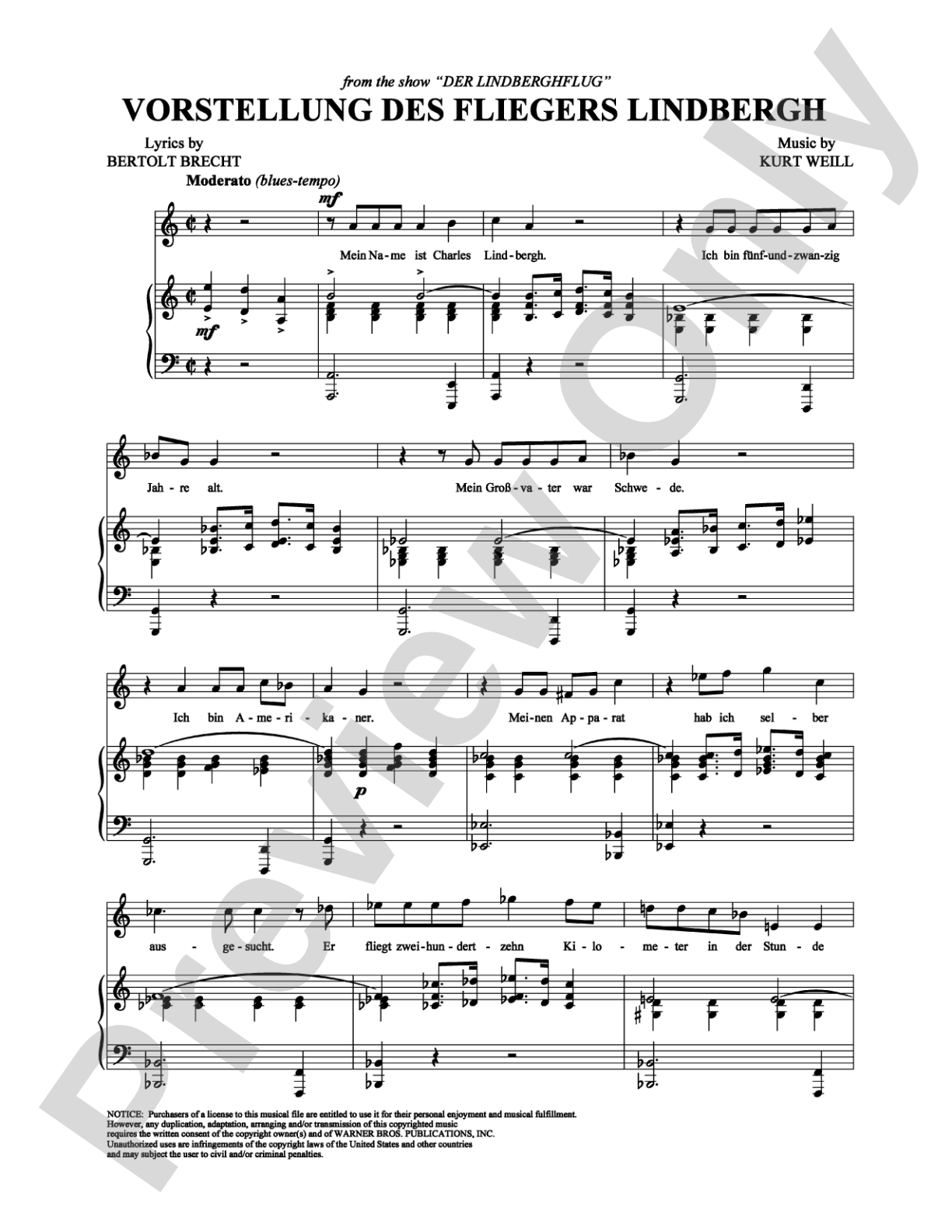
Brecht's "Lindbergh-Flug" (The Lindbergh Flight), written in 1929 with music by Weill and Paul Hindemith, was a radio cantata commissioned to commemorate Lindbergh's transatlantic flight. The work exemplifies Brecht's commitment to accessible, socially conscious art that could reach mass audiences while maintaining artistic rigor and intellectual depth.