
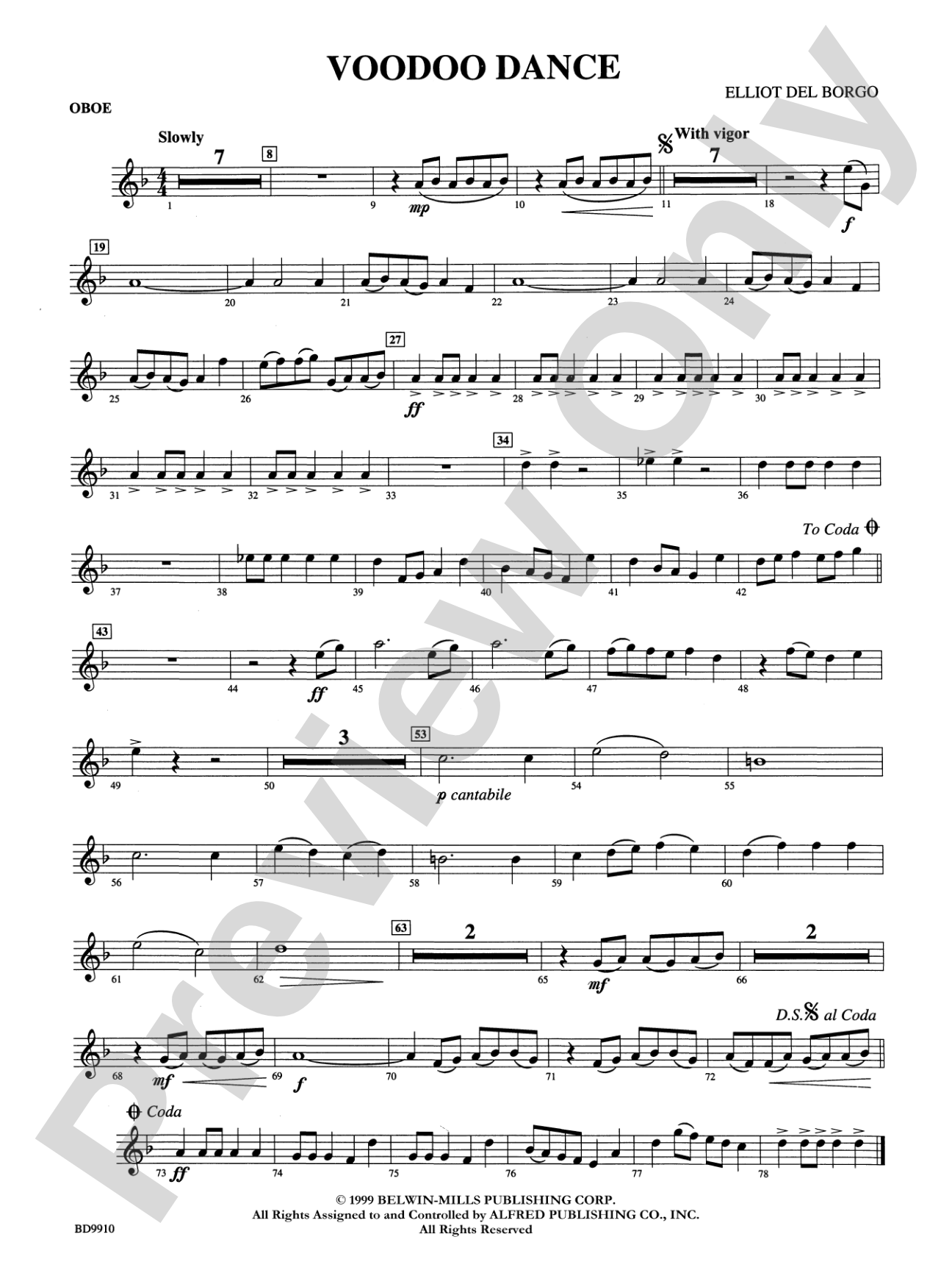

Voodoo Dance: Oboe
By Elliot Del Borgo
Grade: 1 (Very Easy)
Item: 00-PC-0002094_O1
$3.00
Pickup currently not available
Description
Dark mystery surrounds the sinister primitive religion based on sorcery and magic charms. We hear the eerie scene being set as the work begins. At a moment of pause, we are propelled into the whirling, percussion-driven dance that descriptively evolves. For the least experienced ensemble, here is that opportunity to let the imaginative powers of your audience members aid your performance. Entrancing! (3:22)


Don't just read it, hear it, play along with it, and watch your students grow with it. In MakeMusic Cloud, Voodoo Dance: Oboe comes alive with professional accompaniment, adjustable tempo, and built-in practice tools that turn solo practice into real progress.
Open in the Player
Jump straight in and assign it today.
Start Your Free Trial
Open this title and explore the full library in minutes.
Sample Audio
No sample audio found.
Sample Video
No sample videos found.
Additional Details
Series:
Belwin Beginning Band
Publisher:
Alfred Music
Page Count:
148
SKU:
00-PC-0002094_O1
More about this title
About the Composer: Elliot Del Borgo
Elliot Del Borgo is a prolific composer and arranger whose catalogue spans concert band, jazz ensemble, and wind ensemble literature. His gift for accessible orchestration and dramatic storytelling has made his works staples in beginning and intermediate band programs across North America. Del Borgo understands what young musicians need to sound impressive while building fundamental ensemble skills.
His compositions often prioritize imaginative scoring and programmatic clarity, allowing less experienced ensembles to create compelling musical narratives without technical barriers. This approach has earned him recognition as a trusted voice in music education publishing.
Why we love this
Voodoo Dance proves that Grade 1 repertoire doesn't mean simple storytelling. Del Borgo builds genuine tension through texture and orchestration rather than technical demands, letting your students inhabit a genuinely atmospheric sound world. The percussion-driven middle section gives rhythm section players the spotlight they crave while the full band gets to experience real ensemble dynamics, making this an uncommonly rewarding opener or festival selection.
What to expect
The music unfolds like a slow descent into shadow. High, sparse voices and mysterious percussion create an unsettling calm, then suddenly the pulse quickens and the full ensemble is swept into a hypnotic, driving rhythm. There's an intoxicating quality to the repetitive motion and swelling dynamics that makes the piece genuinely engaging rather than merely cute or Halloween-themed.
Who it's for
Beginning band programs looking for festival or concert repertoire with genuine dramatic impact. This works equally well for a Halloween concert, a fall festival appearance, or a programming slot where you want to showcase your ensemble's musicality without taxing their technical abilities. Directors of Grade 1 bands will find it an ideal vehicle for teaching phrasing, ensemble balance, and the relationship between rhythm and structure.
How to get the most out of it
- Shape the opening mysteriously by asking the band to sit with silence before the first notes emerge; the contrast between quietness and the eerie beginning intensifies the atmosphere without requiring technical sophistication.
- Let percussion carry the middle section's forward momentum; once that whirling dance kicks in, the winds should lock onto the rhythmic pulse rather than fight to lead it.
- Balance descriptive intent with ensemble confidence. Encourage students to visualize the darkening scene and building energy so their sound choices reflect genuine curiosity about the music's narrative arc.
- Experiment with the dramatic pause marked in the score as a true moment of collective breath; this teaches the band that silence and stillness are as expressive as sound.
How to use it
Open a fall concert with this as your attention-grabber; the dramatic shift from mystery to frenetic energy resets the audience's expectation of what a beginning band can express. It also pairs beautifully with lighter, more lyrical Grade 1 works on the same program, creating programming contrast. The 3:22 runtime makes it ideal for festival schedules or as a standalone statement piece.
Skills your students will build
- Maintaining ensemble balance across changing textures and dynamics
- Responding to expressive direction within accessible technical ranges
- Understanding how rhythm section articulation drives ensemble momentum
- Creating mood and atmosphere through tone color rather than technical display
- Reading and executing straightforward rhythmic patterns in a programmatic context