Volcano: 1st Violin Sheet Music Preview

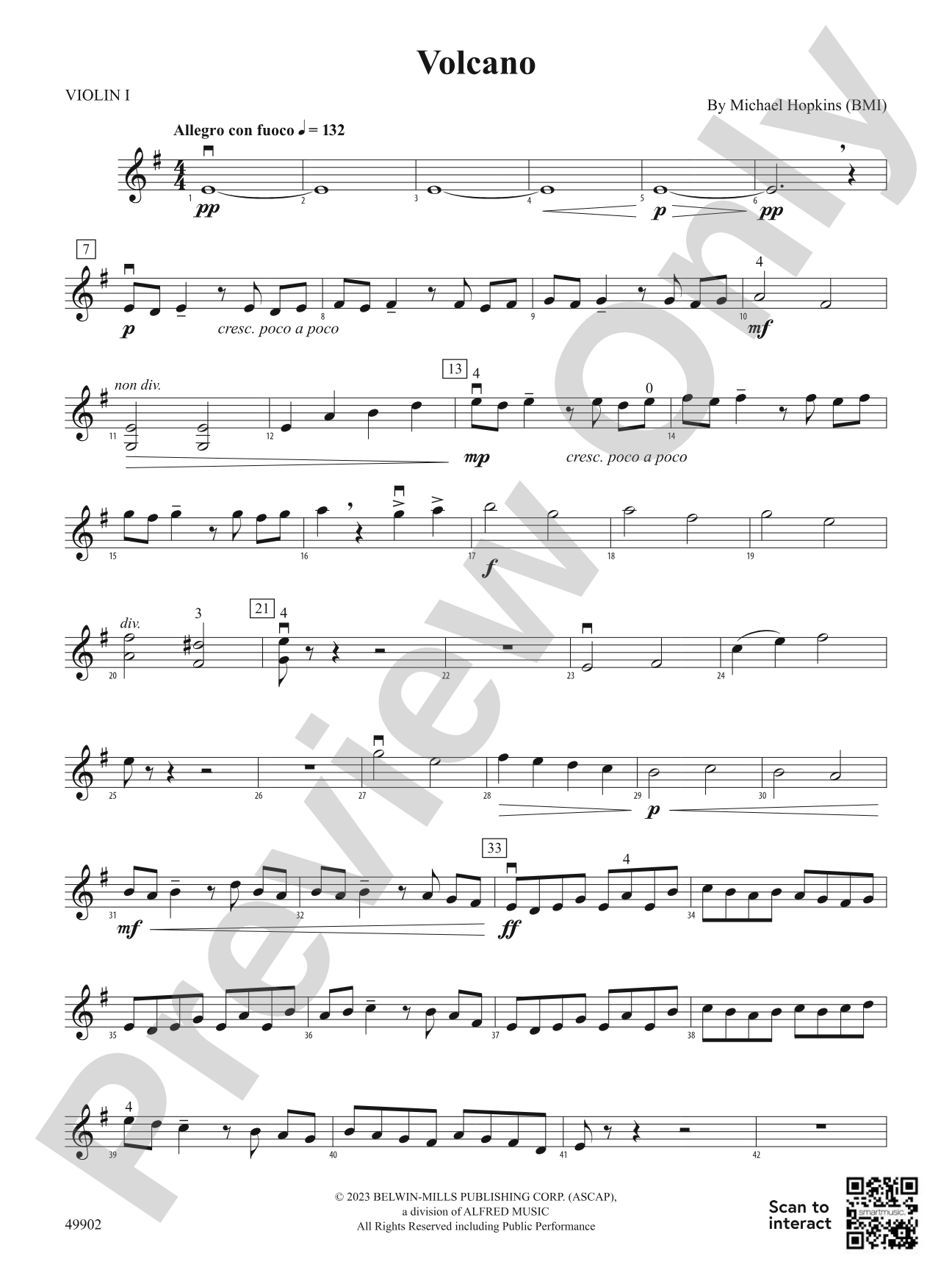
Volcano: 1st Violin

By Michael Hopkins

Grade: 2.5

Item: 00-PC-0019018_VN1

Digital Download
$3.00
Description
Volcano by Michael Hopkins is a fast and rhythmically energetic original concert work in E minor. Written for intermediate orchestra, this piece features all orchestra sections on melodic material. This is an excellent piece for helping students learn about bow speed, articulation, string crossings, syncopated rhythms, phrasing, and dynamic contrasts. Violin, viola, and cello parts are playable in first position. Double basses have a few shifts to 2nd and 3rd position. (3:50)

Don't just read it, hear it, play along with it, and watch your students grow with it. In MakeMusic Cloud, Volcano: 1st Violin comes alive with professional accompaniment, adjustable tempo, and built-in practice tools that turn solo practice into real progress.

Sample Audio
0:00
0:00
Sample Video
Additional Details
Series: Belwin Intermediate String Orchestra
Publisher: Alfred Music
SKU: 00-PC-0019018_VN1

More about this title

About the Composer: Michael Hopkins

Michael Hopkins

Michael Hopkins directs the music education program at the University of Michigan, where he teaches string techniques, orchestra methods, and applied research in music education. His career spans decades of conducting university and secondary orchestras across Colorado, Michigan, and Vermont, and he founded the Burlington Chamber Orchestra. Hopkins has presented over 60 times at national and state music education conferences, focusing on string pedagogy and music technology.

Beyond the podium, Hopkins is a prolific composer and arranger with over 70 published works for orchestra. His scholarship appears regularly in peer-reviewed journals including the Journal of Research in Music Education and American String Teacher. He authored The Art of String Teaching, a foundational resource for orchestra directors, private teachers, and string education programs.

Why we love this

Hopkins designed this piece with teaching in mind. Every section gets melodic responsibility, ensuring no students sit passively while others carry the material, and the rhythmic energy demands that your orchestra truly listen to one another. The intermediate grade level pairs rigorous technical work (string crossings, syncopation, articulation variety) with music that excels at festivals and competitions.

What to expect

Volcano erupts with rhythmic propulsion and volcanic imagery that justifies its name. The writing throbs with syncopated energy and full orchestral textures; upper strings cut through lower voices with clarity, and every part feels vital to the sound.

Who it's for

Intermediate string orchestras (Grade 2.5) seeking a contemporary original that develops both technical and musical maturity. Directors preparing for festivals and competitions will find a piece that impresses adjudicators while building genuine conductor and musician skills.

How to get the most out of it

  • Isolate the syncopated rhythms in sectionals before full orchestra rehearsal. The energy lives in precision, not speed; lock the rhythm section first, then let the melodic sections layer in.
  • Work bow speed control in separate passages. Shorter, lighter strokes in the fastest sections preserve clarity and prevent the piece from collapsing into mud at concert tempo.
  • Map dynamic contrasts across full sections at least two rehearsals before performance. Mark where each section peaks and valleys, and conduct those peaks with clear gesture.

How to use it

Program this as an energetic anchor in a competition set or a festival performance. Its three-minute, fifty-second duration and programming appeal make it ideal paired with a slower, more lyrical work, allowing your orchestra to showcase range and control.

Skills your students will build

  • Bow speed control and articulation contrast
  • String crossings in rapid passages
  • Syncopated rhythm reading and execution
  • Dynamic shaping and contrast across sections
  • Ensemble listening and rhythmic precision
  • First-position violin, viola, and cello reading
  • Upper-position bass technique (2nd and 3rd position)

You May Also Like