Vocalise, Op. 34, No. 14: B-flat Tenor Saxophone Sheet Music Preview

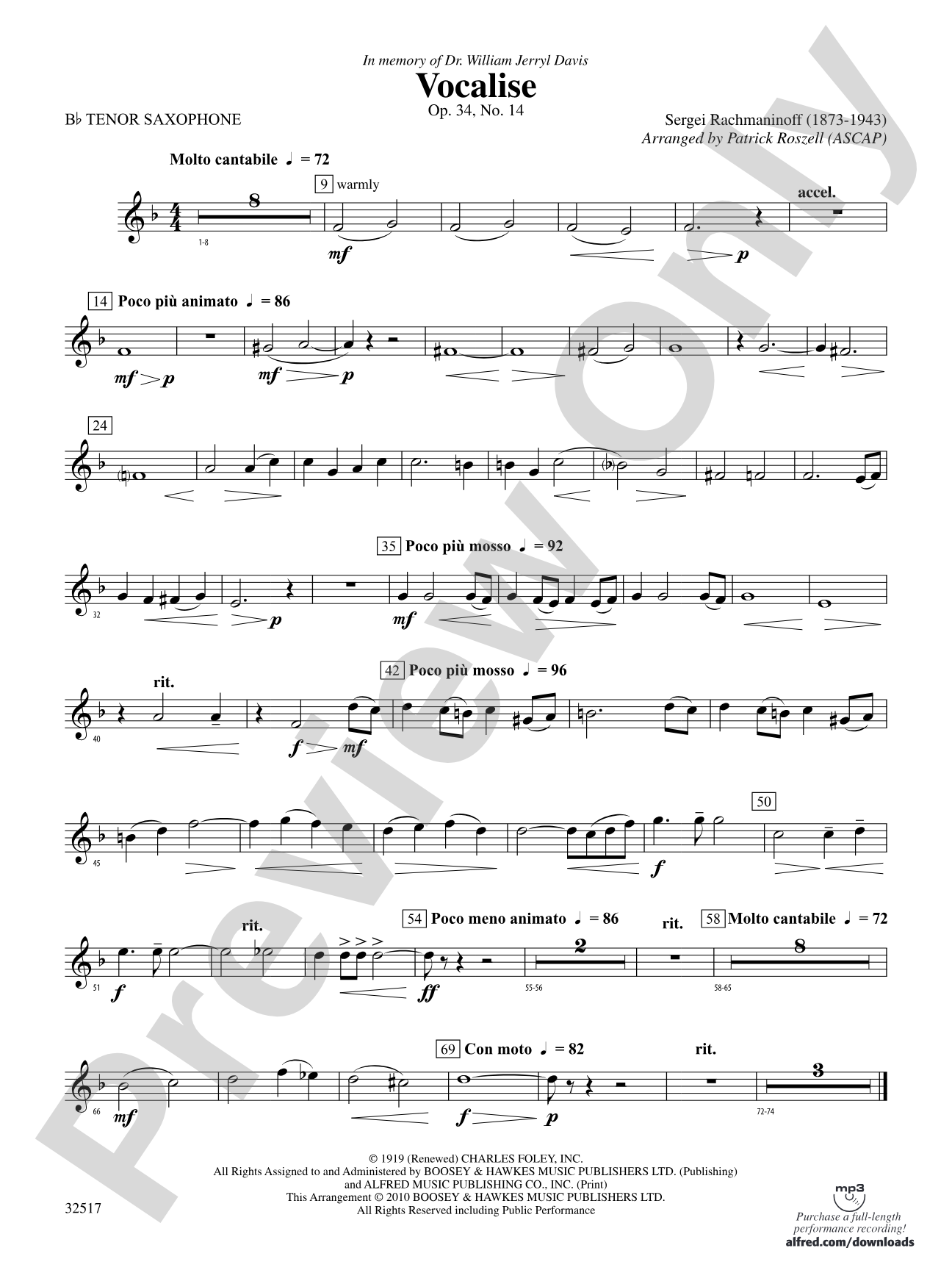
Vocalise, Op. 34, No. 14: B-flat Tenor Saxophone

In memory of Dr. William Jerryl Davis

By Sergei Rachmaninoff / arr. Patrick Roszell

Grade: 3 (Medium Easy)

Item: 00-PC-0014394_TX1

Digital Download
$3.00
Description
Haunting yet beautiful, Sergei Rachmaninoff originally wrote Vocalise as a song without text for soprano and piano. This exquisite arrangement brings this immortal melody to your concert band. A beautiful contest or concert piece!

Don't just read it, hear it, play along with it, and watch your students grow with it. In MakeMusic Cloud, Vocalise, Op. 34, No. 14: B-flat Tenor Saxophone comes alive with professional accompaniment, adjustable tempo, and built-in practice tools that turn solo practice into real progress.

Sample Audio
0:00
0:00
Sample Video
Additional Details
Series: Belwin Concert Band
Publisher: Alfred Music
Page Count: 114
SKU: 00-PC-0014394_TX1

More about this title

About the Composer: Sergi Rachmaninoff

Sergei Rachmaninoff (1873-1943) was a Russian composer and pianist whose lush harmonic language and sweeping melodies defined late Romantic music. His works for voice, piano, and orchestra remain cornerstones of concert repertoire, prized for their emotional depth and technical brilliance.

Rachmaninoff's gift for vocal writing shines throughout his songs and operas. Vocalise stands apart as a wordless song, allowing pure melody to carry all expression. This approach influenced generations of composers and remains a masterclass in line writing for any musician who performs it.

Why we love this

This arrangement captures everything that makes the original so affecting while giving concert band players direct access to a masterwork they might otherwise only hear on recordings. Rachmaninoff's long, singing lines transfer beautifully to band voices, and Patrick Roszell's orchestration respects the piece's harmonic integrity while creating natural doublings and countermelody throughout the ensemble. At Grade 3, it's fully accessible yet maintains the sophistication audiences expect from masterwork arrangements.

What to expect

Haunting and tender, with the quality of a voice suspended in time. The melody unfolds with such restraint and inevitability that you feel its inevitability before it arrives. Silence becomes as important as sound.

Who it's for

Concert band directors seeking a moving centerpiece that challenges students to sing rather than simply play their parts. Equally valuable for contest programs where musicality and ensemble blend matter as much as technical display.

How to get the most out of it

  • Shape the melody through long-term phrase arcs rather than measure-to-measure dynamics. Think of it as a continuous vocal line even though multiple sections will carry it.
  • Balance sectional entrances carefully. The beauty of an arrangement lies in hearing the melody float seamlessly from woodwinds to brass without stumbling on the handoffs.
  • Avoid excessive vibrato in the upper woodwinds on the main theme. A focused, pure tone lets the lyrical quality speak.
  • Use the full range of dynamics available in your hall. The quiet sections need genuine softness so that moments of swell resonate with real impact.

How to use it

Program this alongside more energetic material to create textural contrast on a concert or festival. Its introspective nature makes it ideal for closing a set on a gentler note or opening a second half with quiet beauty. Contest adjudicators consistently reward pieces where the ensemble demonstrates control of sustained tone and sensitive phrasing.

Skills your students will build

  • Sustaining long melodic lines with consistent support and evenness
  • Balancing dynamics in soft passages without losing projection
  • Passing melody between instrumental choirs smoothly and securely
  • Understanding harmonic movement and voice leading through performance

You May Also Like