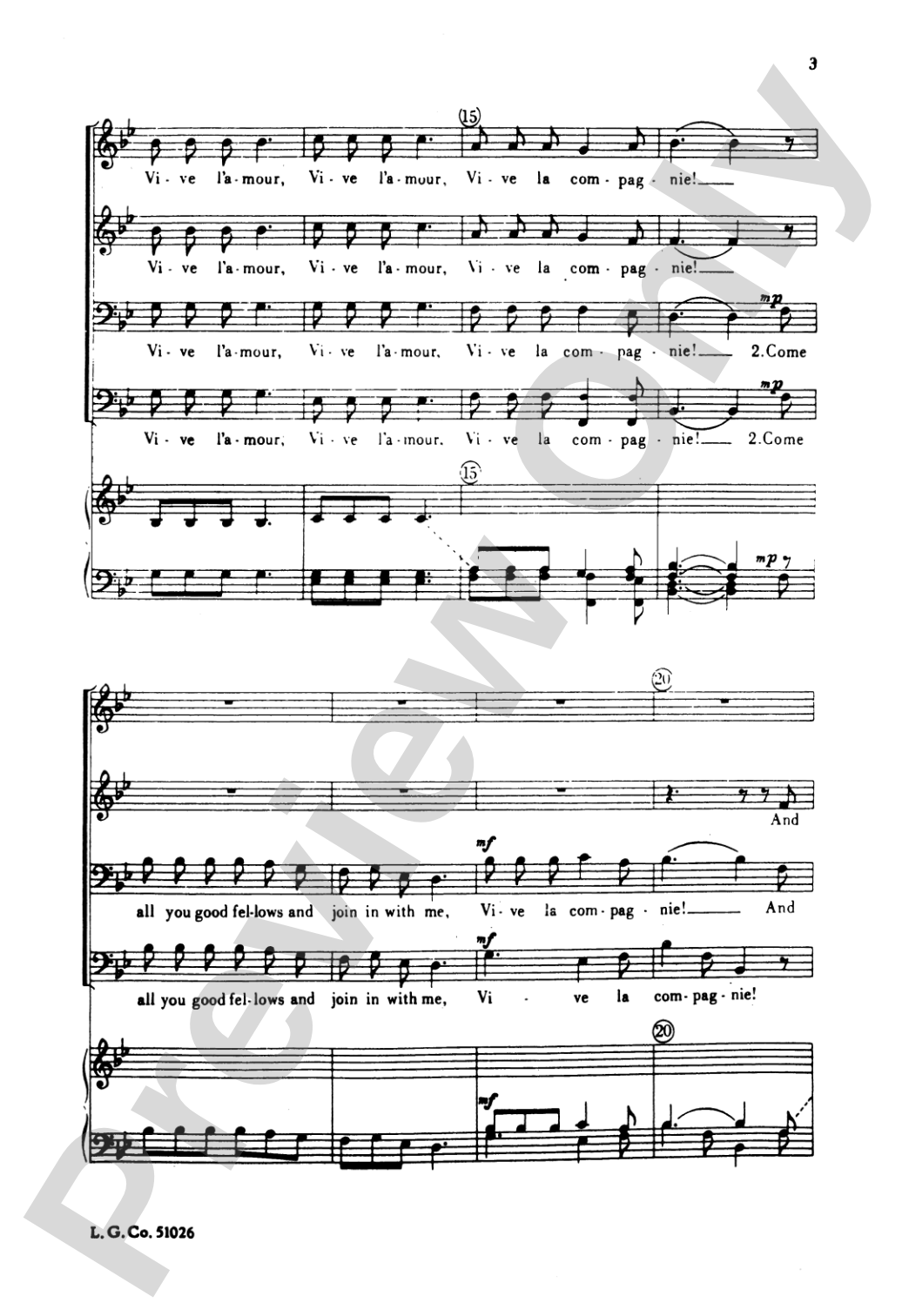
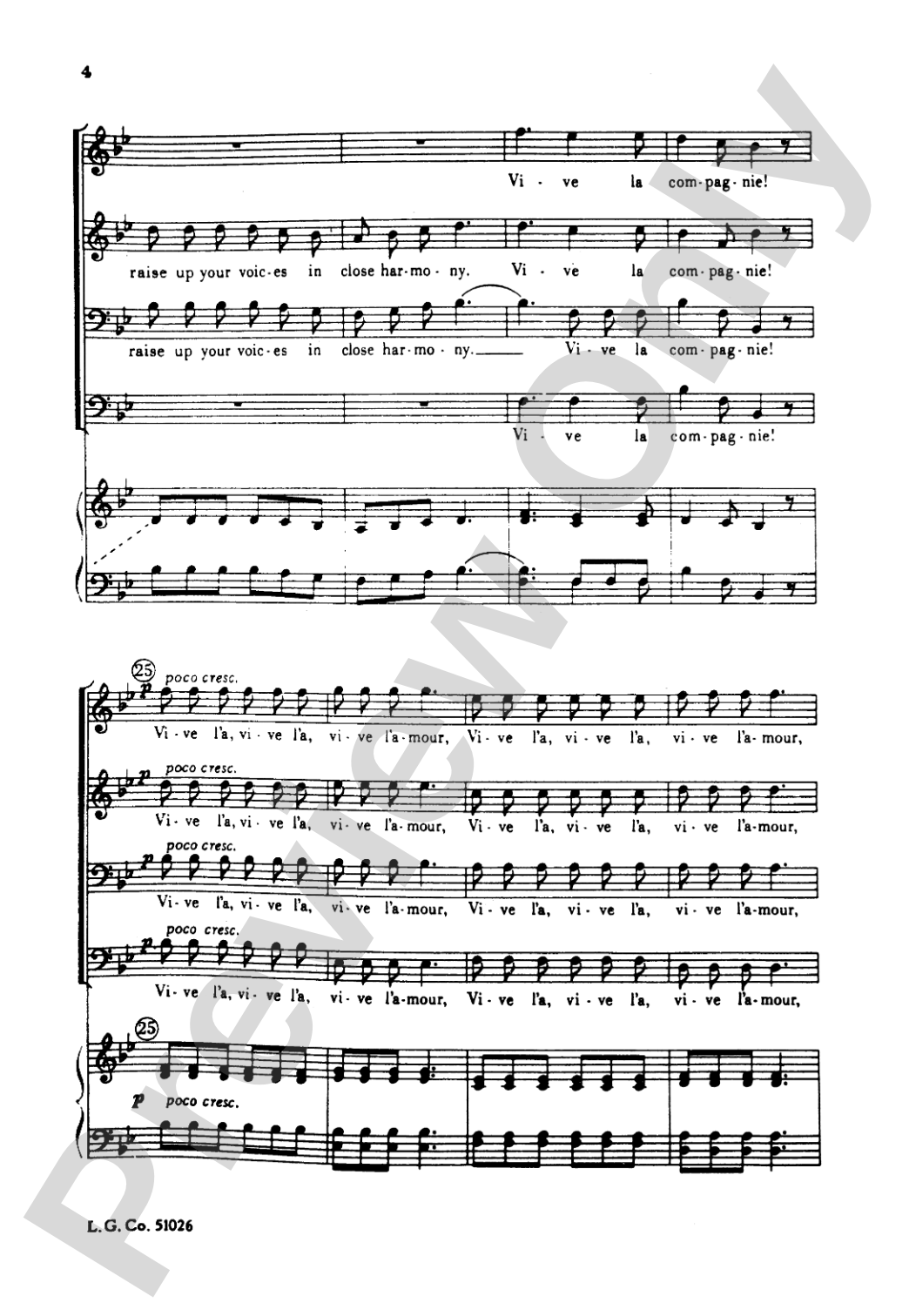
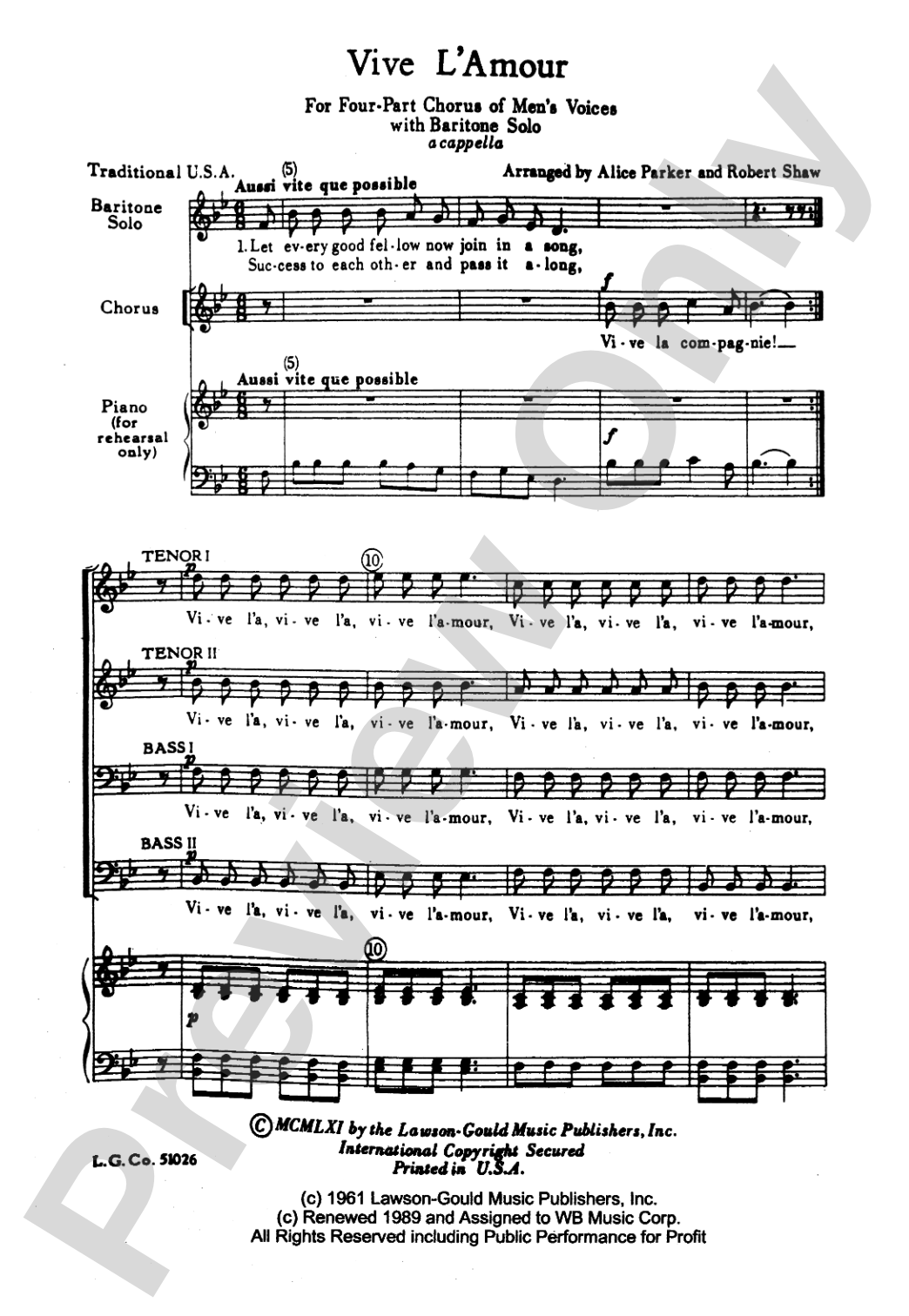
Vive l'Amour Sheet Music Preview

Vive l'Amour: TTBB Choral Octavo

Arr. Robert Shaw and Alice Parker

Item: 00-PO-0002643

Digital Download
$2.05

Minimum order quantity: 20 copies

Description
This title is available in Music Prodigy. This title is available in MakeMusic Cloud.

Vive l'Amour: TTBB Choral Octavo isn't in MakeMusic Cloud just yet...but it could be. Let us know you'd like to see it, and you'll help shape what comes next. In the meantime, start a free trial and dive into thousands of interactive titles your students can play along with today.

Sample Audio
0:00
0:00
Sample Video
Additional Details
Series: Lawson-Gould
Publisher: Alfred Music
Page Count: 12
SKU: 00-PO-0002643

More about this title

About the Arranger: Robert Shaw

Robert Shaw stands as one of the most influential choral conductors and arrangers in American music history. His arrangements of folk songs and spirituals became standard repertoire for generations of choirs, prized for their musicality, accessibility, and deep respect for source material. Shaw's collaborative partnership with Alice Parker produced some of the most enduring choral works of the 20th century, combining scholarly understanding of folk traditions with practical insights gained from decades of conducting.

Why we love this

Shaw and Parker's arrangement captures the robust charm of this traditional song while respecting its folk origins. The TTBB voicing feels natural and singable, with moments of genuine warmth that make the piece rewarding for both singers and audiences. This is the kind of standard that belongs in every men's choir library.

What to expect

Warm, approachable, and genuinely joyful. The arrangement invites singers into a tradition of communal singing while offering enough harmonic interest to keep rehearsal engaging. There's an unpretentious quality here that feels honest and celebratory.

Who it's for

Men's choirs seeking accessible, rewarding material that sits well in the voice and connects with audiences. High school, college, and community ensembles looking for a folk arrangement with real substance and proven repertoire value.

How to get the most out of it

  • Shape the phrases with a conversational tone rather than operatic grandeur; this is a folk song, not an art song, and the style should feel unpretentious and direct.
  • Balance the harmonic movement carefully in the lower voices, especially where inner parts carry the melody or countermelody, so the arrangement's architecture remains clear.
  • Treat the text with rhythmic precision and clear diction so the joy and affection in the lyrics come through without strain.

How to use it

Pair this with other folk arrangements to create a thematic concert section, or use it as an encore or closing piece where its character and brevity feel natural. It works equally well in formal concerts and informal community gatherings.

Skills your students will build

  • Balancing melody across voice parts in arrangement contexts
  • Blending and balance within harmonic structures
  • Singing with clear, natural diction in secular choral music
  • Sustaining steady parts while ensemble textures shift

You May Also Like