
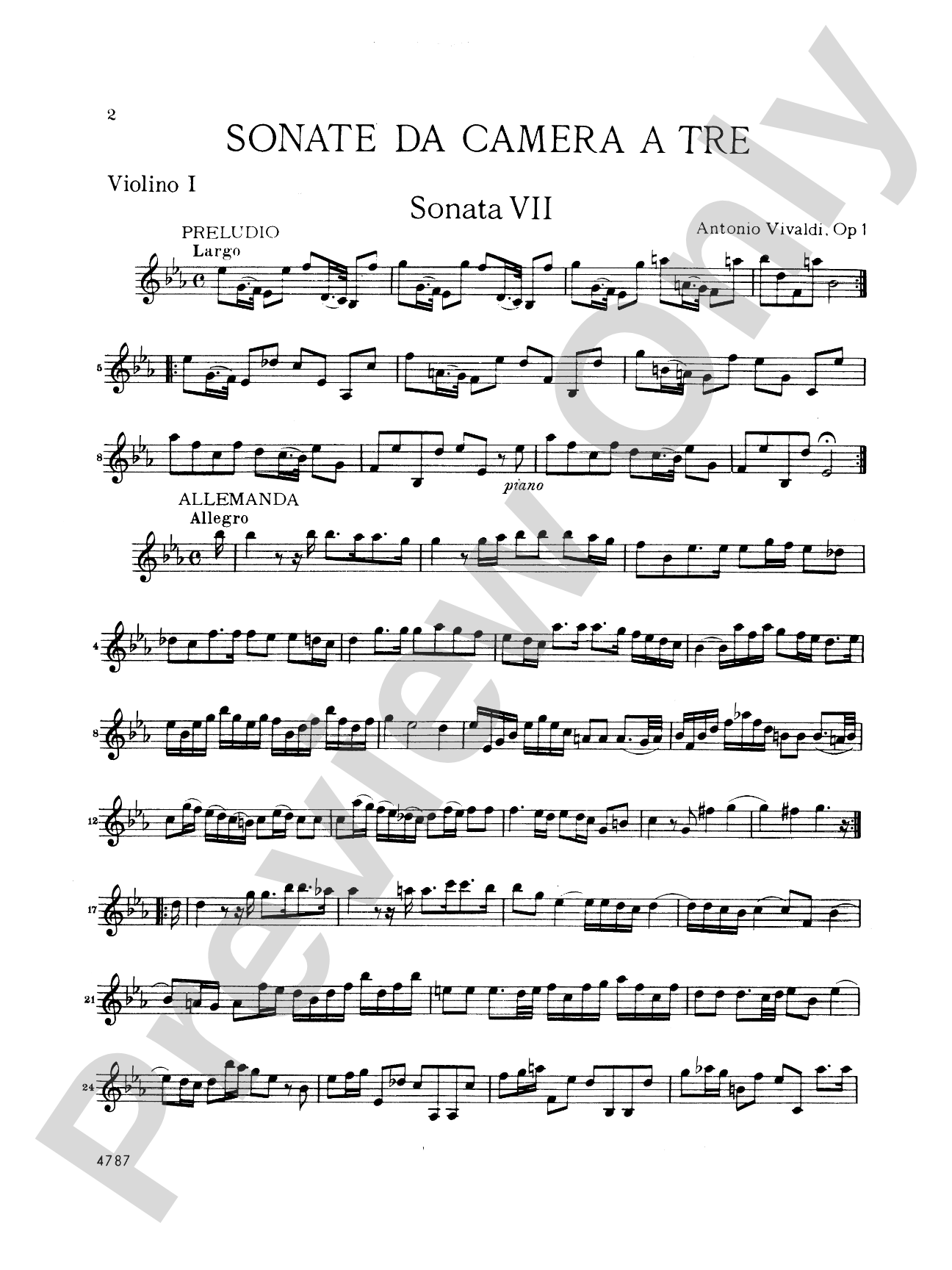
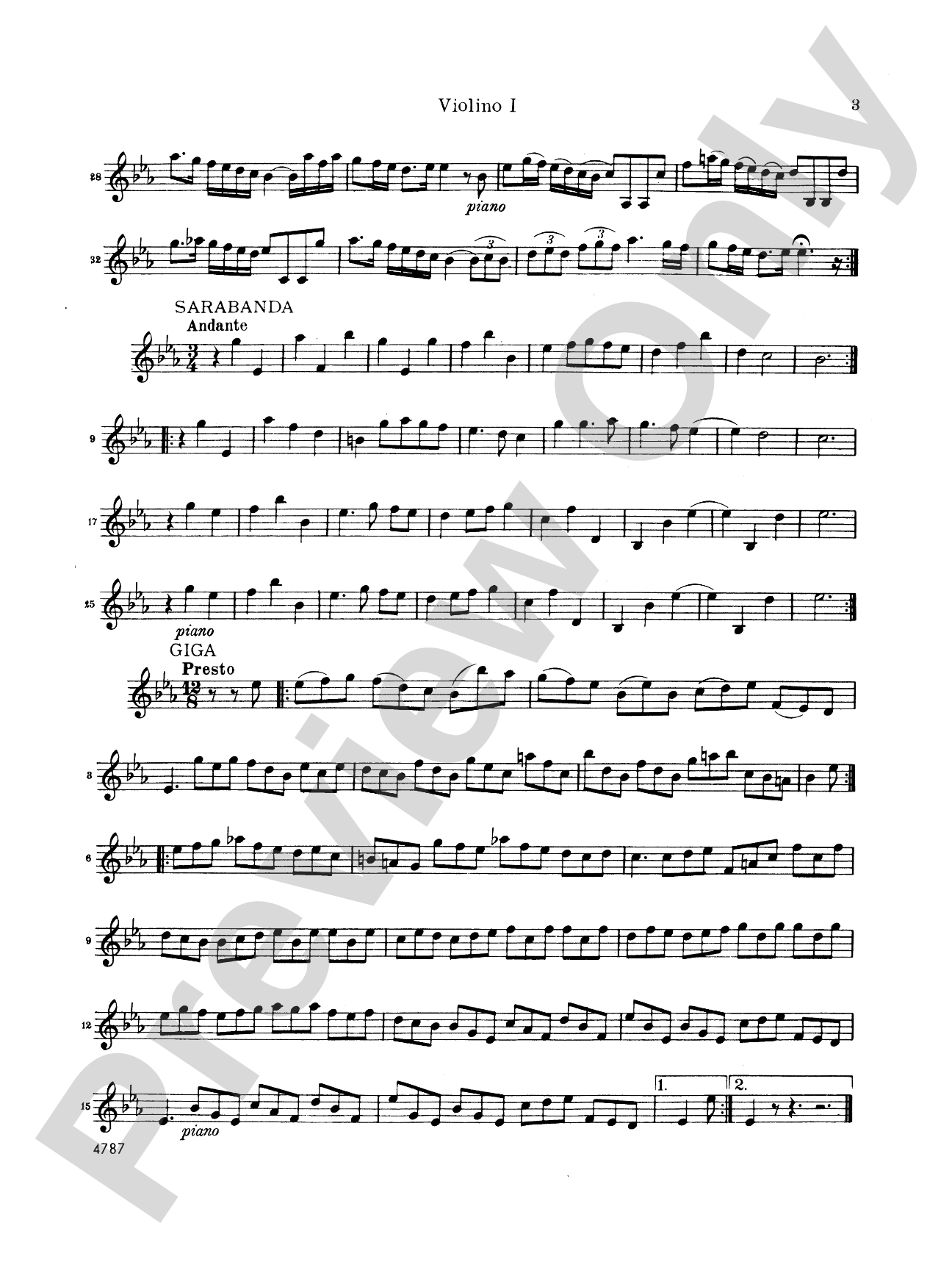

Vivaldi: Sonatas da Camera a Tre (Book II, Nos. 7-12): String Trio Score & Parts
By Antonio Vivaldi
Item: 00-PK-0003616

$14.99
Pickup currently not available
Buy Extra Parts (Digital PDF Download)
Parts Added to Cart!
Related Items
Sonatas de Camera a Tre, Opus 1 (Volume II, Nos. 7-12): String Trio Score & Parts |
$14.95
|
View |
Description


Don't just read it, hear it, play along with it, and watch your students grow with it. In MakeMusic Cloud, Vivaldi: Sonatas da Camera a Tre (Book II, Nos. 7-12): String Trio Score & Parts comes alive with professional accompaniment, adjustable tempo, and built-in practice tools that turn solo practice into real progress.
Open in the Player
Jump straight in and assign it today.
Start Your Free Trial
Open this title and explore the full library in minutes.
Sample Audio
No sample audio found.
Sample Video
No sample videos found.
Additional Details
Series:
Kalmus Edition
Publisher:
Alfred Music
Page Count:
92
SKU:
00-PK-0003616
Instrumentation:
with Piano
More about this title
About the Composer: Antonio Vivaldi
Antonio Vivaldi (1678-1741) was a Venetian priest and virtuoso violinist who fundamentally shaped the Baroque concerto and sonata forms. His prolific output across sacred music, opera, and instrumental works established conventions that composers throughout Europe would follow for decades. The four seasons brought him lasting fame, but his chamber works reveal an equally inventive mind engaged with intimate musical conversation and structural clarity.
Vivaldi's sonatas da camera occupy a unique space in his catalog. These works blend the elegance of dance movements with the sophistication of multimovement chamber forms, and they showcase his gift for memorable thematic material and fluid harmonic language. For string players, they remain essential repertoire for understanding how the Baroque trio texture works and how a master craftsman balances three independent voices.
Why we love this
These Sonatas da Camera sit at an ideal balance point: structured enough to teach formal clarity and part independence, yet stylistically approachable for student players who have solid fundamental skills. Unlike some Baroque chamber works that demand virtuosity, Vivaldi's writing here prioritizes melodic grace and rhythmic drive, making the music rewarding to perform even at moderate technical levels. They're proven contest material precisely because they demonstrate musicianship without requiring showmanship.
What to expect
Vivaldi's chamber works breathe with Italian warmth and galant elegance. The textures feel conversational: two violins gesture and respond while the cello guides the harmonic journey, and each movement unfolds with a sense of inevitability that makes the music feel both structured and spontaneous. There's a brightness to the harmonic language and a directness to the thematic material that makes these works feel immediately alive in performance.
Who it's for
String trios at the high school and early college level will find this collection immediately useful. Players with solid note-reading skills and at least one year of experience with chamber music can engage with the musical content and historical style. These sonatas reward serious preparation and are valuable for festival competition, chamber ensemble courses, or concerts pairing Baroque and contemporary repertoire.
How to get the most out of it
- Establish a clear harmonic foundation by listening carefully to the cello line; it anchors the entire texture and often contains the strongest sense of direction in phrase construction.
- Shape each movement's opening theme distinctly; Vivaldi's sonata movements benefit from a clear melodic gesture that the ensemble can reference and develop through the movement.
- Balance the two violin parts by understanding their dialogue: when they alternate, each needs space; when they move together, blend the tone but preserve individual articulation.
- Maintain steady pulse across all three parts even during elaborate passagework; the dance heritage of these works depends on clear rhythmic momentum rather than expressive rubato.
How to use it
Program these as anchors for a Baroque chamber concert, pairing them with solo or concerto works by Corelli, Purcell, or Telemann to create a coherent historical survey. Alternatively, use individual sonatas as contest entries or ensemble recital pieces to demonstrate your trio's command of classical style and part independence. The presence of optional keyboard parts also allows for flexible performance configurations depending on venue and ensemble size.
Skills your students will build
- Listening and responding to independent melodic lines within a three-part texture
- Baroque phrasing and cadential structure (recognizing and executing authentic closes and half closes)
- Articulation conventions specific to the Baroque period (matching tonguing and bow stroke to harmonic function)
- Balance and blend between violins when moving in parallel motion versus contrasting material
- Understanding figured bass harmony through the cello's harmonic role